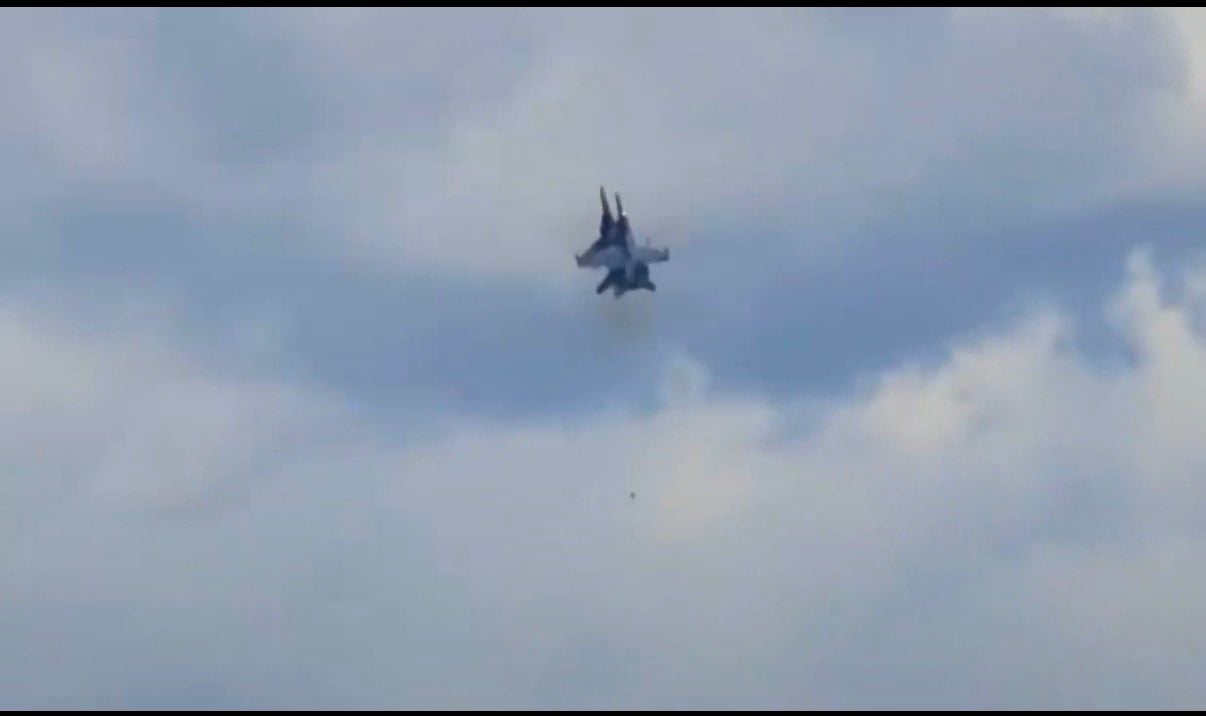
It was supposed to be a thrilling afternoon of aerial entertainment. Instead, the Gunfighter Skies Air Show at Mountain Home Air Force Base in Idaho gave spectators a heart-stopping moment that nobody in the crowd was prepared for. Two U.S. Navy EA-18G Growler jets collided in midair on Sunday, sending both aircraft spiraling toward the ground in a blaze of fire and thick black smoke.
The incident happened around 12:10 p.m. Mountain Daylight Time during an aerial demonstration, when the two jets, both assigned to Electronic Attack Squadron 129 based out of Whidbey Island, Washington, made contact with each other at altitude. For anyone watching from below, the next few seconds were equal parts terrifying and miraculous: four parachutes appeared in the sky, two from each aircraft, as all four crew members successfully ejected before the planes went down.
Commander Amelia Umayam, a spokesperson for Naval Air Forces, U.S. Pacific Fleet, confirmed to reporters that all four aircrew members were alive, on the ground, and being evaluated by medical personnel. Emergency responders were quickly on the scene as officials worked to gather more information and account for everyone involved.
Dramatic videos that surfaced on social media captured the full gut-punch of the moment. You can see the two jets make contact, the parachutes bloom open against the sky, and then the aircraft tumbling before slamming into the earth and erupting into enormous fireballs. It is, by any measure, the kind of footage that reminds you just how unforgiving aviation can be, and how remarkable it is when the safety systems actually work.
What We Know About the Crash
BREAKING: Two U.S. Navy jets collided mid-air and exploded during the Gunfighter Skies Air Show at Mountain Home Air Force Base. pic.twitter.com/R66ADWM2TY
— Breaking911 (@Breaking911) May 17, 2026
Mountain Home Gunfighters, the official group behind the air show, posted a statement to Facebook confirming that an aircraft incident had occurred approximately two miles northwest of the base. The statement was brief but pointed: emergency responders were on scene, an investigation was underway, and more details would follow as they became available.
The Navy’s confirmation came through Commander Umayam, who identified the aircraft as EA-18G Growlers from VAQ-129. The jets were mid-demonstration when the collision occurred, which means the aircraft were likely flying in close formation or performing coordinated maneuvers, the kind of flying that looks absolutely breathtaking when everything goes right and absolutely catastrophic when it does not.
Eyewitness David Katz, who attended the air show with his two sons, told reporters he watched as one of the planes ignited in the air after the impact. “We saw the smoke and fireball,” he said. “One of the planes was impacted and started burning in the air.” He described watching from his vehicle as bystanders tried to figure out whether the pilots had gotten out safely, with fire crews rushing past in real time.
What Is the EA-18G Growler?
If you are not deep in military aviation circles, you may be wondering what exactly an EA-18G Growler is. Here is the quick version: it is a twin-seat electronic warfare aircraft built on the frame of the F/A-18 Super Hornet, and it is one of the most sophisticated jets in the Navy’s arsenal.
Rather than carrying bombs or missiles as its primary payload, the Growler is designed to jam enemy radar and communications systems, essentially blinding adversaries before or during combat operations. It is the Navy’s airborne electronic attack specialist, and the crews who fly it undergo intensive training. VAQ-129, the squadron these jets belonged to, is specifically a training squadron, meaning its mission is to produce the next generation of Growler crews, which gives the incident a particularly sobering layer of context.
The aircraft is not cheap, either. Each EA-18G Growler carries a price tag in the range of $67 million, so Sunday’s incident represents a significant loss of equipment in addition to the human drama that unfolded.
What Happens Next and What We Can Learn From This
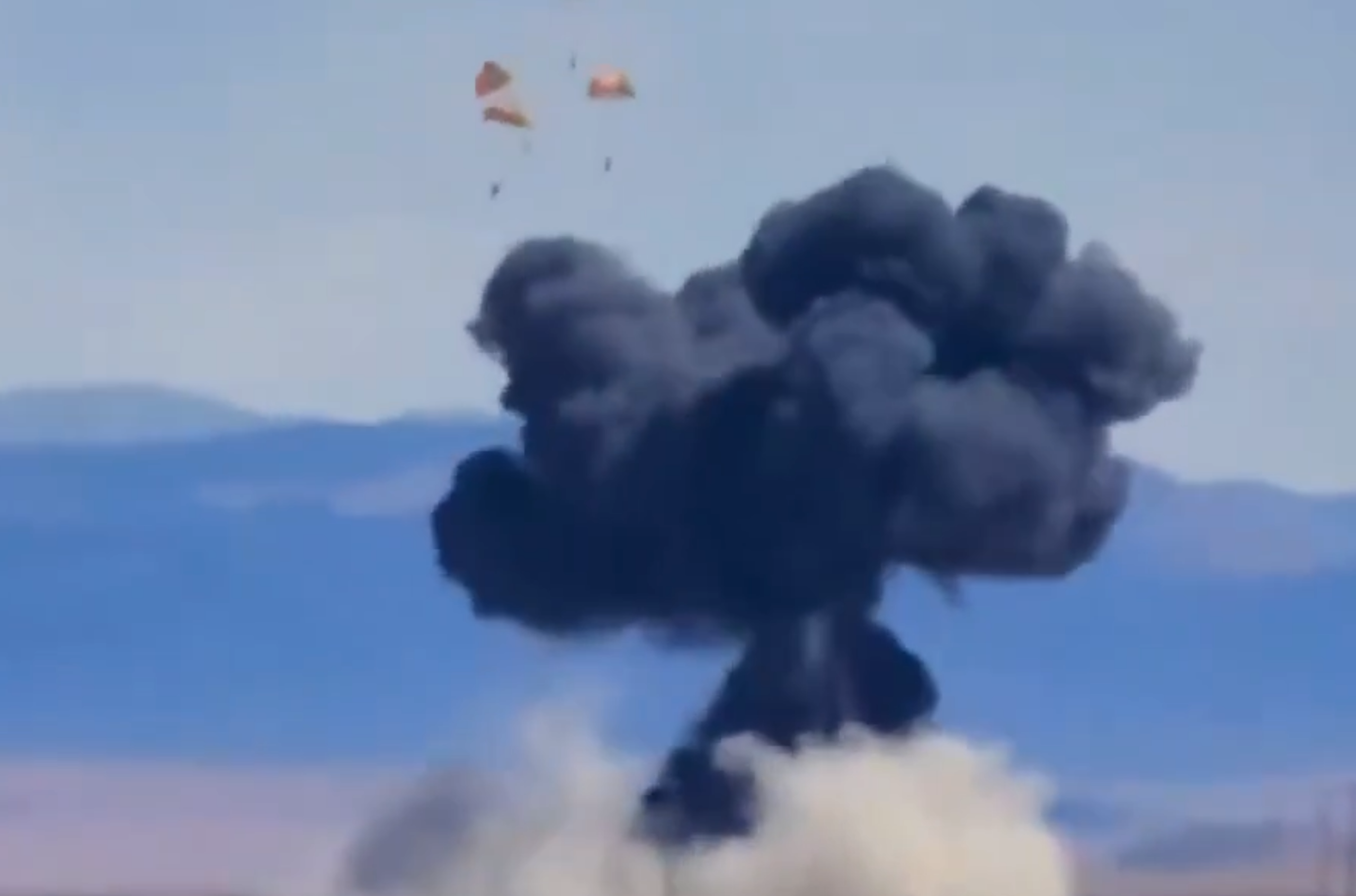
Midair collisions at air shows are rare but not unheard of, and whenever one occurs, it sets off a chain of formal investigations. Expect the Navy and potentially the National Transportation Safety Board to be involved in a thorough review of what went wrong. Investigators will examine flight data, communications, maintenance records, and eyewitness accounts to piece together the sequence of events that led to contact between the two aircraft.
The bigger takeaway here is actually an encouraging one, even if it does not feel that way at first glance. The ejection systems worked. Both crews got out. In a scenario where two fast jets collide at speed, that outcome is far from guaranteed. The survival of all four crew members is a testament to both the design of the aircraft’s ejection systems and the training these aviators receive for exactly these kinds of emergencies.
It also serves as a reminder that air shows, while incredible spectacles for the public, carry real operational risk. Tight formations, low altitudes, and high-speed maneuvers push both aircraft and pilots to their limits, even for highly experienced crews. The investigation will ultimately tell us whether this was a mechanical issue, a communication failure, a judgment call, or something else entirely. Until then, the most important headline remains the same: everyone made it out alive.