For a title like this, the cleanest way to avoid guesswork is to anchor it to a major international safety measure. The 2025 Global Peace Index from the Institute for Economics & Peace ranks 163 states and territories using 23 indicators across three broad areas: societal safety and security, ongoing conflict, and militarisation.
That does not mean every street in a lower-ranked country is equally dangerous, and it does not mean a ranking alone can replace on-the-ground judgment. What it does offer is a defensible framework for identifying places where conflict, instability, repression, or insecurity are especially severe at the national level.
For geographic clarity, this list focuses on sovereign states in Asia and leaves out transcontinental Russia. Using the 2025 GPI, the six least peaceful sovereign states in Asia are Yemen, Afghanistan, Syria, Myanmar, North Korea, and Iraq.
All six also currently carry U.S. State Department Level 4: Do Not Travel warnings, though the reasons vary from war and terrorism to wrongful detention and severe limits on consular help. That is why these countries belong in the same conversation, even if the nature of the risk is not identical in every case.
1. Yemen

Yemen is the least peaceful sovereign state in Asia on the 2025 Global Peace Index, ranking 159th out of 163 globally. In the same report, it also sits among the world’s weakest performers on the conflict side of the index, which reflects how deeply the civil war and wider instability continue to shape daily life.
The U.S. State Department lists Yemen as Level 4: Do Not Travel because of terrorism, civil unrest, crime, health risks, kidnapping, and landmines. That combination makes Yemen the clearest fit for the top of this list. The danger here is not some isolated hotspot problem. It is systemic.
2. Afghanistan

Afghanistan ranks 158th globally on the 2025 GPI and remains the least peaceful country in South Asia in the report. It also performs extremely badly on the index’s safety and security measures, which is one reason it remains one of the clearest examples of a country where instability is not just political background noise but an everyday condition.
The current U.S. advisory is also Level 4: Do Not Travel, citing civil unrest, crime, terrorism, wrongful detention, kidnapping, natural disasters, and limited health facilities. That is about as comprehensive a warning as a traveler can receive, and it underlines how little room there is for casual risk-taking.
3. Syria

Syria ranks 157th globally on the 2025 GPI, placing it deep in the bottom tier of the index’s Asian countries. The report’s wider conflict picture makes the reason obvious enough: Syria’s fragile stability still sits under the shadow of armed factions, outside actors, and the possibility of renewed escalation.
The State Department’s wording is even blunter: Do not travel to Syria for any reason. Its advisory cites terrorism, unrest, kidnapping, hostage taking, crime, and armed conflict, which is why Syria remains one of the strongest examples of a country where danger is structural rather than occasional.
4. Myanmar

Myanmar is the least peaceful country in the Asia-Pacific region in the 2025 GPI and ranks 153rd globally. The report describes it as the region’s sharpest deterioration, with worsening scores across all three domains and continuing civilian harm in the years since the 2021 coup.
The U.S. State Department places Myanmar at Level 4: Do Not Travel because of armed conflict, potential civil unrest, arbitrary enforcement of local laws, poor health infrastructure, land mines and unexploded ordnance, crime, and wrongful detention. That is a wide-ranging risk profile, not a narrow regional caution confined to one corner of the country.
5. North Korea

North Korea ranks 149th globally on the 2025 GPI, making it the second least peaceful country in the Asia-Pacific region after Myanmar. The index also treats it as one of the world’s most militarised states, which fits a country where the risk to outsiders is tied less to ordinary tourism friction and more to the character of the state itself.
Its travel danger looks different from that of an open war zone, but it is still severe. The U.S. advisory is Level 4: Do Not Travel and warns of arrest, long-term detention, and wrongful detention targeting U.S. citizens. That is enough to put North Korea firmly on this list even without battlefield conditions driving the risk.
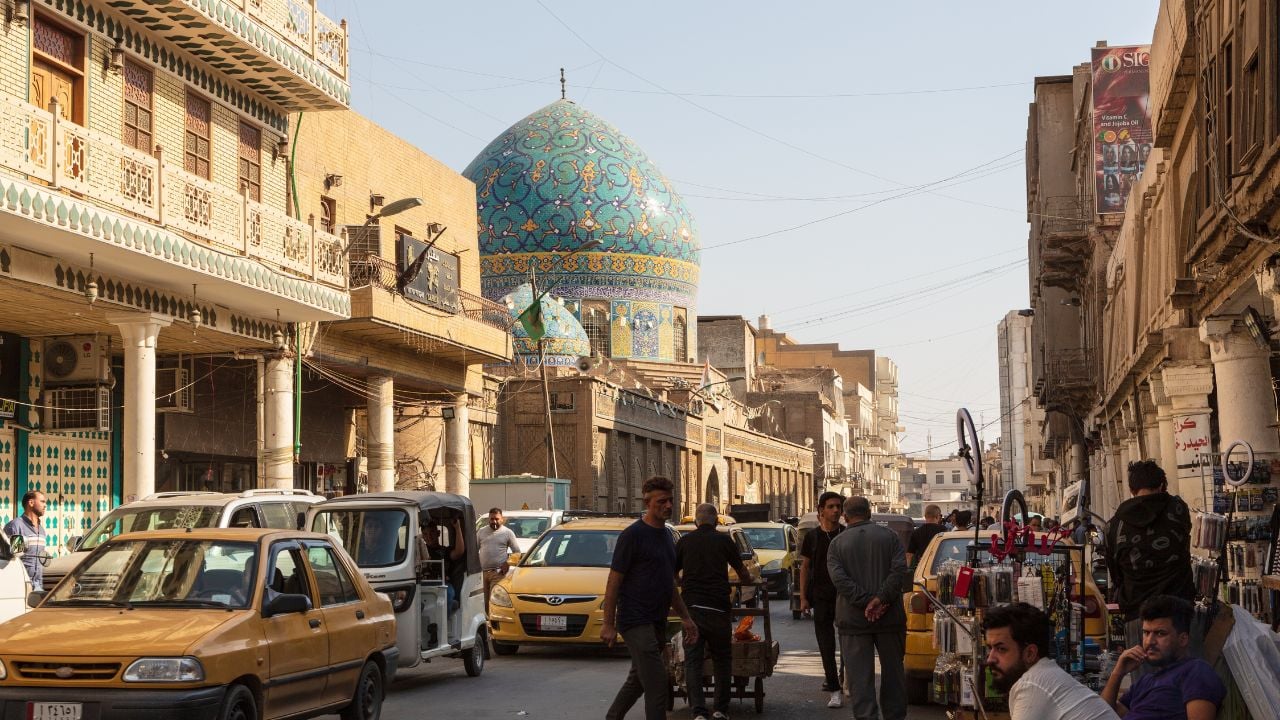
6. Iraq

Iraq ranks 147th globally on the 2025 GPI, which still leaves it among the least peaceful sovereign states in Asia. The country is no longer discussed internationally in exactly the same way it once was, but the index makes clear that the broader security picture remains weak by global standards.
The current U.S. advisory is Level 4: Do Not Travel because of terrorism, kidnapping, armed conflict, civil unrest, and the U.S. government’s limited ability to provide emergency services. That combination keeps Iraq firmly in this group, even if the country’s risks do not always receive the same daily attention as some of the others above it.