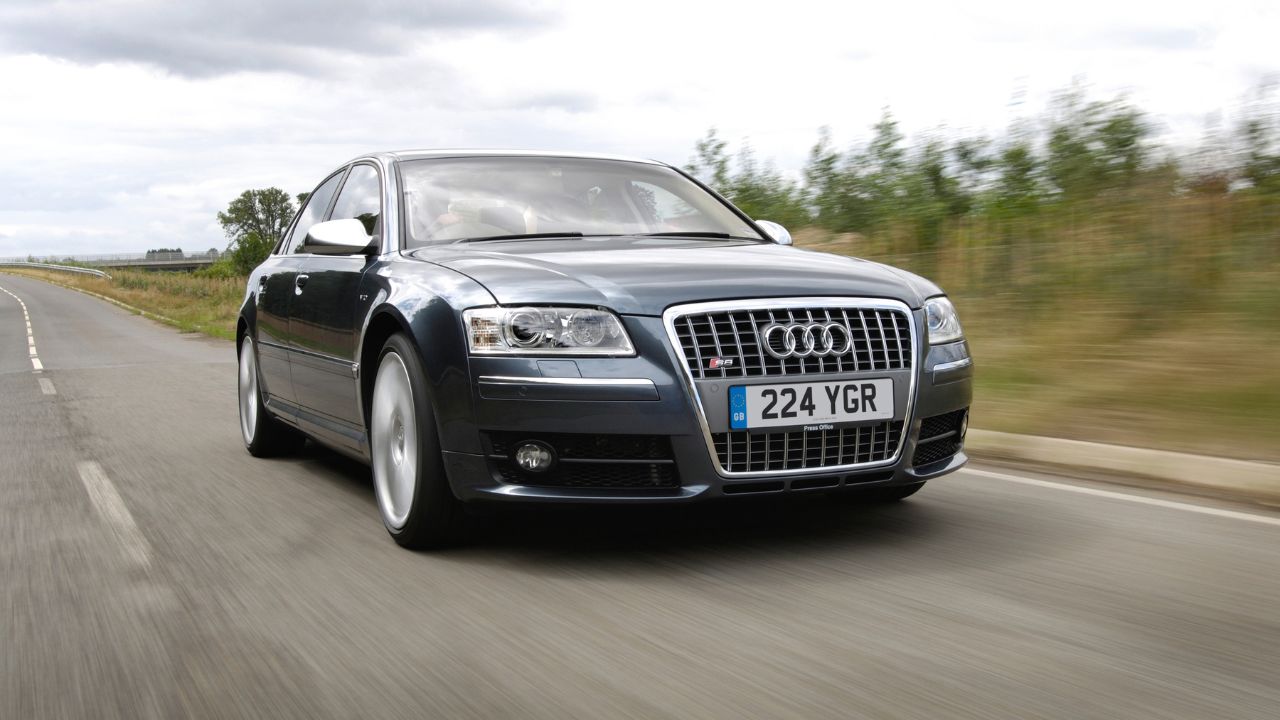
A true factory sleeper feels like a secret hiding in plain sight. It may look like a sedan, wagon, luxury cruiser, or pickup built for ordinary life, then reveal an engine story that belongs somewhere far more exotic.
This topic needs careful handling. A big engine alone is not enough, and a sporty badge does not automatically make something a sleeper. The most interesting cars are the ones where the mechanical connection is real, documented, and meaningful.
Some of these machines used engines directly tied to supercars. Others used factory variants from the same exotic engine families, changed for luxury-sedan duty, emissions rules, drivability, or brand-specific tuning.
That distinction is part of the appeal. A Ferrari-engined Lancia, an M1-related BMW sedan, a Lamborghini-related Audi V10, and a Viper-powered pickup all tell different stories, but they share the same basic thrill: serious exotic hardware hiding inside a practical shape.
When The Engine Story Had To Be Real
Factory production mattered here. Tuner builds, one-off conversions, and concept cars can be fascinating, but they change the nature of the comparison. The stronger story comes from cars that manufacturers actually signed off, built, sold, and supported.
The engine connection also had to be more than a vague marketing association. Some cars used direct supercar hardware, while others used closely related factory engine families shared with exotic or high-performance models. When the engine was related rather than identical, that difference matters.
The body style matters just as much as the engine. Sedans, wagons, luxury cars, and trucks create the best contrast because they were built to carry people, luggage, or daily responsibilities, not only to chase lap times or poster status.
BMW E28 M5

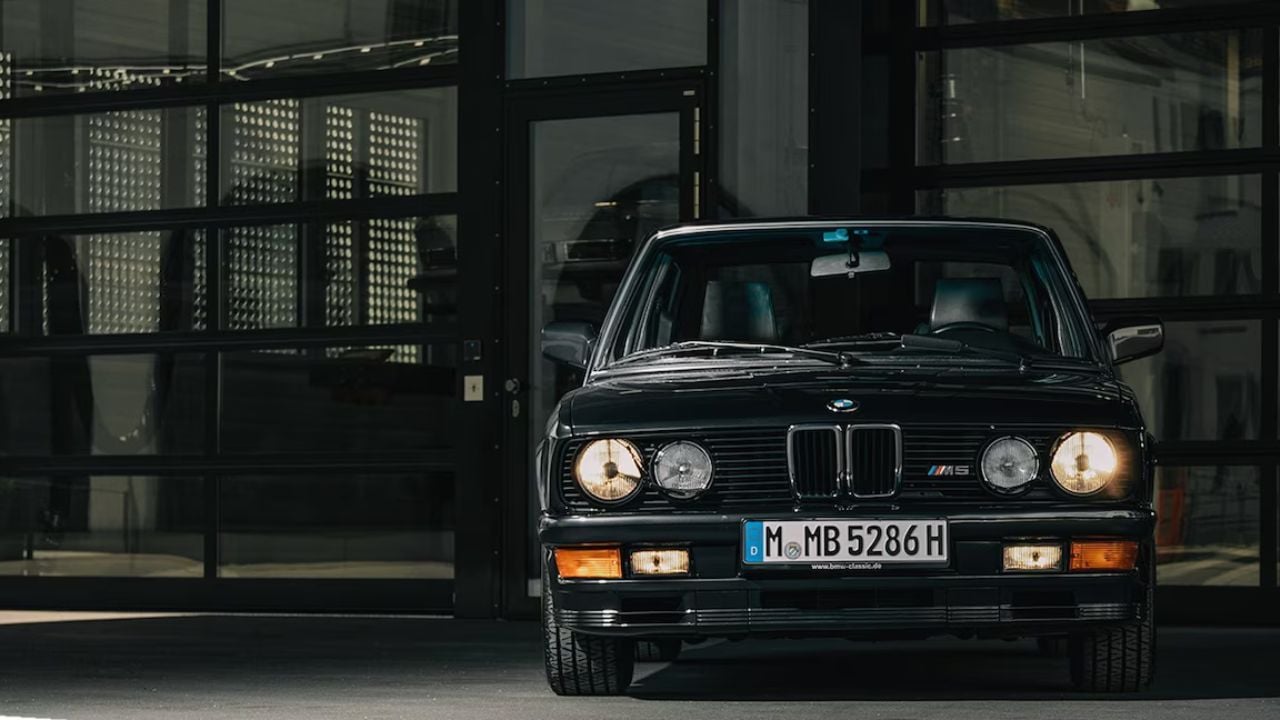
The original BMW M5 remains one of the purest factory sleepers ever built. From the curb, it looked close enough to a regular executive sedan to pass quietly through traffic. Under the hood, it carried one of BMW M’s most important engine stories.
European E28 M5 models used the M88/3, a development of the engine family associated with the legendary BMW M1. North American cars used the related emissions-compliant S38B35, keeping the same basic high-performance lineage while adapting the package for U.S. regulations.
That gave the E28 M5 its enduring tension. It was a hand-built, rear-wheel-drive sedan with a high-revving inline-six and performance that barely showed from the outside. The body looked sober. The engine story was pure BMW Motorsport.
Lancia Thema 8.32

The Lancia Thema 8.32 may be the strangest and most wonderful sedan in this group. From most angles, it looked like a clean Italian executive car from the 1980s. Beneath the hood sat a Ferrari V8.
The Thema 8.32 used a 2.9-liter, 32-valve Ferrari engine based on the unit from the Ferrari 308 GTB and Mondial Quattrovalvole. Lancia changed the character for sedan duty, including a cross-plane crankshaft that better suited a four-door luxury car.
Output was about 212 hp, with 0-to-62 mph in 6.8 seconds and a top speed around 149 mph. Those figures sound modest now, but the idea remains spectacular. Lancia put Ferrari character into a formal front-wheel-drive sedan and wrapped it in a body that barely warned anyone what was waiting inside.
Audi S8 5.2 FSI V10
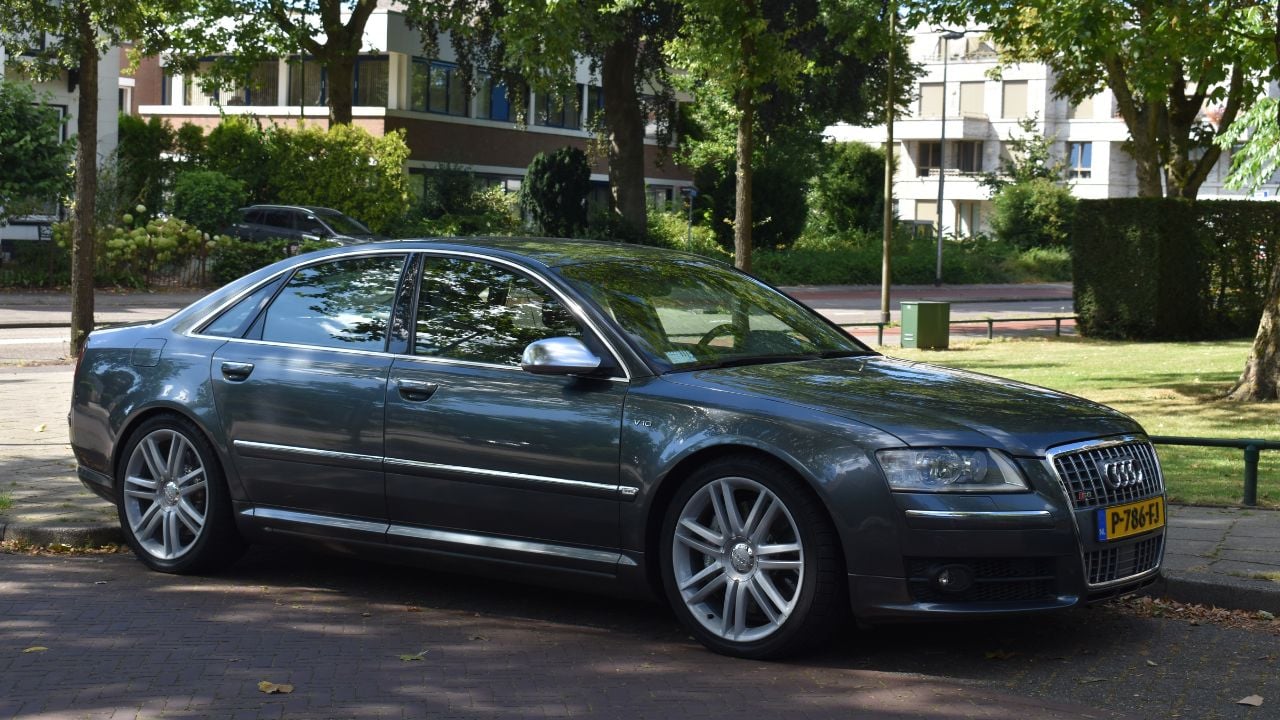
The D3-generation Audi S8 was not invisible, but it mastered quiet menace. It looked like a large luxury sedan for executives, not a car with a Lamborghini-related V10 behind the grille.
Audi’s 5.2-liter V10 in the S8 was widely described at launch as derived from the Lamborghini Gallardo engine, though it was not simply an unchanged Gallardo motor dropped into an A8 body. Audi tuned the engine for a large luxury sedan, giving it a different character from the sharper Italian application.
The result was a 318-cubic-inch V10 rated at 450 hp and 398 lb-ft of torque. Edmunds lists a claimed 0-to-60 mph time of 5.0 seconds and a limited top speed of 155 mph. The setting made it special: a leather-lined Audi limousine that could rev and sound like something with much closer ties to Sant’Agata than the valet stand suggested.
Maserati Quattroporte Sport GT S
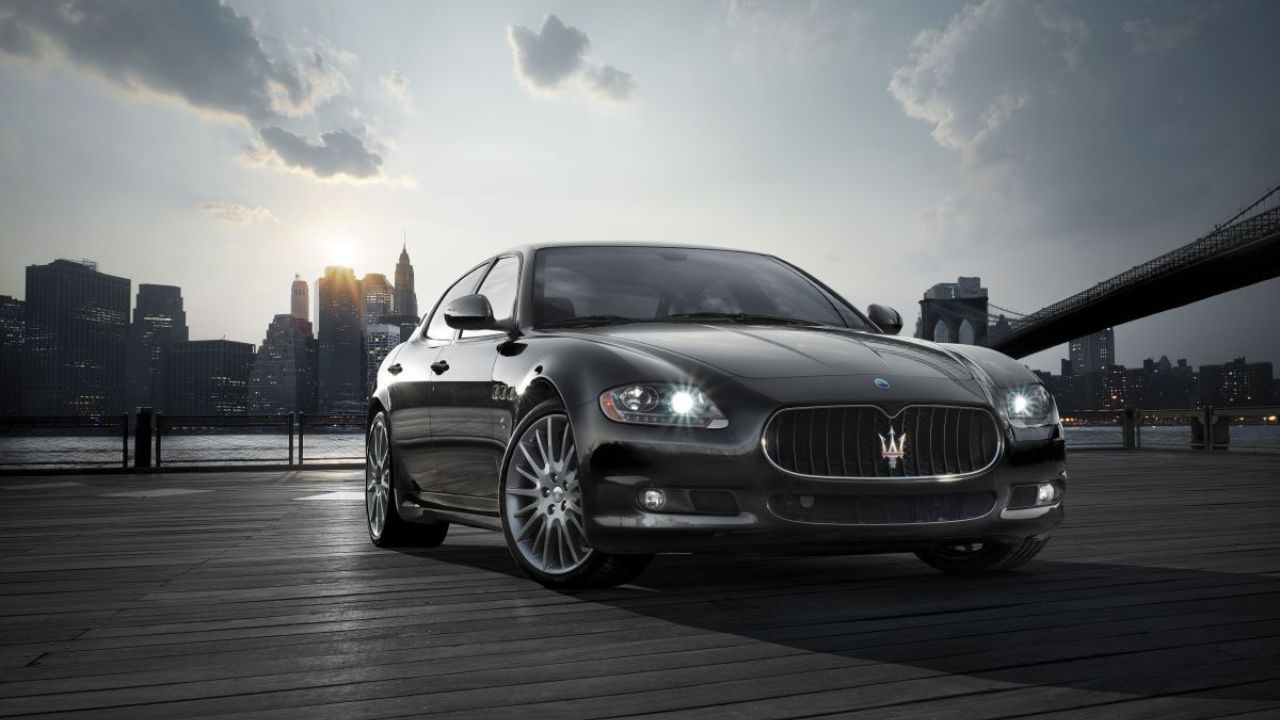
The fifth-generation Maserati Quattroporte was beautiful enough to draw attention, but it still carried itself like a formal luxury sedan rather than a supercar relative. The key was its Ferrari-Maserati F136 V8 family.
That engine line appeared across Maserati and Ferrari performance models of the era, though the Quattroporte did not use a single supercar engine transplanted unchanged. The Quattroporte V used V8 engines from the F136 family, while the later Sport GT S brought a sharper 4.7-liter version with more attitude and stronger performance.
Maserati press material listed the Quattroporte Sport GT S at 323 kW, which works out to roughly 433 to 440 hp depending on rating convention. The number gave the big sedan real pace, but the sound was the unforgettable part. It felt theatrical, mechanical, and deeply Italian, which made the four-door body even more compelling.
Cadillac CTS-V Wagon

The Cadillac CTS-V Wagon turned the most practical body style in the Cadillac showroom into one of America’s great factory oddities. Its long roof suggested family duty, cargo space, and road-trip usefulness. The engine belonged to a much louder part of GM performance culture.
Precision matters here. The CTS-V did not use the exact LS9 from the C6 Corvette ZR1. It used the supercharged 376-cubic-inch LSA V8, closely related to the ZR1’s engine but tuned and equipped differently for Cadillac duty. MotorTrend described the CTS-V’s 556 hp and 551 lb-ft output as down from the ZR1, but still enormous for a luxury sedan.
The wagon body made the formula even better. Cadillac’s New York Auto Show release listed the CTS-V Sport Wagon with a 556-hp supercharged V8 and a six-speed manual or automatic. It was family transport with a ZR1-related supercharged small-block under the hood.
Dodge Ram SRT-10

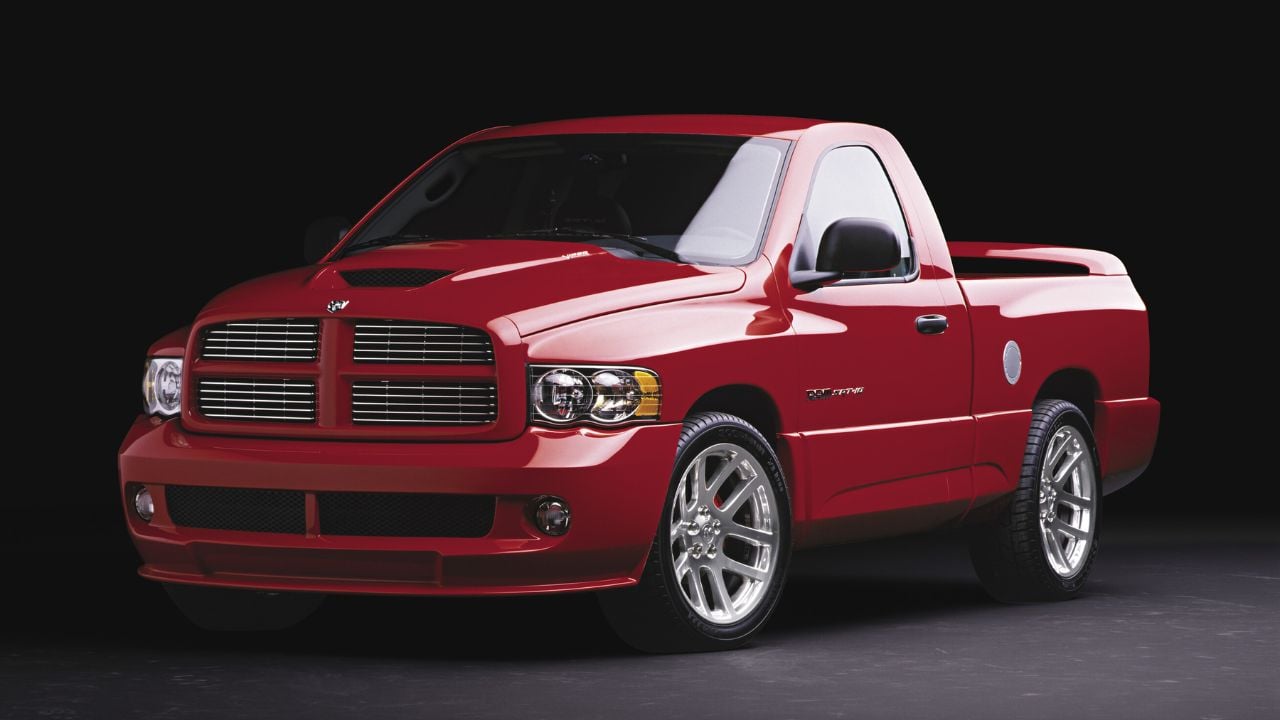
The Dodge Ram SRT-10 was not a sleeper in the quietest sense, but it remains one of the wildest factory examples of supercar hardware in a practical body. A truck bed, tall cab, and full-size pickup proportions are not what most people associate with Viper power.
Dodge ignored that logic and gave the Ram SRT-10 an 8.3-liter V10 connected directly to the Viper. The engine produced 500 hp and 525 lb-ft of torque, outrageous numbers for a production pickup in the early 2000s.
AutoWeek recorded 0-to-60 mph in 5.02 seconds and the quarter mile in 13.62 seconds. The regular-cab manual version remains the purest expression of the idea: big, loud, unnecessary, and completely unforgettable.
The Magic Of A Supercar Secret
Cars like these make performance feel mischievous. They prove that exotic engine stories do not always need to live behind two seats, under glass, or inside bodies shaped only for posters.
The surprise comes before the speed. A Ferrari V8 in a Lancia sedan, an M1-related BMW engine in an M5, a Lamborghini-related V10 in an Audi limousine, and a Viper V10 in a pickup all feel wonderfully unreasonable in different ways.
That is the lasting appeal. These were not just faster versions of practical machines. They were moments when engineers, product planners, and performance divisions were allowed to do something gloriously strange.
When that happens, the result is more than another quick sedan, wagon, or truck. It becomes a practical vehicle with a supercar secret, and that combination still feels irresistible.