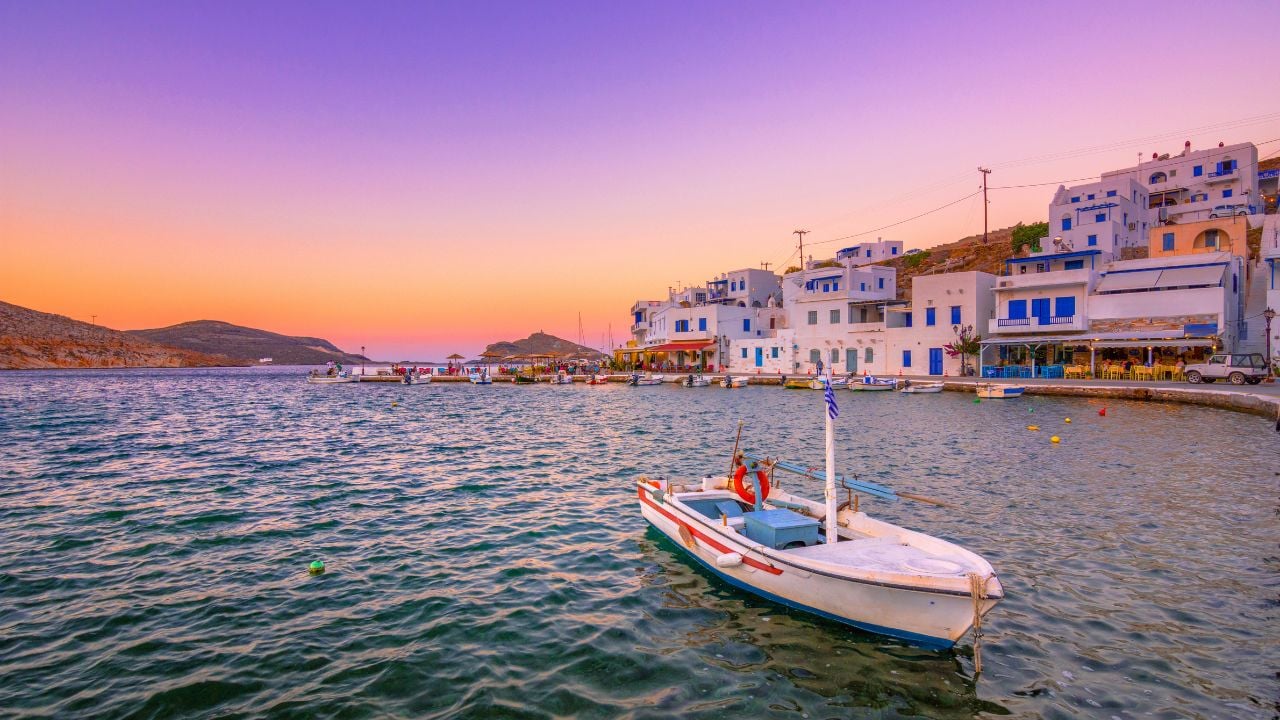
A photo can catch the color of a place, but it rarely catches the moment when the air changes. It misses the sound of water below a cliff, the smell of bread near a village square, the silence after sunset, or the way a narrow lane suddenly opens toward the sea.
Some trips are better in motion than they are in a frame. The camera catches the cliff, the tower, the lake, or the medina wall, but it misses the wind on your face, the uneven stone under your shoes, the bell from a church, the market noise, the clouds dragging shadows across a mountain, or the smell of grilled fish near the port.
The five places below all photograph beautifully, but that is not the full point. They are places where the day gets better when you slow down enough to hear, smell, and feel what is around you.
The picture may bring you there. The memory usually comes from everything the picture failed to hold.
1. São Jorge, Azores, Portugal
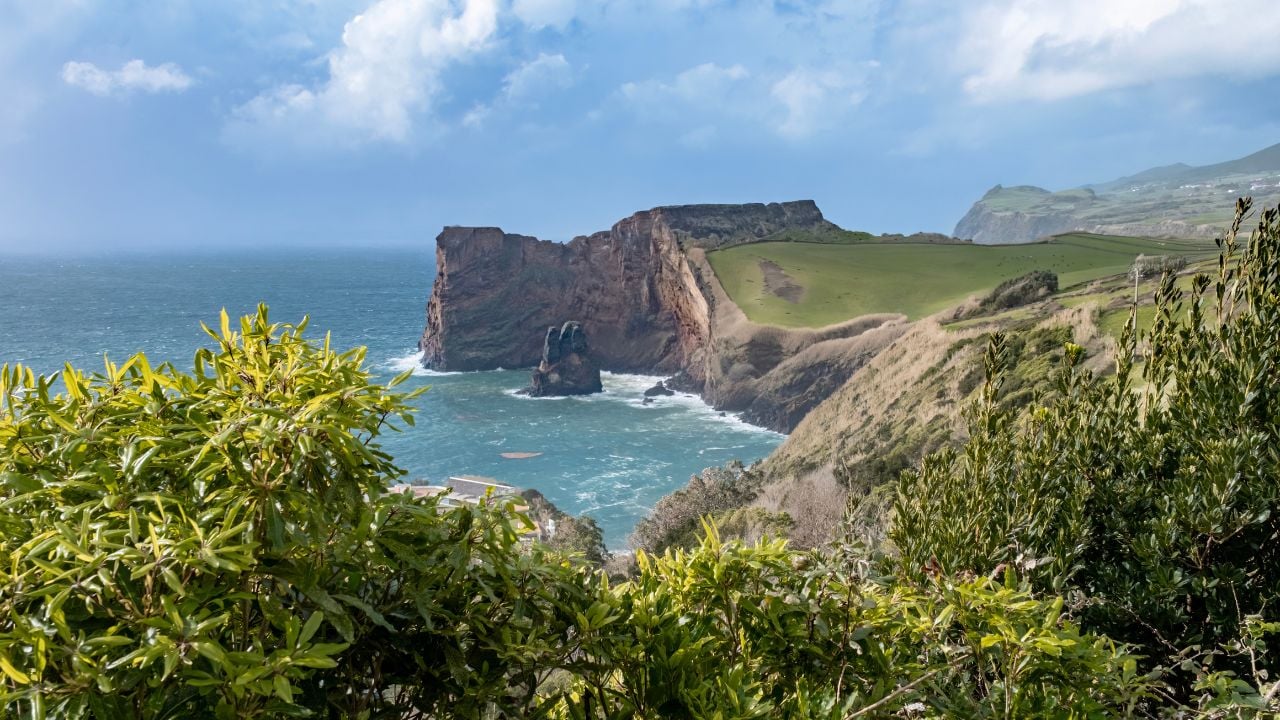
São Jorge looks dramatic in photographs, but the island feels much larger when the cliffs are above you and the Atlantic is moving below. The roads run along a long, narrow strip of green land, and the sea keeps appearing at the edge of the view, sometimes calm and silver, sometimes dark and restless under low cloud.
Visit Portugal describes São Jorge as one of the greenest islands in the Azores, shaped by cliffs, crags, and fajãs. The island is 54 kilometers long and only 6.9 kilometers at its widest point, which explains why the ocean feels so present. You are rarely far from a bend in the road where land suddenly drops away.
The fajãs are what make São Jorge feel different from a simple island viewpoint. These flat coastal areas sit below steep cliffs, with houses, fields, lagoons, stone walls, and narrow paths pressed between rock and sea. A photograph can show the pattern, but it cannot capture the feeling of looking down toward a tiny settlement and realizing how far below it sits.
Fajã da Caldeira de Santo Cristo brings the island’s wildness into sharper focus: lagoon water, coastal stone, wind, footpaths, and the sense that arrival here still asks something from the traveler. Fajã dos Cubres has its own quieter pull, with water, grazing land, and the ocean beyond. Clouds move fast over the ridges, and the green can change from bright to almost black in minutes.
São Jorge stays in the body more than in the camera roll. The steep roads, the smell of damp grass, the Atlantic noise, the cheese, the fog on the high ground, and the sight of small houses below impossible cliffs make the island feel less like a view and more like a place you had to enter carefully.
2. Tinos, Greece
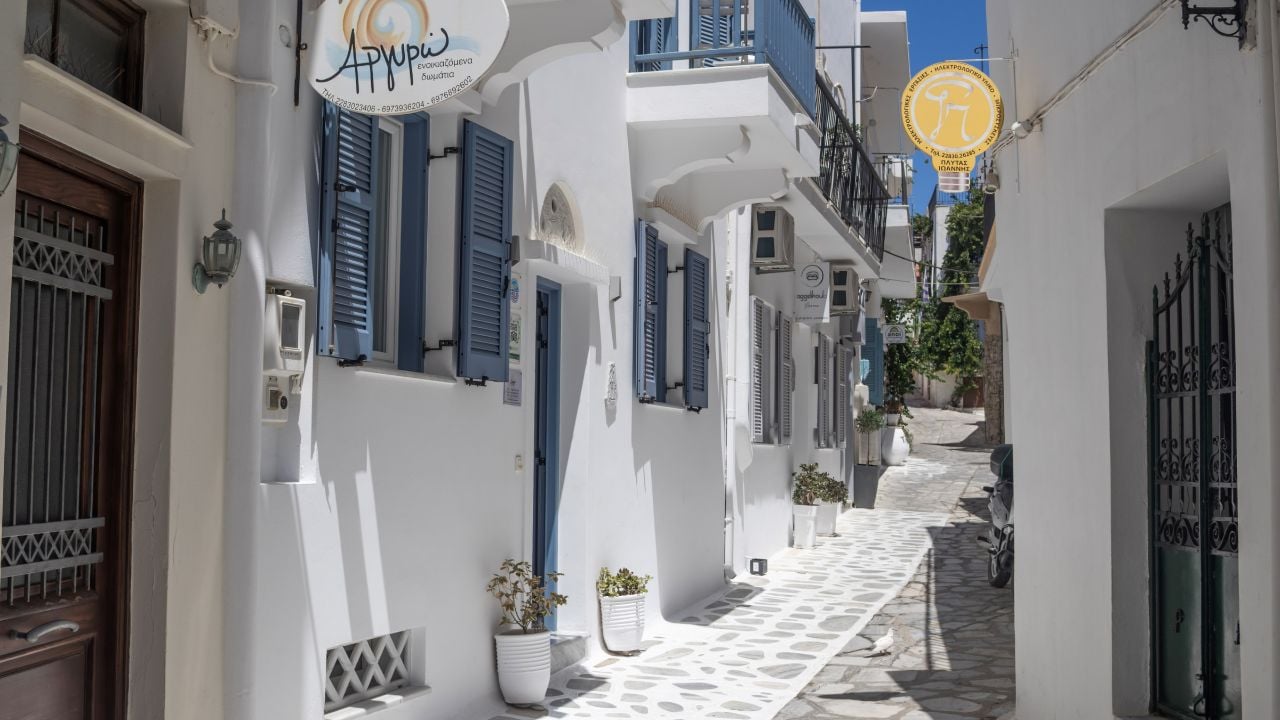
Tinos has the Cycladic white walls and bright sea light people expect from Greece, but the island’s best moments are not only the obvious blue-and-white ones. They are in the marble details around a doorway, the wind moving through a dry hillside, the shade of a village square, or the way a taverna table feels after a hot walk through stone lanes.
Visit Greece describes Tinos as a rising Cyclades destination for nature lovers, architecture fans, art admirers, and food-focused travelers. It also connects the island with major Greek marble artists, including Gyzis, Lytras, Chalepas, Filippotis, and Sochos. That marble heritage is not hidden in one museum; it appears in villages, fountains, doorways, church details, and carved surfaces that catch the sun.
Pyrgos is one of the places where Tinos becomes more than a pretty island. Marble sits in the streets, on the buildings, around the squares, and in the memory of the workshops. A visitor walking through the village does not just see “white Greece”; the material has weight, craft, and history. Even small details can feel handmade.
Volax changes the island completely. The round boulders scattered through the landscape make the village feel almost lunar, while basket-weaving and quiet streets keep it grounded in daily life. Elsewhere, dovecotes, terraces, chapels, and dry-stone walls break up the hills. The island asks for slow looking because the best details are often not where the first photo is taken.
Tinos is prettier in person because it is rougher, windier, and more layered than a simple Cyclades image suggests. The memory is not only white walls and blue doors; it is marble dust, hot stone, sea wind, grilled food, village cats, church bells, and the feeling of finding another small square just when you thought the walk was finished.
3. Upper Svaneti, Georgia
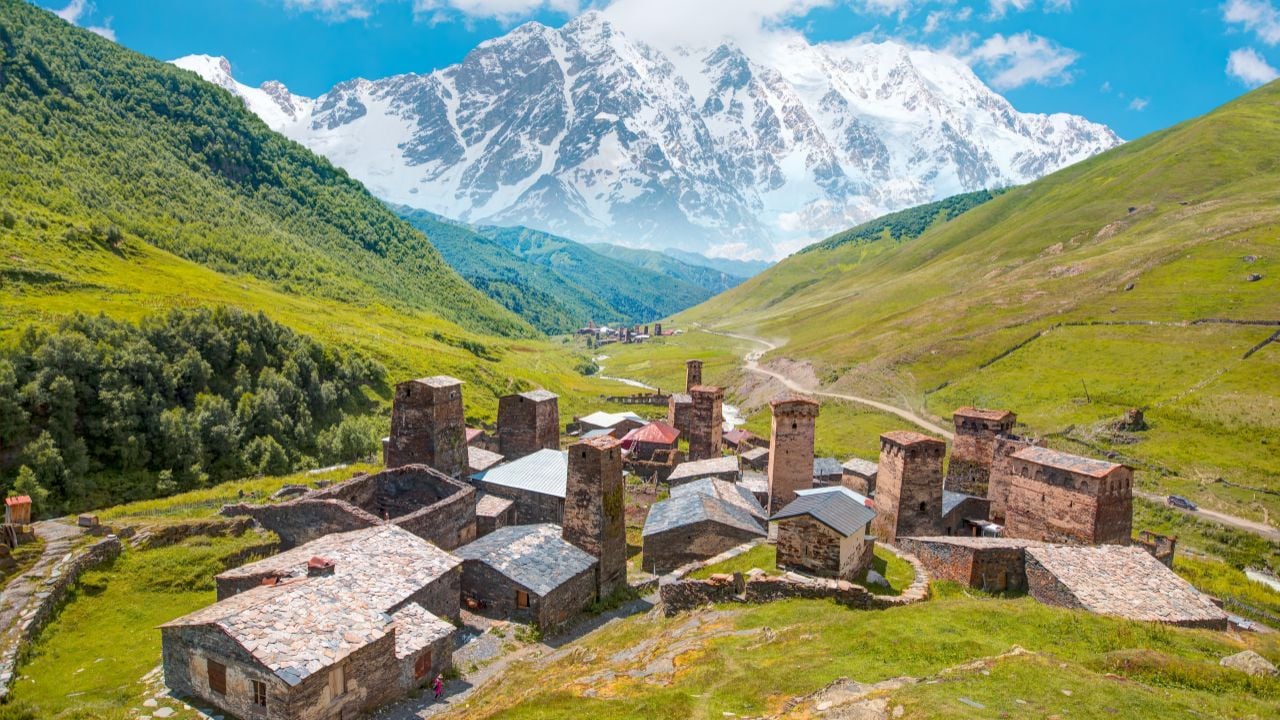
Upper Svaneti is one of those mountain places where photographs almost look too neat. Towers, stone houses, pastures, and snowy peaks fit into the frame beautifully, but the frame misses the cold air, the distance between villages, the sound of animals, and the rough feeling of roads moving through the Caucasus.
UNESCO describes Upper Svaneti as an exceptional example of mountain scenery with medieval-type villages and tower-houses, preserved partly through long isolation. The towers look striking from far away, but their real force comes from standing near them and seeing how directly they rise from village ground into mountain sky.
In places such as Ushguli and Chazhashi, the towers do not feel decorative. They feel defensive, practical, and old in a way that makes the landscape seem harsher and more human at the same time. UNESCO notes that Chazhashi has preserved more than 200 medieval tower houses, churches, and castles, with houses that served as both dwellings and defensive posts.
The valleys carry a silence that pictures cannot explain. A stone tower may look dramatic on a screen, but the memory changes when there is pasture underfoot, snow above the ridge, smoke from a chimney, and a road that reminds you how remote the place still is. The mountains do not sit politely in the background; they press around the villages.
Upper Svaneti stays with visitors because it feels ancient without feeling empty. People still live among the towers, animals move through the villages, and weather changes the whole scene quickly. The strongest memory may be the mix of stone, cold air, height, and ordinary life continuing under peaks that make everything else feel temporary.
4. Lake Bohinj, Slovenia
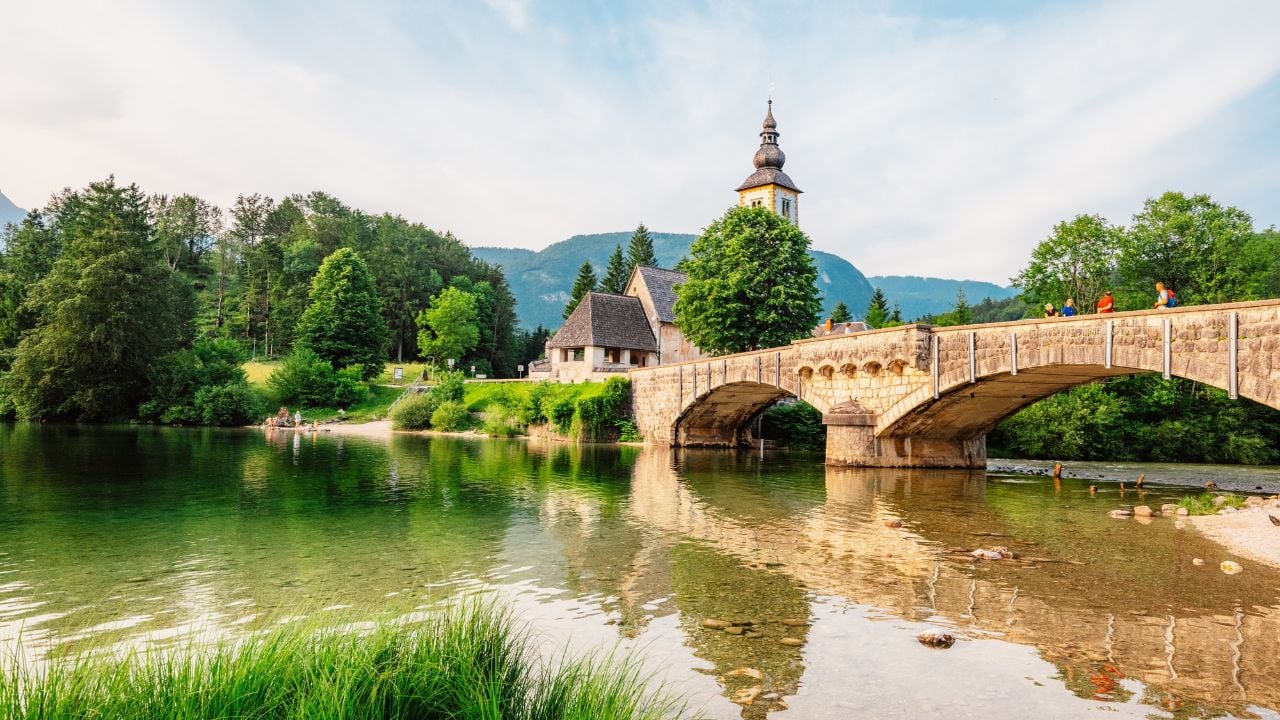
Lake Bohinj often looks perfectly calm in photographs, but standing beside it feels different. The water is bigger, darker, and colder-looking than the image suggests, and the Julian Alps rise close enough to make the shore feel protected and exposed at the same time.
Bohinj’s official tourism site describes Lake Bohinj as Slovenia’s largest natural permanent lake, located in a glacially formed basin. It holds almost 100 million cubic meters of water, warms to 24°C at the surface in summer, and can freeze in winter. Those facts help explain why the lake feels so different across seasons, weather, and light.
Near the Church of St John the Baptist, the scene has the kind of beauty everyone wants to photograph: stone bridge, church walls, water, trees, and mountains behind it all. But the place becomes richer when you stop treating it like a viewpoint. There is the sound of the lake against the shore, the bell from the church, cyclists passing, hikers sorting gear, and clouds sliding over the peaks.
The water changes all day. In clear weather, it can turn green and bright near the edge; under cloud, it becomes heavier and gray. A boat crossing, a quiet swim, a forest path, or a bench near the shore can feel more memorable than the standard postcard angle because the lake keeps shifting while you are there.
Bohinj is better in person because it is not only pretty. It is silent, cold, spacious, wooded, and watched over by mountains. The camera can catch the church and water, but it misses the feeling of standing beside a glacial lake and realizing that the whole valley seems to breathe more slowly than you do.
5. Essaouira, Morocco
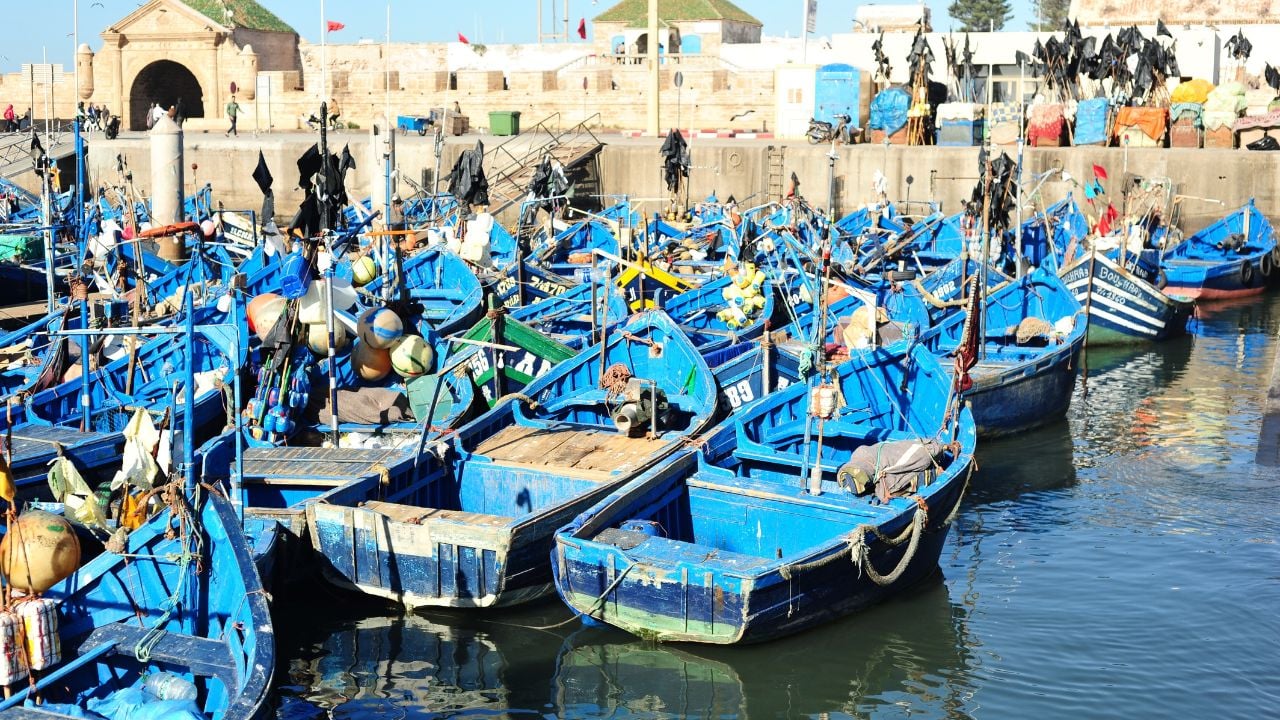
Essaouira is almost impossible to understand as a still image because the city is always moving. Gulls cut across the sky, wind pushes through the streets, fish comes off boats near the port, blue hulls scrape against one another, and the medina shifts between shade, white walls, carved doors, shop noise, and sudden Atlantic light.
UNESCO describes the Medina of Essaouira, formerly Mogador, as an exceptional example of a late-18th-century fortified town built according to contemporary European military architecture in a North African context. The ramparts, gates, and medina walls are part of that history, but the city’s force comes from how alive those spaces still feel.
The fishing port gives Essaouira its strongest smell, sound, and color. Blue boats, nets, gulls, wet stone, fish counters, men working near the water, and the Atlantic wind make the port feel too busy for a clean postcard. It is better that way. The place feels used, not staged.
Inside the medina, the streets narrow and the light changes. White walls bounce brightness into one lane, then the next turn drops into shade. Shops show woodwork, textiles, spices, argan products, leather, and small objects that make visitors slow down without needing a formal plan. Music is part of the city too, not as background decoration, but as something that belongs to cafés, streets, festivals, and long evenings by the sea.
Essaouira’s beauty comes with salt, noise, wind, and appetite. A photograph can catch the blue boats and white walls, but it cannot hold the gulls, the seafood smoke, the Atlantic air, the sound of shopkeepers, or the feeling of walking out of the medina and suddenly seeing the ocean open in front of you.