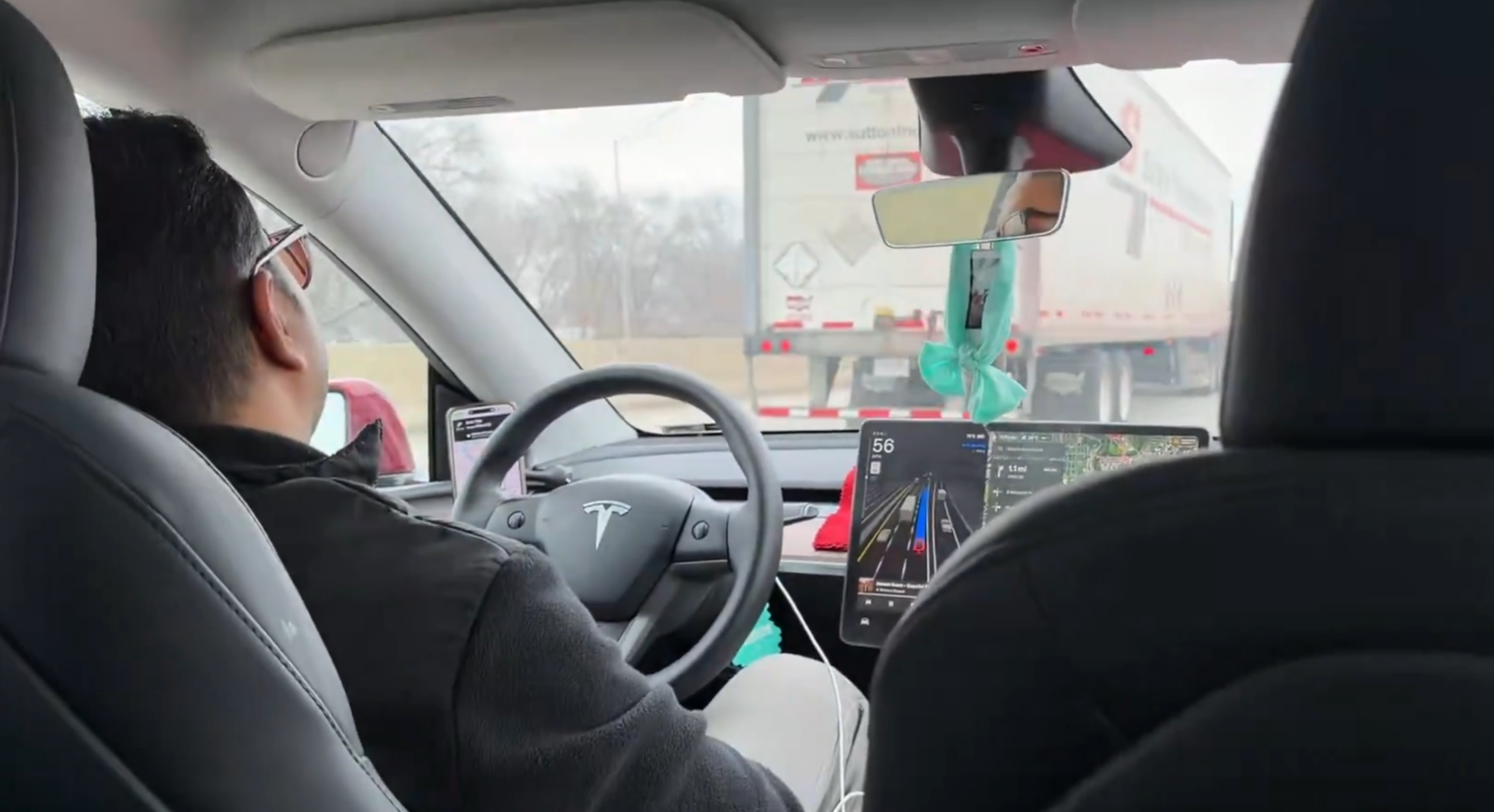
A video making the rounds on social media shows something that looks straight out of a tech demo gone too comfortable: an Uber driver, completely asleep, while a Tesla navigates itself down the highway. The passenger documented the whole thing, seemingly amused, even noting that the car took the correct exit and delivered him safely to his destination without the driver ever opening his eyes. The clip has racked up over a thousand comments, and the reactions are all over the place.
The passenger, posting under the handle @boostedboikyle on X (formerly Twitter), said the driver was out for roughly 20 minutes, which accounted for about 90 percent of the total trip. The car was traveling at the posted speed limit, the navigation was running, and apparently nobody was in any hurry to intervene. The whole scene played out to the backdrop of Benson Boone’s “Beautiful Things,” which is either deeply ironic or very on-brand for the moment, depending on your perspective.
The video is funny in that nervous, “should I be laughing at this?” kind of way. But underneath the laughs, it raises questions that are genuinely worth taking seriously. Tesla’s Full Self-Driving feature has a name that suggests a lot more capability than it actually has. And that gap between branding and reality is not just a marketing problem. It is a safety problem, and this video is a fairly clear illustration of why.
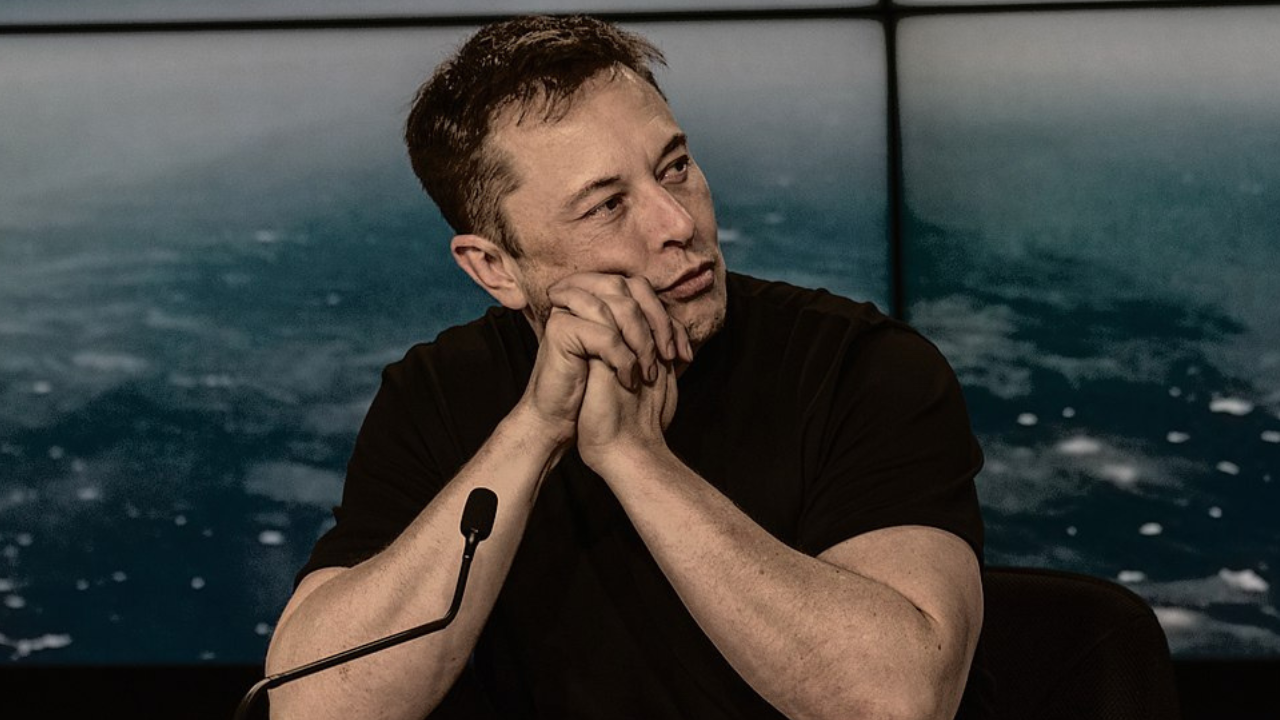
What makes this incident worth discussing beyond the meme factor is the context surrounding it. Tesla’s FSD has been hyped for years by Elon Musk as the future of autonomous transportation. Drivers and passengers alike have absorbed that messaging. So when a video like this goes viral and half the comments treat it as a win for the technology, that reflects something real about how the public perceives it. And that perception, frankly, is not accurate.
What Tesla’s Full Self-Driving Actually Is (And Is Not)
My uber picked me up in a Tesla and fell asleep on the highway. I’ve driven with FSD and trust how well it works so I wasn’t worried. It took the exit and drove me to my destination all by itself. He was asleep for 90% of the 20 minute drive haha pic.twitter.com/bYTC0718mN
— Kyle Wade (@BoostedBoiKyle) May 20, 2026
Here is the part that tends to get lost in the excitement: Tesla’s Full Self-Driving is a Level 2 driver assistance system. That classification comes from the SAE International scale, which ranks vehicle automation from Level 0 (no automation) to Level 5 (fully autonomous under all conditions). Level 2 means the car can handle steering, acceleration, and braking simultaneously, but the human driver must remain engaged and ready to take control at any moment.
The name “Full Self-Driving” is, to put it charitably, aspirational. The car is not driving itself. It is assisting a driver who is supposed to be paying attention. Tesla’s own documentation acknowledges this. The system is designed to prompt drivers to keep their hands on the wheel and their eyes on the road, using camera-based monitoring to check for attention. The fact that the driver in this video managed to sleep through the entire highway portion of the trip, without the car apparently pulling over, is exactly the kind of scenario Tesla says the system is meant to prevent.
Elon Musk Promised Full Autonomy a Decade Ago. He Recently Had to Walk That Back.
The promise of fully autonomous Teslas is not new. Elon Musk began making those claims around 2016, telling the public that full self-driving capability was roughly a year or two away. Then a year became two, two became five, and the goalpost kept moving. For years, he maintained that Tesla vehicles would reach true autonomy imminently.
That narrative hit a notable wall earlier this year, when Musk was pressed during a Tesla earnings call and effectively acknowledged that the full autonomy he had long promised was not where he had claimed it would be. It was a rare moment of public recalibration from someone who had built much of Tesla’s premium brand identity on the idea that its cars were on the verge of driving themselves. The admission did not get nearly as much attention as the original promises did, which is part of the problem. The hype outlives the correction.
This matters because people make real-world decisions based on those promises. Drivers who believe they have purchased a nearly autonomous vehicle behave differently behind the wheel than drivers who understand they are using a lane-keeping assistant. The Uber driver in this video may well be one of those people.
The Internet Reacted, and the Divide Was Immediate
Responses to the video broke into a few clear camps. Some commenters found it genuinely impressive that the car handled the route without incident. Others pointed out that the driver violated Tesla’s own terms of use, which explicitly require the driver to be alert and prepared to intervene. Several noted that the driver probably deserves a one-star rating, which is hard to argue with.
One commenter raised a concern that cuts to the heart of the issue: “What if he wakes up, gets scared, and jerks the steering wheel?” Another said they would actually feel safer if there were no driver present at all, since a startled human taking sudden control could be more dangerous than the car continuing on its own. That tension, between trusting the machine and trusting a panicked human, is something engineers think about. Passengers generally do not.
Whole Mars Catalog, an X account that covers Tesla and FSD content and tends to view the technology favorably, shared the original video and advised that if this happens to you, it is probably best to wake the driver up. They also noted that while FSD is designed to detect drowsy drivers and pull over, that feature is not foolproof, and sunglasses in particular can interfere with the eye-tracking system. One commenter joked that the appropriate response is to “wake him up with an Uber suspension.” Another argued that waking a sleeping driver could itself be dangerous if they panic. The disagreement was genuinely spirited.
What We Can Actually Learn From This
The most useful takeaway from this incident is not about whether Tesla’s technology worked or failed. It mostly worked, in the narrow sense that nothing bad happened. The more useful question is what it tells us about the relationship between public perception and actual technology capability.
When a system is called Full Self-Driving, people treat it like it can fully drive. That is not an unreasonable response to the name. But it creates real danger when the system is actually Level 2 and requires constant human supervision. The branding and the reality are in direct conflict, and that conflict is playing out on highways. A driver falling asleep for 20 minutes while trusting a driver-assist feature is not a fluke. It is a predictable outcome of years of overpromising.
There is also something worth noting about the role that influencer-style viral content plays in shaping perception. When a video like this gets thousands of shares and mostly amused reactions, it reinforces the idea that sleeping through a Tesla ride is fine, maybe even kind of cool. That normalization is hard to walk back. The responsible framing, which is that the driver behaved recklessly and got lucky, tends to get fewer shares than the version that reads as a fun tech story.
Tesla does have attention-monitoring features, and the system is designed to escalate warnings and eventually pull over if a driver is unresponsive. That clearly did not happen here, for reasons that are not publicly known. But the existence of those features should not be taken as permission to test them. Level 2 automation with a sleeping driver is not a success story. It is a near miss that happened to have a soft landing.