
Some cars are remembered for an engine note. Some live forever because of a racing story, a movie scene, or a shape that never really leaves your head. Then there is a smaller, more interesting group where the wheels do almost half the talking. You do not need to see the badge, the grille, or even the whole profile. One glance at the wheel design and you already know the car. That is when a wheel stops being a component and starts becoming part of the myth.
That is what this list is chasing. Not just attractive wheels, and not just famous cars, but machines whose wheel design became inseparable from the whole identity. In some cases the wheel was born from racing. In others, it turned a good design into a complete one. And in the best examples, the car and the wheel feel so perfectly matched that separating them now almost seems rude.
When Does A Wheel Become Half The Legend?

This list is about cars whose factory wheel design became part of the car’s public identity, not just a nice styling detail. I prioritized models where the wheels are either widely recognized by nickname, deeply linked to the car’s image, or still used as shorthand for the entire machine decades later.
Racing heritage mattered, but so did pop culture, because some wheels became icons on posters and movie screens before they became collector trivia. I also wanted variety across eras and countries, since this kind of fame is not limited to one scene or one decade. The real test was simple: could a knowledgeable enthusiast identify the car from the wheels alone? If the answer was yes, the car had a place here.
Porsche 911 And Carrera With Fuchs Wheels

There are famous wheels, and then there are Fuchs. Porsche says the first 911s fitted with Fuchs wheels went on sale in 1966, and the design stayed on new 911s through 1989. That kind of longevity already tells you something.
The five spoke cloverleaf shape did not just suit the 911, it became one of the reasons the 911 looked complete in the first place. The bright petals, dark pockets, and light visual footprint gave the car elegance without softening its purpose. That matters because the 911 has always walked a difficult line between precision and charm. Fuchs wheels helped it do both at once. They looked technical, but never cold.
They looked special, but never fussy. Even now, people can spot a classic 911 from the wheel alone, which says everything about how deeply this design is tied to the car. In the history of wheel fame, this is close to the gold standard.
Shelby Cobra 427 With Halibrand Wheels

A Cobra without Halibrands would still be wild, fast, loud, and unforgettable. It just would not look quite as dangerous. The Shelby American Collection notes that competition Cobras ran wider Halibrand wheels, and period specialists still identify the magnesium Halibrand designs as proper Cobra equipment, including the famous “wine glass” style fitted to AC Cobras.
That is important because the Cobra was never a tidy, delicate sports car. It was muscle and menace packed into a compact British shape, and the wheels had to look like they were barely containing the violence. Halibrands did exactly that. They gave the Cobra a hard, functional stance that matched the side pipes, swollen fenders, and giant engine perfectly.
This is one of the clearest examples of wheels reinforcing a car’s whole personality. You do not see a Cobra on Halibrands and think about accessories. You think, yes, that is exactly how a Cobra should hit the world.
BMW E30 M3 With BBS Cross Spokes

The E30 M3 has one of the most complete silhouettes in performance car history, and the BBS cross spoke wheel is a huge part of that. BMW calls the E30 the first M3 and the most successful touring car ever produced, while Hagerty notes that the distinctive BBS cross spoke pattern became a calling card and that the E30 M3 wore BBS alloy wheels as part of that era’s deeper BMW relationship with the brand.
That combination is exactly why this car fits the headline. The wheel looks motorsport sharp without trying too hard, and it gives the M3 the kind of precision that suits every other line on the car. Nothing is overdone. Nothing is soft. The spokes seem to tighten the whole body visually, almost like the car is standing on its toes.
That is why the wheel became more than period correct decoration. On the E30 M3, BBS cross spokes are part of the argument, proof that this homologation hero took every detail seriously.
Pontiac Firebird Trans Am With Snowflake Wheels

Few American cars wear their era as confidently as the late 1970s and early 1980s Trans Am, and the Snowflake wheel is a big reason why. Hemmings explains that Pontiac introduced the cast aluminum design for 1977, with its intricate cross fin pattern inspiring enthusiasts to call it the Snowflake, while the later WS6 package brought the deeper 15×8 version that became the look most people now associate with serious Trans Ams.
Even modern GM restoration suppliers still market these as the iconic Snowflake wheels of 1978 to 1981 Trans Ams. That tells you how much the design stuck. The Trans Am already had the shaker scoop, the screaming chicken, and enough attitude to fill a stadium, but the Snowflakes finished the job. They gave the car just enough jewelry without making it precious.
Gold accented versions on black cars are especially unforgettable. They do not merely support the styling. They are the styling. Take them away, and the whole car loses a little swagger.
Buick GNX With Black Mesh Wheels

The GNX is one of those cars that looks like it knows exactly what it is doing, and the wheels are central to that confidence. Buick’s own retrospective on the car highlights the 16 inch black mesh aluminum alloy wheels as one of the details that made the GNX unforgettable, right alongside the all black paint and serial numbered dash plaque. That is a wonderfully honest clue.
Buick understood that the GNX needed visual seriousness, not chrome flash or decorative excess. The black mesh wheels helped deliver that mood. They made the car look lower, meaner, and more technical, like a street car that had been quietly sharpened after hours. They also fit the GNX’s personality perfectly. This was not a flamboyant supercar. It was a sinister turbo coupe that built its legend by surprising people.
The wheels play the same game. They do not shout, but they absolutely stare back. That is why they remain so tied to the car’s mystique.
Subaru Impreza 22B STi With Gold BBS Wheels
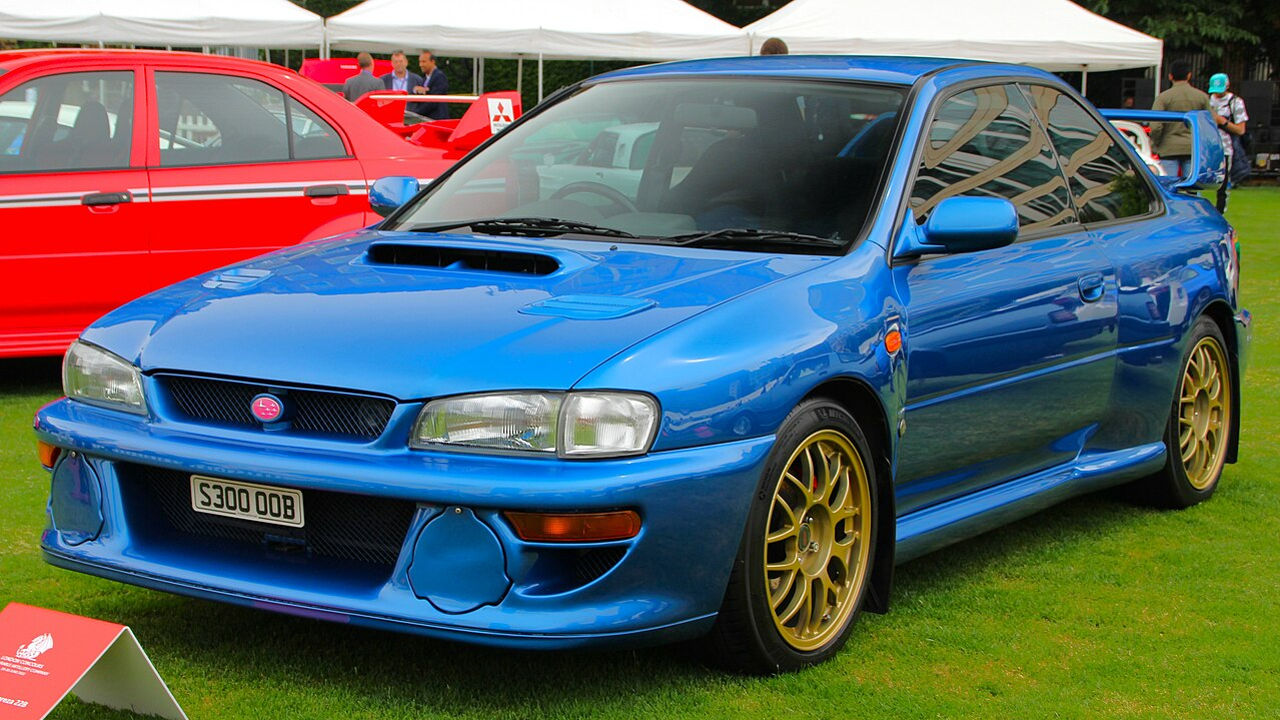
The 22B would still be a rally legend without the gold BBS wheels. It just would not feel quite so complete. STI’s own heritage page says the 22B was created to recreate the look and feel of the Impreza World Rally Car 97, complete with blistered fenders, a big rear spoiler, and Sonic Blue Mica paint.
Road & Track adds the detail that widened fenders wrapped around specific gold painted BBS wheels, which is really the key visual point here. The 22B is one of those rare cars where the wheel color matters almost as much as the wheel design. Gold BBS wheels against blue paint became visual shorthand for Subaru’s rally glory, and the 22B is the road car that froze that image in place.
Even people who do not know the chassis code often know the look. That is the standard for this headline. The wheels are not a footnote to the legend. They are one of the first reasons the legend works at all.
Ferrari Testarossa Monodado
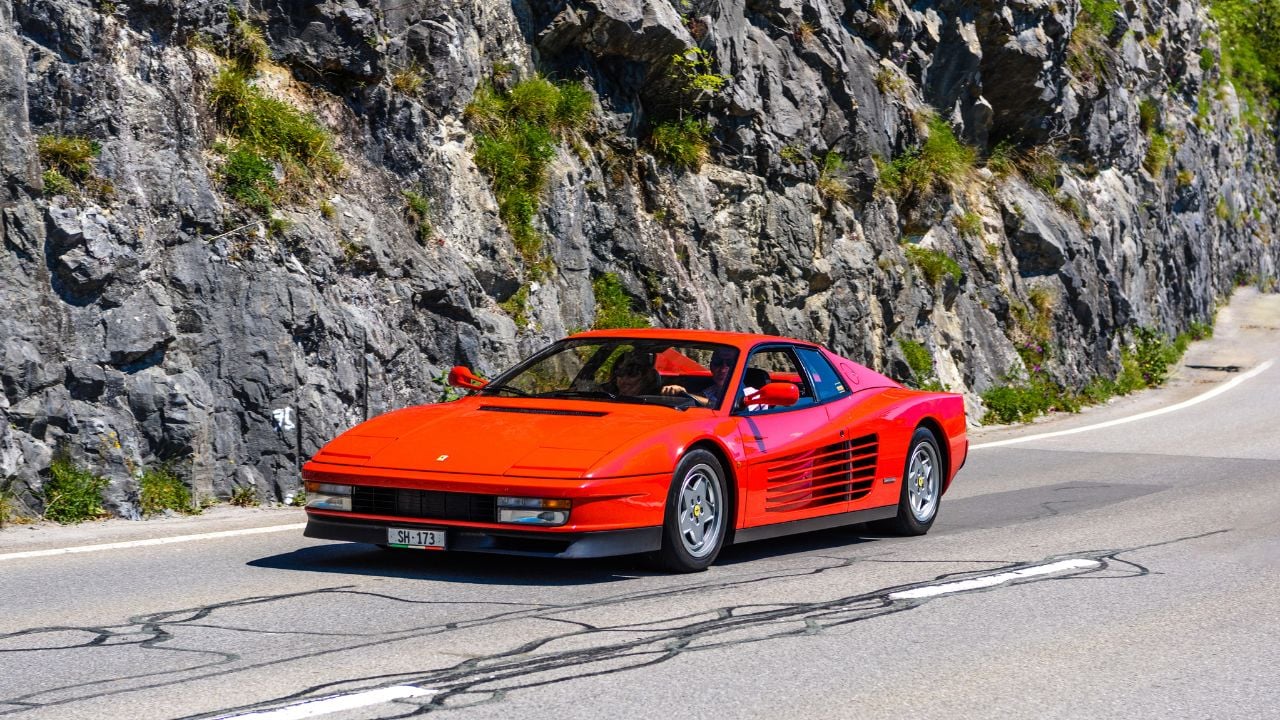
The Testarossa was never going to disappear politely into the background, and the Monodado wheels suit that personality perfectly. Ferrari’s official archive still frames the 1984 Testarossa around its specifications and proportions, while collector sources note that early pre-1988 cars were the ones fitted with the special Monodado single bolt wheels before Ferrari switched to five bolt wheels on later Testarossas.
Those wheels matter because the Testarossa already looked theatrical from every angle, but the single nut setup gave the car an extra dose of exotic confidence. It felt race bred, expensive, and just a little intimidating, which is exactly what buyers wanted from a 1980s Ferrari flagship. The five spoke form is clean, but the center lock idea is what really makes the image stick. It turns the wheel into an event.
On a Testarossa, that is appropriate. This is a car defined by broad shoulders, strakes, and visual drama, and the Monodado wheels belong in that same conversation as one of the details that made the fantasy feel complete.
Mercedes-Benz 190 E 2.5-16 Evolution II

The 190 E 2.5-16 Evolution II is one of the rare cases where a wheel design helps a serious performance car look even more unapologetic. Mercedes-Benz’s public archive shows the 190 E 2.5-16 Evolution II riding on 17 inch light alloy wheels, and Hagerty’s recent feature notes that those 17 inch wheels were part of the package that pushed the car even further from standard 190E civility.
That may sound understated on paper, but the visual effect is not understated at all. The Evo II wheels have that unforgettable flat faced, almost disc like look that suits the car’s box flares and giant rear wing perfectly. They look aerodynamic, severe, and deeply German in the best possible way.
This is not wheel design trying to look elegant. It is wheel design trying to look efficient, intimidating, and just odd enough to be memorable. That is why the Evo II’s wheels stay in your mind. They feel less like decoration and more like equipment from a racing pit lane accidentally approved for the road.
Renault Clio Williams With Gold Speedline Wheels

The Clio Williams is proof that wheel fame is not reserved for supercars and muscle cars. Renault’s heritage museum says the Clio Williams was designed for rally racing and became a major hit well beyond the homologation target, while Hagerty notes that the original 15 inch gold Speedline design is exactly what marks the Williams out from the ordinary Clio 16v. That is the whole point.
The car is excellent on its own, but the gold Speedlines turn it from quick hot hatch into full character piece. Blue paint and gold wheels can be overdone on lesser cars. Here, it just feels right. The contrast makes the car look special before it has moved an inch, and it gives the Williams the sort of visual identity hot hatchbacks usually struggle to achieve.
You do not need giant wings or absurd bodywork when the color, stance, and wheels tell the story this well. That is why these Speedlines are so beloved. They finish the car with absolute confidence.
Lotus Esprit S1 With Wolfrace Slot Mags

The Esprit S1 already looked like it had landed from another decade, but the Wolfrace wheels gave that wedge shaped drama the final piece of punctuation. Lotus says the Esprit instantly captured the public imagination and launched with Wolfrace alloy wheels, while Wolfrace’s own retrospective on the James Bond car explains that the famous S1 from The Spy Who Loved Me wore the company’s Slot Mag design.
That detail matters because the Bond Esprit locked the image into popular culture forever. The car’s clean wedge body and those deep dish slot mags created a look that was futuristic, glamorous, and faintly ridiculous in exactly the right way. You can laugh at the era and still love it. In fact, that is part of the charm. The Esprit’s wheels are nearly as famous as the car because they helped sell the fantasy.
This was not just transportation. It was a machine that looked ready to turn into something else entirely, and the wheels played along beautifully.
Which One Would You Recognize From Across The Street?

That is the fun of a list like this. It is not really about wheels alone. It is about the rare moments when design, engineering, image, and memory all snap into place at once. The Fuchs on a 911, the gold BBS on a 22B, the Snowflakes on a Trans Am, the Slot Mags on an Esprit, these are not just factory choices anymore. They are part of the way the car lives in people’s heads.
And that is probably the strongest compliment any wheel can get. When the wheels become part of the car’s name without anyone needing to say them out loud, they have graduated from hardware to mythology. Some cars are legends because of what they did. These ten are also legends because of what they stood on.