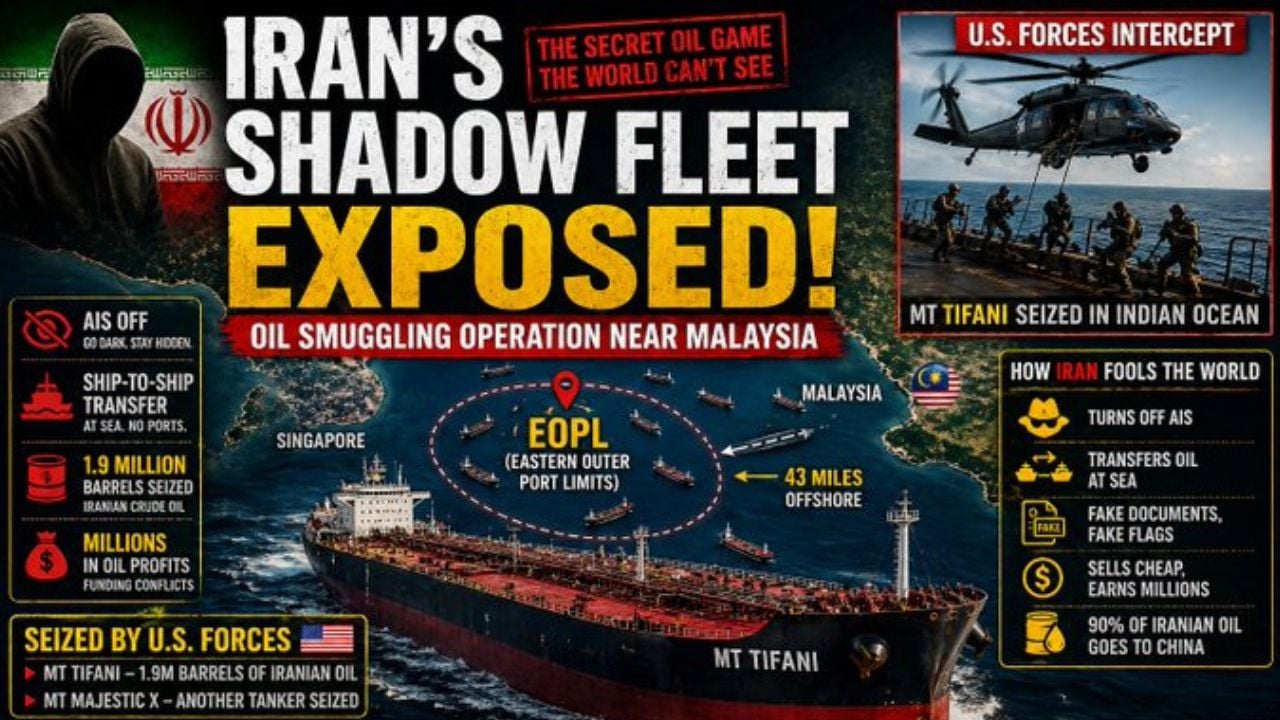

The seizure of the oil tanker MT Tifani by United States forces in April 2026 effectively drew global attention toward a little-known maritime zone off the coast of Malaysia that plays a critical role in Iran’s sanctioned oil trade.
Authorities say the vessel was carrying about 1.9 million barrels of crude, highlighting the scale and sophistication of a shadow network that keeps Iranian exports flowing despite mounting pressure from Washington and its allies.
For nearly a year before its capture, the MT Tifani traveled repeatedly between Iran and a loosely defined anchorage known as the Eastern Outer Port Limits, or EOPL.
Located near the eastern entrance to the Singapore Strait, one of the busiest shipping lanes on the planet, the zone sits within Malaysia’s exclusive economic area and frequently hosts hundreds of vessels visible via satellite imagery.
The tanker often lingered in this region, switched off its automatic identification system, and later reappeared; a pattern widely associated with covert ship-to-ship transfers.
Satellite Evidence
Satellite analysis cited in media report shows the MT Tifani offloading cargo in August 2025 to another vessel, the Macho Queen.
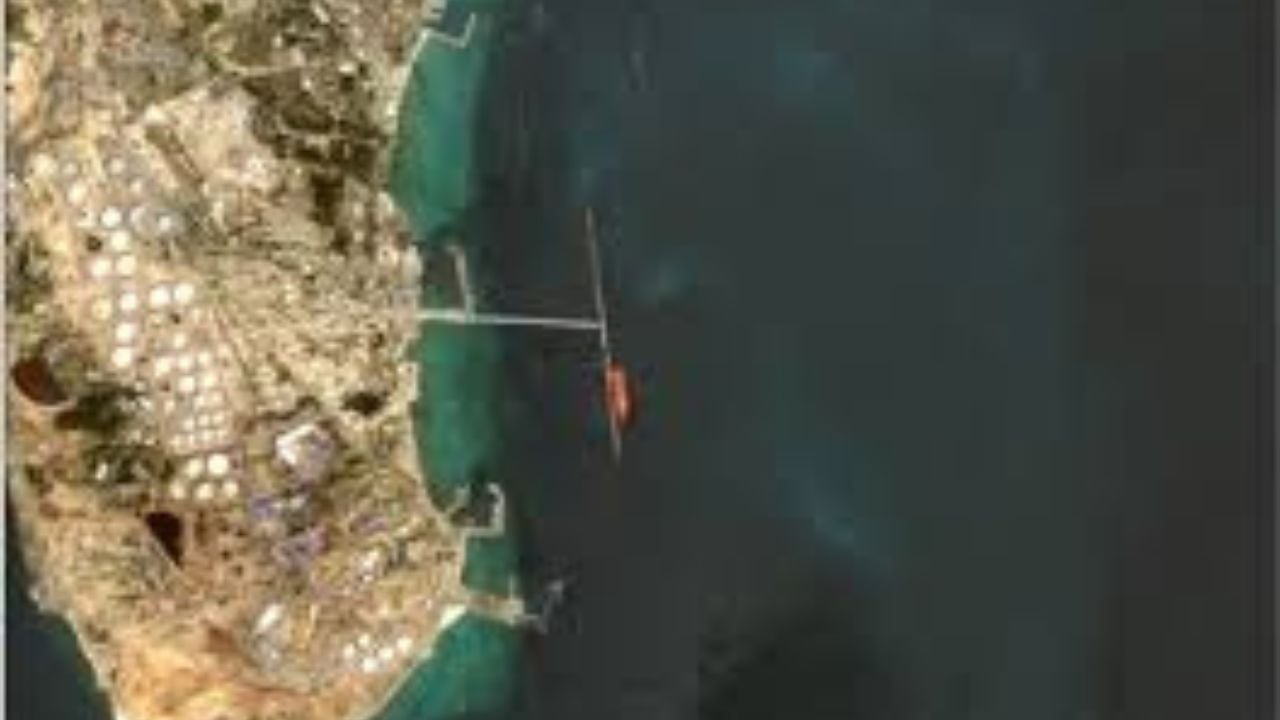
After receiving the oil, that ship briefly activated its tracking system before heading toward China and then going dark again following sanctions imposed by the United States.
A second tanker, the MT Majestic X, followed similar routes between the Middle East and the same anchorage before also being seized.
Experts say the EOPL has become a preferred hub for Iran’s shadow fleet due to its strategic location and relatively lax enforcement. The area offers proximity to major trade routes while allowing vessels to operate with limited scrutiny.
Data compiled by United Against Nuclear Iran indicates at least 679 ship-to-ship transfers occurred there in 2025, a sharp rise from previous years. Even that figure may be conservative due to gaps in satellite coverage.
Iran’s reliance on such methods stems from extensive sanctions that restrict its ability to sell oil openly. The country still exports significant volumes, averaging about 1.69 million barrels per day in 2025, with roughly 90 percent reportedly heading to China.
Much of this crude is sold at a discount compared to global benchmarks, but elevated oil prices have ensured that each transfer can still generate tens of millions of dollars in revenue.
The Two-Fleet System
The mechanics of the trade involve two sets of vessels.
The first group collects oil from Iran, primarily from Kharg Island, and transports it across the Indian Ocean to Southeast Asia. The second group receives the cargo through offshore transfers and delivers it to Chinese buyers, often independent refineries in Shandong province.
These shipments are frequently disguised, with documentation altered to present the oil as originating from other countries.
Operators employ several tactics to avoid detection.
Ships disable or manipulate their tracking systems, conduct transfers under cover of darkness, and sometimes change names, flags, or ownership records. False documentation is common, creating a paper trail that conceals the crude’s true origin.
Analysts describe this system as a form of cargo laundering designed to bypass international restrictions.
Beyond facilitating trade, the EOPL also serves as a floating storage site. Iran has positioned large volumes of oil in tankers near key Asian markets, reducing reliance on the volatile Persian Gulf.
At one point in early 2026, nearly 191 million barrels were held at sea, most of it in East Asian waters. This reserve has allowed Tehran to maintain exports even during heightened military activity in the Middle East.
The Interception
The timeline leading to the MT Tifani’s seizure underscores the risks involved.
1/2
Just a few miles off the coast of Singapore, a massive ship suddenly disappears from radar.
Where did it go? Days later, when it reappears, it is carrying 1.9 million barrels of stolen oil. How Iran’s shadow fleet manages to fool the world and carry out this secret… https://t.co/yzqNlLqBFR pic.twitter.com/Y2fJIvCnvC
— DI (@DIDeskk) April 28, 2026
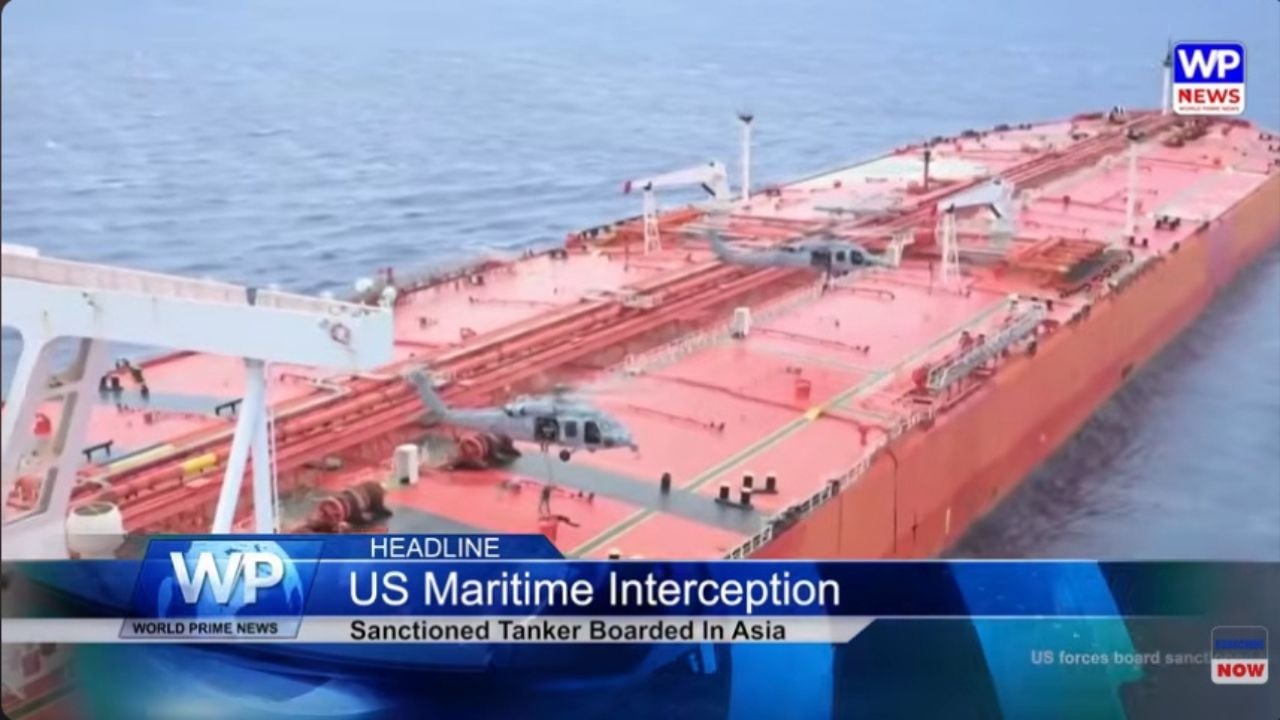
The vessel was tracked near Kharg Island in early April before reappearing days later en route toward Southeast Asia. After passing Sri Lanka, it made abrupt course changes shortly before US forces intercepted it.
Footage released by the Department of Defense shows troops boarding the tanker as helicopters circled overhead.
The incident signals an expansion of the conflict with Iran into critical maritime corridors far from the Gulf. It also underscores how a network of aging tankers, hidden transfers, and permissive waters continues to sustain a sanctioned oil economy that remains deeply intertwined with global energy markets.
Sources: CNN