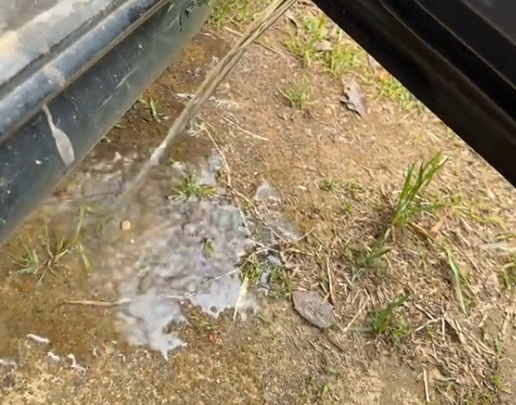
A TikTok video from a South Carolina mom recently stopped millions of drivers in their tracks, and for good reason. In a 30-second clip, Sami Ray Keown crouched beside her 2020 Toyota Corolla, pulled a small rubber plug from the bottom of the door panel, and watched a shocking amount of water pour out onto her driveway. The video exploded to over 1.2 million views almost instantly, and it is not hard to see why.
Most of us wash our cars, drive through rainstorms, and never think twice about what happens to all that water. Turns out, some of it has been quietly making itself at home inside your doors. What looks like a solid, sealed chunk of metal is actually a designed collection point for water, and if you have never checked yours, there is a decent chance you are hauling around a surprise swimming pool the next time it rains.
Keown, whose TikTok channel covers everyday life and home moments, posted the clip on May 2 with a simple question for fellow Corolla owners: has this happened to you? The comment section answered loudly, and what started as a Toyota-specific query quickly turned into a nationwide car owner moment of “wait, mine does that too.”
The good news is that none of this is a defect or a disaster. It is, in fact, your car working exactly as designed. The slightly less comforting news is that if you ignore it long enough, things can go sideways fast. Here is what every driver should know.
Why Car Doors Collect Water in the First Place
This is not a manufacturing flaw. It is just physics and engineering doing what they do. Car doors have windows that move up and down, and that movement means the rubber seals at the top of the door can never be completely airtight against the glass. If those seals were tight enough to block every drop of water, the window motor would burn out trying to push through them. So manufacturers intentionally allow a small amount of water to pass through, especially during heavy rain or a car wash.
That water trickles down inside the door cavity and collects at the bottom, where drain holes have been drilled specifically to let it escape. Under normal conditions, water flows in, trickles out, and nobody is the wiser. The rubber plugs sitting in those drain holes are not there to seal the water in. They are there to keep road debris, dirt, and insects from being kicked up into the door cavity from below while still allowing water to drip out under its own weight.
When those plugs get clogged with leaves, grime, and road debris that has settled over time, the drain path gets blocked and the water has nowhere to go. It just sits there. Sometimes for months. And that is when a short video of someone pulling a plug turns into a viral moment with a comment section full of stunned car owners.
This Is Not Just a Toyota Problem
@s.keown23 Not even joking when I say it sounded like a gallon of milk sloshing around in my door😳😳#toyotacorolla2020 #doorplugs #fyp ♬ original sound – Sami Ray Keown
One of the biggest takeaways from the comment section on Keown’s video was just how universal this issue is. Owners chimed in with the same experience across a huge range of vehicles, including the RAV4, Camry, Corolla Cross, Lincoln, Jeep Cherokee, Chevy Tahoe, and Ford F-250. One commenter put it plainly: it is a car thing, not a Corolla thing.
Drain holes are a standard design feature across the automotive industry. Every manufacturer uses them. The variation is in how many holes they drill and where they position them. Some vehicles drain more efficiently than others, but the basic premise is the same across the board. If you drive a car with doors, and all cars have doors, this applies to you.
The reason Toyotas tend to come up in these conversations is not that they are worse at draining water. It is simply that Toyotas are incredibly common, so statistically speaking, a lot of the people watching viral car videos happen to own one.
Should You Leave the Plugs In or Pull Them Out?
This is where the comment section got genuinely interesting and a little divided. Auto technicians and experienced car owners weighed in with different takes, and all of them had reasonable logic behind their positions.
One camp, including some who identified as technicians, argued that the plugs can simply come out and stay out, particularly in areas with frequent rainfall. The reasoning is that open drain holes mean water exits immediately rather than building up at all.
The opposing view, argued at length by another commenter, is that the plugs serve a real purpose. Leaves, mud, and large debris can enter an unplugged door cavity from below and settle inside, ultimately holding moisture against the metal and causing the same rusting problem the drain holes are meant to prevent. According to this perspective, the better approach is to remove the plugs periodically, flush out the cavity, clear any blockages, and reinstall the plugs.
A third perspective offered a regional middle ground. In the Pacific Northwest, where it rains constantly, leaving the plugs out makes sense because the volume of water simply requires constant drainage. But on gravel roads or farms where mud and debris are a daily reality, keeping the plugs in and checking them regularly is the smarter call.
The right answer likely depends on where you live and how you drive.
What This Viral Moment Teaches Every Car Owner
Beyond the novelty of watching water pour out of a car door, this video is genuinely useful. It is a reminder that routine car maintenance extends well beyond oil changes and tire rotations. Most drivers have never once thought about their door drain holes, and many mechanics would tell you that is exactly how rust problems quietly develop over years without any obvious warning signs.
Water sitting inside a door is not just an annoyance. It corrodes the steel from the inside out, which is both expensive and difficult to detect until the damage is significant. A few minutes with a screwdriver or a straightened wire coat hanger, run through the drain holes to clear any debris, can prevent hundreds of dollars in bodywork down the road.
Experts recommend checking door drain holes at least once a year for most vehicles. If you live somewhere rainy or regularly drive on dirt roads, bumping that up to a couple of times a year is wise. While you are at it, take a look at the rubber seals along the top of the door. A worn or cracked seal lets in far more water than a healthy one, and replacing it, while not exactly cheap, solves the root cause rather than just managing the symptom.
Keown’s video was meant to be relatable content for fellow Corolla owners. What it accidentally became was a public service announcement for millions of drivers who had no idea their doors were filling up with water every time it rained. Sometimes the most useful car advice does not come from a mechanic. It comes from a mom in her driveway with a camera and a very soggy door.