If you went back in time and asked someone in the 1980s what the early 2020s would look like, they probably would have said flying cars. Instead, we got smartphones, social media, and artificial intelligence.
Now, a Chinese automaker is trying to bring that old prediction back into the conversation.
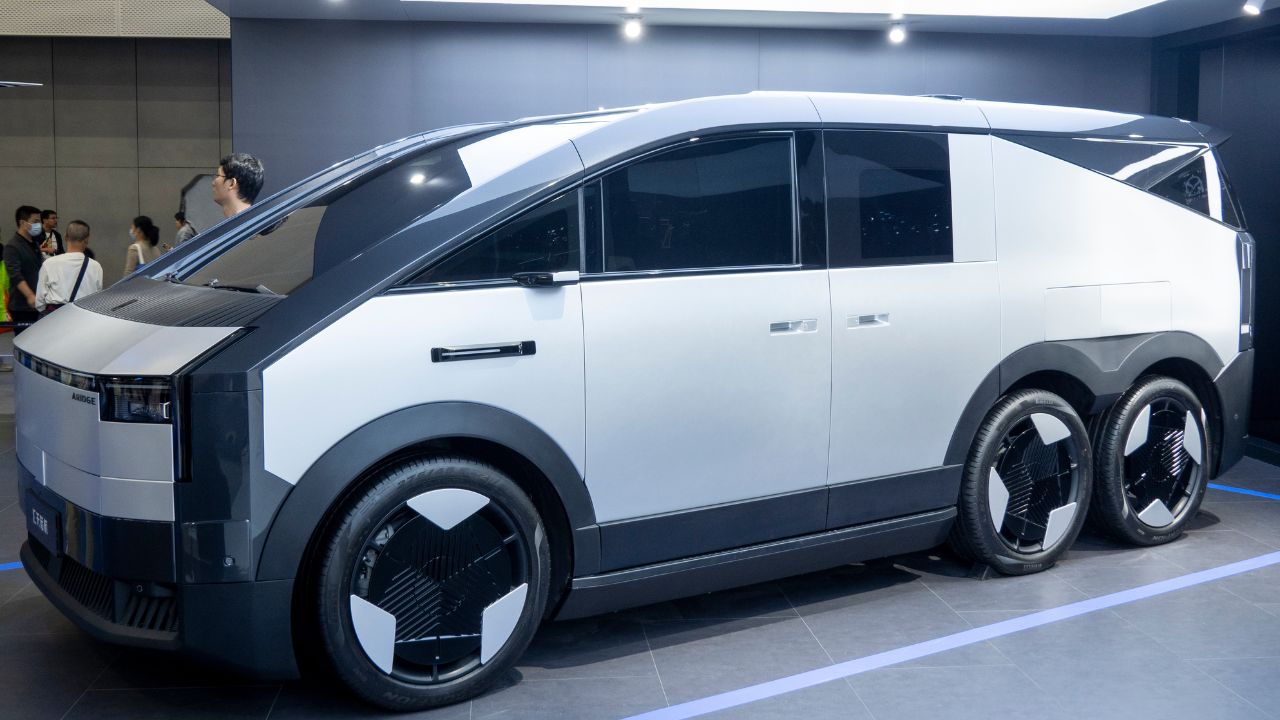
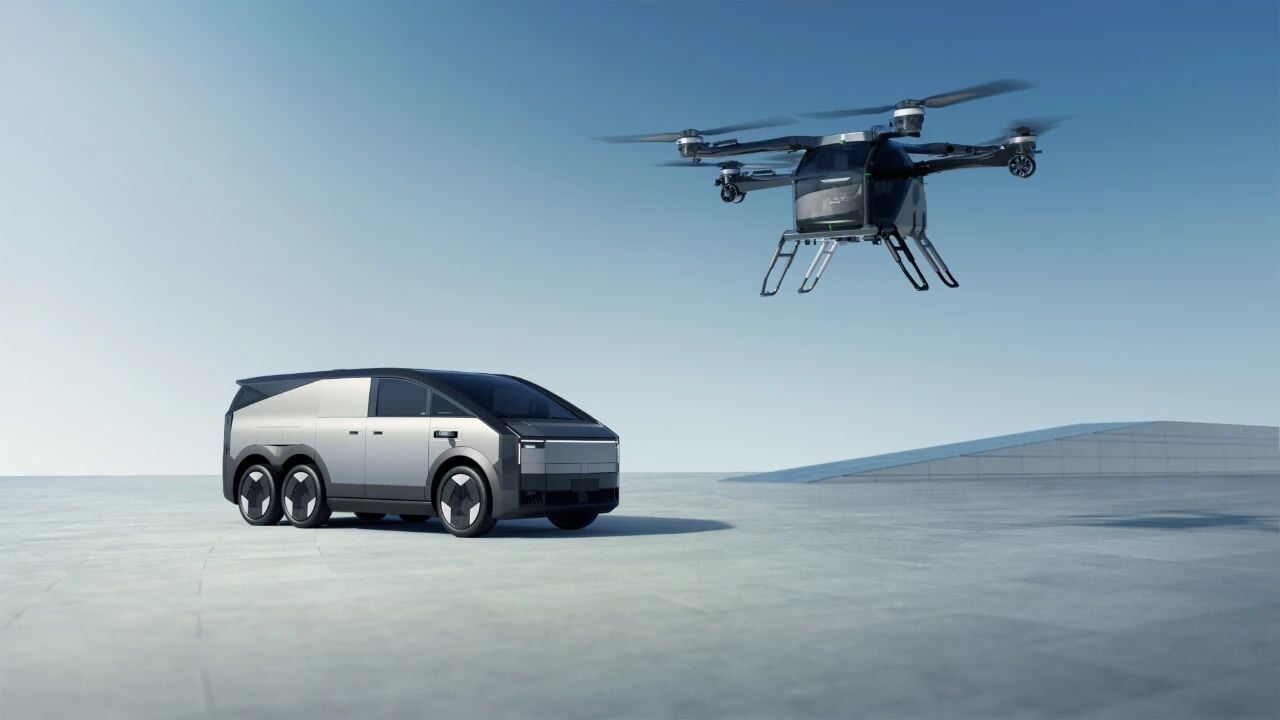
XPeng’s aviation arm, XPeng AeroHT, has developed what it calls the Land Aircraft Carrier, a six-wheeled electric van that carries a foldable two-seat eVTOL aircraft in its rear bay.
They built a vehicle that drives like a van, then deploys the aircraft when it’s time to leave the road behind. No rerouting. No sitting in gridlock. Just vertical departure.
Unlike most skybound concepts that never move past renderings and hype videos, this one is tied to a production timeline. Thousands of buyers have reportedly already placed deposits, and a dedicated factory is under construction in Guangzhou. Deliveries are currently targeted for 2026, assuming certification and regulatory hurdles cooperate.
A Van That Casually Carries a Flying Machine
At first glance, the Land Aircraft Carrier looks like a heavy-duty electric van. That is wide, tall, and riding on six wheels. The proportions are deliberate. It needs the space, because the real payload isn’t cargo. It’s an aircraft.
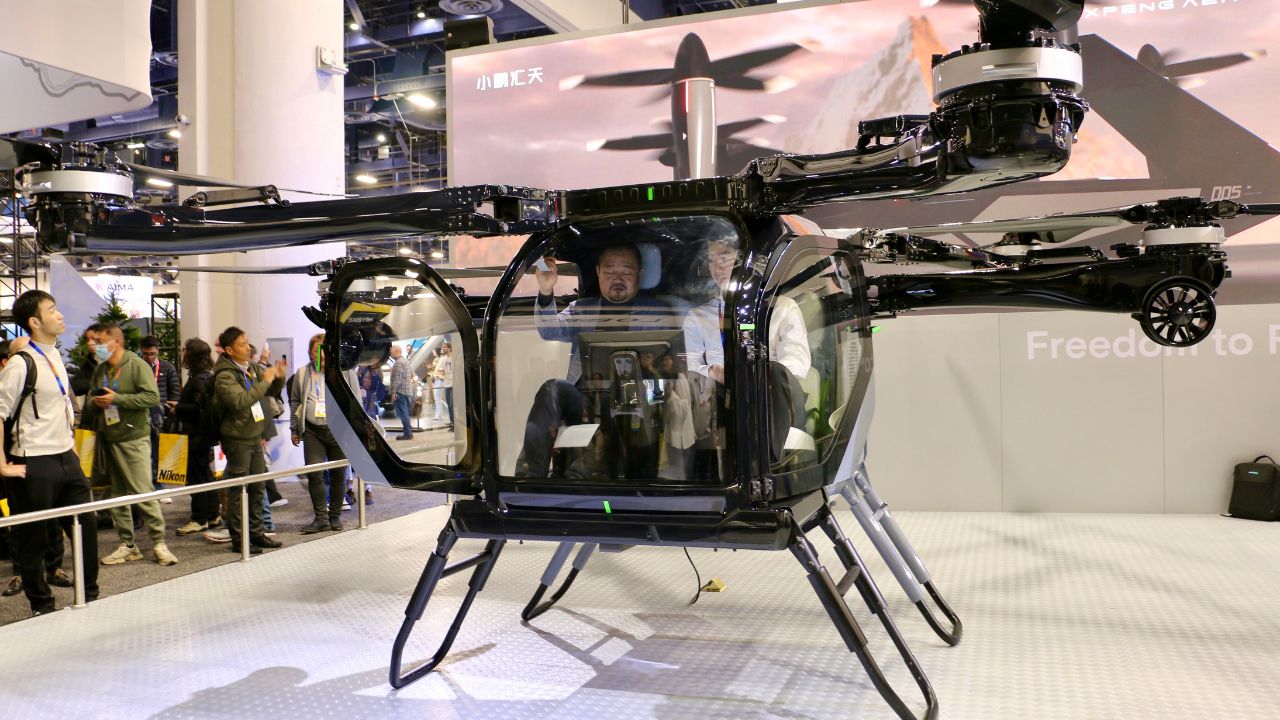
Tucked into the rear is a foldable two-seat eVTOL aircraft, designed for short, low-altitude hops. Its arms fold inward to fit neatly inside the vehicle, then extend outward during deployment. With a single command, the rear opens, the aircraft rolls out, and within minutes, it is ready for vertical takeoff.
The van doubles as a mobile charging station, using a high-voltage system to recharge the aircraft between flights. That removes the need for fixed infrastructure, at least in theory. You drive, you launch, you land, you keep going.
XPeng says the ground vehicle will target a range of around 1,000 km, while the aircraft is built for multiple short trips rather than long-haul travel. The idea is simple: bypass bottlenecks, not replace planes. In practice, it turns the sky into a flexible extension of the road network—one that only activates when needed.
Orders, Factories, and Timelines
This is where the story shifts from spectacle to intent. XPeng isn’t just showing this off; it is preparing to build it. The company has already begun construction of a dedicated manufacturing facility in Guangzhou, designed explicitly for its modular flying vehicle program. Initial capacity will be limited, but long-term plans suggest production could scale significantly if demand holds.
And demand is already forming. Reports indicate more than 7,000 pre-orders, a mix of private buyers and commercial interests. That includes potential use cases like emergency services, inspection work, and rapid response in areas where roads are unreliable or congested.
Pricing is expected to land around $280,000, placing it firmly in the high-end category but not entirely out of reach for institutional buyers or wealthy early adopters. That matters, because new transport technologies rarely start cheap—they start useful, then scale.
XPeng aims to deliver the first vehicles in 2026. That timeline depends heavily on certification, but the presence of working prototypes and a production roadmap suggests this is further along than most “flying car” projects that came before it.
Gravity Is Easy, Regulation Isn’t
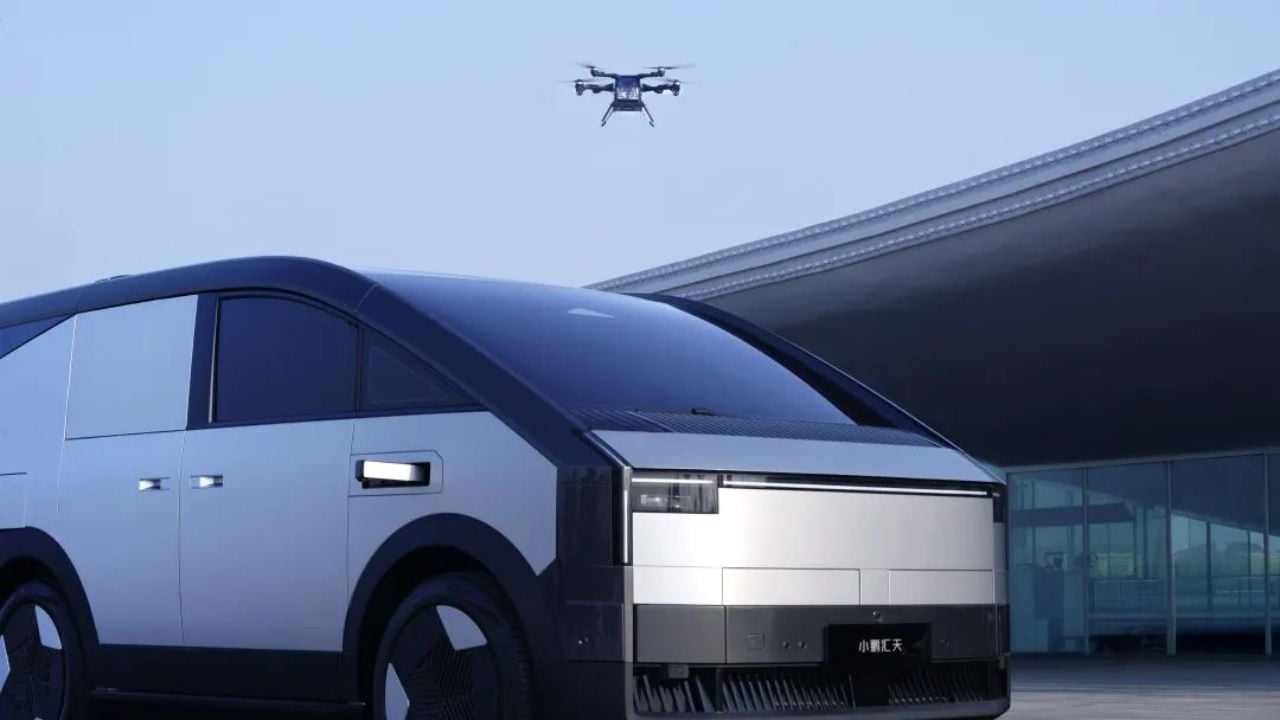
Though the engineering is impressive, the challenge is elsewhere. Airspace is regulated, fragmented, and slow to change. Even if the vehicle works exactly as intended, widespread adoption depends on rules that don’t yet exist. Questions around licensing, flight corridors, safety standards, and urban integration remain unresolved.
China has begun opening parts of its low-altitude airspace, which gives XPeng a potential home-field advantage. Expanding beyond that to Europe or the United States will be significantly more complex, requiring compliance with multiple aviation authorities.
Then there is usability. XPeng is working toward simplified controls and semi-autonomous flight, but reducing pilot workload does not eliminate risk. For this to scale, it has to be safe, predictable, and easy enough to operate without specialized training.
Still, the appeal is obvious. In a world where traffic keeps getting worse, the ability to opt out, is powerful. The Land Aircraft Carrier does not fix congestion. It makes it irrelevant, at least for the people who can afford to rise above it.