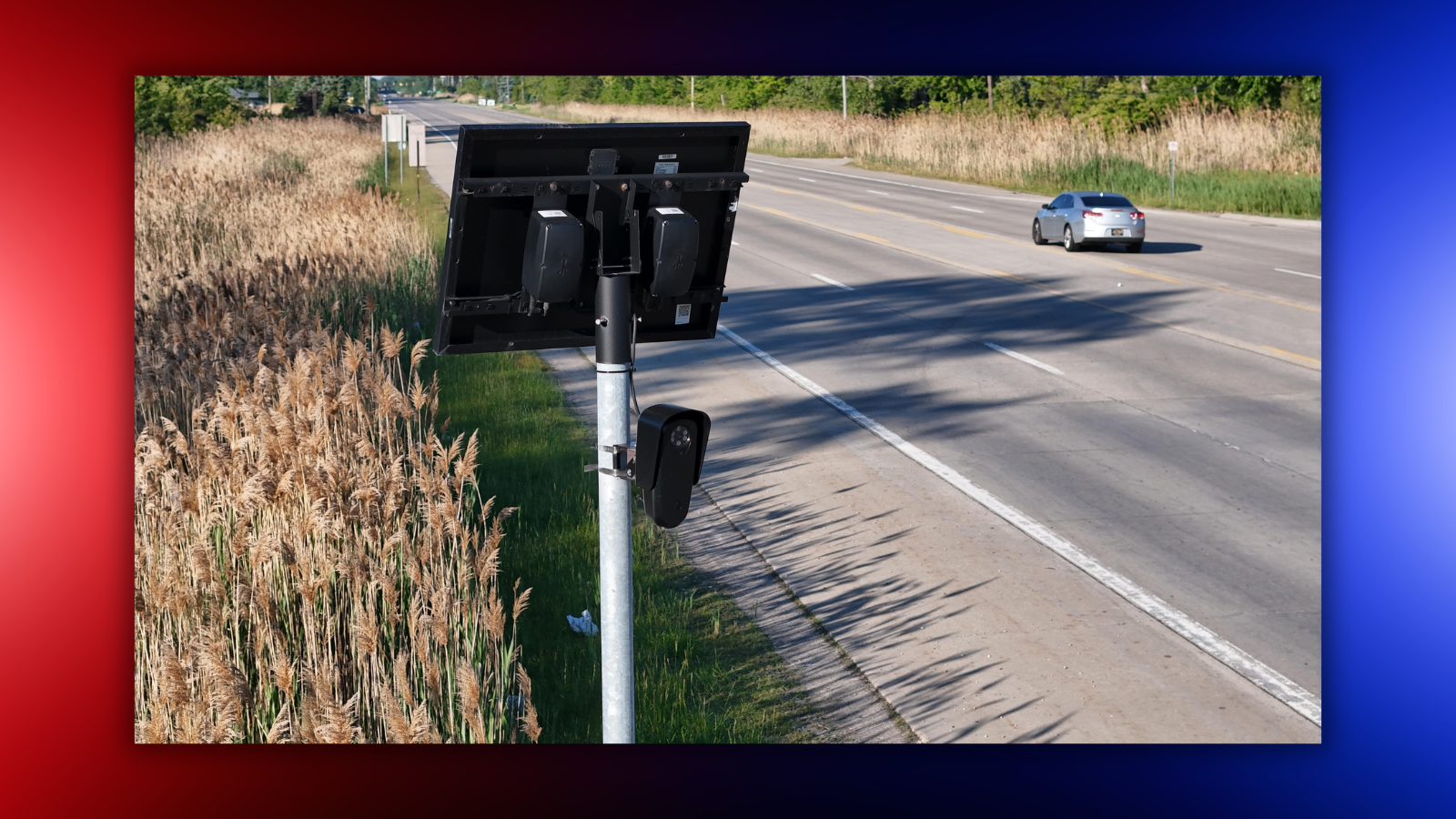
Automated license plate readers have become a familiar part of the roadside landscape in communities across the country. The cameras can help police locate stolen vehicles, identify wanted vehicles, and assist investigators in serious cases.
Flock Safety, one of the biggest companies behind the technology, has defended its cameras as an effective law enforcement tool. At the same time, concerns about privacy, misuse, bad data, and mistaken alerts have fueled a growing debate over how these systems are used.
That debate is now playing out in Wisconsin after a traffic stop on Interstate 94 ended with multiple police officers drawing their firearms on people who were no longer being sought by police. The stop was initiated after a Flock alert connected their vehicle to a Milwaukee homicide investigation.
FOX6 Milwaukee reports Brookfield police ultimately contacted the Milwaukee Police Department and were told MPD no longer needed the vehicle or the people inside. Officers then released them. That leaves one important question unanswered: Why was the vehicle still generating an alert?
A Flock Alert Leads To A High-Risk Stop On I-94
Video shown by FOX6 captured multiple police vehicles surrounding the car on I-94 in Waukesha County. Officers could be seen with firearms drawn while a passenger held their hands outside a window.
Brookfield police told the station the vehicle had been flagged through Flock in connection with a Milwaukee homicide investigation. After contacting MPD, however, officers learned Milwaukee police no longer needed either the car or its occupants.
FOX6 reached out to MPD seeking an explanation for why the vehicle remained active in the system. The station had not reported an answer when its story was published.
Based on the information released so far, it has not been established that the camera misread the license plate. Instead, the vehicle appears to have generated an alert tied to information that was no longer actionable by the time Brookfield police stopped it.
The Incident Adds To A Growing Flock Debate
The Brookfield stop comes as Flock cameras face increasing scrutiny in Wisconsin and elsewhere.
Wisconsin Public Radio reported earlier this year that the Milwaukee Police Department sharply reduced the number of employees with access to Flock following a criminal case involving former officer Josue Ayala.
Ayala was accused of improperly using the system to monitor a person he was dating and that person’s ex. WPR reported that he later pleaded guilty to attempted misconduct and resigned from the department.
The controversy grew again in July when WPR reported Milwaukee Police Detective Tehrangi Chapman had been charged with misconduct in public office and misuse of a GPS device. A criminal complaint alleged Chapman used Flock searches to track two people in violation of department policy.
Those cases involve alleged misuse by users rather than a camera incorrectly reading a plate, but they have added to questions about access, oversight, and how the technology is monitored.
The debate has also reached local government. Dane County officials previously pulled funding for a Flock contract after raising concerns about public trust. Funding for license plate reader technology was later restored, but officials opted to use a different provider.
Milwaukee Police Chief Jeffrey Norman has defended the technology, telling FOX6 that it can help officers identify suspects, investigate violent offenses, and provide information prosecutors can use in criminal cases.
Flock has also pushed back against criticism. In a statement provided to FOX6, the company said its readers capture images of vehicles and license plates in public view, do not use facial recognition, and require users to document the reason for searches. The company also says searches create permanent audit records.
Another Mistaken Alert Involved A Range Rover Press Car
The Brookfield stop is not the only recent incident raising questions about what happens when bad information reaches an automated license plate reader system.
Automotive journalist Joel Feder, director of content and product at The Drive, detailed a police stop earlier this summer involving a $155,000 Range Rover press vehicle he was testing in Minnesota.
Feder said four police vehicles surrounded him and his wife after officers received Flock alerts indicating the Range Rover’s license plate had been reported stolen. He later learned police had been receiving alerts on the vehicle for days.
The problem involved a New Jersey manufacturer plate. Feder’s Range Rover carried plate 34 10 DTM, while another plate reported missing in California was 34 03 DTM. Records Feder obtained showed the missing plate had been entered as the shortened 34 DTM.
Police ran the Range Rover’s VIN during the stop and determined the SUV itself was not stolen.
The circumstances are different from what has been reported in Brookfield. In Minnesota, the problem involved how plate information was entered and processed. In Wisconsin, the question is why a vehicle apparently remained associated with a homicide alert after Milwaukee police no longer needed it.
Both cases, however, point to the same practical problem: an automated system can act on information that is incomplete, inaccurate, or no longer current.
The Brookfield stop does not appear to show a camera misreading a plate. Instead, it raises a different question: what happens when a vehicle remains flagged after police no longer need it?
As license plate reader systems become more common, that question may prove just as important as whether the cameras themselves work as intended.