
Elon Musk says he wants to make Star Trek real. And by that he means he wants to build spaceships that can turn the earth into a Star Trek-like world where shuttling between planets is a way of life. China, however, has a different, a lot more combatant idea.
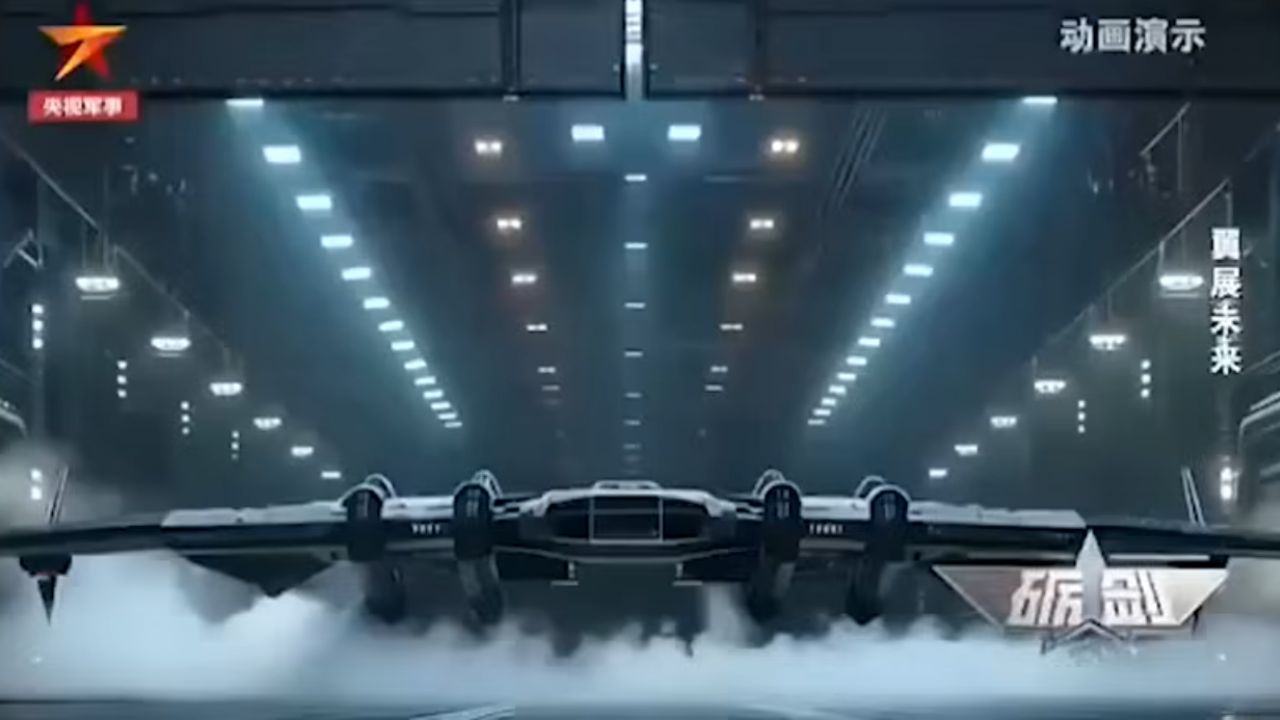
The country just pulled the curtain back on one of the most audacious military aviation concepts ever publicly discussed, unveiling a video that imagines a colossal airborne warship operating at the very edge of Earth’s atmosphere.
Dubbed the Luanniao, or “Luan Bird,” the proposed craft looks exactly like it was lifted straight from science fiction. Yet Beijing insists this isn’t science fiction. That it is a long-term vision that could become reality within the next two to three decades.
If the timing coincides with Musk’s Star Trek Real, maybe he should consider equipping the touristy spaceships with canons and plasma shields or get plucked off the sky by a territorial bird called Luanniao.
A Colossal “Flying Aircraft Carrier”
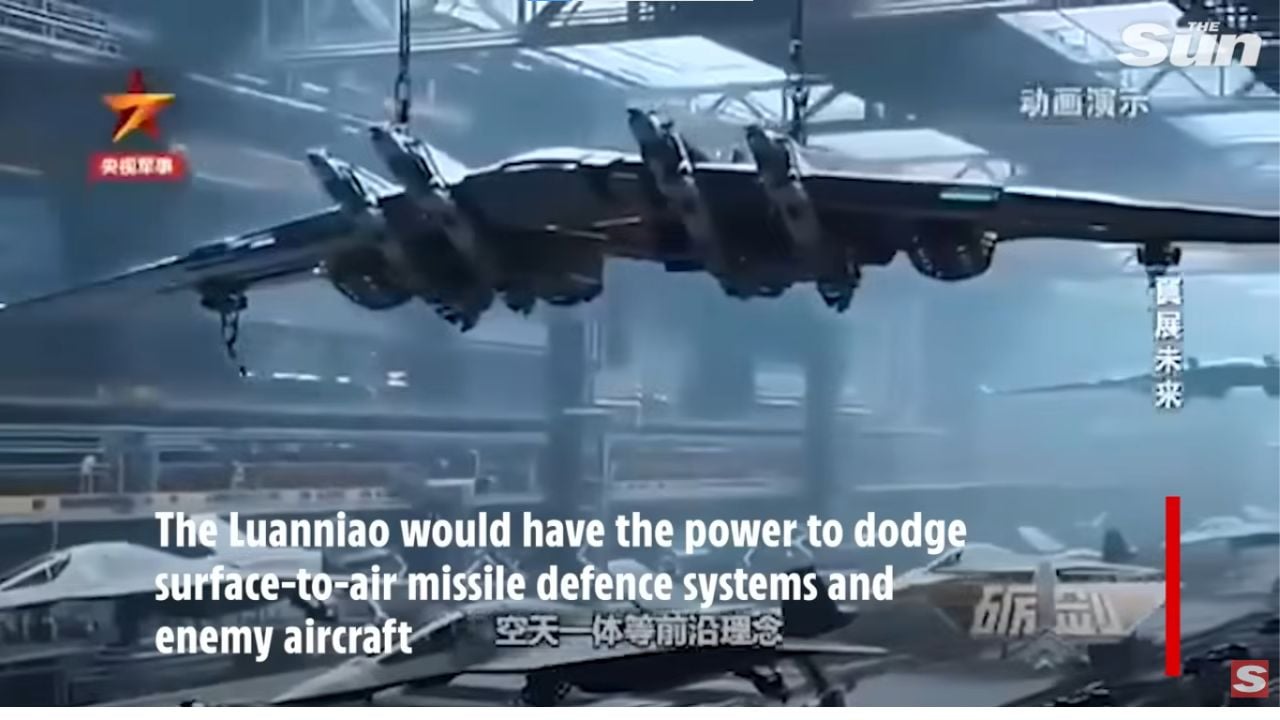
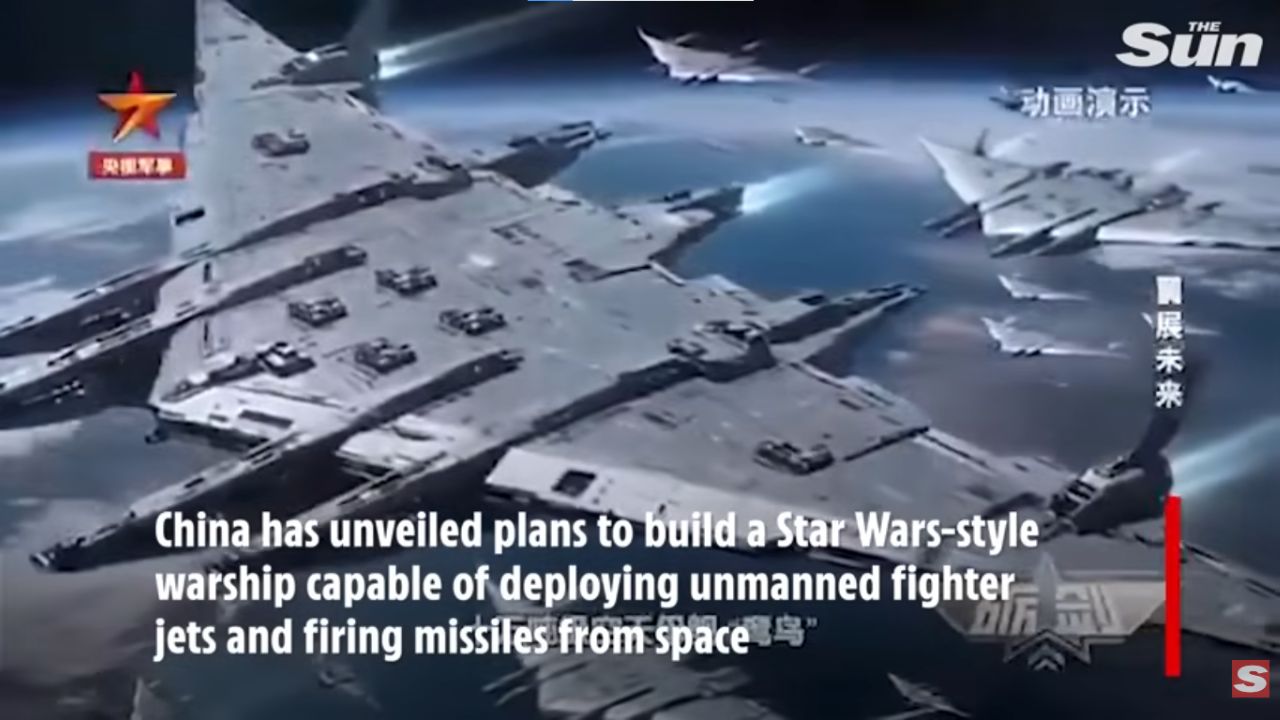
According to details revealed in Chinese media and highlighted by the Daily Mail, the Luanniao would be an airborne carrier of unprecedented scale. The concept calls for a platform roughly 794 feet long and more than 2,200 feet wide, with a staggering takeoff weight of around 120,000 tons.
If built, it would dwarf every existing aircraft and airship, ultimately redefining the true meaning of air superiority.
The size alone is far from the only detail that makes Luanniao particularly striking. It’s its intended role. The vessel is designed to carry as many as 88 unmanned Xuan Nu fighter jets.
These drones, still firmly in the conceptual phase, are envisioned as highly maneuverable stealth aircraft capable of launching hypersonic missiles. From a strategic standpoint, the idea is simple but unsettling.
A floating base positioned above conventional air defenses could deploy swarms of autonomous strike aircraft from a position few existing systems could reach.
The Engineering and Strategic Divide
Defense analysts remain deeply divided on whether such a machine could ever be built. The physics alone raise enormous questions. Sustaining flight near the boundary of space would require propulsion systems that do not yet exist, along with fuel reserves on a scale no aircraft has ever carried.
Hovering or loitering at such altitudes would also demand breakthroughs in materials science, thermal management, and structural engineering.
Peter Layton, a visiting fellow at Australia’s Griffith Asia Institute, told the Telegraph that if the Luanniao were ever realized, it would dramatically alter the balance of military aviation.
Operating above surface to air missiles, most fighter jets, and even above the worst of Earth’s weather, such a platform could theoretically position itself directly over targets.
That vertical advantage could allow unprecedented surveillance and strike capabilities, especially when paired with autonomous drones.
Still, skepticism dominates expert discussions. Many believe the project functions more as a signaling tool than a serious near-term engineering effort. The Luanniao concept is part of China’s broader Nantianmen, or “South Heavenly Gate,” project led by the Aviation Industry Corporation of China.
This initiative aims to push the boundaries of aerospace and space technology, even if some ideas never progress beyond the drawing board.
Ambition as Strategy
There are also alternative visions that introduce new risks. Placing the craft into full orbit could bypass some atmospheric challenges, but it would expose the vessel to space debris and anti-satellite weapons. Launching something of this scale into orbit would also require reusable heavy lift rockets that China has yet to successfully demonstrate in operational form.
For the rest of us, the Luanniao story resonates beyond military speculation. It reflects the same technological ambition that drives China’s rapid advances in electric vehicles, autonomous driving systems, and battery manufacturing.
The willingness to publicly explore radical ideas, even improbable ones, is part of a broader strategy to project confidence and technological momentum.
Whether the Luanniao ever leaves the ground may ultimately be beside the point. As Layton suggested, the concept itself sends a message. To domestic audiences, it inspires national pride and belief in future dominance.
To international observers, it paints a picture of a nation willing to imagine capabilities others have not even seriously attempted. In that sense, China’s “Star Wars” warship is already doing its job, even if it remains firmly in the realm of vision rather than reality. And we thought Musks Star Trek world was crazy.