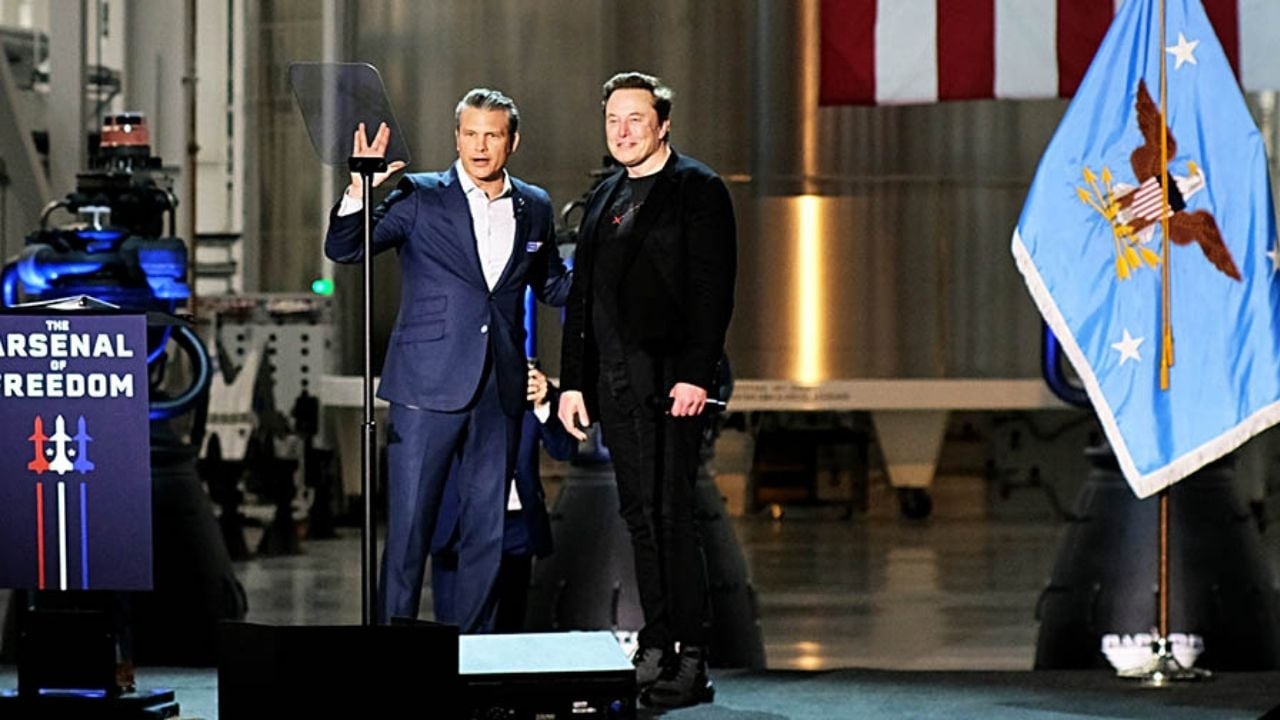

Elon Musk stood before a crowd at SpaceX’s sprawling Starbase campus in South Texas and dropped another one in an unending rain of bombshells. “We want to make Star Trek real,” he declared, outlining a vision of humanity pushing deeper into space with large interplanetary ships carrying people from one world to another and beyond.
The comment was too loaded to slip into the drain of throwaway lines. It quickly became a focal point of discussion when U.S. Secretary of War Pete Hegseth echoed the phrase with a Vulcan salute alongside Musk, marrying Musk’s commercial space ambitions to a broader vision of technological supremacy.
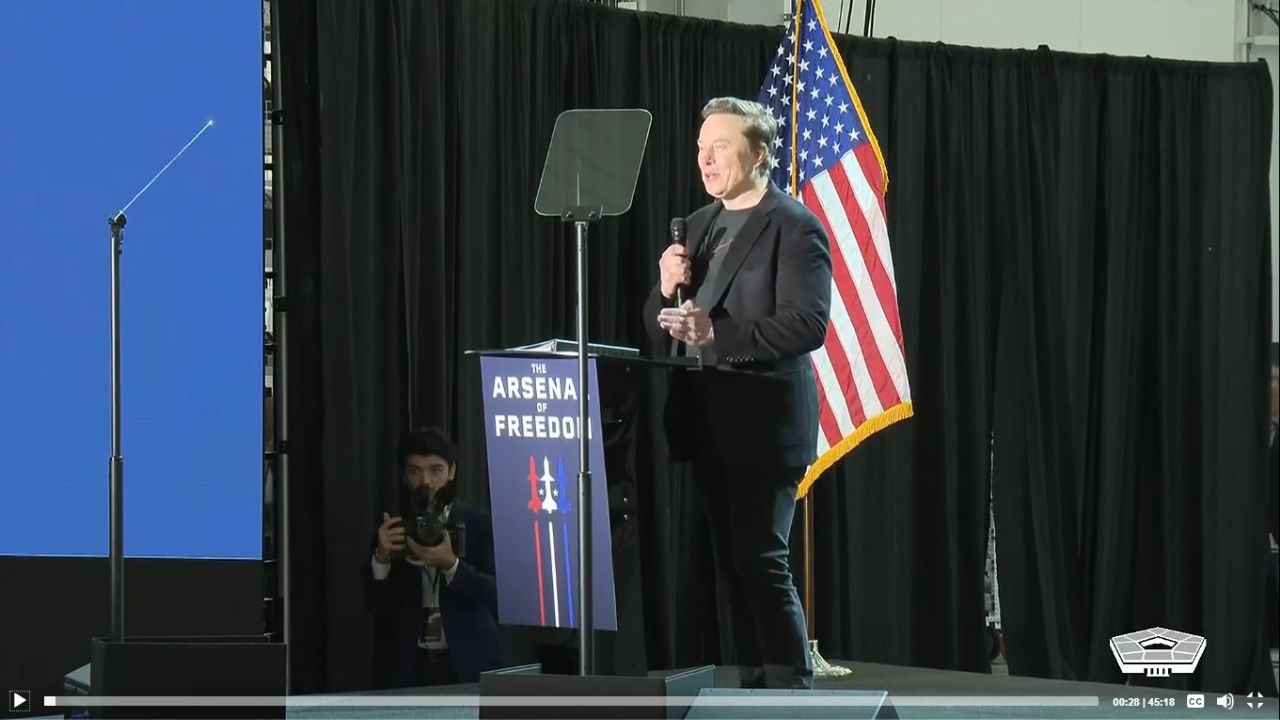
Apparently, the real reason SpaceX exists is it can build a world where humans can shuttle to and from space as routinely as it is done in the Star Trek movies. He wants to make Star Trek real, and not just a movie. After thanking the secretary for visiting the Starbase, Musk said, “I’ll tell you a little bit just about the purpose of SpaceX. It’s like we want to make Star Trek real, ok? His speech is actually reproduced on the department’s website.
The “Star Trek Real” Doctrine Takes Shape
View this post on Instagram
At first glance, the scene played a bit like a Hollywood set. A billionaire entrepreneur who has revolutionized electric cars and rockets stood beside one of the nation’s most combative defense chiefs. SpaceX rockets dotted the background.
The crowd was a mix of aerospace engineers, Pentagon officials and invited guests. In this unusual cross-section of Silicon Valley and Washington power politics, Musk’s sci-fi language served a real purpose: to paint a picture of the future that captures the imagination.
For Musk, “Star Trek real” is shorthand for what SpaceX has long pitched as its broader mission. He framed SpaceX as a launch provider and an engine for turning science fiction into reality, with “spaceships going through space — big spaceships — with people going to other planets, going to the Moon and ultimately beyond our star system,” he said. He even talked about the possible encounter with alien life as part of the cosmic exploration story.
“I don’t know, but we want to go, and we want to see what’s happening, Musk said to a round of applause. “And we want to have epic futuristic spaceships with lots of people in them traveling to places we’ve never been to before. Yeah, that’s the goal.” That’s the goal of SpaceX, according to Musk, and Hegseth agrees.
That language resonates with a certain futuristic ethos. People buying Tesla vehicles or following SpaceX launches are used to Musk’s big visions. But when those visions are invoked in the context of U.S. defense policy, they take on a different color. It is one thing to talk about Mars colonies over a webcast.
It is another for the U.S. War Secretary to echo that same cosmic aspiration while standing inside what is essentially the industrial core of a private space company.
The Vulcan Salute as a Strategic Bridge
For Hegseth, the message was deliberately ambitious and aggressively optimistic. Echoing Musk’s phrasing, he flashed the Vulcan salute that fans of Star Trek will recognize instantly and repeated “Star Trek real.” It played well on social media. It also served as a rhetorical bridge from Musk’s commercial goals to Pentagon priorities.
Hegseth seized the moment to push a broader theme of technological transformation, arguing that the U.S. must “win the strategic competition for 21st century technological supremacy” against rising global rivals.
The secretary thanked Musk for hosting him and for building something unlike anything in America or the world over, highlighting “the strength of American ingenuity and American invention.” In the secretary’s words, “I could not think of a more fitting venue to continue our Arsenal of Freedom tour and to outline today the future of technological innovation at the War Department.”
A New “Essential to National Security” Moment
Indeed, beneath the sci-fi allure lies serious policy. Hegseth outlined plans to integrate advanced artificial intelligence platforms, including Musk’s own Grok AI alongside Google’s Gemini, into defense networks.
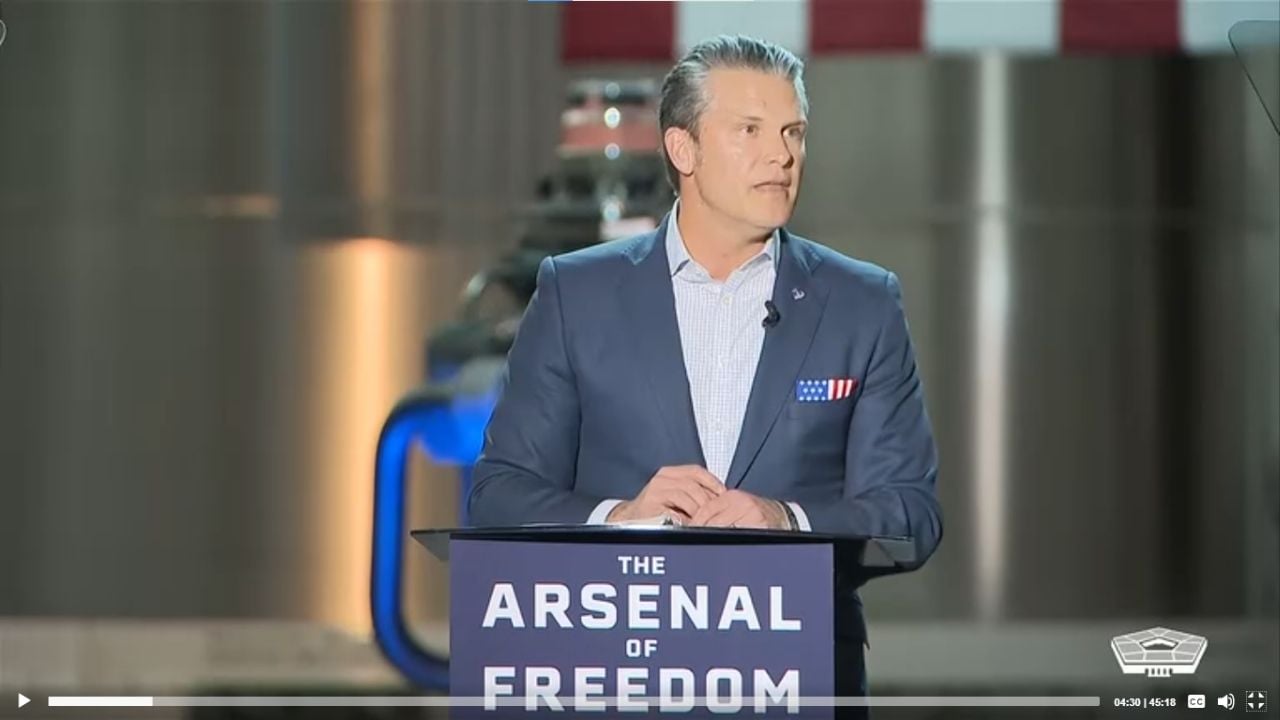
The goal was framed as building an “AI-first, war-fighting force,” one that breaks away from what he described as delay-ridden bureaucratic systems at the Pentagon. He said outdated acquisition processes must give way to rapid innovation if the U.S. is to retain its edge.
That bold framing attracted enthusiasm as much as skepticism. Believers see the blending of commercial innovation with national strategy as a necessary evolution. Musk’s success in scaling rocket production and lowering launch costs is precisely the type of disruptive model many in government would like to see mirrored across defense acquisition and national space strategy.
As Hegseth said, “those of you here at SpaceX will appreciate this, knowing that, as World War II was ending, the secretary of war and secretary of the Navy wrote to the National Academy of Sciences and declared that scientific research was essential to our national security.”
The idea of turning Star Trek into reality is a compelling rallying cry for those who believe American innovation can propel humanity into a genuinely interplanetary future.
The Final Frontier
Unbelievers, however, worry the narrative obscures deep challenges. Turning fiction into fact is not as simple as visionary slogans or celebrity endorsements. Real deep-space travel faces immense scientific and engineering hurdles that are decades, if not centuries, away from being solved.
Meanwhile, aligning defense policy with commercial ambitions raises questions about oversight, priorities and the role of private tech in matters of national security. “I’ve talked at length about the challenges we face in transforming the War Department to address current and future missions,” said the secretary, “all in service of meeting the needs of the 21st century warfighter.”
For us, the moment represents something familiar. Just as electric vehicles once seemed like futuristic pipe dreams before becoming mainstream realities, Musk’s cosmic ambitions might redefine what we think of when we imagine the future of mobility — on Earth and beyond.
The difference is that space, unlike roads, still sits largely outside everyday experience. The challenge now is turning rhetoric into engineering reality, and Star Trek into something more than words on a stage. For the man of war, his chief concern, as he said in his Starbase speech, is that “the United States must win the strategic competition for 21st century technological supremacy.”
Sources: US Dept. of War, upday News