Waymo is having another moment, and once again, it is not happening in a controlled test environment or a quiet stretch of road.
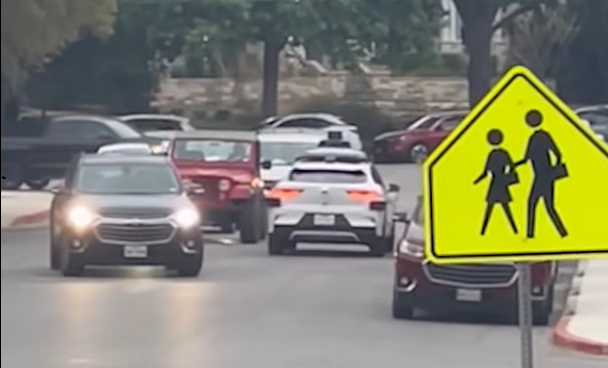
This time, it is a school zone in San Antonio, where a parent recorded one of the company’s autonomous vehicles traveling the wrong way during morning drop-off. KSAT reported the situation did not result in a crash, but it still feels like the kind of scenario that gets attention quickly.
According to KSAT, a crossing guard attempted to redirect the vehicle away from students and from entering a one-way traffic flow, but the Waymo continued moving against traffic. The parent who recorded the video described the moment as “scary and dangerous,” and school officials later confirmed they contacted law enforcement, who in turn reached out to Waymo about potential changes, including geofencing during pickup and drop-off hours.
That would be enough on its own to raise concern. What pushes this further is how familiar it feels. Incidents like this, where autonomous vehicles struggle with real-world, real-time traffic control, keep surfacing, and every time they do, the same questions follow right behind them.
What Happened
Embedded media follows. Please allow a moment for it to load.
According to KSAT, the incident occurred outside Cambridge Elementary in Alamo Heights during active morning drop-off, when traffic patterns are managed and the street operates as one-way. A parent recorded the Waymo vehicle traveling down Townsend Avenue against the flow of traffic while a crossing guard attempted to intervene.
The parent told KSAT the situation created a “scary and dangerous” environment near the front of the school. The Alamo Heights Independent School District said it became aware of the incident through concerned parents and contacted law enforcement, who then reached out to Waymo regarding potential geofencing of the area during school hours.
Local reporting also noted that officers are present during drop-off and pickup to assist with traffic flow. That is the extent of what has been confirmed publicly based on current reporting.
Internet Reaction Focuses on Accountability and Risk
The reaction online was immediate, and much of it centered on a question that continues to follow autonomous vehicles. Who is responsible when something like this happens?
“Who gets ticketed?” one commenter asked, capturing a theme that appeared repeatedly throughout the discussion. Others framed it slightly differently, questioning whether responsibility lies with the company, a passenger, or the system itself.
Some viewers focused less on blame and more on what may have caused the behavior. “Probably a one-way during school hours sign posted… that wouldn’t show up on an online map,” one commenter wrote, pointing to the temporary nature of school-zone traffic rules.
That explanation aligns with reporting that the street operates as one-way only during certain hours, though it remains speculation from commenters rather than a confirmed cause. Other reactions were more direct, with some calling for the vehicles to be removed from public roads altogether.
Safety concerns were a major driver of that response, especially given the location. “No one was hurt this time. Do you wait until it hits a child?” one commenter wrote, reflecting the tone of many reactions.
Not every comment was serious. “They need ‘way mo’ research,” one user joked, leaning into the name in a way that managed to land despite the situation.
Others pushed back more directly, arguing that incidents like this should be weighed against the broader safety case for autonomous systems. One commenter pointed to the absence of impaired driving, speeding, and distracted driving as reasons the technology may still reduce overall risk.
The Bottom Line
What is confirmed is limited but clear. A Waymo vehicle was recorded traveling the wrong way in a school zone during active drop-off, and a crossing guard attempted to redirect it, according to KSAT. No injuries were reported.
What remains unclear is why the vehicle behaved the way it did and how it interpreted the traffic controls in place at the time. Public reporting has not provided those answers.
The reaction, however, is already defined. Some see incidents like this as evidence that the technology is not ready, while others view them as isolated events within a system that may still offer broader safety benefits.