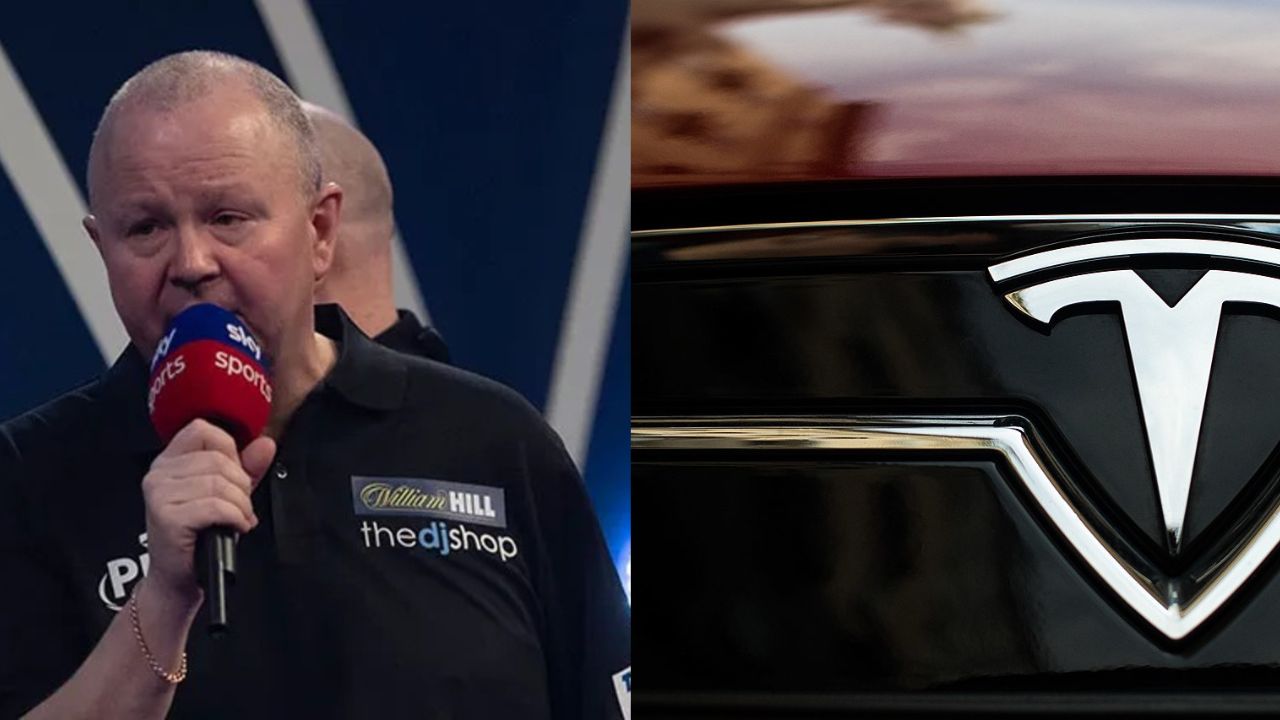

Tesla’s stock resurgence has captured the imagination of investors and drove the company’s valuation into the stratosphere. But according to veteran fund manager George Noble, that meteoric rise could be nothing more than the biggest bubble in stock market history.
Noble is a respected investor and former director of Fidelity International’s fund. He delivered a stark critique of Tesla’s market position in an interview with Business Insider.
He argues that the EV (electric vehicle) maker’s valuation has detached from the fundamentals that traditionally support sustainable growth. What he sees instead is a narrative-driven stock price propped up by hype and future promise rather than current performance. “I think this is the biggest bubble possibly in stock market history,” he said.
The Narrative vs. The Numbers

At the heart of Noble’s argument is a simple but powerful assertion: Tesla’s narrative appeal far outweighs its underlying business health. Investors, he says, have focused too much on ambitious future projects and not enough on the core metrics that drive real value.
“There’s not been a single stock, in my opinion, that has been so disconnected from fundamental valuation,” he told Business Insider.
Tesla currently boasts a market valuation in the neighborhood of $1.4 trillion, and that figure has stunned even seasoned market watchers. But Noble believes that such numbers dramatically overstate the company’s worth when measured against traditional financial metrics.
Based on sales, earnings, and competitive pressures, he asserts that the stock should trade in a far more restrained range of between $60 and $140 per share. If his estimate proves prescient, this implies a potential fall of roughly 80 percent or more from current levels.
A Reliance on Core Sales and Shifting Narratives
View this post on Instagram
One of Noble’s primary criticisms targets the wide gulf between Tesla’s valuation and its revenue sources. Despite the futuristic narratives attached to the company — everything from solar technology to robotaxis — roughly 87 percent of Tesla’s income still comes from selling vehicles.
And these sales haven’t been particularly robust. Tesla experienced its second consecutive year of declining deliveries in 2025, and Noble predicts that 2026 will mark a third year of contraction.
That decline in core business activity stands in stark contrast to the company’s lofty ambitions. Elon Musk has repeatedly positioned Tesla as more than just an automaker. Over the years he has shifted the company story from renewable energy and battery storage to autonomous vehicles and humanoid robotics.
But Noble characterizes much of this messaging as a distraction from mounting operational challenges.

“The product,” Noble says, “is the stock. It’s not the cars. It’s the narratives. He keeps going from one narrative to another. Years ago, it was solar power, then he had The Boring Company. He’s also promised Robotaxis for 10 years.”
This disconnect between narrative and fundamentals is what leads Noble to label Tesla as an extreme case of a market bubble. Unlike stocks that rise on steady earnings growth or disruptive innovation in established markets, Tesla’s valuation surge stems largely from speculative confidence about its future.
In Noble’s view, Tesla has become what he calls “the product is the stock.” The belief in what it might eventually become has eclipsed the reality of what it currently is.
A Warning Echoed by Other Skeptics

Other prominent investors share similar concerns about Tesla’s valuation. Business Insider recalls Porter Collins of Seawolf Capital, one of the traders made famous in The Big Short. He too echoed warnings that Tesla ranks among the market’s most overvalued names.
At the same time, Ross Gerber, once an early supporter of Tesla, has been trimming his exposure and suggested that 2026 could be a pivotal year for the company’s stock.
Tesla is no stranger to debate about its stock’s valuation. The company’s rise over the past decade has been dramatic, turning it into one of the most valuable automotive brands in history. But that ascent has always been accompanied by questions about sustainability and rational pricing.
Whether Tesla’s narrative power can endure a shift toward fundamentals remains to be seen.
A Potential Reckoning in a Shifting Market
Noble’s warning lands at a moment when broader market skepticism is rising, particularly around high-growth tech and EV stocks.
If his bubble thesis gains traction among institutional investors, Tesla could find itself under intense pressure as broader investor sentiment shifts toward profitability and away from vision alone. And it may not matter that he harbors visions of a “StarTrek Real” world where his company builds spaceships and ferries people to space.
For now, Tesla’s story continues to captivate believers and skeptics. But as Noble argues, investors may need to reassess whether the buzz is masking the real drivers of value or if, at some point, reality will catch up with expectation.
Sources: Business Insider