Tuesday morning started with a harsh reminder that some hazards do not come with warning signs, especially on roads that cut through Florida’s wetlands. This was not speeding, not distraction, not a chain-reaction crash. This was something far less predictable.
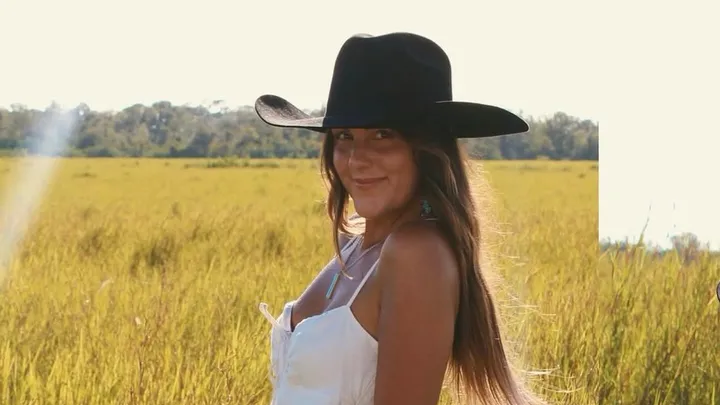
Maslin Kurtz, 25, of Myakka City, was driving on March 5 when her vehicle collided with an alligator and rolled, turning an ordinary trip into a violent crash in seconds, according to reporting from the Bradenton Herald and details shared through a GoFundMe created on her behalf.
The impact left her with fractures to her shoulder, sternum, and spine, injuries serious enough to require several days in the ICU. Crashes involving large animals rarely end cleanly, and when the vehicle flips, the margin for survival narrows fast.
And yet, she survived. She is now back home recovering, facing weeks of healing ahead and leaning on the kind of support that often only shows up after something goes very wrong.
Pulled From a “Crushed Car”
According to the fundraiser, a couple stopped after the crash and rescued Kurtz from her “crushed car,” staying with her and praying while waiting for emergency responders. “I thank God for y’all,” Kurtz wrote. “Truly a miracle I’m here today. Could not have done it without your help.”
Organizers described her as “an incredible, loving, and talented person filled with so much love and joy.”
How To Help
The GoFundMe was created to help cover medical expenses and lost income as Kurtz faces a long recovery. Her injuries did not require surgery, though organizers say she will be out of work for weeks as she heals.
As of the latest update, more than $6,300 had been raised toward a $9,000 goal.
This Is Peak Season—and Encounters Go Up
As unusual as this crash sounds, it comes at a time when incidents like this become more likely. According to the Florida Fish and Wildlife Conservation Commission, alligator courtship begins in early April, with peak mating activity in May and June.
During this period, alligators become more mobile, more territorial, and far more likely to leave the water in search of mates or new territory, increasing the chances of crossings on roads and in places where drivers do not expect them.
Alligators are found in all 67 Florida counties and can occupy nearly any freshwater or brackish environment, meaning the overlap between drivers and wildlife is wider than many people realize.
A Second Incident Shows the Pattern
In a separate case out of Cass County, Texas, a 12-foot alligator struck by a vehicle had to be euthanized due to its injuries, according to the Texas Parks and Wildlife Department. Game wardens were called to the scene around 4 a.m. after the animal was hit on FM 3129.
Officials noted that during mating season, alligators are actively moving in search of new waterways or mates and will typically move on if left alone.
“Alligators by nature are shy animals that, if left alone, keep to themselves and play an important role as apex predators in aquatic ecosystems,” the agency said, adding that feeding or harassing them is illegal.
How Common Are Incidents?
Despite the headlines, serious incidents remain rare. Wildlife officials say the odds of a Florida resident being seriously injured in an unprovoked alligator incident are roughly 1 in 3.1 million. Between 2012 and 2022, Florida averaged about 8 unprovoked bites per year that required medical attention.
As more people live, drive, and recreate near water, however, the chances of encounters naturally increase.
The Part That Matters
It is easy to write this off as another “only in Florida” story. It is not. This is what happens when a roadway intersects with a large, powerful animal moving in low visibility conditions during peak activity season.
For Kurtz, it meant a wrecked vehicle, multiple fractures, and a long recovery ahead. It also meant something else that does not always get enough attention—strangers stopping, stepping in, and helping when it mattered most.
For everyone else, the takeaway is simple. This is the time of year to expect the unexpected, especially near water, on rural roads, or in poorly lit areas.
Because while hitting an alligator is rare, the moment it happens, everything changes.