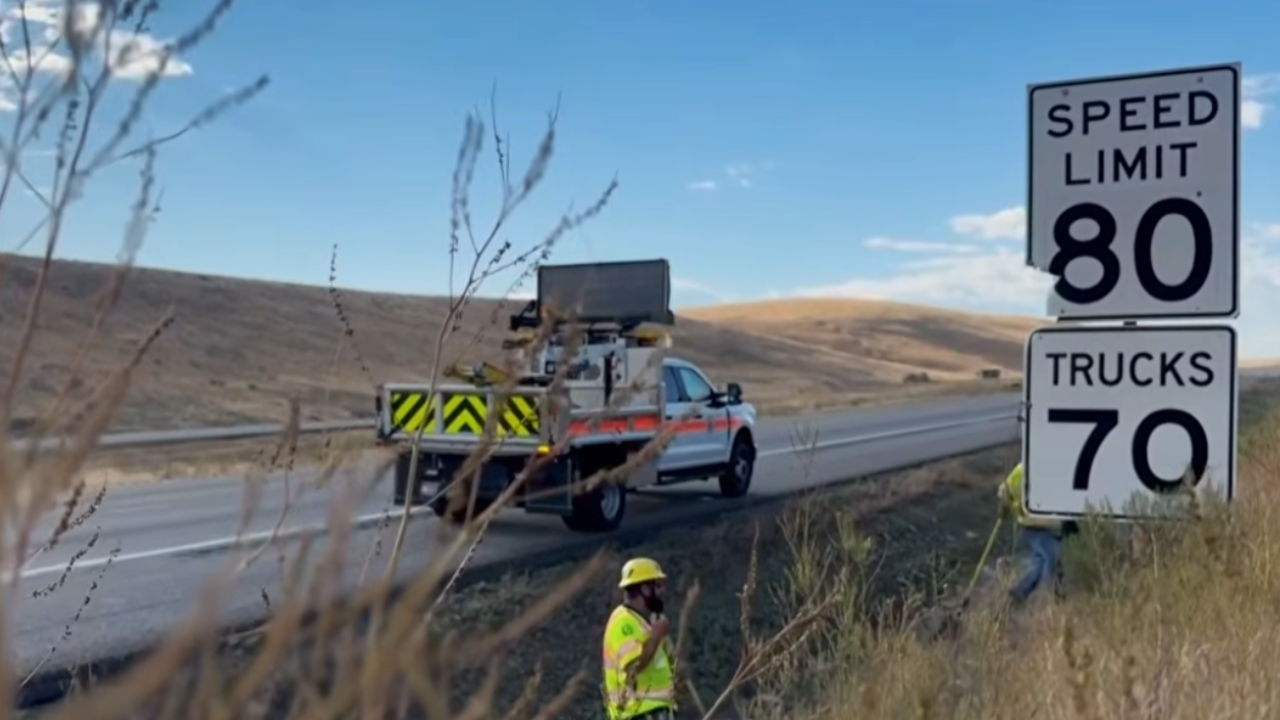
For more than a decade, Idaho drivers got used to a strange little dance on the interstate. Cars could legally cruise at 80 mph on certain stretches, while big rigs were stuck at 70. That gap created its own kind of traffic ballet, with passenger vehicles weaving around trucks that simply couldn’t keep pace even if their drivers wanted to.
As of July 1st, that gap is gone. Commercial trucks in Idaho can now legally travel up to 80 mph on interstates, matching the speed limit for cars. It’s a quiet but notable shift for a state that has spent years adjusting its highway speed rules in stages.
A little history helps explain how we got here. Back in the 1980s, Idaho’s speed limit sat at 55 mph before jumping to 65. Then in 2014, lawmakers bumped the limit on much of Interstate 84 and other rural interstates up to 80 mph for cars, while trucks stayed capped at 70. That 10 mph difference has now been erased, at least on paper.
The change didn’t require new signage or extra spending. Idaho Transportation Department crews spent the morning of July 1st removing the variable speed limit signs that used to remind truckers of their lower limit. Those signs aren’t headed to a landfill either. The sheet metal gets recycled at ITD’s sign shop, which is a nice reminder that even government agencies don’t love buying new metal when the old stuff still works fine.
Don’t Expect Every Truck to Suddenly Speed Up
Here’s the part that might surprise casual observers. Just because the law allows 80 mph doesn’t mean truckers will actually drive that fast. Many trucking companies electronically govern their vehicles well below the new limit, often for insurance reasons.
An 80,000 pound truck traveling 80 mph is a different animal than a sedan doing the same speed, especially on downhill grades where control becomes trickier.
Company Policy Still Rules the Road
Drivers interviewed described trucks governed anywhere from 65 to 68 mph, regardless of what state law now permits.
Independent owner-operators without those restrictions may take advantage of the higher limit, but company drivers are still bound by whatever their employer and insurer decide is safe.
What This Means for Everyday Drivers
For the average commuter, the practical impact might be smaller than expected. Some trucks will speed up.
Many won’t. ITD’s hope is that narrowing the legal gap between cars and trucks will smooth out traffic flow and reduce the frustration of speed mismatches on the highway.
The Real Takeaway Hasn’t Changed
Whether you’re driving 65, 70, or 80, the advice from transportation officials remains the same. Stay engaged, watch for slower vehicles, and match your speed to what’s actually safe rather than just what’s legal.
Idaho may have leveled the playing field on paper, but attentive driving is still what keeps everyone moving safely.