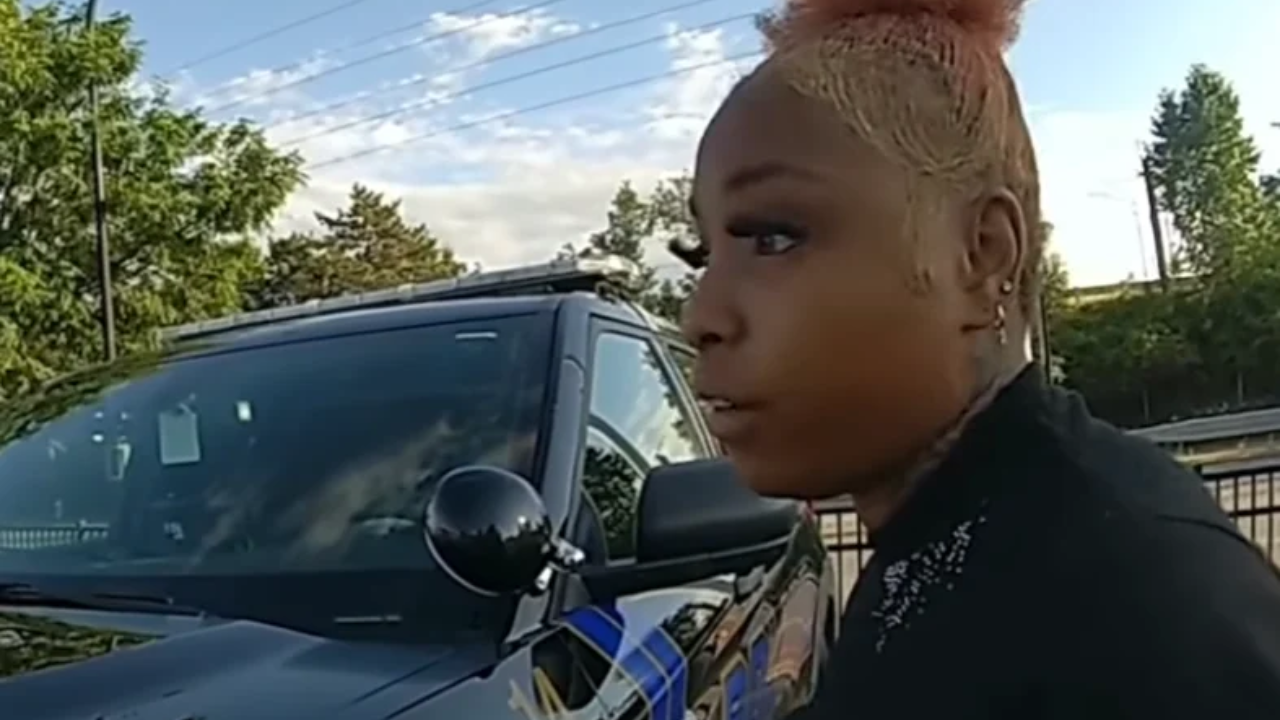
An 18-year-old Ohio woman walked into a car dealership hoping to secure a $54,000 Range Rover with no money down. She had identification, insurance documents, and people waiting outside to pick her up. What she didn’t have was a convincing explanation for the information on her credit application.
The encounter happened on August 26, 2025, near Akron, Ohio. Dealership employees became suspicious when the young woman struggled with basic personal details and appeared unfamiliar with her own credit history. Rather than complete the transaction, they contacted police.
Guessing Headlights identified the woman as La-La Moore through its records research. During questioning, Moore told officers that other people had arranged the paperwork and driven her to the dealership. She insisted she was only checking whether she could qualify for financing, but the people who had brought her there were no longer waiting outside.
The incident is receiving renewed attention after Code Blue Files uploaded the police footage on November 19, 2026. Although the encounter had appeared in earlier videos, the new upload offers another look at how dealership employees recognized a suspected financing scheme before a luxury SUV could leave the lot.
The Paperwork Problem
Embedded media follows; please allow a moment to load.
The trouble began with a temporary driver’s license and a credit application that didn’t quite match. A dealership employee told an officer that Moore had trouble completing her information and signed a name differently from how it appeared on the identification she presented.
Her answers raised additional questions. She reportedly claimed to live in the Cleveland area and work at Cleveland Clinic, but employees noticed inconsistencies involving her address and other information. When they asked about a previous automobile loan appearing on the credit report, she couldn’t say whether she had one.
The employee explained that the credit history showed a previous loan worth approximately $54,000. That was a substantial obligation for someone who appeared unable to recognize it.
Moore had also expressed interest in a monthly payment of about $450. According to the employee, she quickly signed paperwork after being shown a financing figure that raised further suspicion.
By the time police arrived, dealership staff had assembled enough discrepancies to explain why they believed the application deserved closer attention.
A Different Name
When an officer approached Moore, he asked whether she knew why police were there. She initially seemed uncertain before asking whether the problem involved her identification.
The officer then asked where she lived and whether she had identification bearing her real name. Moore acknowledged that the document she had presented wasn’t hers, and the officer asked for her name.
She answered, “La-La.”
Moments later, officers placed her in handcuffs. The officer also directed her attention to a forgery warning on the paperwork she had been using.
Once outside, the officer read Moore her Miranda rights and began asking how she had ended up at the dealership with the questionable documents.
Her explanation introduced another set of people into the story.
Someone Else’s Idea
Moore told the officer the plan didn’t originate with her. According to her account, others supplied the identification and instructed her to go to the dealership and ask about getting a vehicle with no down payment.
“I wasn’t gonna buy it. It was zero down,” she explained, adding that she wanted to see whether she would be approved.
The officer challenged that explanation. If she obtained approval, what was supposed to happen afterward? Moore said she expected to return another day, depending on what the people accompanying her wanted to do.
She also claimed that she was meeting the people involved for only the second time. They had driven her from the Cleveland area toward Akron, a trip she said was farther than she expected.
Moore told officers that she had a job and helped care for her grandmother. She also said she had never attempted anything like this before.
The officer pointed out that being 18 meant she could face adult criminal consequences for her actions. Her account of being recruited by someone else did not answer what she knew when she presented the identification.
Her Ride Disappears
As officers continued investigating, Moore explained that she had received insurance documents through her phone. She said the same people who arranged the identification had supplied those materials.
She also described the vehicle that brought her to the dealership as a gray Nissan. The people inside were supposed to be waiting near where they dropped her off.
By the time officers questioned her about their whereabouts, however, she believed they had gone.
“They probably saw me and took off,” Moore suggested.
The footage does not independently establish whether the occupants saw police or why they left. What it does show is Moore facing the investigation without the people she said had arranged the attempted purchase.
She repeatedly offered to show officers phone messages, a contact number, and information identifying a man she believed prepared the documents.
At one point, she asked whether she could show the officer the man’s face. The officer declined to examine that information immediately.
Moore also asked how long she would remain in custody and whether someone could contact her mother.
Before The Keys Change Hands
The case illustrates why a dealership’s financing process involves more than determining whether a customer qualifies for a loan. A vehicle can remain on the sales floor while someone submitting false documents potentially exposes themselves to criminal charges.
Ohio’s forgery law addresses knowingly using forged writings with a fraudulent purpose. A separate identity fraud statute concerns the unauthorized use of another person’s identifying information. The precise charges and required proof depend on the conduct involved.
The National Insurance Crime Bureau’s vehicle finance fraud investigation guide identifies customer identification, financial applications, down payments, and delivery arrangements as important parts of investigating suspicious transactions.
In Moore’s case, the dealership employees noticed problems before the Range Rover was delivered. Their questions about her signature, employment, address, and previous loans led to police becoming involved while she was still inside the business.
The footage documents Moore’s arrest, but an independently verified final court disposition was not available for this report. It does not establish whether she was ultimately convicted, acquitted, or had charges dismissed.