Germany has to be one of the top travel destinations for car enthusiasts. You get to see the birthplace of the automobile and iconic race tracks like the Nürburgring Nordschleife, and you can also test the limits of various cars on unrestricted Autobahn sections if you have the skill and stomach for it. Museum tours are also a must-have on your itinerary, and if you’re a Porsche fan, a German trip would be incomplete without a visit to the marque’s museum in Stuttgart-Zuffenhausen. This sprawling 60,000-square-foot facility displays 80+ cars at any given time, but the specific cars on display are rotated regularly, with certain iconic models like various 911 generations and the legendary 917 racer frequently displayed.
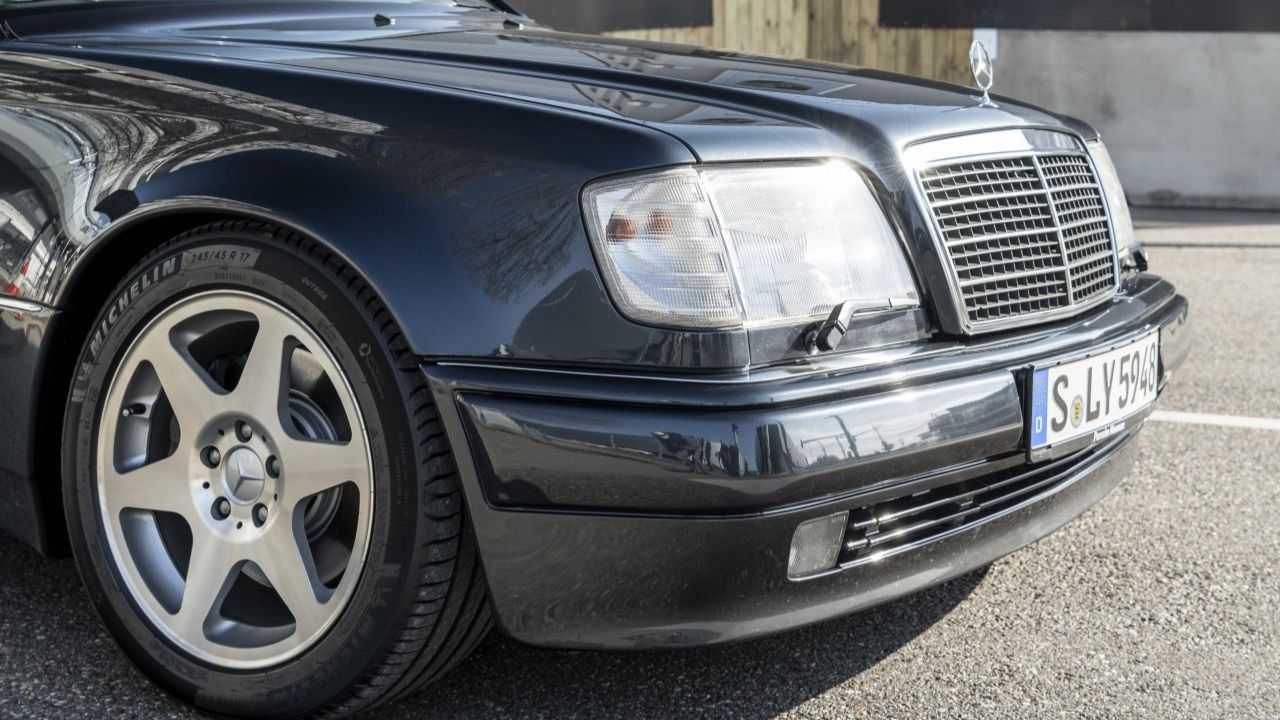
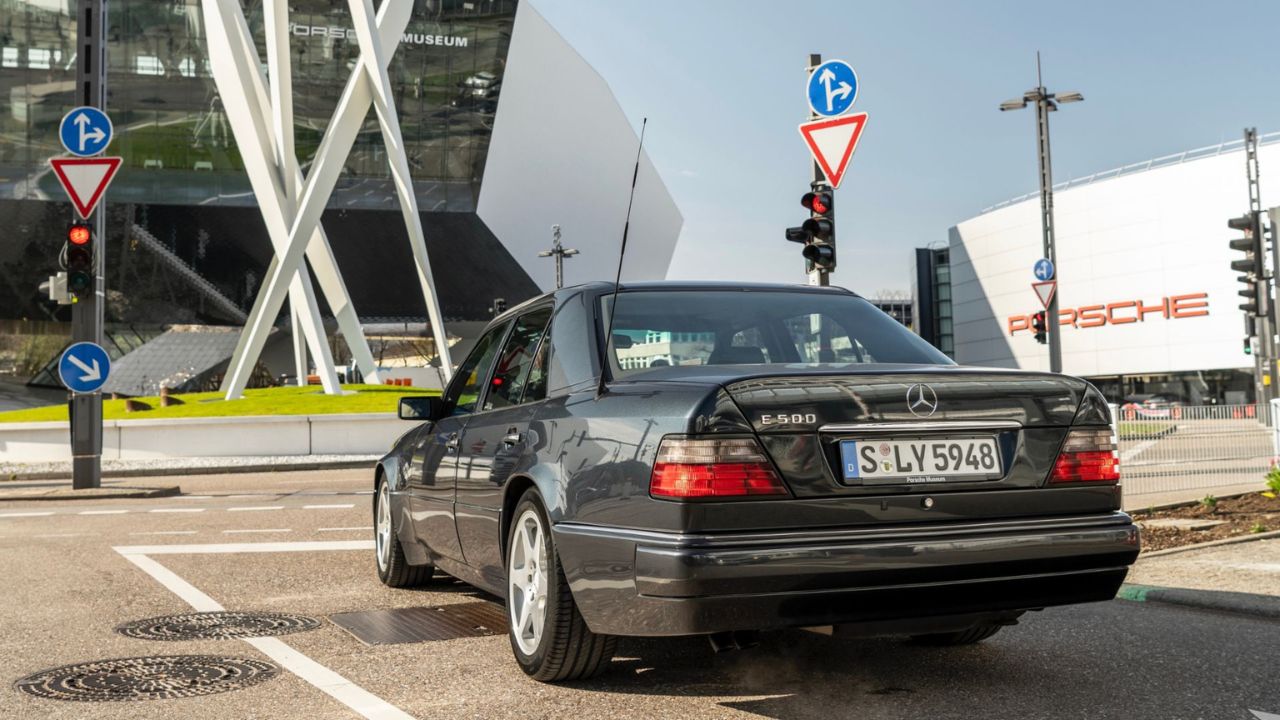
As you explore past and present Porsche icons in the museum, there’s a good chance you might come across a certain model that sticks out like a sore thumb, largely because it wears the Three-Pointed Star badge. This Mercedes-Benz model has appeared on display at the Porsche Museum, and it’s not there by accident, as it represents a moment in time when two cross-town rivals came together and built something truly special.
Mercedes-Benz 500 E: When Mercedes-Benz Performance Met Porsche Engineering
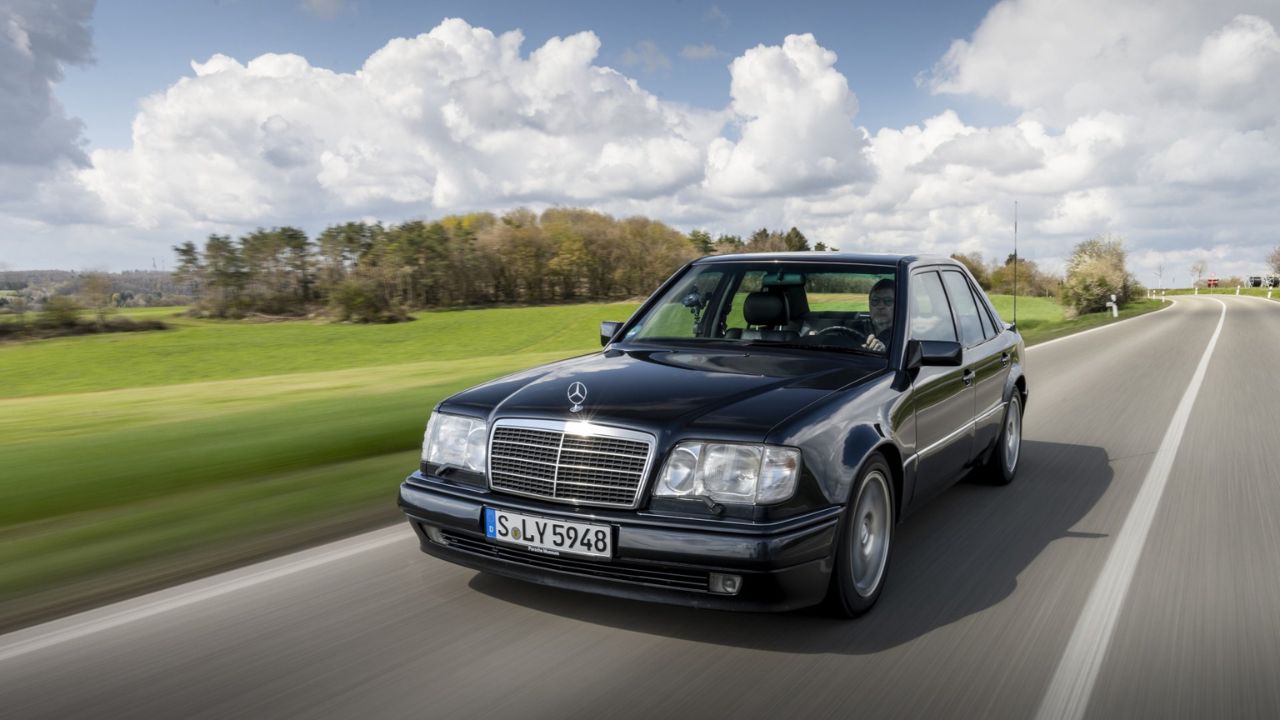
Tired of rivals like the E34 BMW M5 dominating the performance sedan market in the late ’80s, Mercedes-Benz hatched a plan to build a performance-oriented version of the W124 E-Class and reclaim its dominance. The plan was to fit the large 5.0-liter M119 V8 from the 500 SL into the W124 E-Class chassis, creating a super sedan that could beat its segment rivals and chase down genuine sports cars. However, the W124 required extensive re-engineering to fit such a large engine, and since the Mercedes-Benz engineering department had its hands full with the development of the W140 S-Class, Porsche was hired to help with the development and production of the car, resulting in the 500 E (later called the E 500).
Porsche engineers were instrumental in the 500 E project. For starters, they accomplished the primary mission, which was modifying the W124 chassis to accommodate the massive SL-sourced V8, which was rated at 322 hp and 354 lb-ft of torque. The body also had some modifications, most notably the signature flared wheel arches that created a wider track. To handle the power bump, the Porsche engineers also widened the front frame rails, reinforced the firewall, and created room for a larger four-speed automatic transmission and exhaust. They then tuned the suspension, brakes, and chassis, and the 500 E borrowed key hardware from Mercedes parts bins, including brakes from the 500 SL and a rear axle from the R126.
After the re-engineering process was done, Mercedes-Benz realized that the widened W124 couldn’t fit through some sections of the regular W124’s assembly line. Rather than do the expensive changes that were required, Mercedes-Benz opted to produce the 500 E at Porsche’s facilities, which were reportedly not operating at full capacity at the time. Porsche’s key involvement in the development and assembly of the 500 E serves as a testament to its engineering-for-hire history, and that collaboration is why the 500 E sometimes appears in the Porsche Museum, despite wearing a Mercedes badge.
The Ultimate Sleeper Sedan of the 1990s
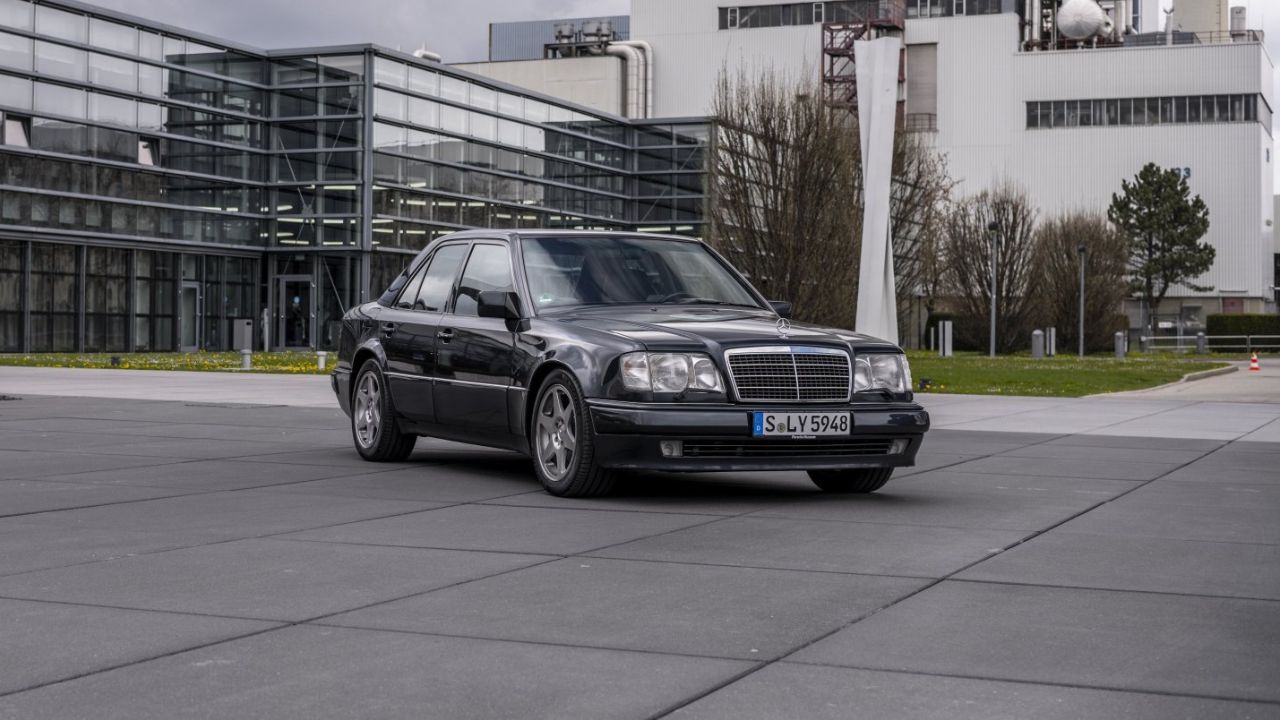
The 500 E project came to life because Mercedes-Benz wanted to build a high-performance E-Class sedan version that would beat performance sedans of the era, but after Porsche’s involvement, it ended up being fast enough to threaten Ferraris and other genuine sports cars of the ’90s. A product of some extensive fine-tuning by the industry’s kings of engineering, the 500 E had changes to the engine and drive components, body, chassis, suspension, and braking system, resulting in an Autobahn missile. Contemporary testing often put the 500 E around the mid-5-second to low-6-second 0–60 mph times and in the low-14s in the quarter-mile, quick enough to run with (and sometimes beat) performance sedans of the era and even nip at the heels of some early-’90s sports cars in certain tests. The 500 E was undoubtedly a menace in straight-line situations, but Porsche’s work on the chassis, suspension, and braking systems also made sure it could handle the corners with some finesse. Engineers involved in the project later emphasized that the chassis, brakes, and powertrain were tuned to deliver exceptional high-speed stability and balance.
Despite having such power and a limited top speed of 155 mph, nothing about the 500 E’s design screamed “fast” at first glance. Apart from the flared arches and wider stance, the 500 E looked much like any other run-of-the-mill W124, which is why it was famously nicknamed the “wolf in sheep’s clothing.” It wasn’t a showy vehicle; it represented pure understatement and only caught the eye at second glance. It’s truly one of the greatest sleeper cars of all time.
The 500 E Is a Rare Hand-Built Masterpiece
Since the 500 E production process was far more manual and physically demanding than a standard modern assembly line, it reportedly took a staggering 18 days to complete a single car. Body assembly and structural modifications were handled at Porsche’s Werk 2 in Zuffenhausen, in the former Reutter building, using Mercedes-supplied body parts and Porsche-specific components like the widened front wings. The bodies then went to Sindelfingen for paint before final assembly and the drivetrain ‘marriage’ were completed at Porsche’s Rössle Bau in Zuffenhausen. Finally, the finished cars were sent to Mercedes-Benz for final inspection and delivery.
Only about 10,479 units were built in total, with production running into 1995. Of those, roughly 1,500–1,528 were shipped to the U.S., making it a relatively rare find.
The 500 E Project Helped Porsche at a Time of Crisis
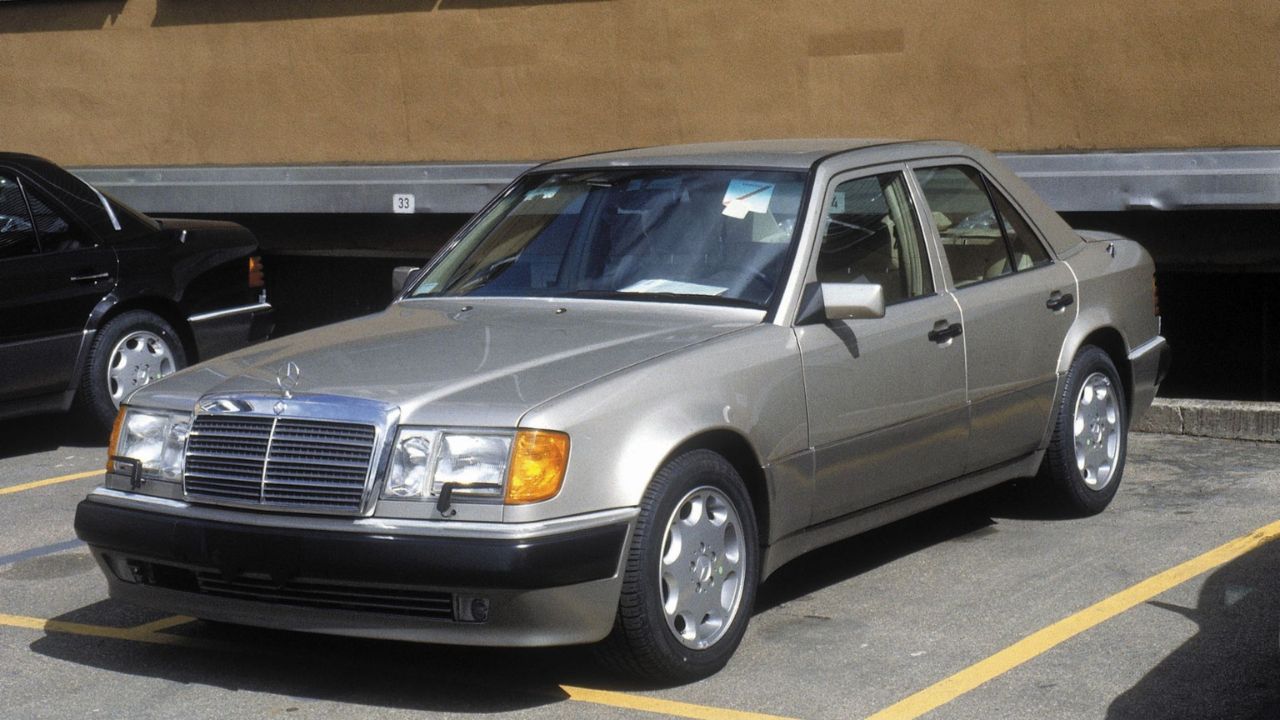
The Mercedes-Porsche collaboration that birthed the 500 E couldn’t have come at a better time, particularly for Porsche. After a decade of declining sales, falling production, and a weak global market, Porsche was facing a crisis that almost destroyed the fabled brand. Thankfully, the 500 E project came along and not only injected some much-needed cash flow to keep Porsche afloat but also allowed the company to use its dormant facilities and keep its workforce employed during a major revenue slump.
Porsche was also able to retain its elite engineering teams and establish a secondary business model of selling its engineering and production services to other automakers. The 500 E didn’t single-handedly save Porsche, but it helped stabilize the company long-term, which allowed them to develop the models that would eventually secure their future.
Mercedes-Benz 500 E Collectibility Today
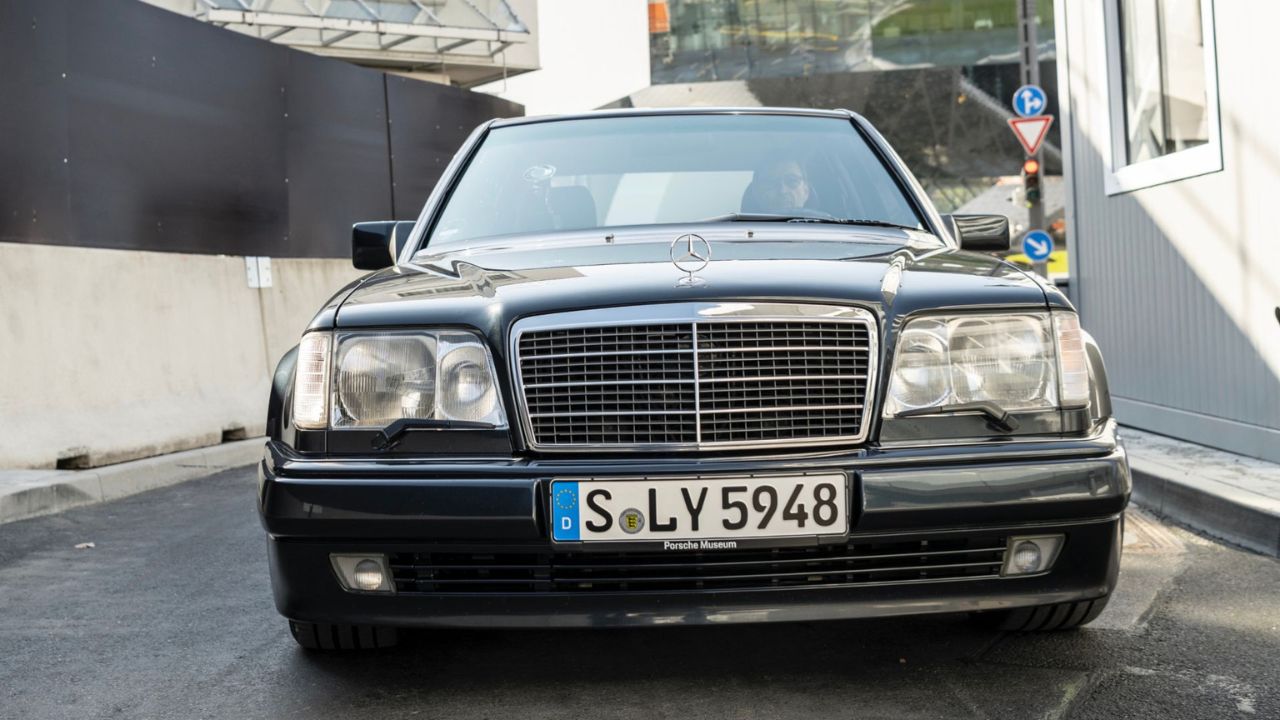
The 500 E went on sale in the U.S. in the 1992 model year, with a price tag of around $81,800. Even by modern standards, this wasn’t a cheap sedan at all. The 500 E cost a pretty penny more than the standard W124 it was based on, and even when compared to direct rivals like the BMW M5 E34, it was a significantly more expensive option that required deep pockets.
Hemmings reported that prices tumbled to an average of $11,000 to $14,000 in a 2012 guide but have bounced back in recent years to an average of $41,000, which tracks when you check auction results. Prices originally collapsed thanks to a combination of luxury car depreciation rates, high maintenance costs, and the understated nature of the 500 E, but as more collectors recognize its Porsche development story and low production, well-maintained, well-documented, low-mileage cars have tended to command the strongest prices.
The Mercedes-Benz 500 E occupies a special place not only on Porsche’s museum floor but also in automotive history books, serving as a reminder of the great things that can happen when great companies work together.