For years, Hyundai has danced around the truck market without fully committing. The Hyundai Santa Cruz gave buyers something different, but it never aimed at the serious off-road crowd.
Now that appears to be changing.
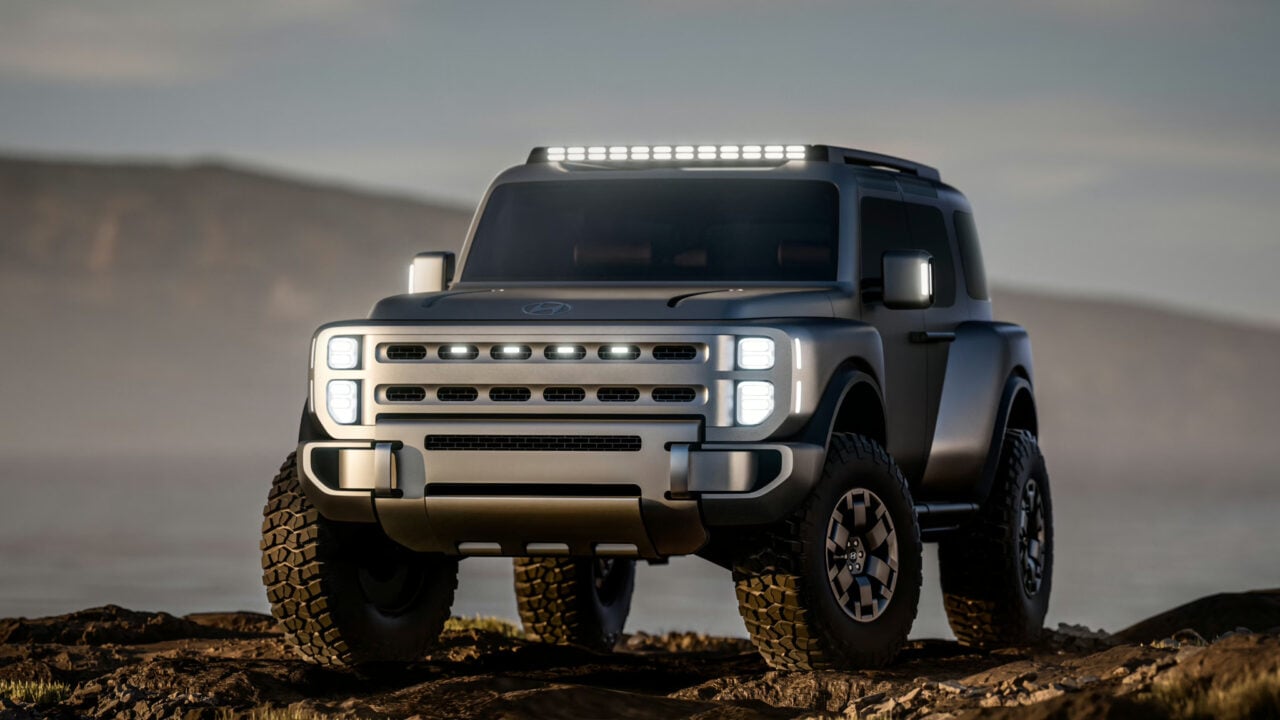
At the 2026 New York Auto Show, Hyundai unveiled the Boulder Concept, a rugged, boxy machine that looks far more ready for Moab than mall parking lots.
Unlike many concepts, this one seems to signal something bigger than flashy design, because beneath the squared-off bodywork sits Hyundai’s first serious body-on-frame architecture, the kind of platform real trucks and serious trail rigs are built on.
Hyundai Finally Looks Ready for Real Off-Roading
The Boulder Concept is a sharp departure from Hyundai’s recent sleek EV styling language.
Instead of curves and aero obsession, it leans into upright proportions, chunky fenders, short overhangs, and classic two-box SUV toughness. It looks intentionally functional, more tool than sculpture.
That’s important because buyers in the midsize truck and off-road SUV world care deeply about authenticity.
If you want to challenge icons like the Toyota Tacoma, Ford Ranger Raptor, or Jeep Wrangler, you need need hardware that looks and performs the part, not just marketing language
It’s Built Around a Proper Truck Chassis
The biggest takeaway is not the styling, but the platform.
Hyundai says the Boulder previews a new ladder-frame setup designed for serious towing, rough terrain, and multiple powertrains.
That means internal combustion, hybrid, and EV versions could all theoretically share the same bones.
Smart move.
Truck buyers are practical people. Many still want gasoline power for range, simplicity, and rural usability. Others may embrace hybrid torque or electric operation. Hyundai seems to understand the market is not one-size-fits-all.
Trail Hardware That Actually Makes Sense
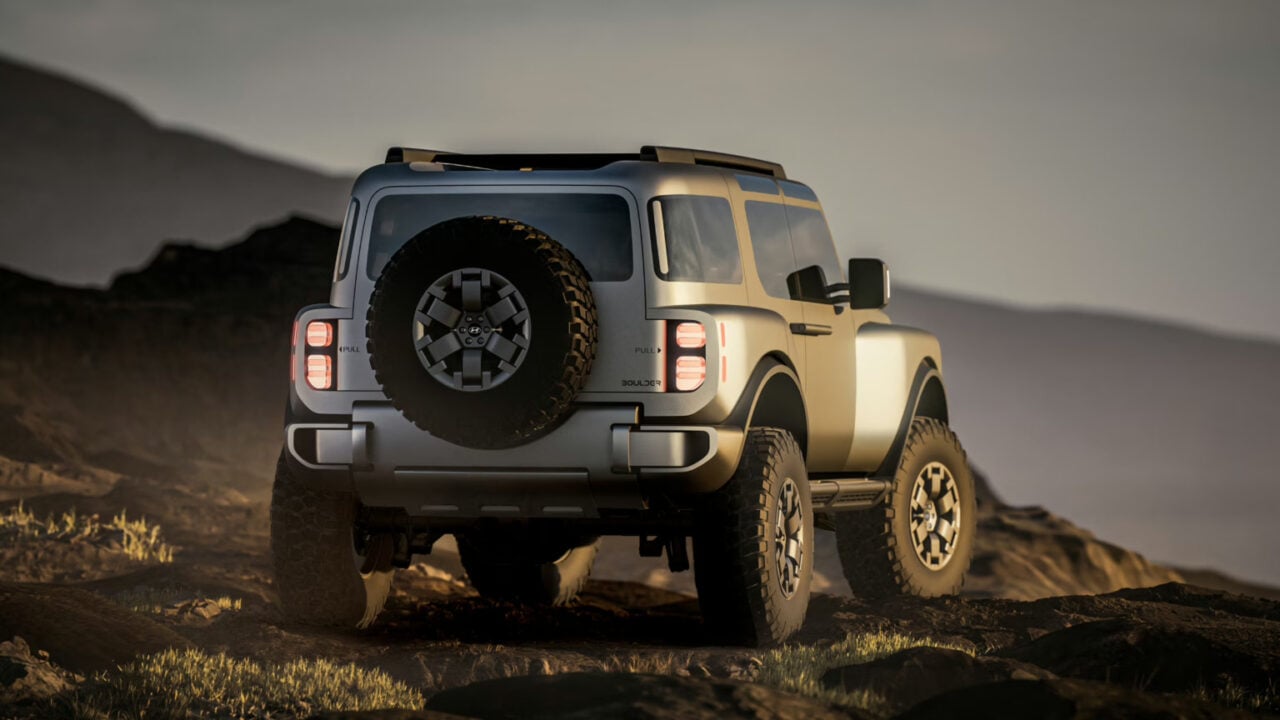
The concept reportedly rides on 37-inch mud-terrain tires and packs a full-size spare mounted out back.
That alone tells you Hyundai wanted this thing discussed in the same breath as legitimate off-roaders.
There is also a clever split or multi-hinged tailgate setup and a sliding rear window, features adventure buyers actually appreciate.
Too many concepts chase impossible fantasy design, but the Boulder appears to mix drama with real-use ideas.
That is how you earn attention.
The Interior Gets Something Very Right
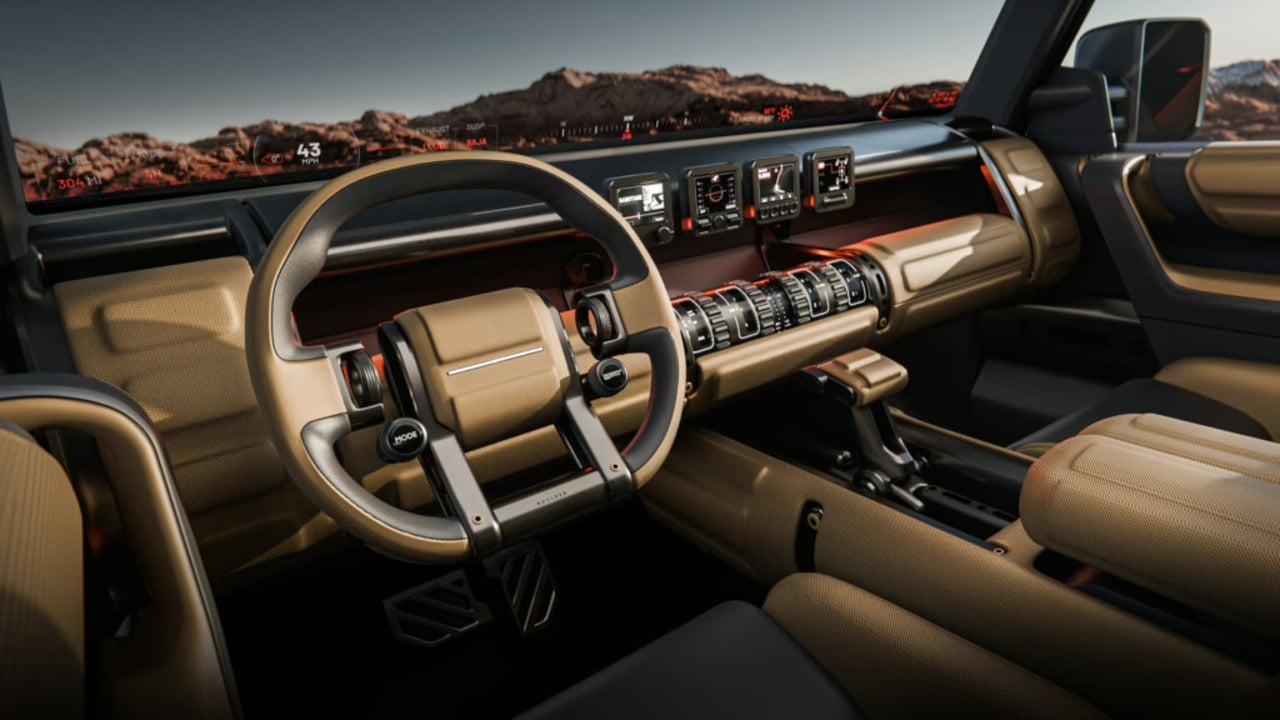
Perhaps the smartest part of the Boulder is inside.
Instead of one giant touchscreen dominating everything, Hyundai reportedly used multiple smaller displays combined with real knobs and tactile controls.
Good!
When bouncing over rocks, wearing gloves, or trying to make quick adjustments off-road, physical buttons beat buried touchscreen menus every time.
Some automakers are finally relearning this lesson after years of turning dashboards into tablets.
Beyond The Concept
The midsize truck market remains one of the most valuable and brand-loyal segments in North America.
Toyota dominates with the Tacoma. Ford is strong with the Ranger. GM has the Chevrolet Colorado and GMC Canyon. Nissan fights with the Nissan Frontier.
Hyundai entering the segment seriously would be a major development.
It would also show the company believes lifestyle trucks and rugged SUVs still have plenty of future left, even as we’re moving toward an electrified world.
The Real Verdict
Concepts are cheap. Production trucks are hard.
The Boulder Concept feels less like a design stunt and more like Hyundai testing the waters before jumping in.
If the final production version keeps the boxy looks, useful cabin, and proper truck underpinnings, established players should pay attention.
Hyundai already proved it can disrupt markets quickly.
Now it may be aiming for dirt.