Walking into a dealership service department has always carried the same vibe as a trip to the dentist. You go in for one thing, and somehow you leave owing money for six others. Suddenly, your car “needs” a transmission flush, a cabin air filter the size of a dinner napkin, and something mysteriously called a “fuel induction service.” Trust the process, they say.
Well, a company called UVeye is here to either fix that trust problem — or, depending on how you look at it, give dealerships an even sharper set of eyes.
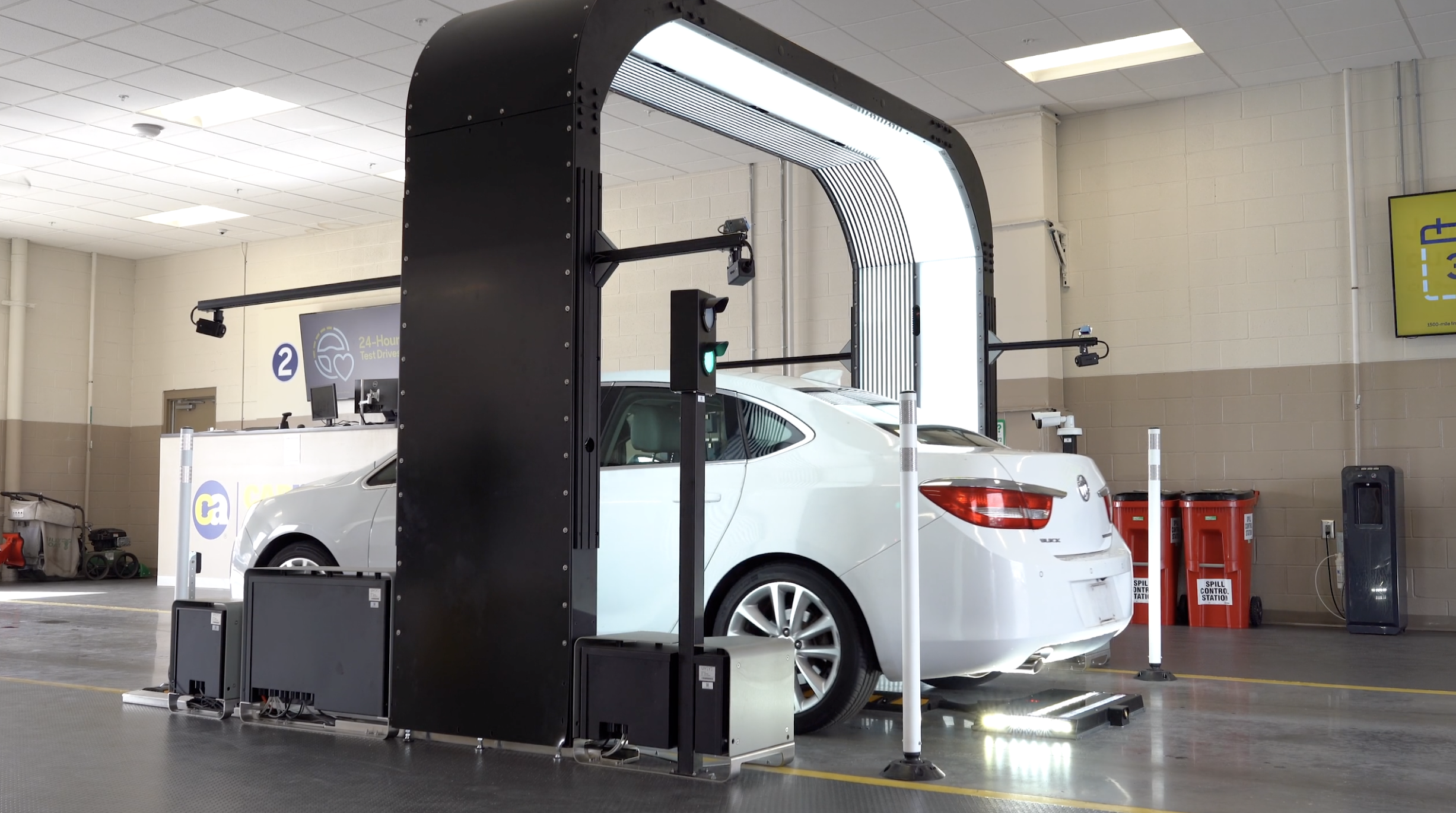
The system works like a drive-through car wash, except instead of soap and spinning brushes, you get bombarded with high-resolution cameras capturing hundreds of images of your vehicle in just a few seconds. We’re talking detail down to 2 millimeters. Scratches, dents, oil leaks, tread wear, that mystery screw you’ve been ignoring in your rear tire for three months — all of it, documented.
“We’re like an MRI for your car,” said Matt Small of UVeye to a Los Angeles news station, which is a sentence that would have sounded like science fiction twenty years ago but now just sounds like a Tuesday.
Here’s how AI diagnoses your car in California repair shops
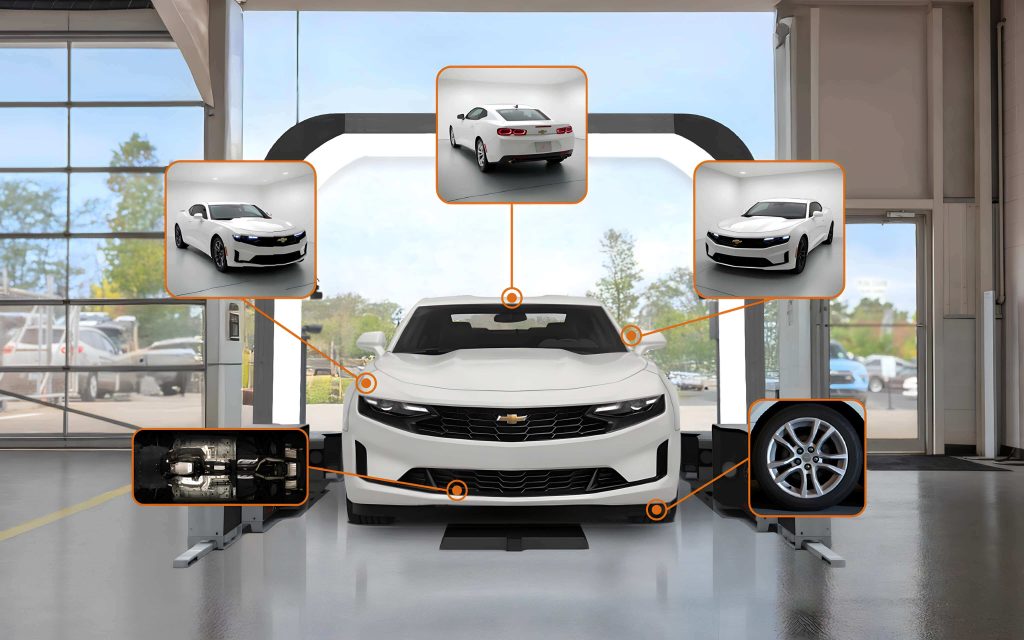
What makes the technology genuinely interesting — and a little wild — is its origin story. UVeye was originally developed for military applications, scanning the undersides of vehicles for explosives and other threats. Now that same undercarriage-imaging tech is being deployed to find out if your Honda Accord has rust issues. From bomb detection to checking whether your rocker panels are flaking. Progress.
Using infrared imaging and artificial intelligence, the system generates a full condition report for customers in under a minute. The AI gets smarter over time, too — UVeye is currently scanning over 3 million vehicles a month, which means it has seen more car underbellies than the most dedicated gearhead on YouTube.
Crown Dealership in Ventura, California is among a growing wave of dealerships adopting the platform, and service manager Mark Thompson has seen firsthand how customers respond when they get to zoom in on their own vehicle’s chassis and actually see what’s going on.
“It’s a pretty neat thing to see a customer’s reaction when they zoom in and say, ‘Whoa, I can see every nut and bolt on the bottom of this car,'” Thompson said.
Yes, the car community spent decades debating whether dealerships were ripping them off. Now there’s a machine that hands both the customer and the service advisor the same photos and says: figure it out together. That’s either a breakthrough in transparency or the most polite accountability system ever invented.
The scanner also timestamps a vehicle’s condition the moment it arrives; useful for settling those classic “that scratch wasn’t there when I dropped it off” arguments that have launched a thousand passive-aggressive Yelp reviews. Trade-in evaluations get a boost too, since there’s now actual visual evidence rather than a guy in a lot walking around your car with a clipboard and a frown.
The future of AI car scanners (is now)
And the tech isn’t staying in dealership lanes. Rental car companies, large commercial fleets, shipping ports, and even Homeland Security are using UVeye systems. So yes, the same technology keeping tabs on whether your tires are wearing unevenly is also quietly doing national security work. Multitasking icon.
One genuinely useful feature that most drivers will completely ignore until it’s too late: the system can detect the actual age of your tires. Not just tread depth — the age. Because apparently a lot of people are still rolling around on decade-old rubber that looks fine on the outside and is quietly plotting against them.
“Really what we find is it doesn’t replace humans — it helps humans do their job better,” Small said.
Which is the right answer, honestly. The car community already has enough to debate — turbo vs. naturally aspirated, lowered vs. stance, dealer oil change vs. quick lube — they don’t need “robot took my mechanic’s job” added to the list.
For consumers who’ve always wanted a little more proof behind a $5,000 repair estimate, UVeye might be the closest thing to a fair witness the service bay has ever had.