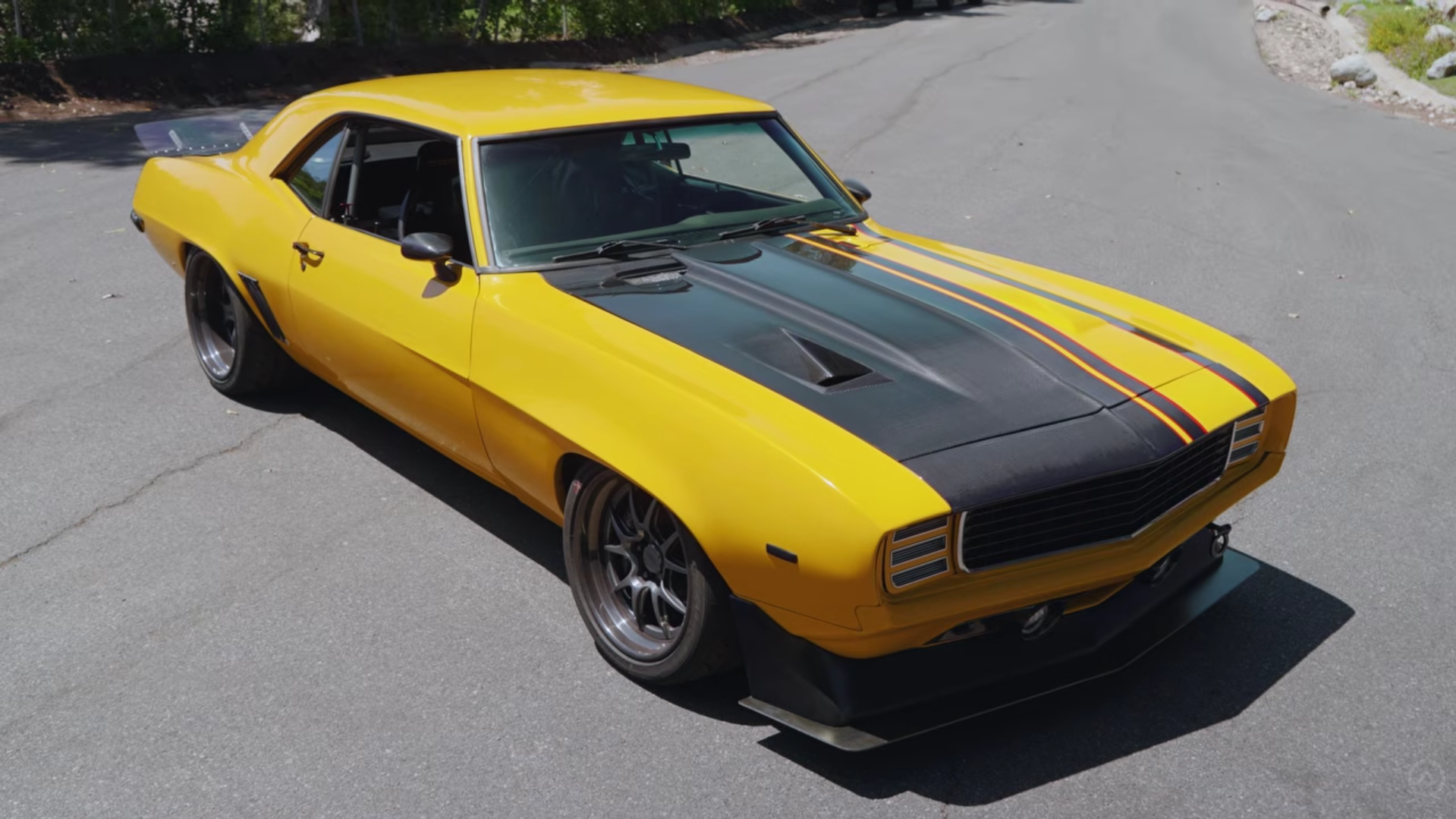
Some pro-touring builds look like race cars but spend most of their lives parked at shows. As featured in a recent video from Autotopia LA, Efrain Diaz’s 1969 Chevrolet Camaro, nicknamed “Poledancer,” is very much the opposite.
Diaz has owned the first-generation Camaro for roughly 25 years, transforming what started as a rough $5,000 swap-meet project into a seriously capable competition machine. The car has evolved through multiple suspension and drivetrain setups as Diaz continued chasing better performance on autocross courses, road courses, and time-trial events.
Today, the Camaro combines roughly 700 horsepower from a naturally aspirated LS-based V8 with a six-speed manual transmission, independent rear suspension, substantial weight savings, and extensive chassis work. Despite the track-focused hardware, it remains street legal and even retains air conditioning.
That combination is exactly what makes this build special. Poledancer is brutally fast when the road opens up, yet Diaz can still drive it to an event, compete all weekend, and head home without loading it onto a trailer.
A 700-HP Naturally Aspirated LS Sits Under The Hood
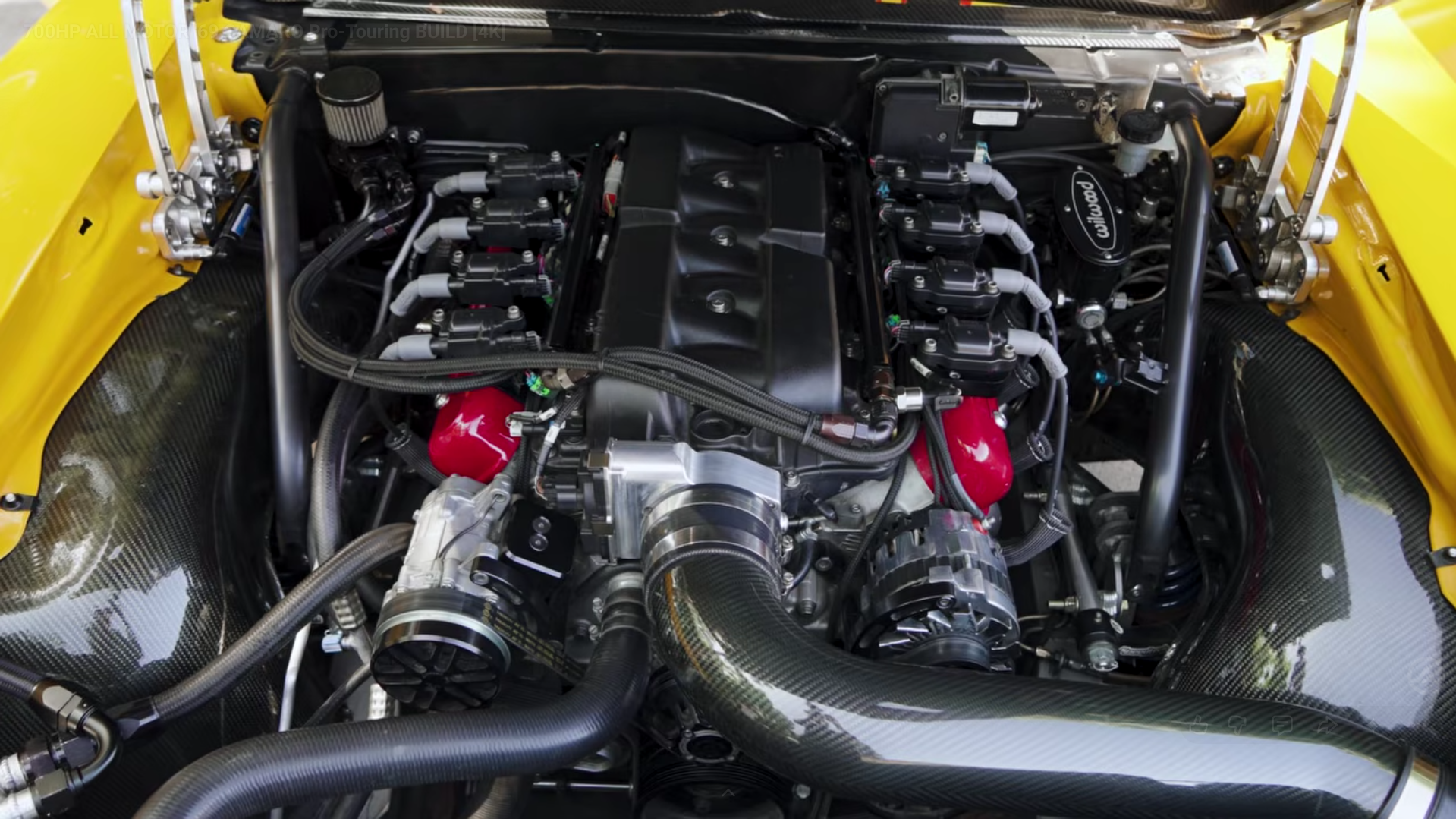
The Camaro is currently powered by a 434-cubic-inch LS-based engine built by Scoggin-Dickey after the car’s previous LS7 suffered a catastrophic failure. Diaz says the current combination produces around 700 horsepower, with output at the wheels landing somewhere in the 600-hp range.
Power is sent through a T56 Magnum six-speed manual transmission that was rebuilt with upgraded internals after suffering its own failure during an event at Pikes Peak International Raceway. A McLeod RXT twin-disc clutch handles the connection between the engine and gearbox, while a 3.70 rear gear helps the big naturally aspirated engine climb through the revs quickly.
The engine reportedly revs to around 7,500 rpm, giving the Camaro a very different character from the turbocharged and supercharged builds often seen in modern pro touring. Diaz has also retained Vintage Air air conditioning, reinforcing the idea that this is still supposed to function as a usable road car.
Carbon Fiber Helps Offset Some Serious Hardware
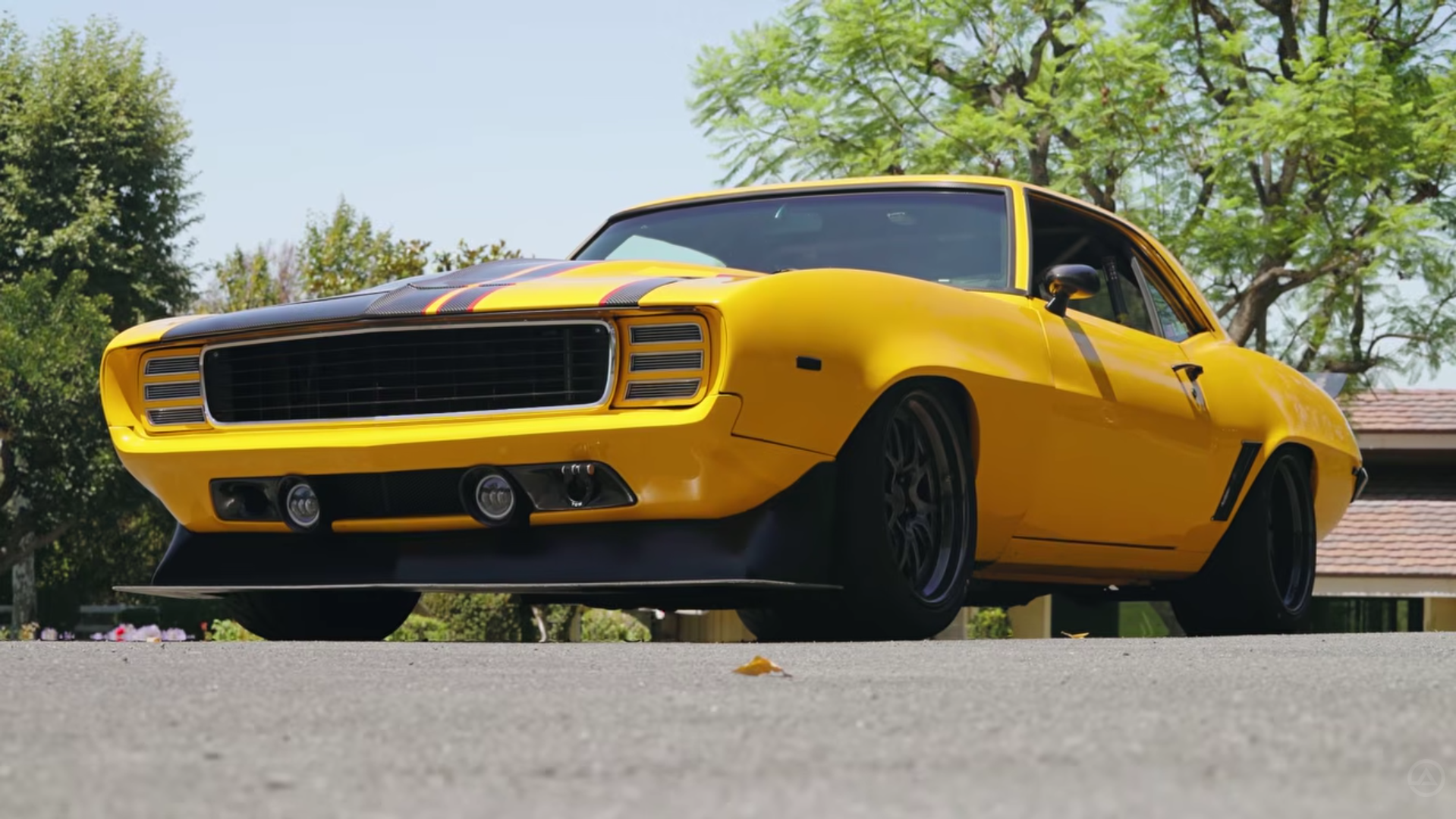
Nearly everything from the doors forward incorporates carbon fiber, including the doors themselves. Diaz says each carbon door weighs approximately 17 pounds compared with roughly 74 pounds for the original steel pieces, creating substantial weight savings in one area alone.
The car rides on 18×12-inch Forgeline wheels at all four corners wrapped in 315-section tires, giving Diaz the convenience of carrying a single spare tire size for competition. Wilwood racing brakes sit behind the wheels, while the car also uses a BMW-sourced MK60 ABS system that can be disabled depending on the event.
Aerodynamic changes include a custom front splitter, extensive brake ducting, and an adjustable carbon-fiber rear spoiler. Much of the fabrication, from inner fenders to exhaust components and interior panels, was completed by Diaz himself in his own garage.
A One-Off Speedtech Chassis Changes Everything
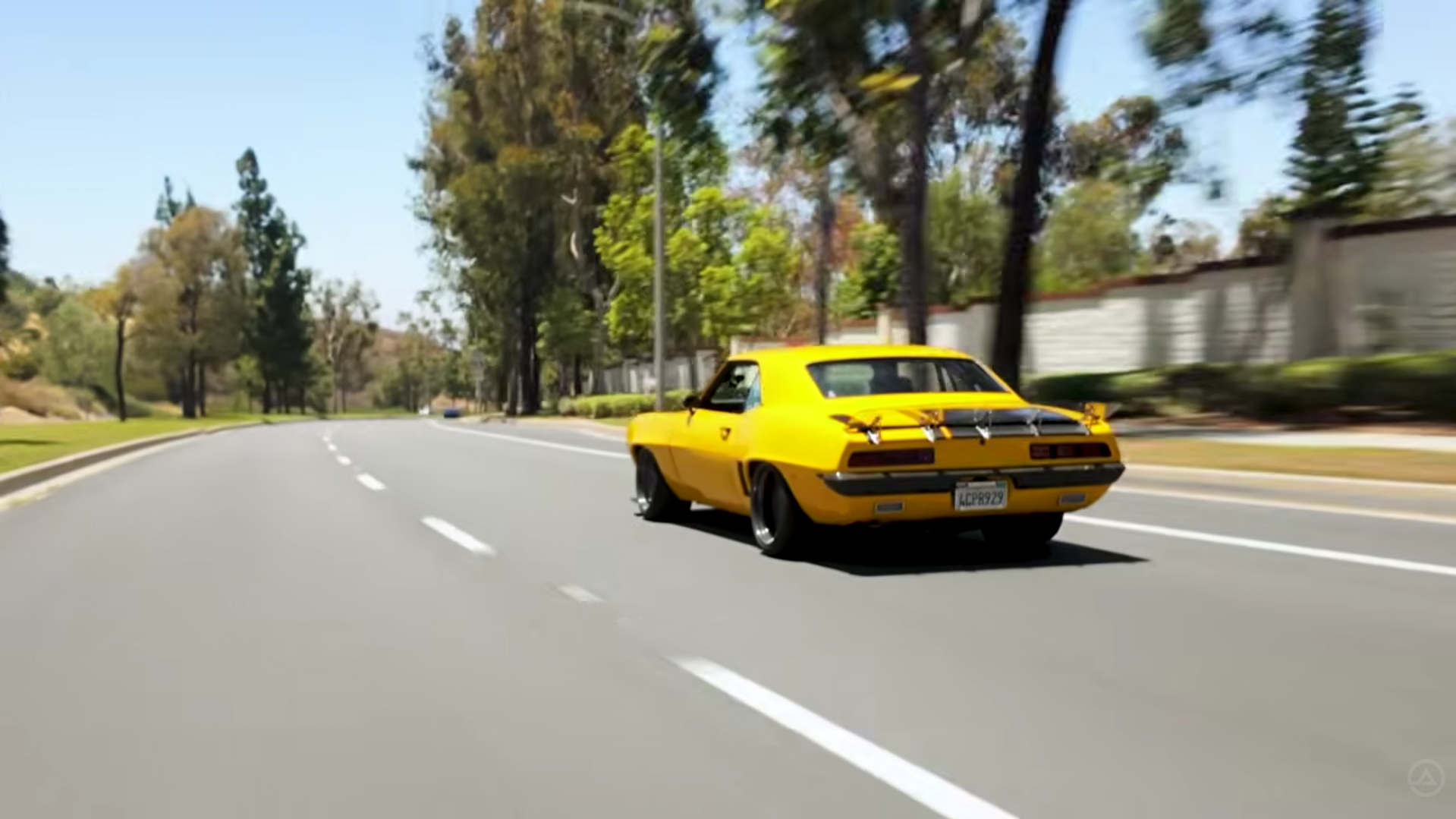
Underneath the classic Camaro body is where the build becomes especially serious. Diaz says the car uses Speedtech’s Extreme independent rear suspension and a one-off lightweight XS chassis configuration that was created specifically for this first-generation Camaro.
The structure is heavily reinforced with welded subframe connectors and chassis bracing that ties the front and rear sections together. A roll cage adds further rigidity, while the suspension geometry and independent rear setup give the car significantly greater capability than the original 1969 underpinnings could ever offer.
The IRS uses serious hardware, including Porsche 930-style axles and a center section based around Ford 9-inch components. Diaz says the change to independent rear suspension made a noticeable difference in how the Camaro behaves when pushed hard.
It Is Still A Camaro Inside
Despite the race-focused engineering, Diaz deliberately preserved parts of the original muscle-car experience. The cabin retains recognizable Camaro touches alongside Wilwood pedals, a race-oriented shifter, brake-bias adjustment, a Haltech control setup, a cool-suit system, and a custom dashboard incorporating a flat-faced 1969 Chevrolet Nova dash.
There is also a functioning stereo system with six speakers, along with working climate control and other road-car conveniences. Even the headlights have been adapted to keep the Camaro usable after dark, with supplemental lighting providing high- and low-beam functionality when needed.
The result is a cabin that feels like a competition car without becoming miserable on the street. That balance is difficult to achieve, particularly in a car powerful and capable enough to compete seriously.
Built To Race, Yet Happy On The Street
During Autotopia LA’s drive, the Camaro appeared to make an immediate impression with its steering response, braking, grip, and naturally aspirated soundtrack. Host Shawn Davis repeatedly praised how cohesive the entire package felt, describing it as one of the best cars the channel had featured.
That may be the biggest compliment a pro-touring build can receive. Poledancer does not rely solely on a huge horsepower number or dramatic appearance; every major system has been developed through years of driving, breaking, rebuilding, and competing.
After roughly six major versions over 25 years of ownership, Diaz has effectively turned his 1969 Camaro into the kind of machine pro touring was always supposed to produce. It looks unmistakably like classic American muscle, makes around 700 naturally aspirated horsepower, and can still cruise home after spending the day attacking a racetrack.