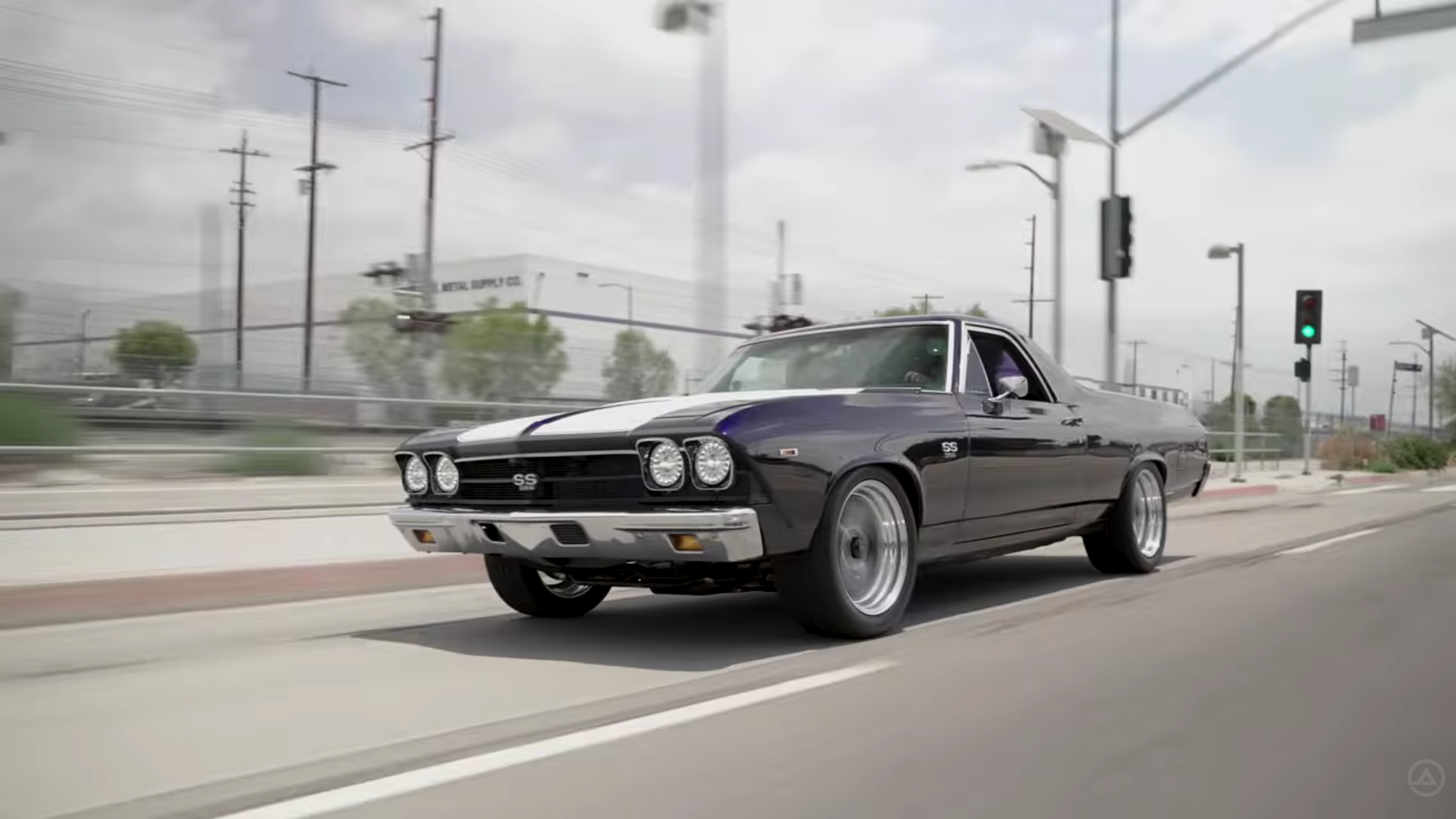
Some restomods are built to chase perfection, but this 1969 Chevrolet El Camino SS, featured on Autotopia LA, was brought back for a much more personal reason. Its owner, Darrin, has had the car for roughly 40 years, turning it from a daily driver and street racer into a long-dormant project before finally reviving it with the same circle of friends who helped wrench on it decades ago.
The El Camino originally ran a big-block V8 with a four-speed manual, and Darrin spent years gradually making it quicker. At one point, the car reportedly ran an 11.32-second quarter-mile at Los Angeles County Raceway before engine trouble and an increasingly track-focused setup eventually pushed it out of regular use.
Life then got in the way. The El Camino sat for roughly three decades, spending time in and around the garage while work, family, and other priorities took over.
When longtime friend Chris from Open Roader Garage convinced Darrin to bring it back, the goal was not to create a flawless show car. Instead, they built something that preserved the El Camino’s old-school personality while giving it the power, brakes, suspension, and reliability needed to be enjoyed again.
A 630-HP LS3 427 Brings It Back to Life
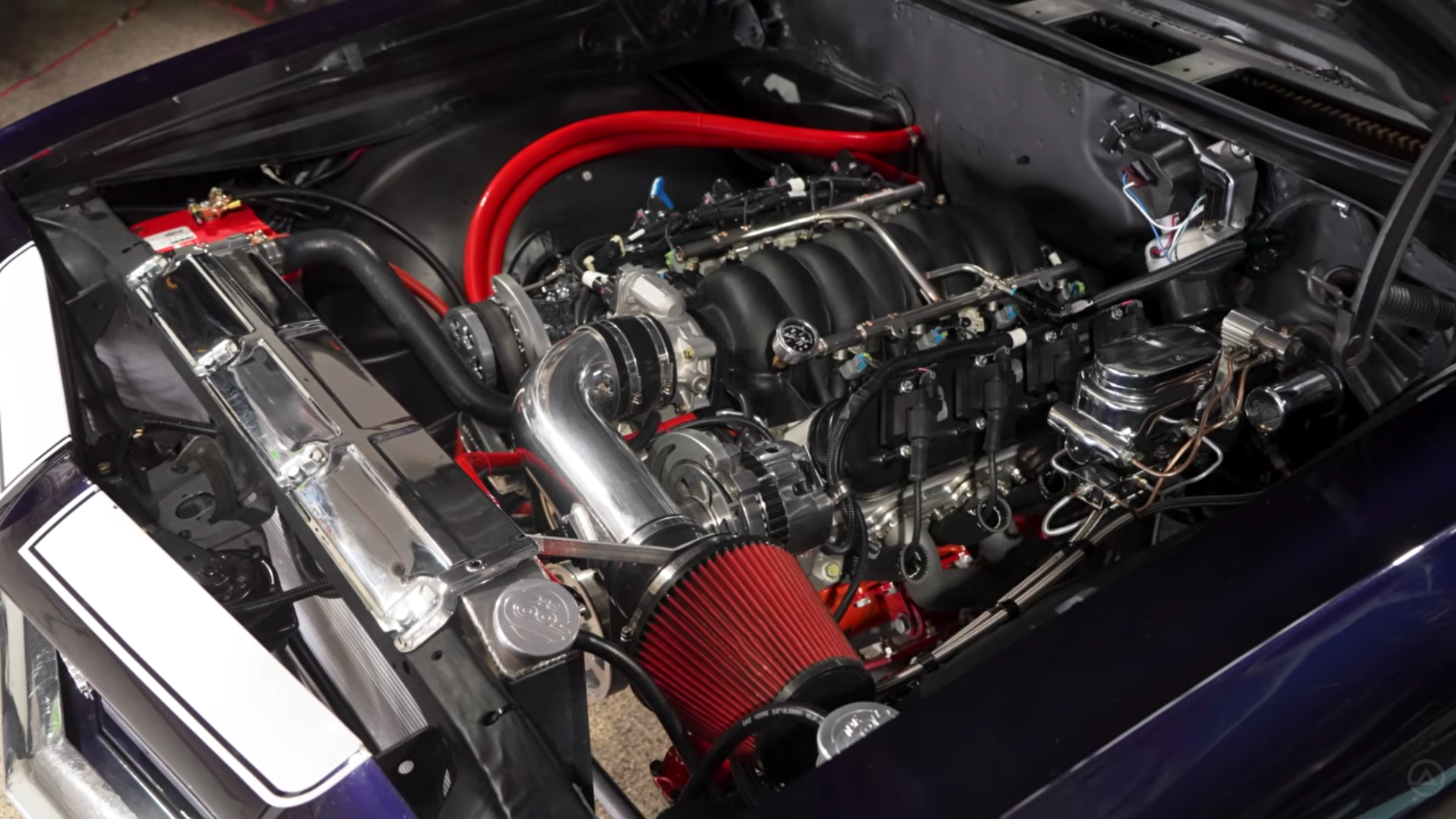
The biggest change sits under the hood, where the old big-block has been replaced by a naturally aspirated Blueprint Engines LS3-based 427 V8. According to Darrin, the engine’s dyno sheet shows 630 horsepower, while output at the rear wheels is around 550 hp with a similar torque figure.
Power is sent through a Tremec TKX five-speed manual transmission. The car retains its original 12-bolt Positraction rear axle and 4.10 gearing, keeping an important part of its old street-racing character intact.
A full three-inch stainless-steel exhaust runs all the way to the rear, giving the LS-powered El Camino the soundtrack to match its performance. The cooling system was also renewed, with Darrin reporting operating temperatures around 185 degrees.
The result is significantly more power than the car realistically needs, which is part of the appeal. Even rolling into the throttle can get the rear tires moving around, and both owner and host agreed that adding much more horsepower would only make the car harder to use.
The Chassis Got Serious Upgrades Too
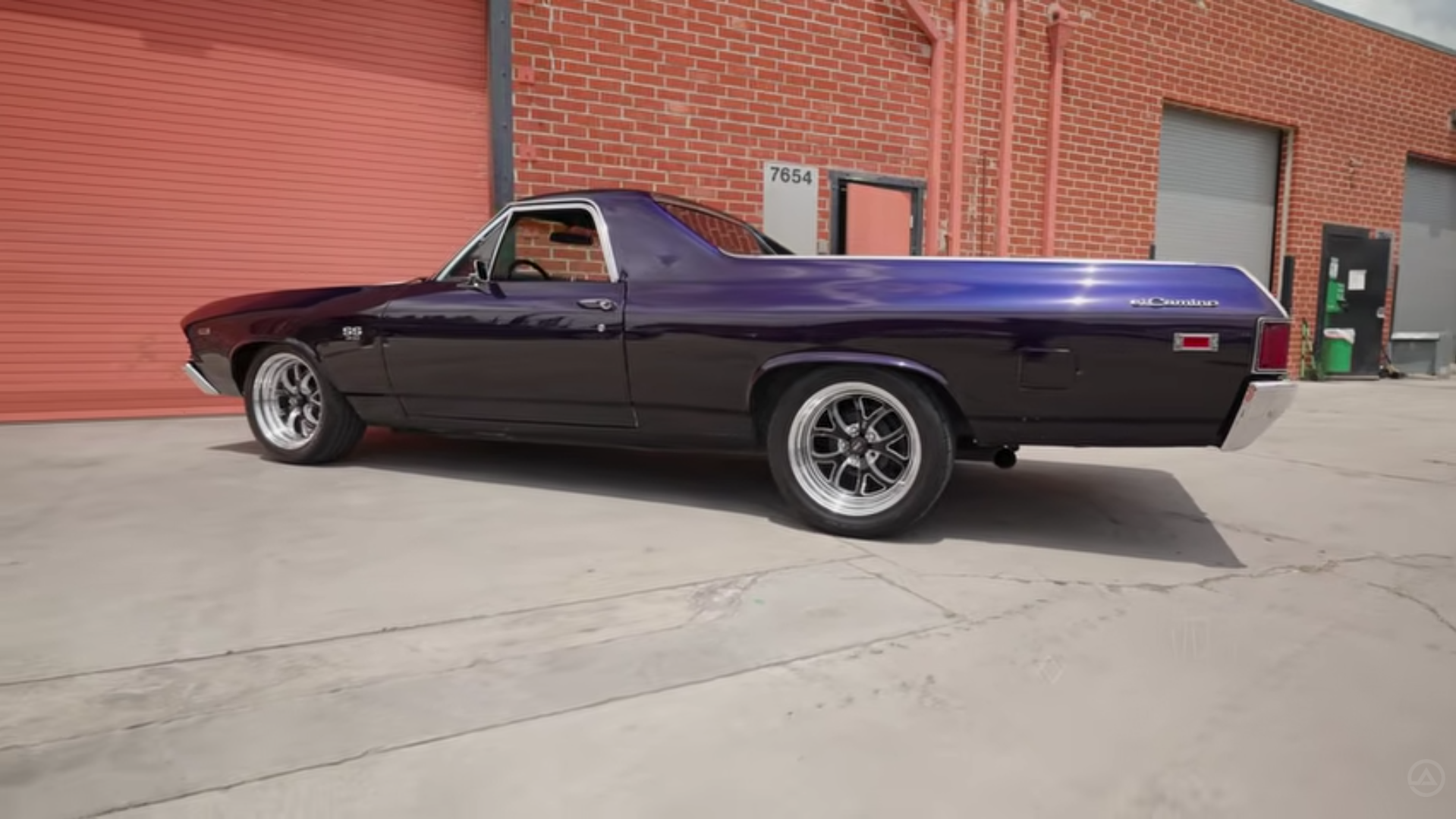
The El Camino still uses its original basic chassis, but the suspension has been extensively updated. New front and rear components, coilovers, and Golden West suspension hardware improve the way it drives without completely erasing the feel of a classic muscle car.
Braking has also been upgraded with six-piston Wilwood calipers at the front, although the rear still uses traditional drum brakes. Steering improvements include a replacement steering box and the removal of the original rag joint in favor of a universal-joint setup.
The car rides on 18-inch Weld wheels with 275/40 tires at the front and 295/40s at the rear. Darrin deliberately avoided tubbing the body, instead fitting as much rear tire as he felt comfortable running within the existing layout.
That decision reinforces the overall philosophy of the build. This is not a pro-touring El Camino engineered to behave like a modern sports car, but an old muscle machine with enough new hardware to make it more capable and enjoyable.
The Interior Still Tells Its Story
Inside, surprisingly little has changed. The seats, trim, and much of the cabin remain as they were decades ago, complete with the wear and imperfections accumulated through years of ownership.
Modern touches are limited but useful. Dakota Digital gauges replace the original instrumentation, the electrical system has been completely rewired using American Autowire components, and the retro-style radio includes Bluetooth connectivity.
Even the shifter itself remains from the car’s earlier days, despite the new five-speed transmission underneath. Darrin has resisted the temptation to over-restore the cabin, preferring to keep the history visible rather than erase it.
Air conditioning may eventually be added, but for now, the El Camino remains relatively simple inside. That suits a car built around driving rather than chasing trophies.
Forty Years Later, It’s Back on the Road
What makes this El Camino special is not simply its 630-hp LS swap. It is the fact that the same owner who drove it to the beach, carried hockey gear in it, and took it street racing decades ago is once again behind the wheel.
Bringing the car back with old high-school friends only adds to that connection. Instead of becoming another abandoned project that quietly disappeared, the El Camino has returned as a faster and more usable version of the machine Darrin remembers.
It still feels old, still has imperfections, and still struggles to put all of its power down cleanly. That is exactly why it works.
After 40 years of ownership and roughly 30 years of sitting, this 1969 El Camino SS is finally doing what it was built to do again: putting a smile on its owner’s face every time the throttle goes down.