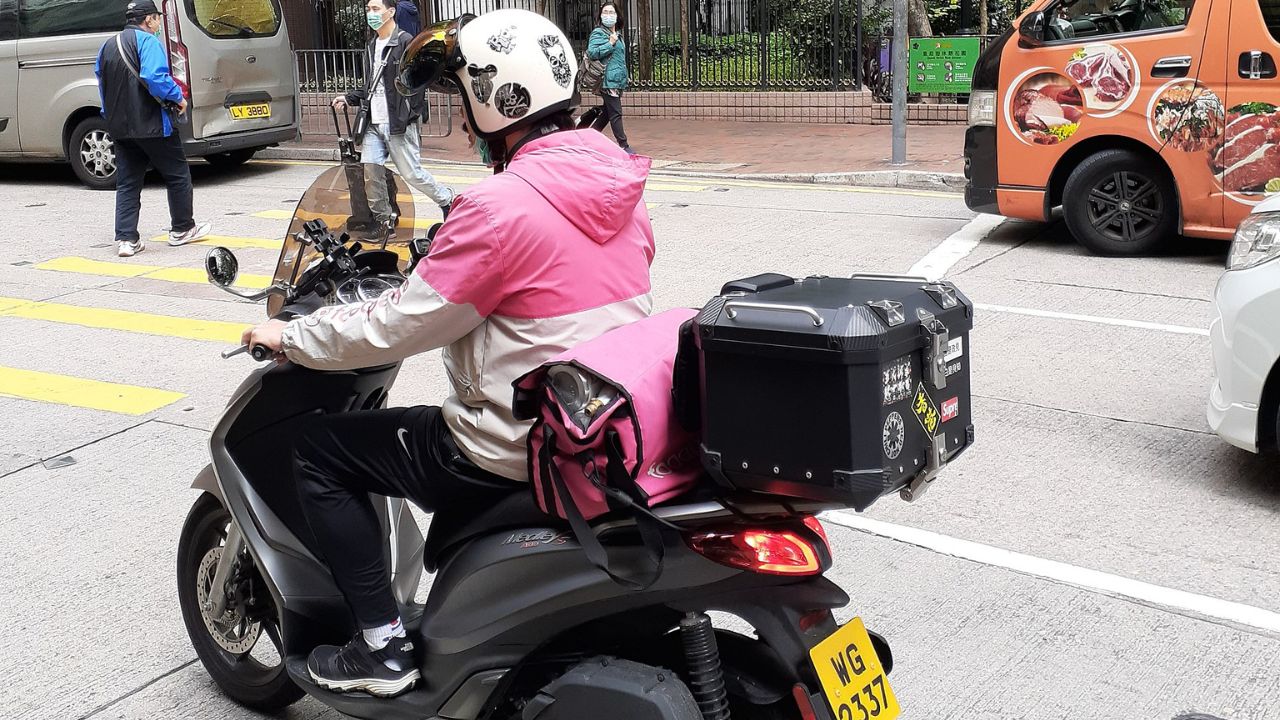

In a remote corner of Tibet’s Himalayas, a 24-year-old delivery driver named Huang Kaihong has quietly become something of a legend. In Medog County, where fewer than 15,000 people live and paved roads only recently arrived, Huang punches in each day at dawn and often doesn’t stop until supper.
That’s because he’s completing nearly 200 orders on his motorcycle as the region’s only full-time delivery driver. That is about four times the daily workload of a typical food courier in Shanghai or Beijing. The thing is Kaihong doesn’t complain much about loneliness. Instead, he talks about the wind, the work, and the joy of being on the road. Go figure
The Science of Two-Wheel Therapy
For those of us accustomed to rush-hour jams and crowded freeways, Huang’s life might look extreme. For many drivers and riders around the world, there is something quietly therapeutic about time spent on wheels, even if it comes with isolation.
There is research showing that motorcycle riding can actually change your brain chemistry in a good way. In one American Rider study, scientists found that riding a motorcycle for about 20 minutes increased alertness and sensory focus — similar to exercise — and significantly lowered levels of cortisol, the body’s primary stress hormone.
In other words, riding did more than make the heart beat a little faster. It helped riders feel calmer and more immersed in the moment.
The “flow state” that riders describe — the kind where nothing exists except the bike, the road, and the wind — sounds like biker poetry but is actually a real psychological phenomenon, where the brain shuts out distractions and focuses on a single task. Athletes, artists, and meditators experience it too, but few activities fuse it with fresh air and velocity like riding a motorcycle does.
How Driving Fights Loneliness
Even behind the wheel of a car, humans derive emotional benefit from movement. Driving gives people the ability to reach friends, family, and social activities with minimal effort.

For people unable to drive, studies of older adults have shown that losing the ability to drive is statistically associated with increased social isolation and depressive symptoms.
Of course, not every road warrior is motivated by solitude. Many motorcyclists and drivers relish the small but meaningful social bonds that form among fellow travelers.
On Reddit and in rider forums, enthusiasts frequently share stories about how a nod from a passing rider or a group meetup lifted their spirits or carved out meaningful connections on what otherwise might have been an ordinary day of errands.
Some of those rides are literally lifesavers for introverts who struggle with social anxiety.
One rider wrote about how riding helped quiet the constant chatter of intrusive thoughts. Another noted that focusing on the ride gave them a kind of “active meditation” that traditional mindfulness practices never quite delivered.
One Man, One Motorcycle, One Remote County
It seems that being on the road, whether on two wheels or four, can function as a kind of moving therapy — a blend of physical activity, sensory engagement, and mental focus that helps clear the mind.
Riders describe it as freeing, a chance to “reset” after a hard day. Drivers talk about the value of scenic drives and the restful clarity of passing landscapes.
It is worth noting that there are limits to this kind of “road therapy.” Long stretches alone on the road can’t replace professional mental health support, and hazardous weather or poor infrastructure can quickly turn therapeutic solitude into a dangerous ordeal. But for many, the benefits outweigh the risks.
Back in Medog, with no colleagues nearby, Huang is as much as delivery driver as he is also a pathfinder, troubleshooter, route planner, customer service rep, and sometimes even a mediator in minor disputes.
He is spreading as many meals as he is spreading connectivity in a place where previously there was almost none. In the process, he has shown that driving — for work or for pleasure — can do more than move goods. It can move people too.
Sources: eVnExpress