Although the Ford Mustang may have seemed like a completely unique car in its time, it actually shared plenty with its corporate siblings. That strategy of borrowing parts from other Ford vehicles helped brilliant executive Lee Iacocca bring the Mustang into production on a very modest development budget.
The Mustang’s success gave Ford room to expand the idea into other models. For this story, the focus is on its more luxurious relative, the Mercury Cougar.
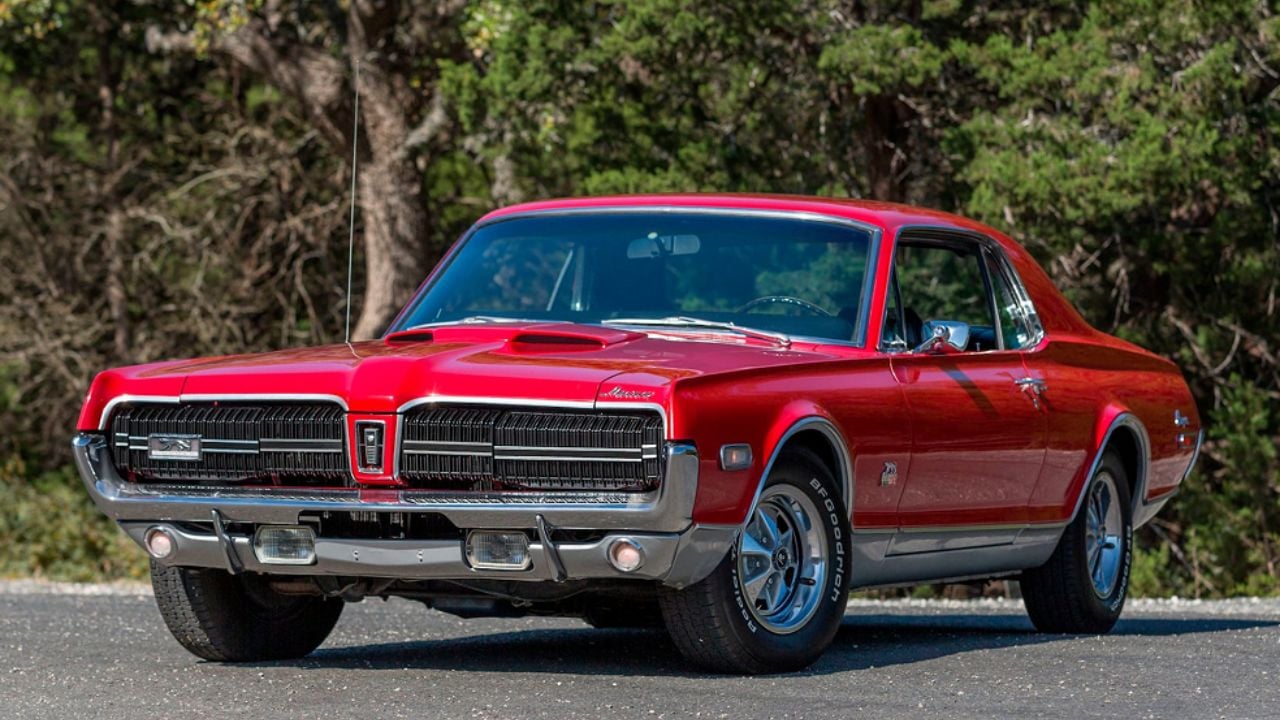
Not just any Cougar, either. This is the GT-E, a rare version that became one of the fastest muscle cars Detroit offered in its day.
How The Mustang Opened The Door
To understand why the GT-E was so special, the story has to begin with the Ford Mustang. When Ford introduced the new model at the New York World’s Fair in April 1964, it changed the face of the American auto industry almost overnight.
The Mustang looked sporty and somewhat European, yet it was priced for a wide audience. Buyers could personalize it almost endlessly, from a simple daily driver to a strong V8-powered performance car. The result was immediate success. Ford expected to sell about 100,000 Mustangs in the first year, but demand ended up being roughly four times higher.
Buyers fell hard for the compact, stylish coupe, and a new vehicle category was born. The pony car became known for a long hood, a short rear deck, manageable size, and a fun, sporty personality.
Mercury Wanted A Classier Mustang
At the same time, Ford’s Lincoln-Mercury division was watching closely. Even while the Mustang project was still in development in 1963, Mercury engineers and designers were already thinking about a more elegant and refined version.
Ford management was cautious at first. The Mustang had not reached showrooms yet, so company leaders decided Mercury should wait and see how the new Ford performed. Once the sales numbers came in, the decision became easy. Lincoln-Mercury received approval to develop its own version of the Mustang idea.
Mercury did not want to create a simple rebadge. The goal was to attract buyers with deeper pockets, people who wanted performance but also expected comfort, style, and refinement.
Cougar Arrived With A Different Personality
That approach produced the Mercury Cougar, introduced for 1967. Although it shared a platform with the Mustang, it was much more than a badge-engineered twin.
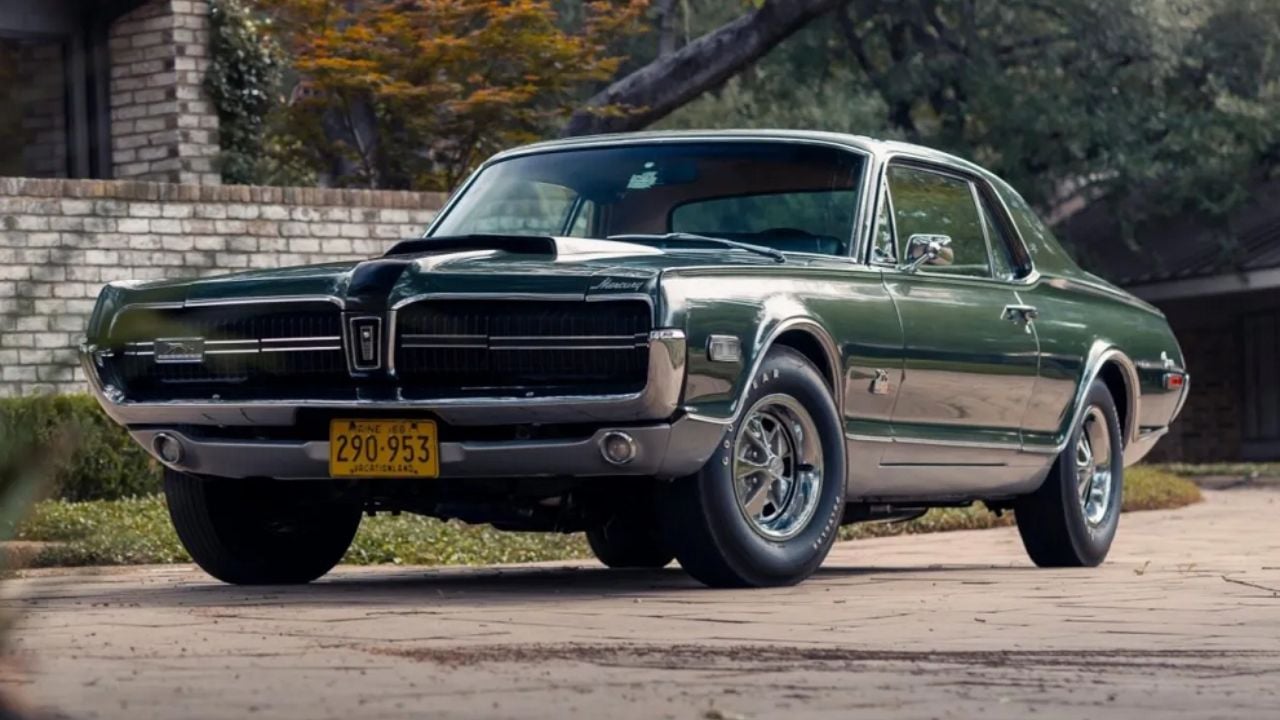
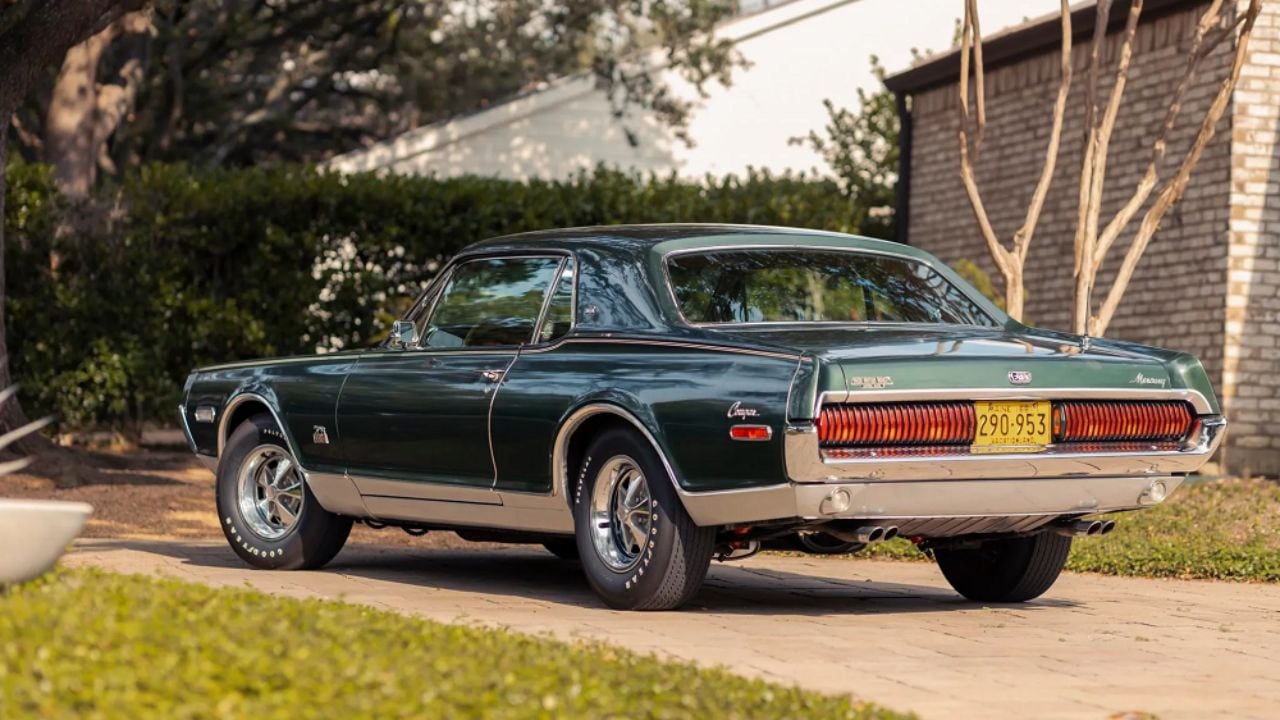
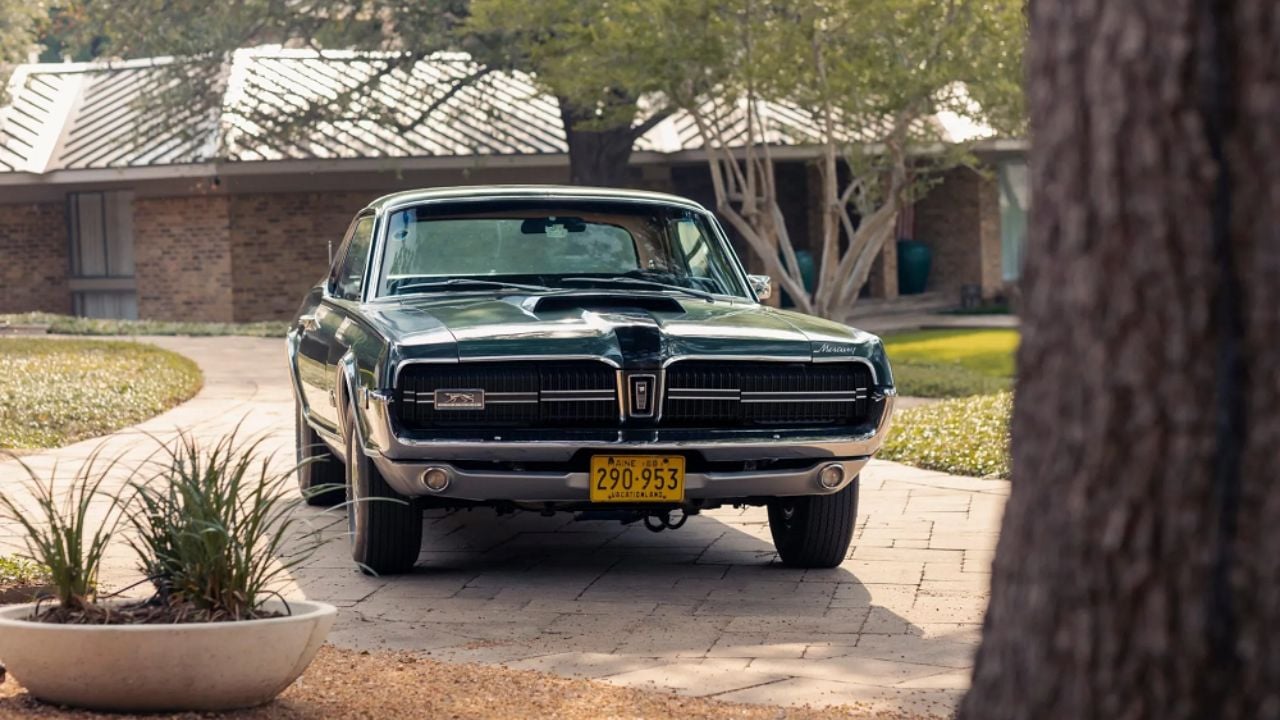
Mercury stretched the wheelbase, redesigned the body, and created a more elegant shape with a near European sense of restraint. Its hidden headlight front end, vertical grille elements, and long body sides gave the Cougar a more serious and upscale presence.
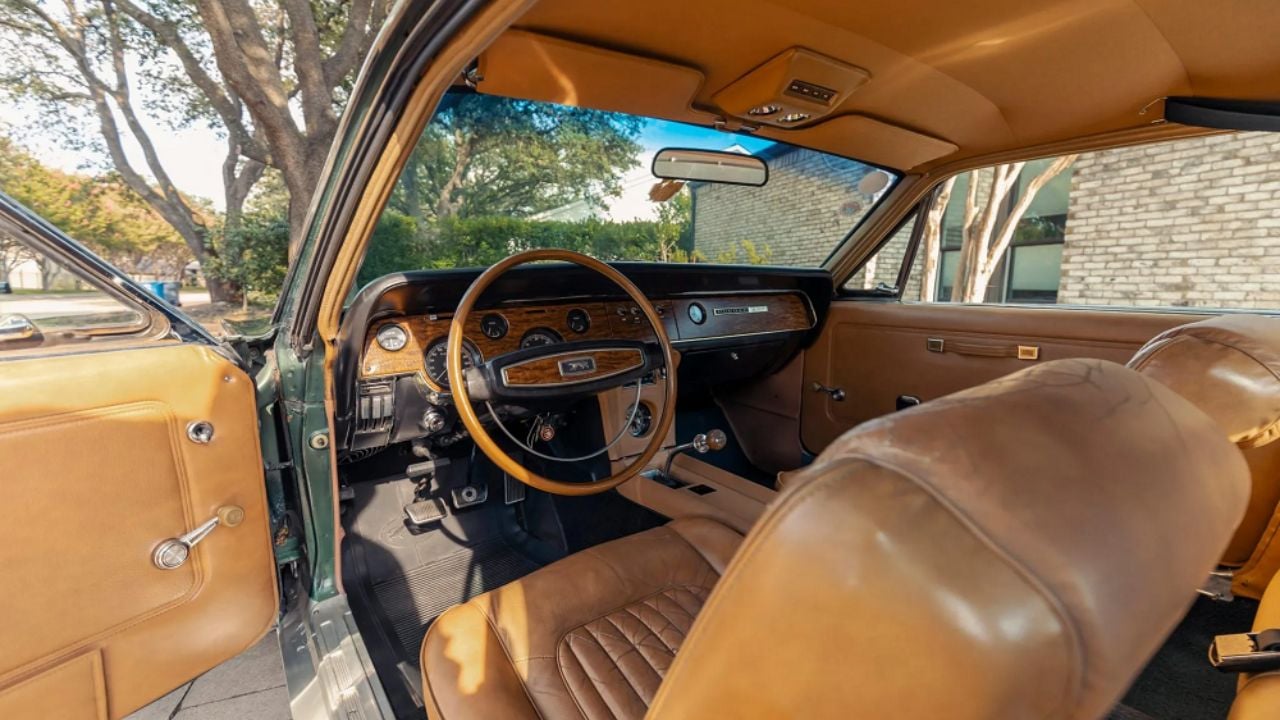
The interior also created a clear contrast with the Mustang’s youthful character. The cabin offered woodgrain trim, comfortable seats, better sound insulation, and a higher level of finish. If the Mustang was aimed at young rebels, the Cougar was designed for grown men in suits who still enjoyed speed.
The Cougar became an instant success. In 1967, Mercury sold over 150,000 examples, accounting for around 40% of Lincoln-Mercury’s total sales. Critics liked it as well. Motor Trend named it Car of the Year. Mercury had finally found a clear identity: the luxurious brother of the Mustang, a car that joined two ideas that did not always seem natural together, elegance and strength.
The GT Package Was Only The Beginning
During an era when automakers competed heavily on horsepower, the Cougar soon received a stronger GT package. It included a more capable suspension and a larger V8 engine.
For 1967, the strongest option was the 390 cubic inch Marauder V8. It produced around 320 hp, which was impressive, but Mercury knew the car could go further.
The Cougar returned in a more serious form for the 1968 model year. The new GT-E package was aimed at buyers who wanted high performance without giving up style. The GT-E was luxurious but also dangerous. It was the definition of a gentleman’s muscle car.
On the outside, it remained relatively subtle. It had a darkened front grille, chrome exhaust outlets, special side trim, and a hood with a pronounced bulge and simulated air intakes. Buyers could choose an exclusive two-tone paint combination or a traditional single-color finish. The real clue, however, was a small elegant badge on the fender that read “7.0 Liter GT-E.”
A Le Mans-Linked V8 Under The Hood
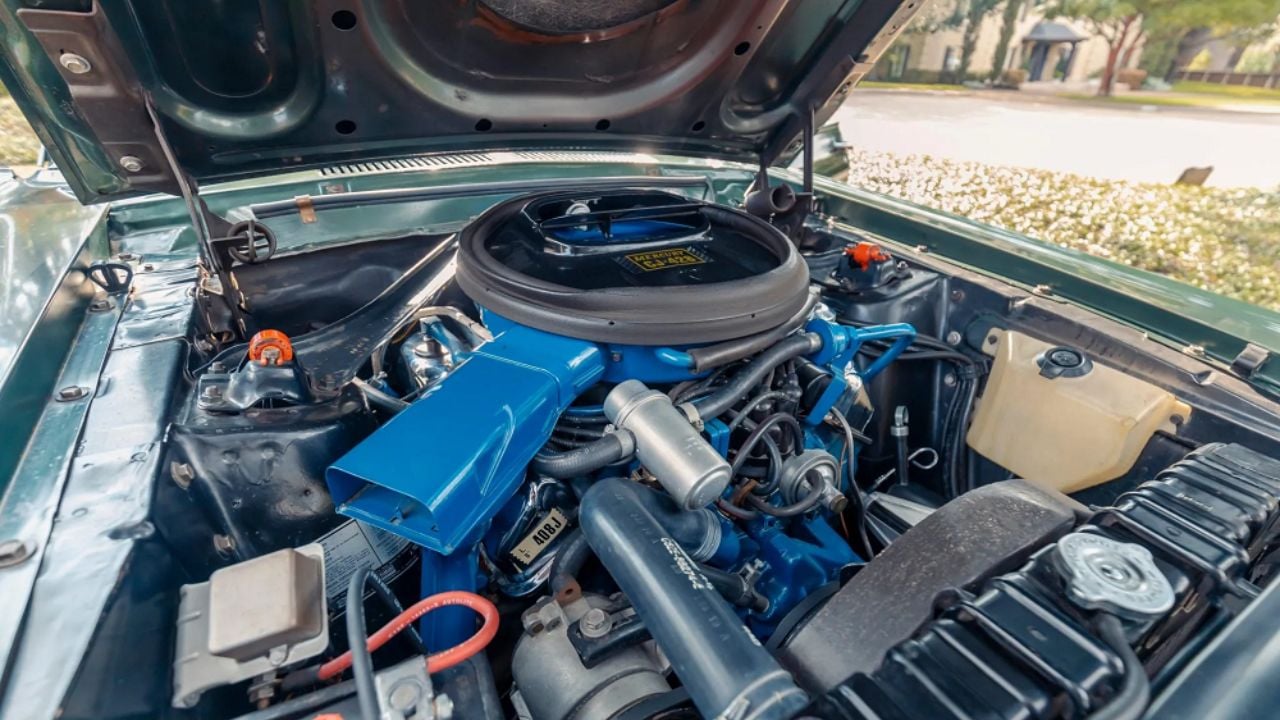
That badge was not just decoration. It meant a 427 cubic inch Ford V8 sat under the hood.
The engine was famous for its racing roots. It powered some of Ford’s strongest machines of the era, including the GT40s that won Le Mans in 1966 and 1967.
In the Cougar, the 427 produced 390 hp and 461 lb ft of torque. That made the GT-E the most powerful Mercury built up to that point. With that much output, the car could reach 60 mph in under six seconds.
The legendary engine’s time in the Cougar was short. Ford soon replaced the 427 with the 428 Cobra Jet, which used a stronger internal design and a larger Holley carburetor. Officially, the 428 Cobra Jet was rated at 335 hp, but period tests suggested the real number was much higher, closer to 400 hp.
The Cobra Jet Made It A True Street Weapon
With the Cobra Jet, the Cougar GT-E became a true wolf in a tailored suit. It looked refined, but it was ruthless on the strip. According to tests by Super Stock & Drag Illustrated in August 1968, a Cougar GT-E with the 428 Cobra Jet covered the quarter mile in 13.23 seconds at 103 mph.
That made it one of the quickest factory muscle cars of the year. Unfortunately, the GT-E had a very short life. The package was available only during part of 1968, and it cost $1,311, which equals about $12,000 today.
Because of the high price and limited promotion, only 37 examples were built with the 428 Cobra Jet. Of those, 34 used the three-speed Merc-O-Matic automatic transmission, while only three had the four-speed Top Loader manual.
A Rare Mercury With A Lasting Myth
Today, the Cougar GT-E is almost mythical among fans of American classics. Few examples have survived, and original cars can bring enormous prices at auction.
For collectors, it is not just a car. It is a reminder of a time when power and style were treated as equal virtues.
Looking back, the Mercury Cougar GT-E was more than a stronger version of a luxury coupe. It was a symbol of an era when American automakers had the courage to experiment, combining luxury and racing technology in the same package. It did so with enough grace that the car still feels special decades later.
The GT-E lasted only a short time, but its legacy has lived on for generations. It remains proof that real strength does not always need to shout. Sometimes elegance speaks loudly enough on its own.
This article originally appeared on Autorepublika.com and has been republished with permission by Guessing Headlights. AI-assisted translation was used, followed by human editing and review.