Quick lube shops are everywhere, and for good reason. They are convenient, fast, and almost always cheaper than a dealership service bay. For the average car owner who just needs a routine oil change and does not want to burn half a Saturday at the dealer, they make a lot of sense. But convenience comes with risk, and that risk is not always obvious until it is far too late.
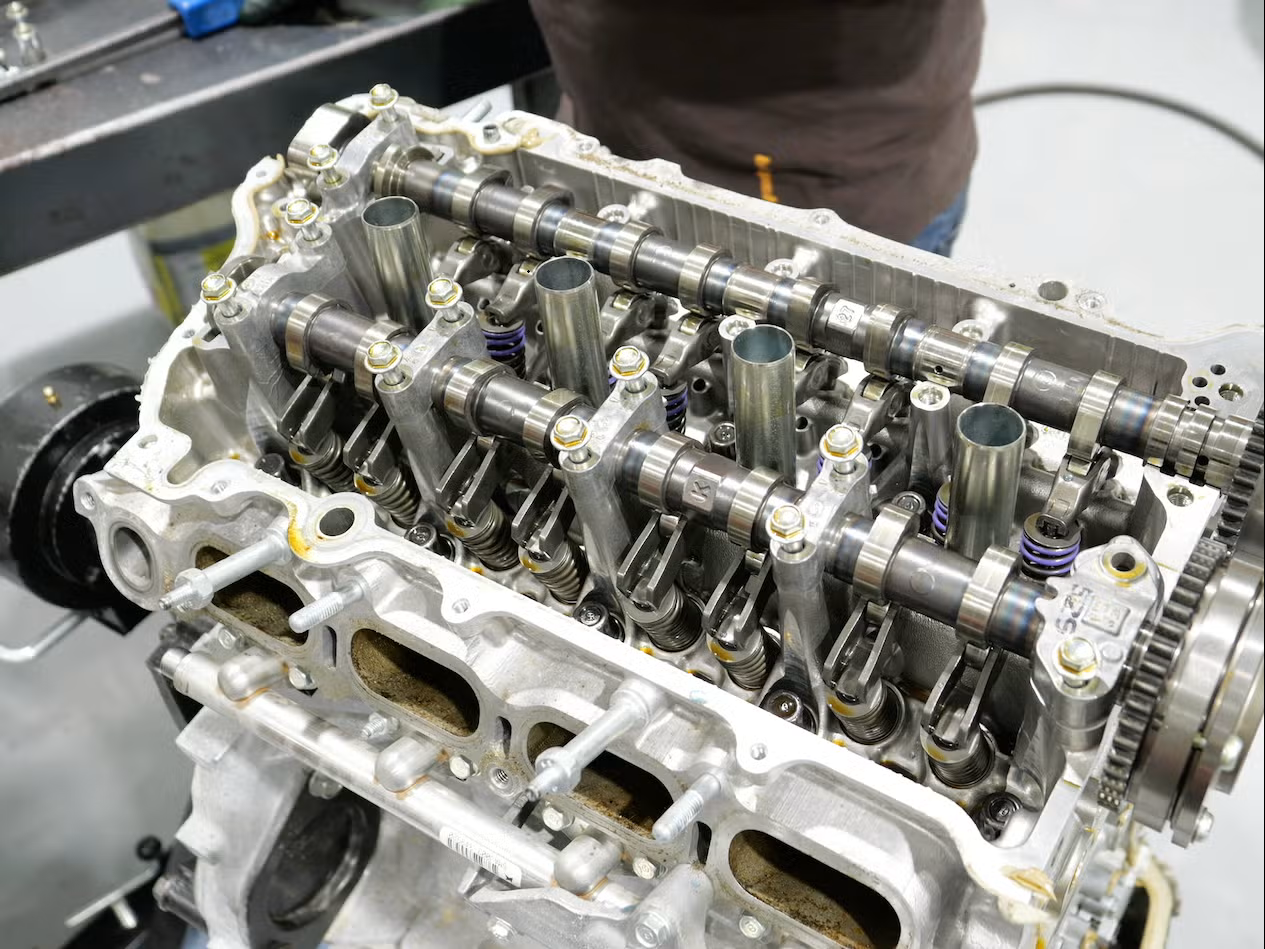
A recent YouTube teardown by the channel I Do Cars walked viewers through the autopsy of a 2024 Honda Accord Hybrid engine that had already been pulled from the car. The exact mileage was not disclosed, but the car is only two years old. That detail alone should make any Accord Hybrid owner sit up a little straighter. A 2024 model year vehicle should still be well within its factory warranty window, yet this one is not. It is a pile of parts on a workbench.
What makes this story particularly painful is that the damage likely traces back to something absurdly small. Not a catastrophic mechanical failure. Not some defect in the engine design. The probable culprit is a pinched O-ring on the oil filter, almost certainly installed during a routine oil change. A few seconds of carelessness, and a brand new engine is scrap.
This kind of failure is a reminder that modern engines are marvels of precision engineering operating at very tight tolerances. They depend completely on consistent oil pressure to keep every moving part alive. Remove that pressure, even partially, and the damage begins almost immediately, well before any warning light has a chance to catch up.
What the Teardown Actually Revealed
When I Do Cars first cracked open this engine, things looked surprisingly normal. The spark plugs were in decent shape. The intake ports were clean, which is actually impressive for a direct-injection engine, since that design tends to leave carbon deposits on the back of the intake valves over time. Under the valve cover, the internals looked almost showroom fresh. Minimal sludge, only mild wear on the cam lobes, timing components in good order.
The red flags did not appear until the cylinder head came off. The combustion chambers, especially in the center cylinders, showed clear contact marks. The pistons had physically touched the cylinder head, which points to something being very wrong in the lower half of the engine. A quick hand rotation of the crankshaft confirmed it: some pistons were sitting lower than others, completely out of sync with their neighbors.
Dropping the oil pan told the full story. Bearing debris was scattered throughout the bottom end. The crank bearings and rod bearings were scorched, textbook signs of oil starvation. The oil pump and balance shafts, interestingly, looked relatively undamaged, suggesting they were not actually moving oil through the system. They were likely pumping air.
The Tiny Part That Probably Started Everything
After all of that catastrophic internal damage, the investigators found an oil filter that looked practically new. The oil inside it was clean, with only minor contamination. But the O-ring on the filter showed evidence of being pinched during installation.
That is where this whole disaster likely began. A pinched O-ring cannot seal properly. Oil pressure bleeds off. Without adequate pressure, the bearings are the first thing to suffer because they rely on a thin film of pressurized oil to avoid metal-to-metal contact. Once that film breaks down, heat spikes, metal starts wearing, clearances open up, and the damage cascades through the entire engine rapidly. By the time a driver notices anything wrong, the engine has usually already crossed a point of no return.
The timing strongly suggests the engine began failing shortly after that oil change was performed.
Why This Matters for Your Warranty

Here is where the situation goes from unfortunate to expensive in a hurry. When a vehicle is serviced outside the dealership network, especially when something subsequently fails, warranty coverage becomes a complicated conversation. Manufacturers can deny claims if they determine that improper service contributed to the failure.
In this case, if the O-ring was indeed pinched during a third-party oil change, Honda has a reasonable argument that the damage resulted from improper maintenance rather than a manufacturing defect. That shifts the entire financial burden to the owner. A replacement engine for a 2024 Accord Hybrid is not a small number.
This does not mean quick lube shops are always the wrong choice. Millions of routine oil changes are performed without incident every year. But it does mean that choosing where to service your vehicle, and trusting who does the work, carries real consequences when things go sideways.
What Every Car Owner Can Learn From This
The most important takeaway here is not to avoid quick lube shops entirely. It is to understand that basic service items are not quite as trivial as they seem. An oil change involves removing and reinstalling components that directly affect engine lubrication. Done wrong, the results can be severe.
A few practical habits worth building: after any oil change, take a moment to check underneath the vehicle for drips, monitor the oil pressure warning light closely in the days following service, and consider checking the oil level yourself within the first week. If anything feels or sounds different after a service visit, get it looked at immediately rather than hoping it resolves on its own.
It also helps to ask questions. A reputable shop should have no problem telling you what filter and oil they used, and confirming the spec matches your vehicle’s requirements. Hybrid engines like the Accord’s can have specific lubrication needs, and using the wrong oil viscosity is another way a well-intentioned oil change can go quietly wrong.
One pinched O-ring. One destroyed engine. One voided warranty. It is a brutal lesson, but one that does not have to repeat itself.