
I’ve always had a soft spot for the Honda Prelude. When I was in high school, the fourth generation rolled out with one of the coolest interiors of the era — that driver-centric wraparound dash was peak Honda design. Then came the fifth-gen model, arguably the best-looking Honda until the S2000 arrived.
The Prelude became one of those cars I admired from a distance — an icon that I always wanted to love, if only it fit my life. Fast-forward to today: the kids are grown, garage space is available, and the idea of a throwback coupe with Honda reliability sounds pretty good on paper.
So when Honda unveiled the new Prelude, it should’ve been a home run for me. Except… it wasn’t.
The early specs, the hybrid setup, the lack of a manual, and now the pricing, just over $43k, have made me more skeptical than excited. I haven’t driven one (yet), but based on what we’ve seen, read, and the firestorm on Reddit, it’s clear the new Prelude isn’t what many of us had hoped for.
So if you’re like me — someone who loves what the Prelude represents, but isn’t sold on what it is — here are the cars I’d buy instead.
Methodology

These picks aren’t based on strict class-comparison charts because real enthusiasts don’t shop that way. This list is for people who look beyond what the car magazines slot into their shootouts — the ones who might genuinely compare a 4-door sedan to a 2-door coupe, or an SUV to a truck.
The free thinkers who don’t color inside the lines… the same people who consider Taco Bell a competitor to Burger King because they’re both places to eat, not because they both sell burgers.
These cars compete with the new Prelude in spirit, not necessarily in segment or price point.
Some are cheaper. Some are far more expensive. Yet, every one of them delivers something the new Prelude doesn’t — whether that’s excitement, nostalgia, performance, or just an emotional spark that made the original Prelude matter.
In other words: these are the cars I’d actually cross-shop — even if a magazine wouldn’t.
Toyota GR86 / Subaru BRZ

On paper, this is the car that should’ve filled the Prelude-shaped hole in my heart: rear-wheel drive, lightweight, manual option, and purpose-built for driving enjoyment. It’s the closest thing we have today to a classic Japanese sports coupe, and at just over $30K, it’s priced like a proper enthusiast car, not a nostalgia tax.
But here’s the thing I wrestle with: as much as I respect the GR86/BRZ, I can’t shake the feeling that it’s a car designed more for college kids than adults. The price is right, the dynamics are solid, and if I squint past that awkward rear end, it even looks good-ish, but there’s something about it that doesn’t feel like a car I’d buy at this stage of life.
Maybe it’s the limited practicality. Maybe it’s the tuner image. Or maybe I just wanted the new Prelude to be this — but with a touch more maturity.
Still, if you’re willing to sacrifice space for pure fun, this is the car that begs to be driven, not just admired.
Hyundai Elantra N

Honda fans keep waiting for a spiritual successor to the Prelude, but Hyundai just built one and quit waiting for a committee to approve it. At under $35K, the Elantra N delivers turbo power, a manual option, and track-ready tuning for less than the Prelude’s rumored price.
It may be a sedan, but it’s the pulse-raising daily that the Prelude hasn’t been in decades.
Toyota GR Corolla

If I picked on the BRZ for feeling like a car for people who still get carded at the grocery store, then let me redeem myself: the GR Corolla is probably my top pick for anything fun in this price point. It’s not the refined grand tourer the Prelude should have been, but I genuinely can’t think of a more entertaining way to spend this much money on a new car.
The Civic Type R is the obvious alternative to the Prelude, same lineage, real performance chops, serious track credibility. However, the GR Corolla gets my heart racing in a completely different way and edges out the CTR as my preferred pick. It feels like Toyota took Honda’s recipe, lobbed off a cylinder just because they could, and then hurled the whole thing into a rally car.
On paper, it’s not a direct competitor to the Prelude at all. Three-cylinder turbo. 300 horsepower. Manual only. AWD. It shouldn’t make sense, and yet it absolutely does.
And honestly? I can even argue that the GR Corolla is “practical.” I mean, it’s AWD. That basically counts as a safety feature, right?
No, it’s not actually more practical than a Civic Type R. But when you’re pitching the idea of this tiny rally hatch to the boss lady, AWD is a fantastic opening argument.
Volkswagen Golf R

VW is arguably the godfather of the hot hatch movement, and you could also argue that they helped define the affordable people’s car. But time changes everything, and Volkswagen’s lineup has quietly crept upmarket. These days, their cars look less boy-racer and more “guy who knows how to pair a blazer with jeans.”
Sure, the GTI and Golf R are still incredibly fun to drive. But on the surface? They’re practical. Mature. Even a little reserved. To the untrained eye, a Golf R in the right color looks like any other hatchback sitting in the Trader Joe’s parking lot.
And that’s part of the appeal.
The Prelude was never a wild, flamboyant car either. It was the prettier, sportier take on sensible Honda engineering. That’s why the GTI and Golf R feel, to me, like spiritual successors to the old Prelude’s philosophy—just executed with German understatement.
The Golf R is the grown-up’s hot hatch. It delivers real performance, but it also feels perfectly appropriate picking up business associates at the airport or chauffeuring clients to lunch.
Let’s be honest: those of us creeping toward the half-century mark probably feel a little less “still-lives-at-home” getting out of a Golf than a BRZ. (No offense to the 49-year-old BRZ hooning crowd—you’re living the dream.) The VW doubles as a grocery-getter that can also embarrass a few sports cars at the track.
In other words, “sleeper hot hatch” should be a thing. And in the case of the Golf R? It absolutely is.
If you want performance without announcing you’re having a midlife crisis, this might be your move.
Honda Civic Type R
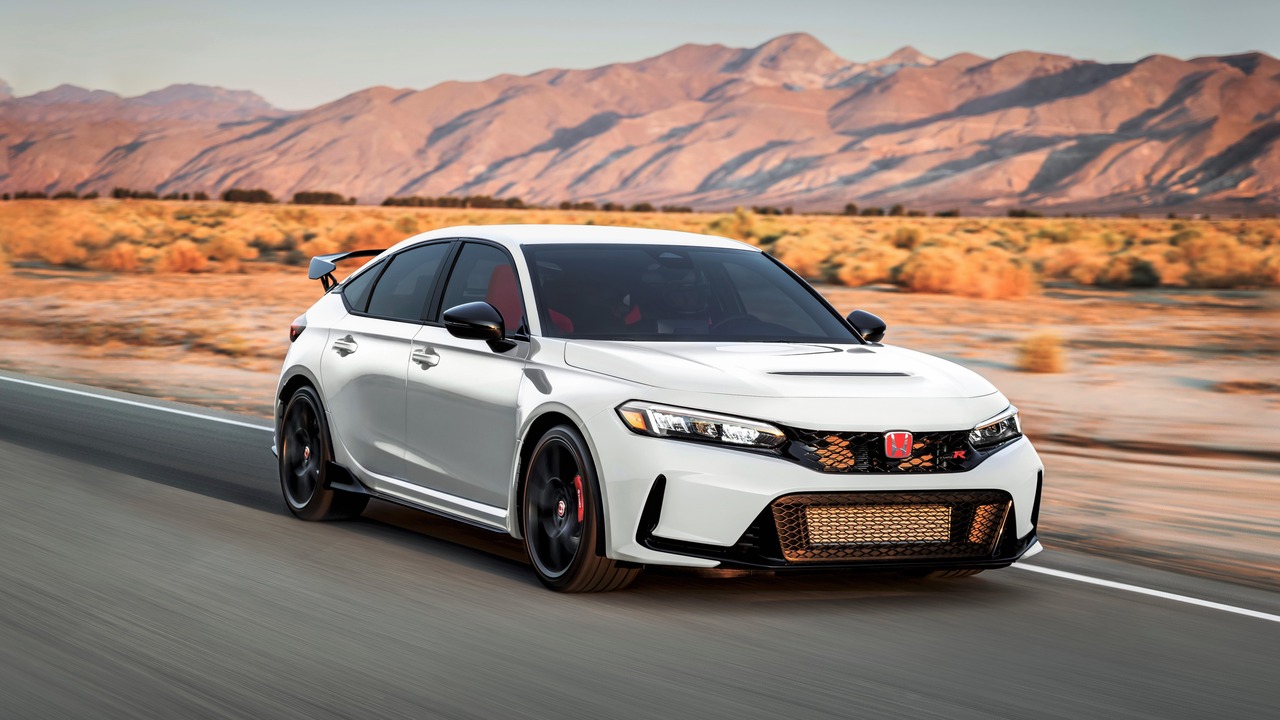
One of the biggest claims to fame for the new Prelude is that it borrows a lot of hardware from the Civic Type R. But here’s the problem: the Prelude doesn’t actually enhance any of those bits — it just quietly inherits them.
If Honda had used that Type R DNA to create something faster, quieter, more luxurious, a sort of “poor man’s 8 Series coupe,” then we’d have a real conversation. Imagine: cushier seats, a subtler body, and performance that slots just below the Type R, but with less tuner-car vibes.
Instead, we got a Honda price like a BMW 4 series… except it doesn’t deliver on either end of the equation. It’s not the poor man’s BMW; instead, it’s the rich man’s Honda.
The Civic Type R is unapologetically a performance machine. It’s got 315 horsepower, a proper manual transmission, and gives you all the engagement you wanted from the Prelude — plus the practicality of four doors and the same heritage the old Preludes were known for. Between the two, on paper, the Civic Type R is the better buy.
Ford Mustang EcoBoost

I’m sure I’ll be hearing from the V8 Mustang crowd in the comments; they are a passionate bunch, and I respect that. But let’s be honest: the 5.0 guys were never cross-shopping a Prelude anyway. The EcoBoost Mustang, though? That’s a different story.
This car doesn’t pretend to be something it isn’t. It’s not a hybrid. It’s not trying to use gimmicks to feel special. It’s a 315-horsepower, rear-wheel-drive coupe that looks like a proper grand touring car and feels like one, too. For around the same price as the Prelude, you’re getting performance that’s actually exciting.
It’s not perfect: the rear seats won’t win any awards, it’s not as refined as a German coupe, and it definitely won’t beat a hybrid at the pump. Yet it’s practical enough for daily use, fun enough when you feel like misbehaving a little, and affordable enough to make you grin instead of sweat.
Plus, it still comes with a proper 6-speed manual. Or a 10-speed auto if that’s your thing. No simulated shift logic or fake engine noise required.
This is the sports coupe Honda could’ve built if it’d prioritized excitement over efficiency. Instead, the Mustang EcoBoost stands here as proof you can still buy a fun, engaging car — without a single gimmick.
Nissan Z

The new Nissan Z is a car that I feel has been criminally slept on. Maybe it’s because the bold retro-styled redesign didn’t come with a clean-sheet platform. Maybe it’s because people expected it to be lighter or more powerful. Or maybe, and this is my bet, it’s because many dealers fumbled the launch by slapping insane markups on it.
Whatever the reasons, it’s a shame, because the Z is still one of the most compelling sports coupes on the market — assuming, of course, you don’t need two toy-sized back seats.
For around $43K, you’re getting 400 horsepower, rear-wheel drive, a proper manual transmission, and a driving experience that has genuine character. It’s not perfect, but it delivers everything the new Prelude doesn’t: real performance, presence, and that elusive feeling of being a sports car, not just looking like one.
If I’m choosing between a hybrid coupe priced like a luxury car and the spiritual successor to the 240Z, I’ll take the one that still remembers how to dance.
BMW M2

The BMW M2 is undeniably “more” — more power, more performance, more presence, and yes, more money. But it’s also more car in every sense of the phrase. And for buyers who tend to keep a vehicle for a decade or longer, that difference matters.
The M2 is the kind of coupe that will age well. Its proportions, its inline-six engine, its rear-wheel-drive layout — these are timeless qualities. Ten years from now, the M2 is still going to be desirable, still going to feel special, going to be something you’re proud to pull out of the garage.
I don’t see the new Prelude holding that kind of long-term appeal.
So while the price jump from “Prelude money” to “BMW M2 money” is real, the value jump is even bigger. If you’re the type of owner who buys a car and hangs onto it — not someone who leases every three years — the M2 is absolutely worth considering. It’s built for the long haul, both mechanically and emotionally.
This is the sort of car the Prelude could have been: a modern, desirable, enthusiast-focused coupe with staying power. BMW just beat Honda to it.
Chevrolet C8 Corvette

Yes, this is the least realistic cross-shop on the list. Nobody is choosing between a Prelude and a Corvette. The C8 is a mid-engine performance weapon; the Prelude never was, and never tried to be.
The price gap is real; a well-optioned C8 can cost as much as two of several cars here. But here’s the real question: does the new Prelude deliver enough for its price, or does it make more sense to stretch for something truly special, even if it costs a lot more?
The old Prelude was the affordable stand-in for cars a segment above it — a way to get a hint of something nicer without the premium price.
The new Prelude doesn’t feel like that. It’s priced like it wants to be a premium coupe, but it doesn’t offer the performance, luxury, or excitement to back that up.
So no, the C8 isn’t a direct rival, but it’s a helpful comparison: If you’re already spending real money on a two-door, you might as well stretch for the one that actually feels worth it.
Mazda MX-5 Miata

The Miata is the little engine that could — the Rudy of sports cars. It’s one of the most affordable new enthusiast cars you can buy. Yet, it never catches shade because it’s won everyone over with its delightfully pure handling, even if the power and practicality are on the light side.
It’s friendly, it’s fun, it has an enormous community behind it, and it still feels like a celebration of driving every time you get behind the wheel. At this point, including the Miata on a list like this feels almost obligatory — not because it’s predictable, but because leaving it out would feel like forgetting the little champ who always shows up and always delivers.
If the Prelude isn’t going to be fast, it needs to be charming. The Miata is lovely. It’s still RWD, available with a manual, still under $35K, and still one of the best driver’s cars money can buy.
It does everything the Prelude doesn’t and it does it with a grin.
Final Thought

I wanted to love the new Prelude. I still might — once I sit in one. But on paper, and in price, Honda built a strange nostalgia hybrid without truly understanding what we loved about the original cars. That’s okay, I can understand the market demands. But it means that if I’m ready to put down $40–$50K for a fun car, I’ve got better options.
And for a car as storied as the Prelude? That’s the biggest disappointment of all.