Most high-powered cars explain themselves at a glance. A low roof, a long hood, a wide track, and a badge with some menace in it usually tell you the story before the engine ever fires.
The vehicles here work the other way around. They look like family shuttles, practical hatchbacks, curious niche projects, or utility-minded machines that should have been content with decent power and a respectable, uneventful life.
That is exactly what makes them memorable. At some point, someone inside each company decided that restraint could wait and that one gloriously excessive engine would make the entire vehicle far more interesting.
The result was not always elegant, and it was rarely logical. But when the mismatch is this dramatic, logic stops being the point and the machine starts becoming legend.
Why These Six Truly Earn The Headline

This list is not about normal performance cars, obvious muscle machines, or halo models that were always supposed to be fast. The vehicles that made the cut are the ones whose body style, mission, or brand identity made serious power feel excessive, strange, or almost comically out of character. Factory builds mattered most, because the real shock comes from an automaker approving the madness itself.
Each entry also needed real output for its era, not just a mild trim with louder exhaust and better wheels. More importantly, the engine had to change the vehicle’s personality so completely that the result still feels surprising now. These are the cases where the powertrain was not simply an upgrade. It was a full-scale act of corporate mischief.
Mercedes-Benz R63 AMG
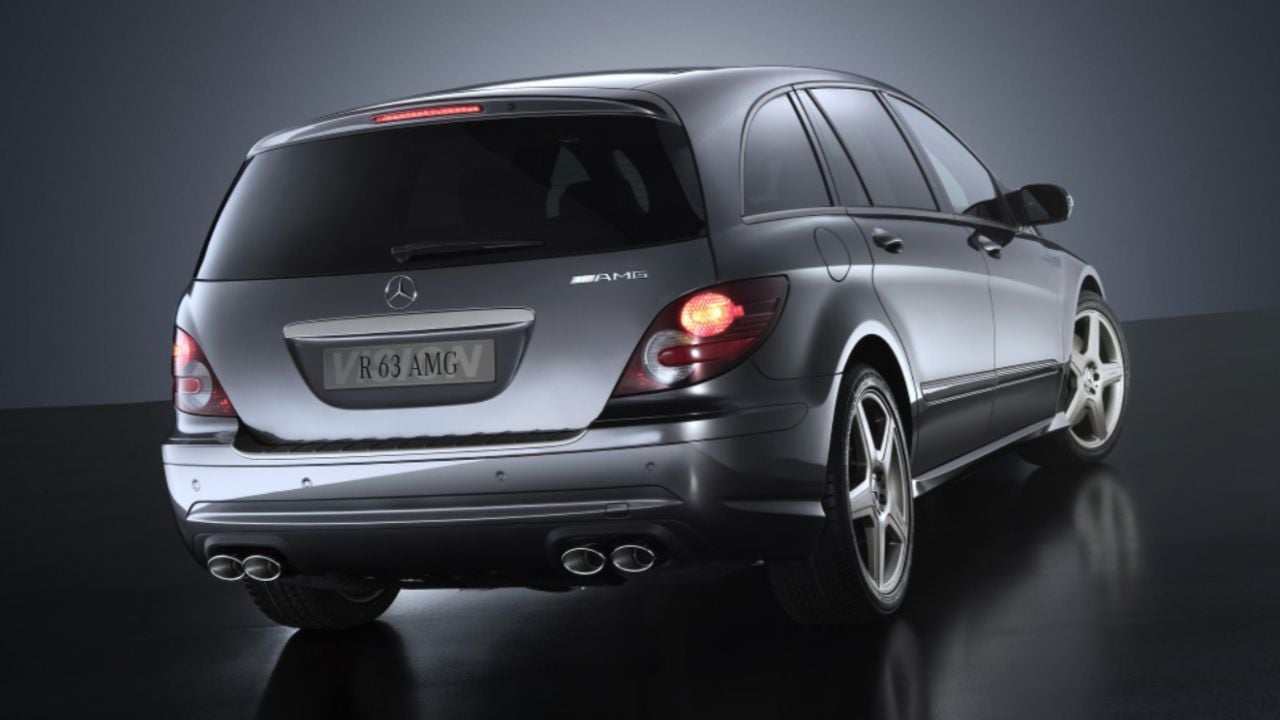
The Mercedes-Benz R63 AMG may be the purest example here because almost nothing about the R-Class suggested it needed a 379-cubic-inch V8 making 503 hp and 465 lb-ft of torque. Mercedes pitched the R-Class as a “Grand Sports Tourer,” but most people saw a luxury family shuttle with minivan energy and an unresolved identity. That should have been the end of the story.
Instead, AMG treated it like an expensive joke that happened to be real. The result was a big, heavy, oddly shaped people mover with the output of a serious performance machine. That mismatch is exactly what makes the R63 unforgettable. It carried families, luggage, and all the visual cues of something practical, yet it had enough muscle to embarrass vehicles with far more convincing performance reputations.
Dodge Caliber SRT4
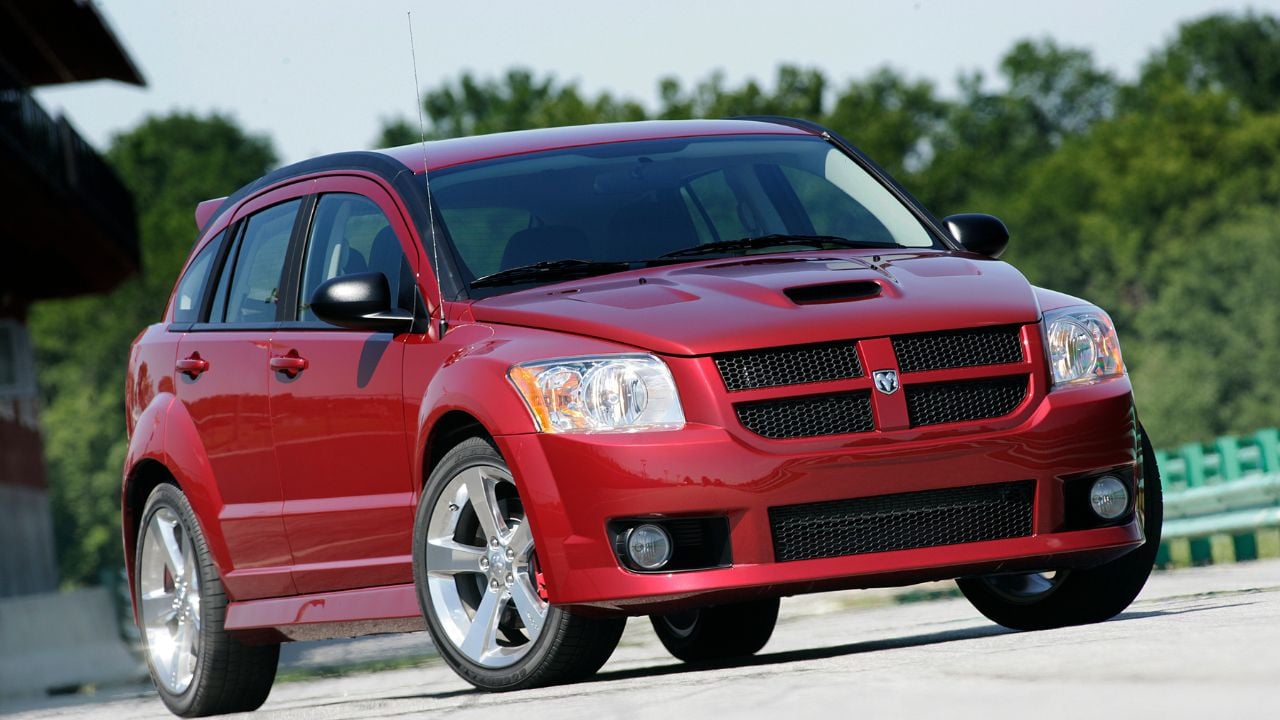
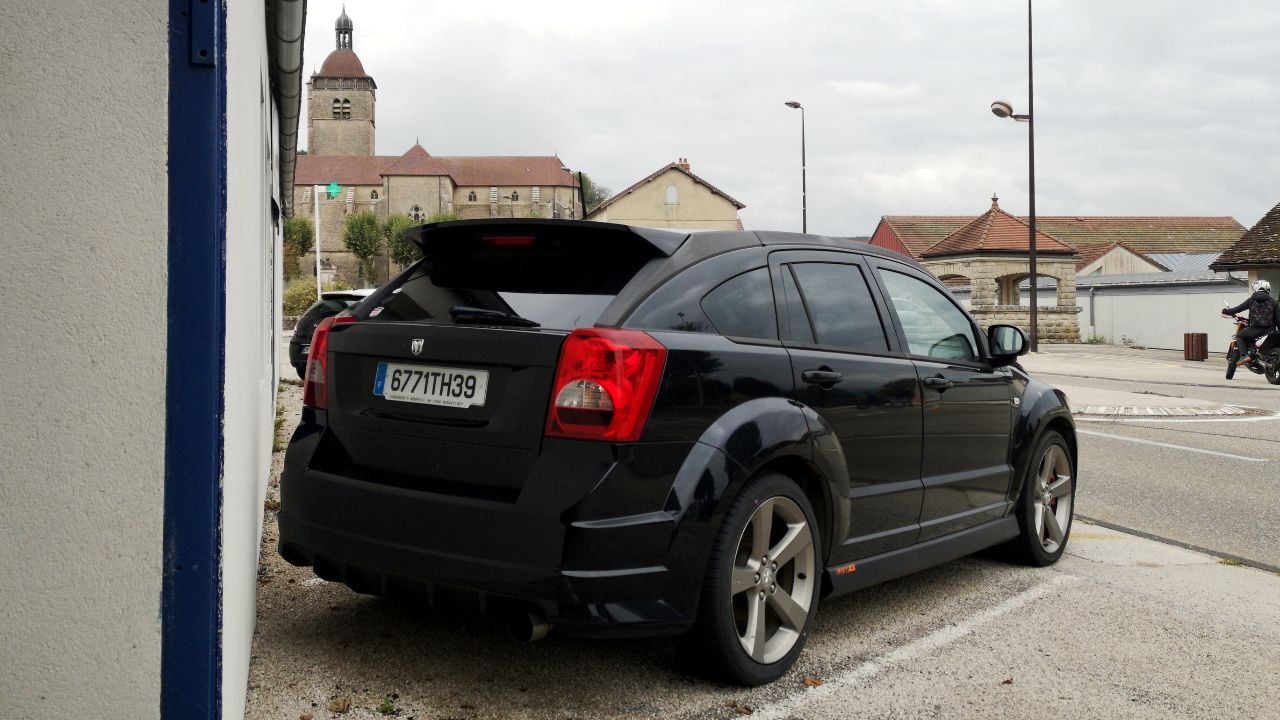
The Dodge Caliber SRT4 was never the sort of compact hatchback that seemed destined for cult status. In regular form, it was practical, inexpensive, and not especially polished. Then SRT dropped in a turbocharged 146-cubic-inch four-cylinder and pushed output to 285 hp and 265 lb-ft, instantly turning the whole thing into a wonderfully unruly contradiction.
Car and Driver noted that torque steer was very much part of the experience, which almost feels perfect for a car like this. The Caliber SRT4 did not hide its rough edges, and that gave it a strange kind of honesty. It was a budget-minded hatch with the temperament of something much more serious, and that gap between humble mission and aggressive power is exactly why it still stands out.
GMC Typhoon
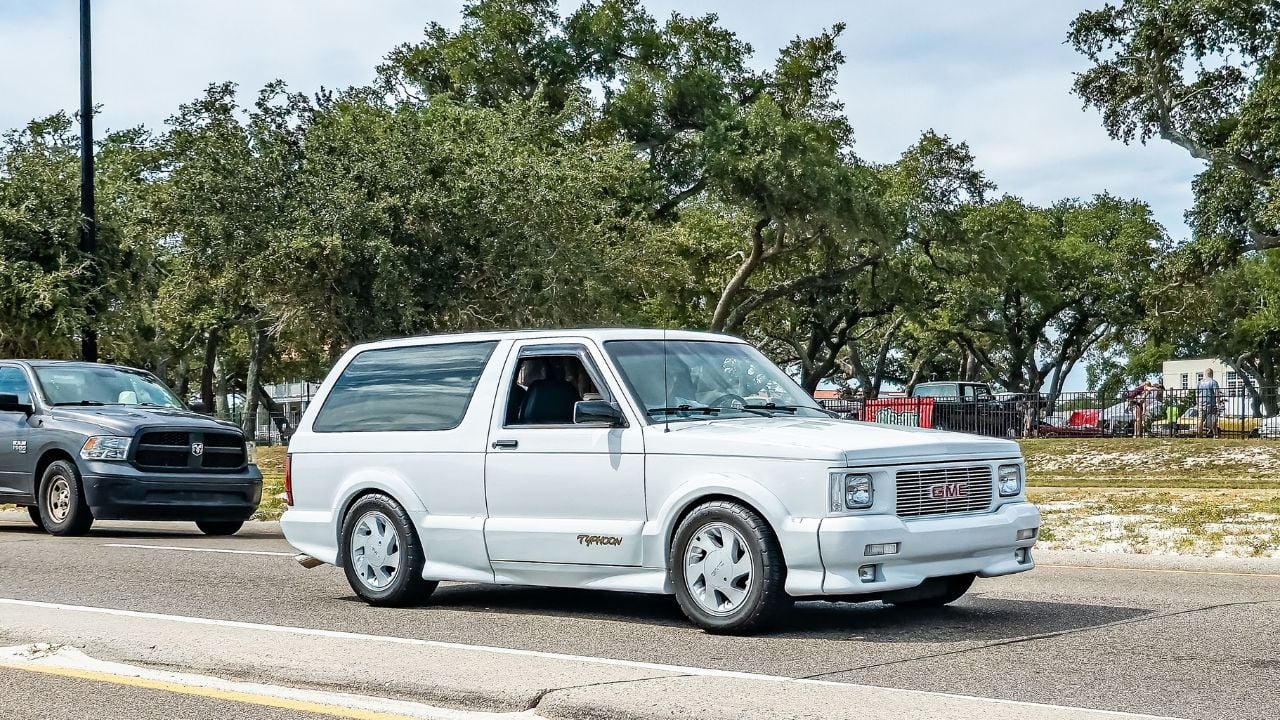
The GMC Typhoon arrived before the performance SUV was a normal part of the market, which is one reason it still feels slightly unreal. Based on a compact SUV formula that should have been content with everyday usefulness, the Typhoon instead got a turbocharged and intercooled 262-cubic-inch V6 producing 280 hp and 350 lb-ft. In the early 1990s, those were real numbers.
What makes the Typhoon such a perfect fit for this headline is that its shape still reads as practical first and exciting second. It looks like something meant for errands, bad weather, and ordinary utility. Then the spec sheet reminds you that GMC briefly decided ordinary utility should feel vaguely threatening.
Chevrolet SSR

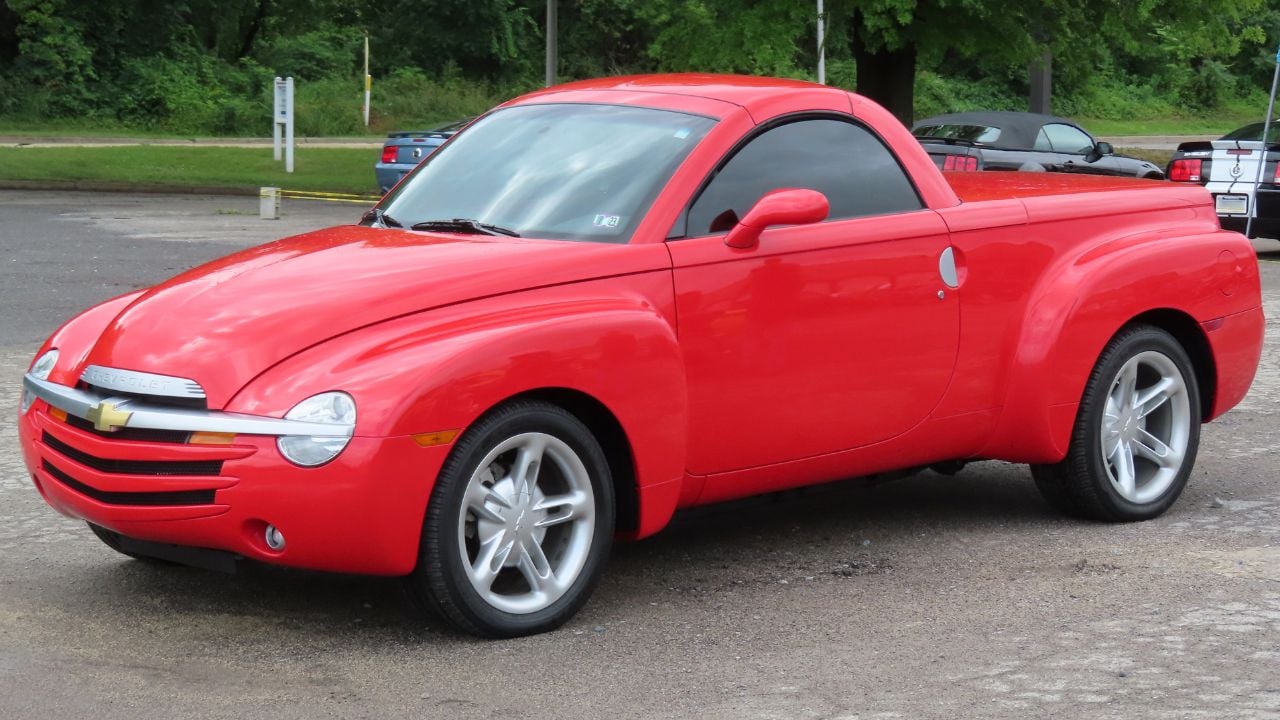
The Chevrolet SSR was already a bizarre creation before the serious engine arrived. It was a retro-styled pickup, a convertible, and a niche image machine all at once, which meant it already lived far away from straightforward product logic. Then Chevrolet gave it what it probably never needed but absolutely benefited from: the LS2 V8, here making 390 hp and 405 lb-ft.
That upgrade changed the entire tone of the SSR. Suddenly this oddball boulevard truck was not just making a style statement. It had the muscle to back up the attitude. Even then, the pairing still felt gloriously unreasonable. A folding-roof pickup built to turn heads did not need that much engine to make its point, but once it got it, the SSR became far harder to dismiss.
Dodge Magnum SRT8
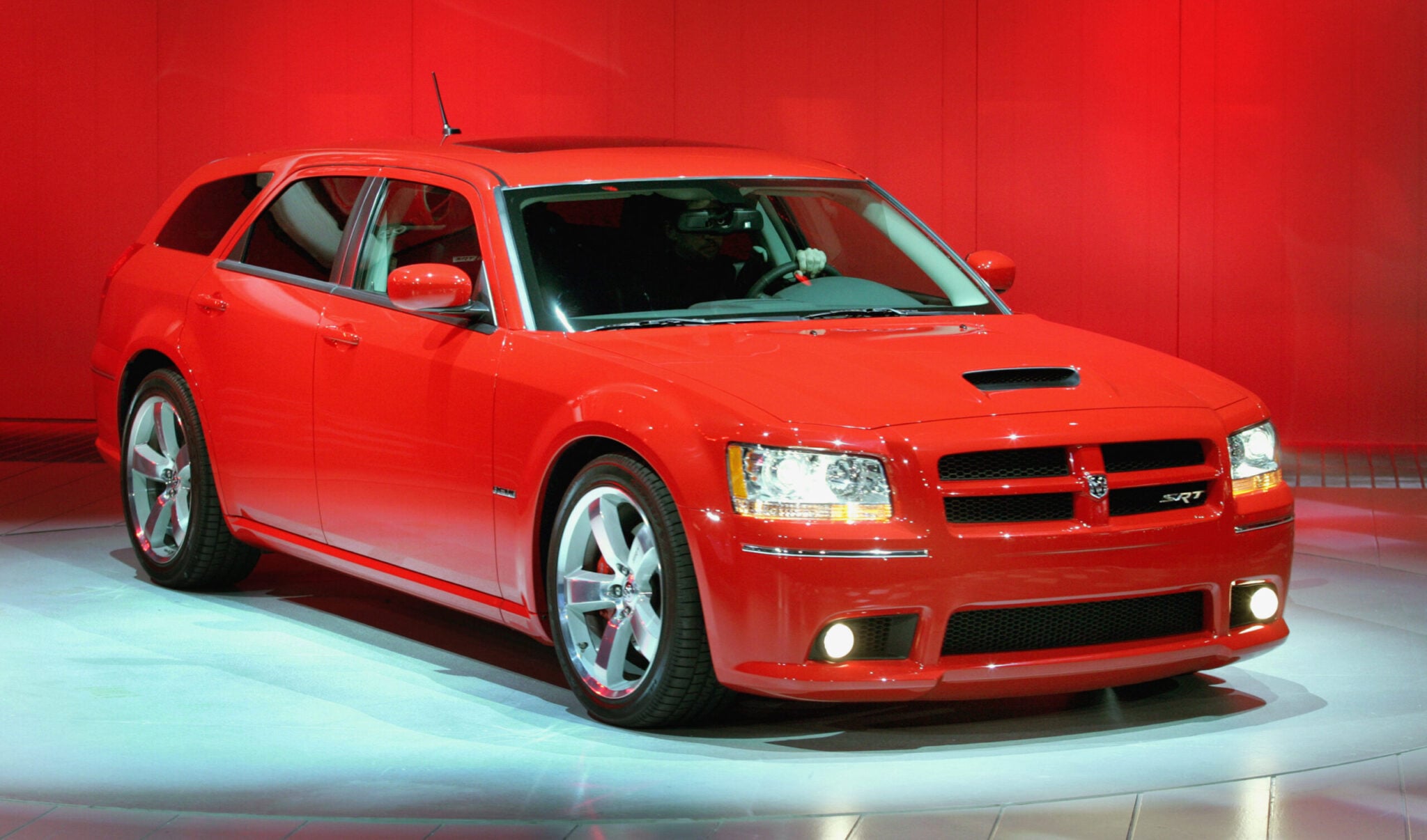
Station wagons have always had a loyal following, but even fans of the breed probably did not expect Dodge to stuff a 372-cubic-inch Hemi V8 with 425 hp and 420 lb-ft into the Magnum SRT8. The standard Magnum already had swagger, yet the SRT8 turned that swagger into something far more theatrical. Here was a long-roof family hauler, a shape associated with cargo space and child seats, suddenly carrying the sort of power figure that belonged in a much more obvious performance machine.
That is what made it special. The Magnum SRT8 did not just offer speed in a practical package. It made practicality feel almost irrelevant. Dodge took one of the most useful body styles in the business and gave it an engine that seemed to grin at the entire idea of responsibility.
Saab 9-7X Aero
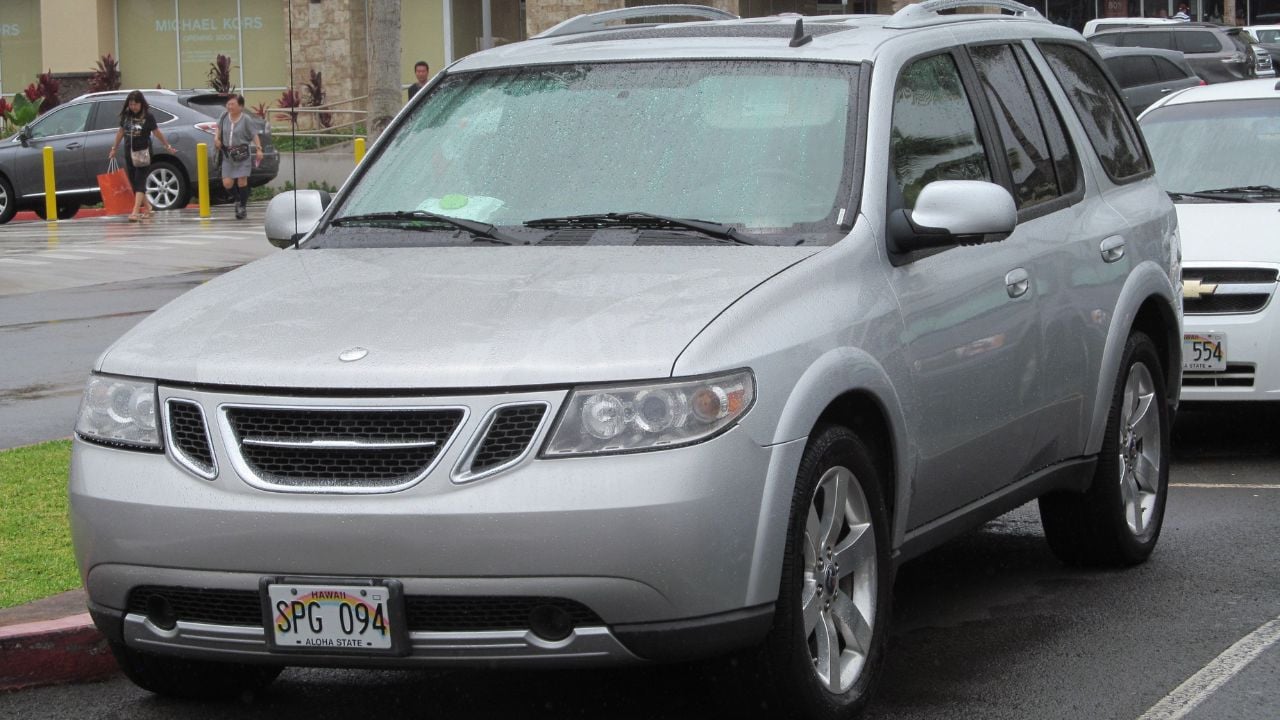
Few badges make this headline work better than Saab. For decades, Saab built its reputation on intelligent oddity, turbocharged character, and a distinctly Scandinavian approach to performance. Then came the Saab 9-7X Aero, which Car and Driver described as Saab dropping a 390-hp small-block LS2 V8 into an “unrefined ute.” That sentence alone practically writes the entry.
The 9-7X was already an uneasy fit in the Saab universe because of its truck-based roots, but the Aero version turned the whole project into something even stranger and somehow more compelling. It was not elegant, and it was not especially faithful to old Saab values. Yet that is exactly what makes it unforgettable. This was a brand known for clever turbo engineering suddenly solving everything with brute American displacement and noise.
The Best Factory Power Moves Are The Ones Nobody Expected
The most interesting powerful vehicles are not always the ones built with a clean mission from the start. Sometimes the lasting legends come from the moments when an automaker looks at a wagon, a compact hatch, a family cruiser, or a deeply strange retro toy and decides it deserves an engine that sounds like a dare.
That is why these six still matter. They remind us that car history is not shaped only by discipline, planning, and perfect market logic. It is also shaped by occasional bursts of nerve, ego, humor, and the kind of engineering confidence that turns an unlikely platform into something nobody forgets.
These machines should not have worked as well as they did, and some of them barely made sense on paper. But that tension is exactly what gave them their charm. The power was excessive, the fit was questionable, and the result was far better for it.