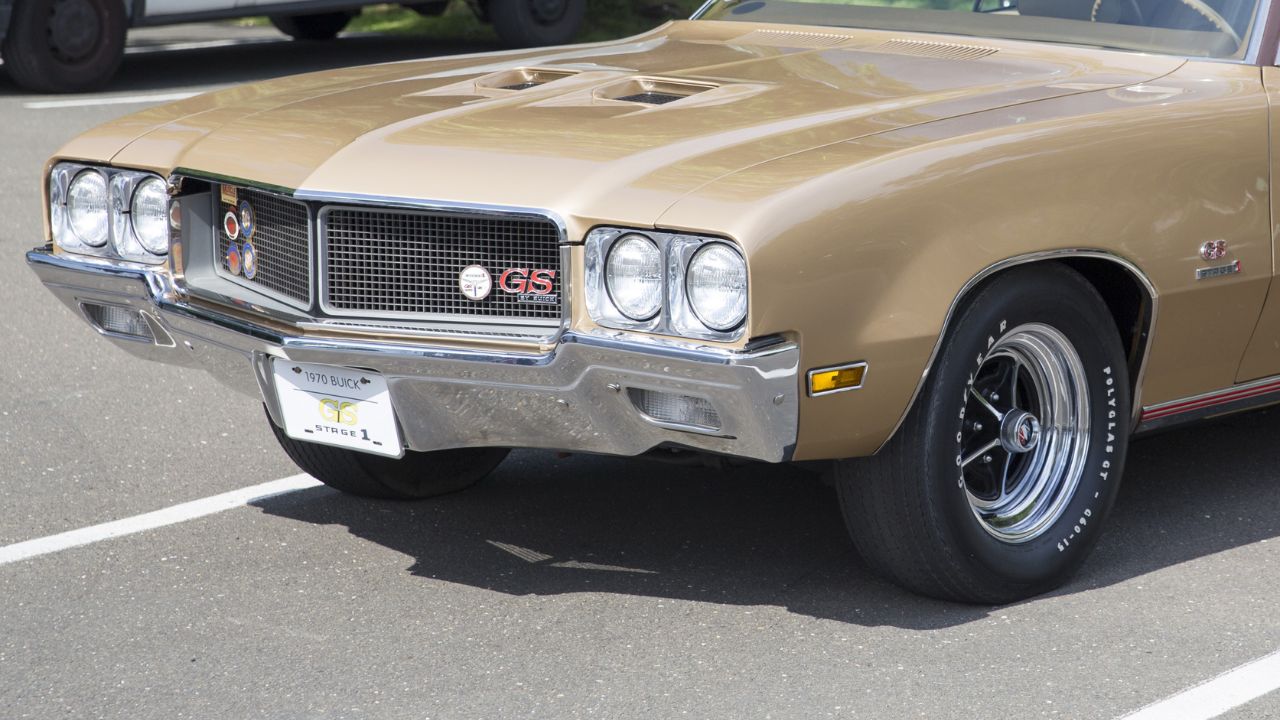
Think 1970 GM muscle cars. Your mind probably went to the fabled Chevelle SS 454 LS6, or perhaps the Pontiac GTO Judge that collectors fight over. Great options, but there’s one GM muscle car from the 1970 model year that barely gets a mention these days, even though it was powerful and quick enough to run with, and in some period tests outrun, many of the era’s quickest muscle cars. This muscle car didn’t need a crazy appearance package or other wild styling elements to show that it was the baddest GM muscle car of the day. Instead, it maintained a relatively low-key appearance and let its doom-bringer of an engine do all the talking.
Its massive torque and big block punch earned a serious reputation in period road tests, but for some strange reason, it doesn’t get the recognition it deserves, and as a result, prices have remained fairly grounded compared to its rivals. So, without further ado, meet the 1970 Buick GS455.
1970 Buick GS 455: GM’s Baddest Muscle Car That No One Remembers
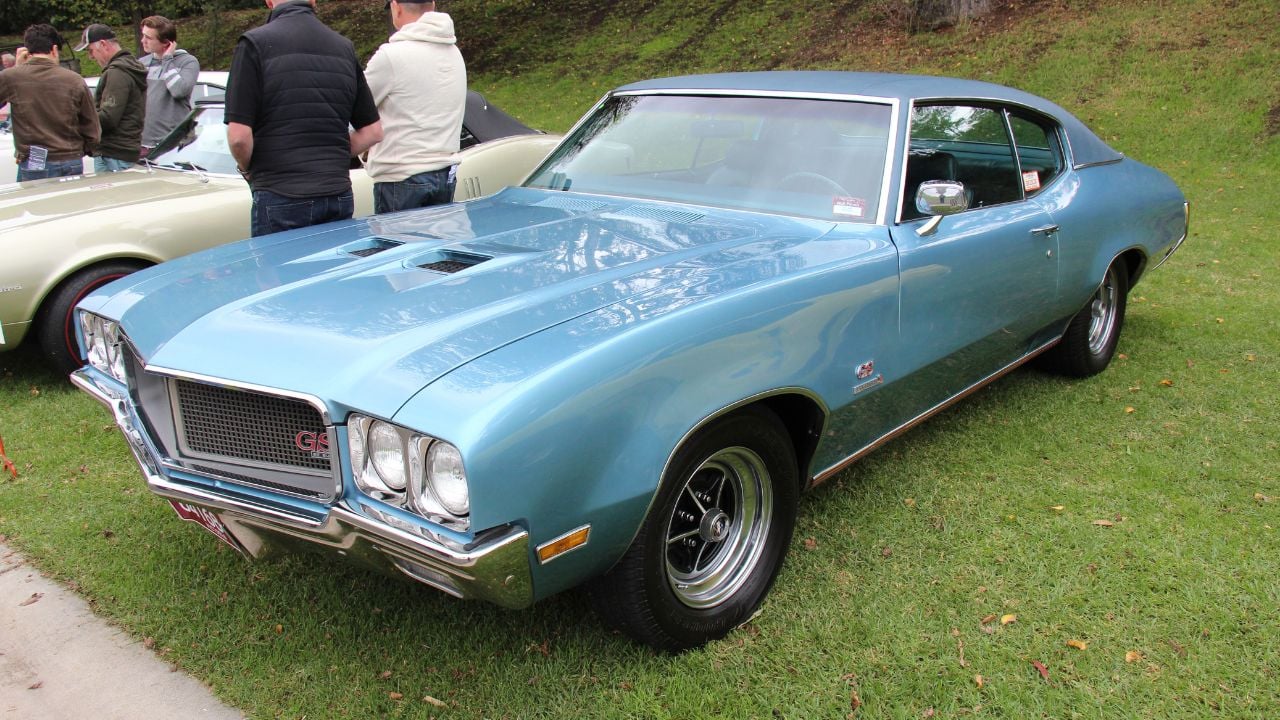
As GM’s “semi-luxury” brand, Buick wasn’t known for offering performance-oriented models, but after Pontiac built the GTO in 1964 and launched the muscle car craze, even they couldn’t resist the urge to join the horsepower wars. So, barely a year after the GTO debuted, Buick introduced the Gran Sport (GS), a high-performance version of the intermediate-sized A-body Skylark.
The Skylark GS was only sold as a two-door hardtop coupe, pillared coupe, or convertible, and was equipped with the legendary 401 cubic-inch “Nailhead” V8. This move not only marked a drastic shift in Buick’s modus operandi, but it also went against the ill-advised GM engine ban, which prevented its brands from installing engines larger than 400 cubic inches in intermediate-sized cars. The GS’s engine was officially listed as 400 cubic inches, though.
The GS was a smash hit, and by the 1968 model year, Buick promoted it to a separate model based on the two-door Skylark’s chassis and body. The 1968 GS 400 also received an updated design that made it one of the best-looking muscle cars of the day. Buick had also phased out the aging Nailhead V8 from 1967 onwards, replacing it with a new 400 cubic-inch V8 that made a respectable 340 hp and 440 lb-ft of torque, but it often found itself outgunned on paper by the most extreme big-block Fords and Hemi-powered Mopars of the day. Even within the GM family, the GS was often rated below some GM siblings in peak horsepower, and that didn’t sit right with Buick engineers, with the high levels of internal competition among GM brands back then.
Then 1970 came and changed everything. 1970 was a huge year for the GS, but even more consequential for GM as a company. The top brass finally came to their senses and lifted the engine ban, which was akin to uncaging a predator that had sat and watched helplessly for years as cross-town rivals dominated the muscle car market with their unrestricted big blocks. Buick engineers were ready to run wild, and they dropped a gargantuan 455 cubic-inch V8 into the GS, creating the 1970 GS 455.
The Torquey GS 455 Was Buick’s Contribution to the Muscle Car Golden Age
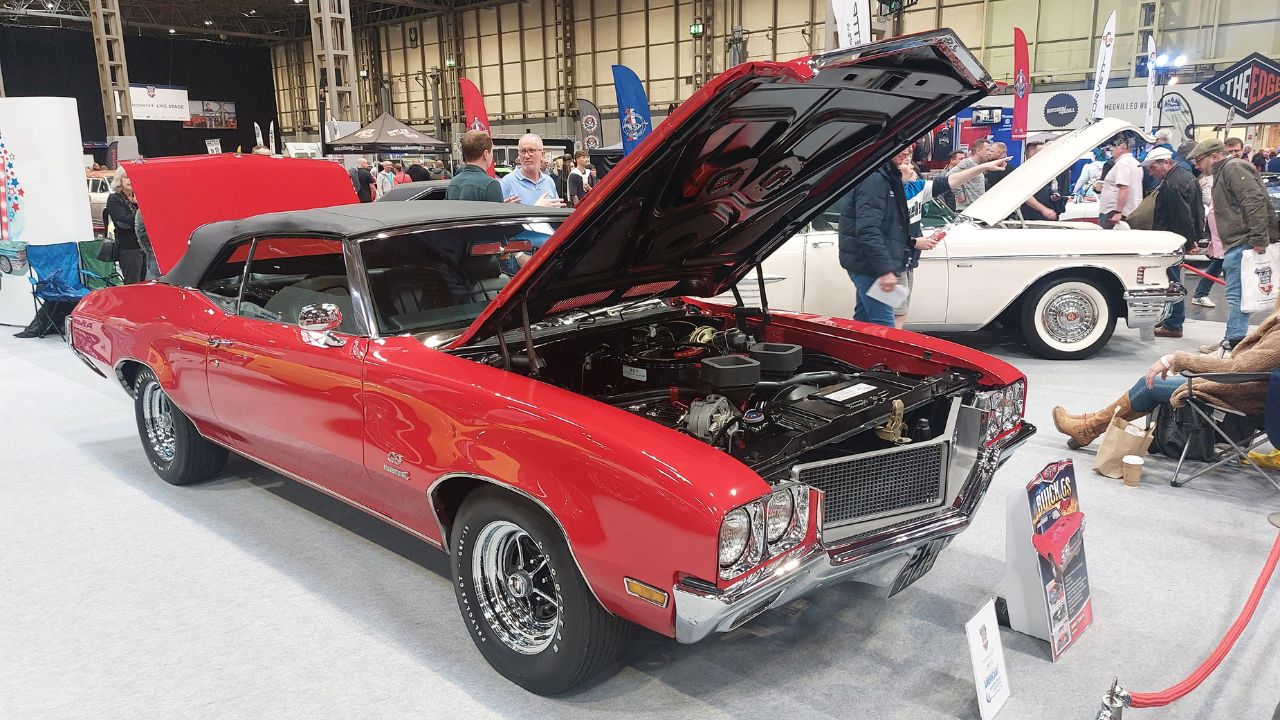
The “Golden Age” of muscle cars, which lasted from the mid-1960s to the early ’70s, produced some of the most iconic muscle cars. While GM did have some contenders, including models like the 1969 Hurst/Olds that found a way around the ban, it largely missed out since the restrictions prevented its intermediate-sized models from achieving their full potential. Thankfully, they lifted the ban in 1970 and everyone let loose.
Since in this era GM divisions largely relied on their own engine families, Buick, Pontiac, and Oldsmobile all installed different versions of 455 cubic-inch V8s in their A-body cars, but Buick’s execution created a ferocious monster that showed the others who’s boss. The GS 455’s behemoth of an engine made 350 hp at 4,600 rpm and a crazy 510 lb-ft of torque at 2,800 rpm. In that era, manufacturers sometimes quoted conservative power figures, which is why period testers and later builders have often argued the output was conservative. Buick’s engine also featured a thin-wall casting block, which made it lighter than rivals, further improving its power-to-weight ratio – it was about 150 lbs lighter than a Chevy 454.
While the 350-hp figure was easy to brush off, with many rivals already past the 400-hp mark, the car’s 510 lb-ft of torque was tough to beat, especially considering that it was achieved at just 2,800 rpm. This massive torque figure and the sheer speed at which it was delivered are why the GS 455 was often nicknamed “the Torque King”. It was often cited as a torque benchmark for American performance cars of its era; later performance cars like the 2003 Viper (525 lb-ft) surpassed it.
The Stage 1 Package Took It up a Notch
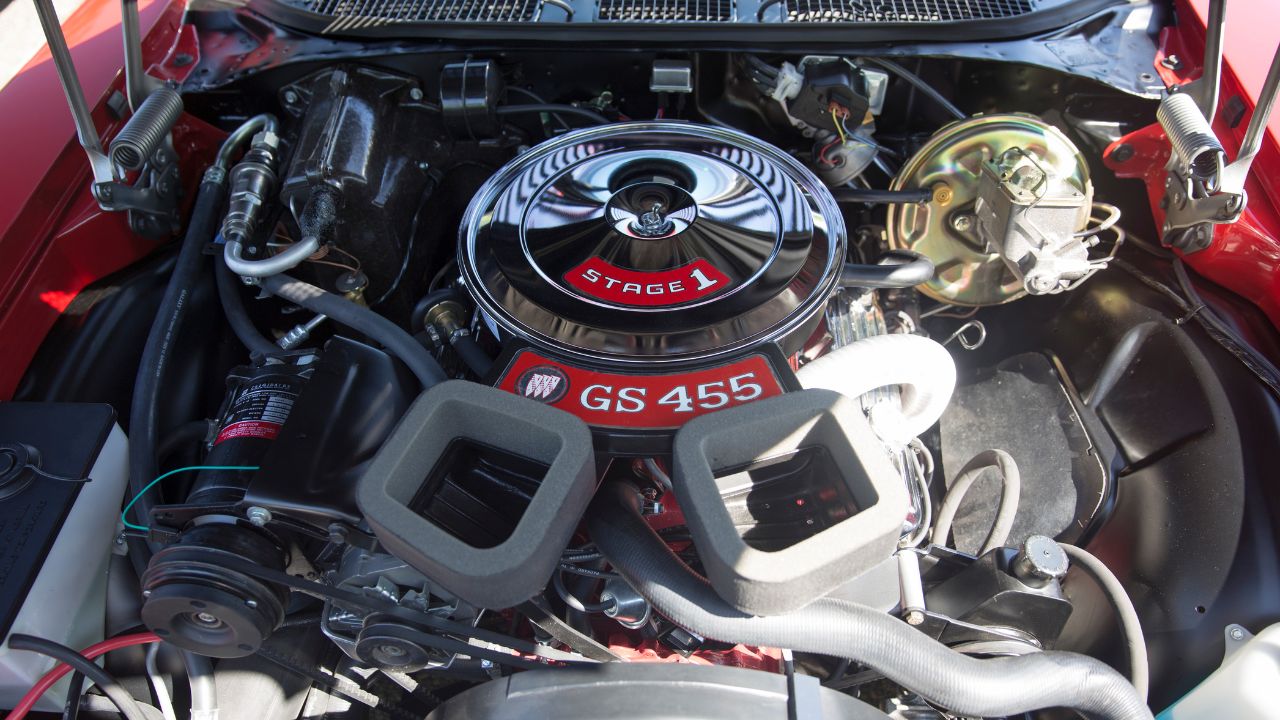
For those who wanted more oomph, Buick offered the “Stage 1” package, which had been introduced in the 1969 model year. In the 1970 GS 455, the $199 Stage 1 package increased horsepower to a still-underrated 360 hp thanks to high-flow engine cylinder heads, a hotter cam, and a specially tuned Quadrajet four-barrel carb. The cooling system and suspension system also got some upgrades, resulting in a car that could cover the quarter mile in 13.38 seconds at over 105 mph, according to period tests from Motor Trend Magazine.
While these figures put the 1970 GS 455 Stage 1 in the same conversation as rivals like the 1970 Chevelle SS 454 LS6 and Pontiac GTO Judge (Ram Air IV), the GS 455 remains a forgotten relic of the past while the Chevy and Pontiac continue to bask in endless acclaim today. One reason behind this is the GS 455’s image of a “Gentleman’s muscle car” since, despite having so much power under the hood, it still catered to Buick’s traditional luxury-oriented buyers and had upscale features like plush bucket seats, woodgrain trim, a center console, deluxe steering wheel, and a relatively quiet and comfortable cabin.
The 1970 GS 455 Is a Rare Sight
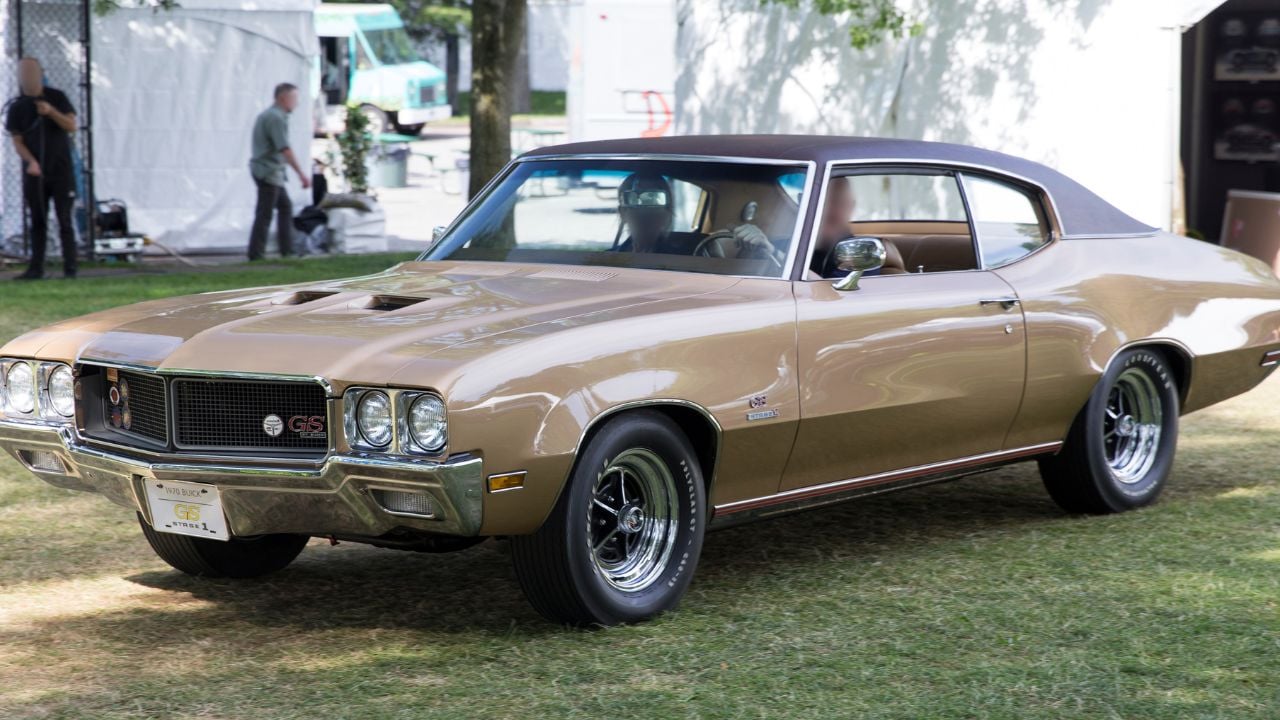
The GS 455 checked all the boxes muscle car purists had and looked set to dominate the rest of the ’70s, but sadly, its reign was short-lived, with stricter emission restrictions forcing Buick to reduce its power output in 1971 to a measly 315 hp and 450 lb-ft of torque for the standard GS 455 and 345 hp and 460 lb-ft for the Stage-1-equipped version. If the GS 455 was the GM swan song for the muscle car era, 1970 is when it hit the highest notes.
Buick produced 9,470 non GSX GS 455 models in 1970, with 2,697 of them equipped with the Stage 1 package. This is not a car you’re likely to run into in the wild too often. The convertibles are far rarer than the coupes, accounting for 1,184 of the GS 455 total, with only 232 of those equipped with the Stage 1 package. Even more of a unicorn is the GSX package, whose numbers we’ve not included in the 9,470 figure, but more on that shortly.
The GSX Was Even Meaner and Rarer
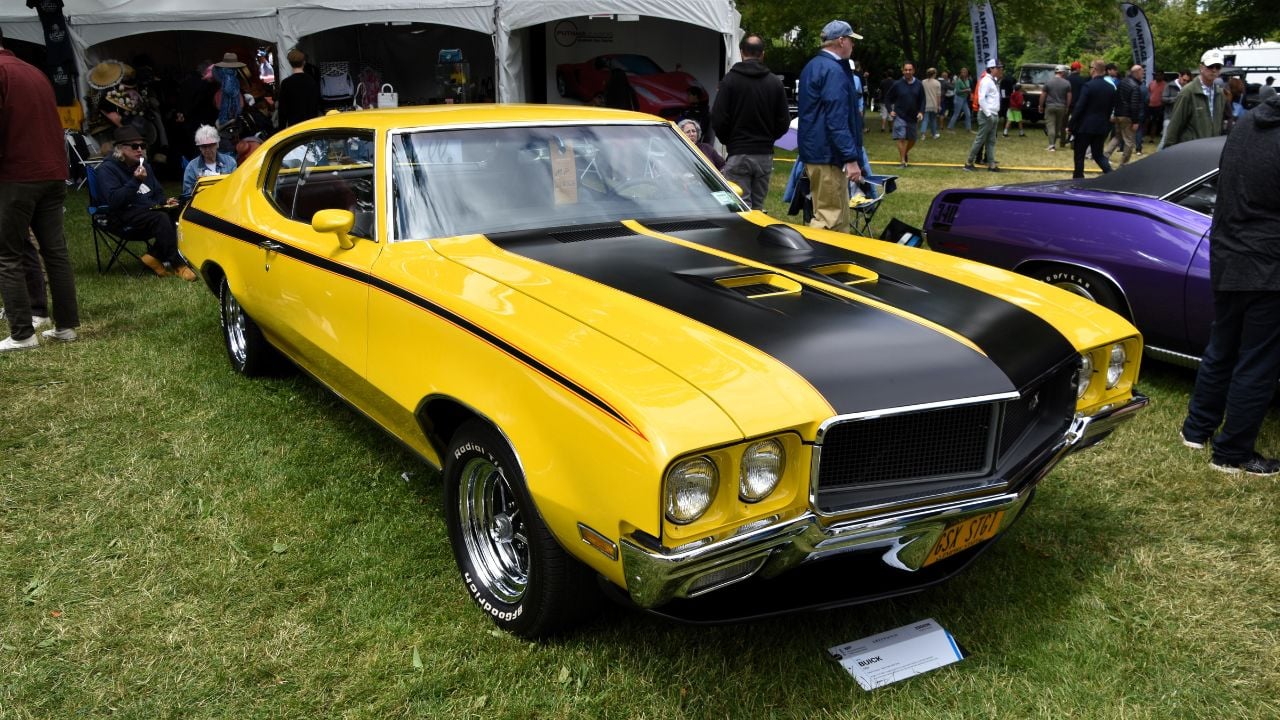
With the muscle car wars in full swing in 1970, Buick hatched a plan to build a high-performance, limited-production halo car that could face off against industry giants like the Chevelle SS and Pontiac GTO Judge. At the same time, Buick wanted something to drive more showroom traffic to the redesigned 1970 A-body, which is why they decided to build a special version of the GS 455 – the GSX.
Not everyone wanted a “Gentleman’s muscle car”, and Buick knew that. Some gearheads wanted to announce their performance intentions, even while parked, and that’s exactly what the GSX offered. The hardtop-only GSX package cost $1,195 on top of the GS 455’s $3,283 price tag, and for that, gearheads got an exclusive choice of either Saturn Yellow or Apollo White paint color, distinctive black stripes, front and rear spoilers, and a functional hood-mounted tachometer. On the performance side, the GSX package mandated a heavy-duty suspension, stiffer shocks and springs, and power front disc brakes; quick-ratio power steering was optional. Like the GS 455, the GSX also had the Stage 1 option that took things a notch higher. Buick ended up producing just 678 GSXs in 1970, according to most sources, with 400 of them equipped with the Stage 1 package.
Unlike the 1970 GS 455, the GSX gets more respect in automotive circles, even though it was mostly an appearance package with similar levels of performance as the more introverted GS 455. Sure, its rarity has something to do with it, but the normal GS 455 surely deserves more respect, right?
The 1970 GS 455 Is an Attainable Collector Muscle Car Today
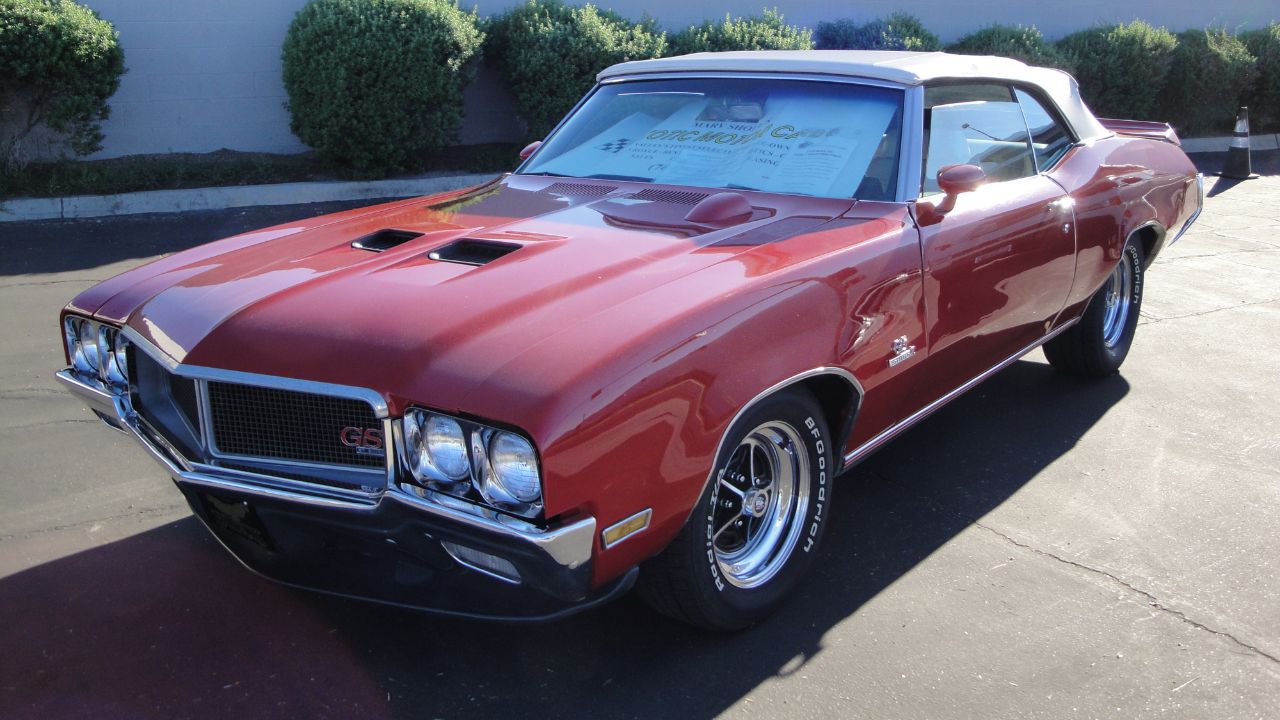
The 1970 GS 455 is a gorgeous golden era muscle car with a beast of an engine, genuine performance credentials, and relatively low production numbers, particularly in Stage 1 guise. This kind of recipe usually pushes prices into levels that mortals of meager means wouldn’t be able to afford, but for some reason, the 1970 GS 455 is surprisingly attainable. According to the Hagerty Valuation Tool, a 1970 GS 455 sport coupe is valued at $29,800 in #3 good condition, and Classic.com shows recent sales as low as $38,000 on November 7, 2025. The Stage 1 Package expectedly commands a premium and Hagerty lists a 1970 GS 455 Stage I sport coupe at $50,300 in #3 good condition, with Classic.com showing sales as low as $51,000 on November 11, 2025. Convertibles may fetch considerably more, especially the 232 units with the Stage 1 package.
While these prices may not qualify as ‘cheap’, they’re far below the GSX, which sold for $154,000 at Mecum Indy on May 16, 2025 in standard form and $236,500 for a Stage 1 example at Barrett-Jackson Scottsdale on January 24, 2025. We don’t even want to go into 1970 Chevelle SS 454 prices, which sold for $440,000 at Barrett-Jackson Scottsdale on January 24, 2026.
The 1970 GS 455 may not attract as many oohs and aahs as the more flashy and famous rivals from its era, but its prices put it within reach, even though it’s equipped to offer better performance-per-dollar than more famous contemporaries. In the world of everything automotive, we call that a no-brainer.