
The Ford Escape may have disappeared from showrooms, but its story apparently isn’t over yet. After ending production of the long-running compact crossover following the 2026 model year, Ford is reportedly preparing to bring the nameplate back later this decade.
According to Ford Authority, the Escape is set to return in 2029 as a fully electric crossover. Rather than serving as a direct replacement for the outgoing gasoline-powered model, the revived Escape would become part of Ford’s next-generation EV strategy.
The move would mirror Ford’s decision to reinvent the Mustang as the electric Mustang Mach-E, using an established nameplate to help introduce new technology to mainstream buyers. This time, however, Ford appears to be targeting one of America’s most competitive vehicle segments.
If the reports prove accurate, the Escape’s return would also mark another major step in Ford’s effort to reset its EV business after several years of financial losses and shifting strategies.
A Familiar Name Gets A New Mission

Ford officially ended Escape production as part of its plan to transform the Louisville Assembly Plant in Kentucky into a hub for future electric vehicles.
The company has invested heavily in retooling the facility, with nearly $2 billion earmarked for the transition. While many assumed the Escape’s departure marked the end of the nameplate, reports now suggest it was only a temporary pause.
Ford Authority says the future Escape will remain a compact crossover, retaining its position in Ford’s lineup while abandoning internal combustion power altogether.
The new model reportedly carries the internal designation U833 and is expected to begin production at Louisville in 2029.
Built On Ford’s New Universal EV Platform
The all-electric Escape is expected to ride on Ford’s upcoming Universal Electric Vehicle (UEV) platform. This architecture is being developed as a flexible foundation capable of supporting a wide range of vehicles, including compact crossovers, three-row SUVs, vans, sedans, and pickup trucks.
Ford executives have previously indicated that affordability and lower operating costs are central goals for the platform. The first vehicle expected to use the new architecture is a midsize electric pickup truck scheduled to enter production next year.
Ford CEO Jim Farley recently described that truck as one of the company’s most important upcoming products, adding that several additional models are already planned for the platform.
An Electric Escape Would Face New Challenges

An all-electric Escape would enter a market that looks very different from the one the outgoing model competed in. While EV adoption continues to grow, most of the Escape’s direct rivals remain powered by gasoline, hybrid, or plug-in hybrid drivetrains. Models such as the Toyota RAV4, Honda CR-V, and Hyundai Tucson continue to rely heavily on combustion power.
The timing is also noteworthy. Federal EV tax incentives have largely disappeared, while consumer demand for electric vehicles has become more uneven than many automakers originally anticipated.
That means Ford will need to convince traditional compact crossover buyers that an EV version of the Escape offers enough value to justify the switch.
Affordability Could Be The Key
One potential advantage may be cost. Ford has repeatedly acknowledged that first-generation EVs have struggled to generate sustainable profits. The company has already scaled back some of its earlier electrification plans while searching for ways to build more affordable electric vehicles.
The new UEV platform is intended to address that issue by reducing development and manufacturing costs across multiple vehicle segments.
If Ford succeeds, the Escape could emerge as one of the more affordable electric crossovers available in the United States, helping it compete against both traditional rivals and a growing number of EV alternatives.
Why The Escape Is Still Relevant
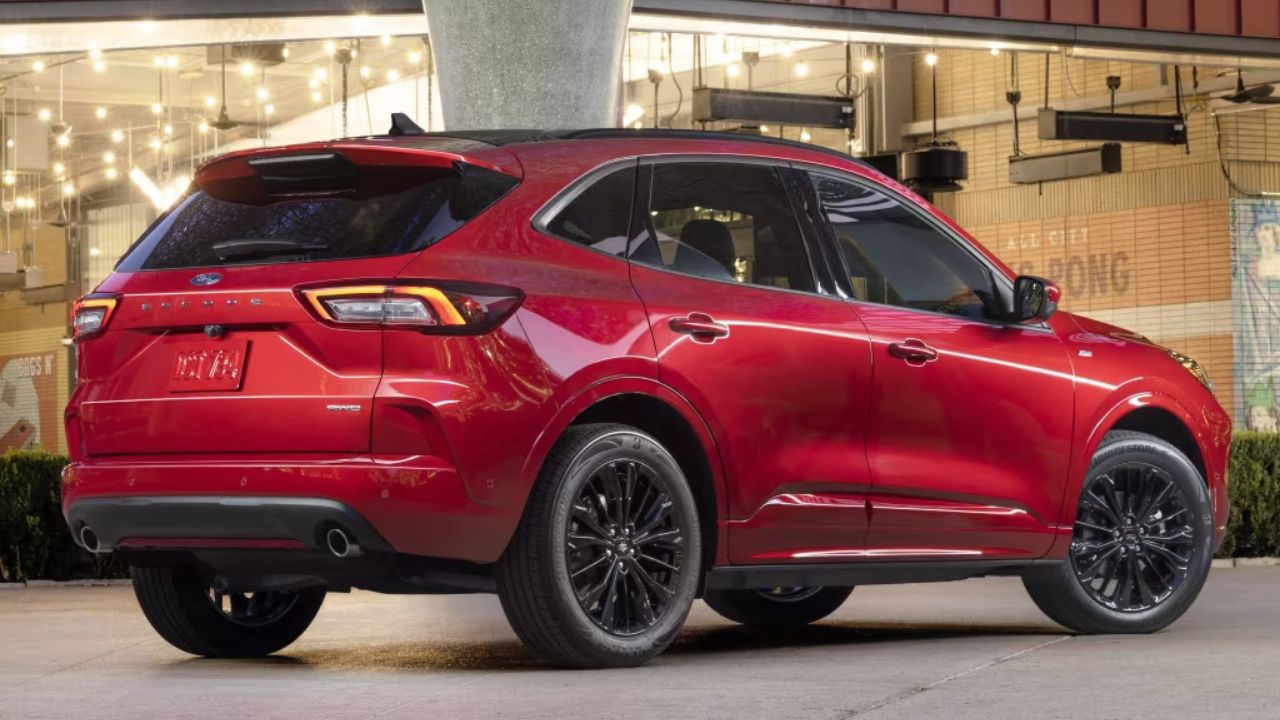
Although the Escape never reached the sales heights of the F-Series or Explorer, it remained an important part of Ford’s lineup for decades.
The crossover regularly delivered six-figure annual sales and peaked at more than 300,000 units sold in 2017. Even as consumer tastes moved toward larger SUVs and trucks, the Escape remained one of Ford’s core volume products.
Bringing the nameplate back gives Ford an opportunity to leverage decades of brand recognition while entering a new era of electric mobility.
With production reportedly scheduled to begin in 2029, buyers will have to wait several more years before seeing whether the Escape can successfully reinvent itself for the EV age. If it does, it could become one of the most significant products in Ford’s next chapter.