
Fresh details from reporting by The War Zone (TWZ) paint a vivid picture of a tense Monday in one of the world’s most critical shipping corridors.
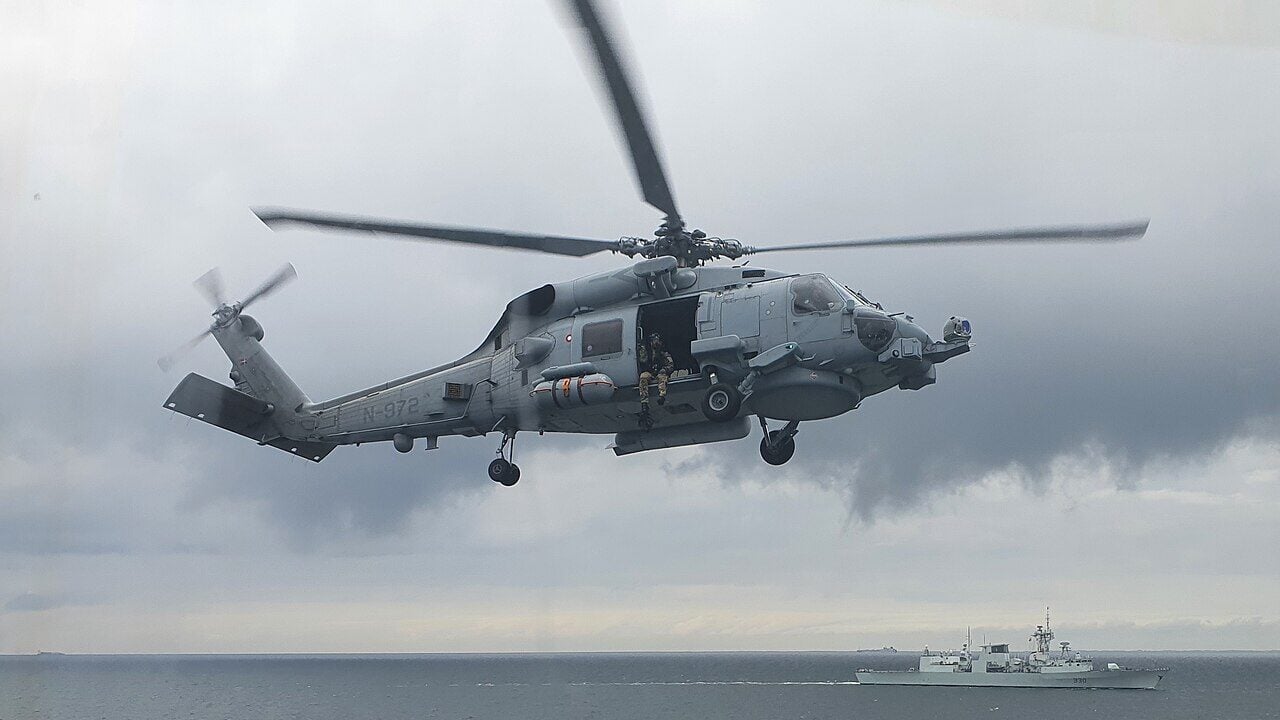
U.S. Central Command (CENTCOM) confirmed that American forces deployed both AH-64 Apache attack helicopters and MH-60 Seahawk helicopters to confront a swarm-style threat from Iranian fast attack craft.
The situation unfolded as six Iranian boats moved in ways that were assessed as threatening commercial shipping in the Strait of Hormuz. This narrow waterway handles a significant share of global oil traffic, which makes any disruption a high-stakes event.
According to US officials, the Iranian action was not limited to small boats. Cruise missiles and drones were also launched toward vessels operating in the area, targeting both military and civilian ships.
U.S. forces responded with layered defenses. Air assets intercepted incoming aerial threats, while helicopter crews engaged the fast attack boats.
The Apaches and Seahawks worked in tandem, using precision weapons and coordinated targeting to neutralize all six boats. Not a single U.S. or allied ship, the US CENTCOM says, was hit during the exchange, underscoring the effectiveness of the defensive umbrella in place.
The MH-60 Seahawk
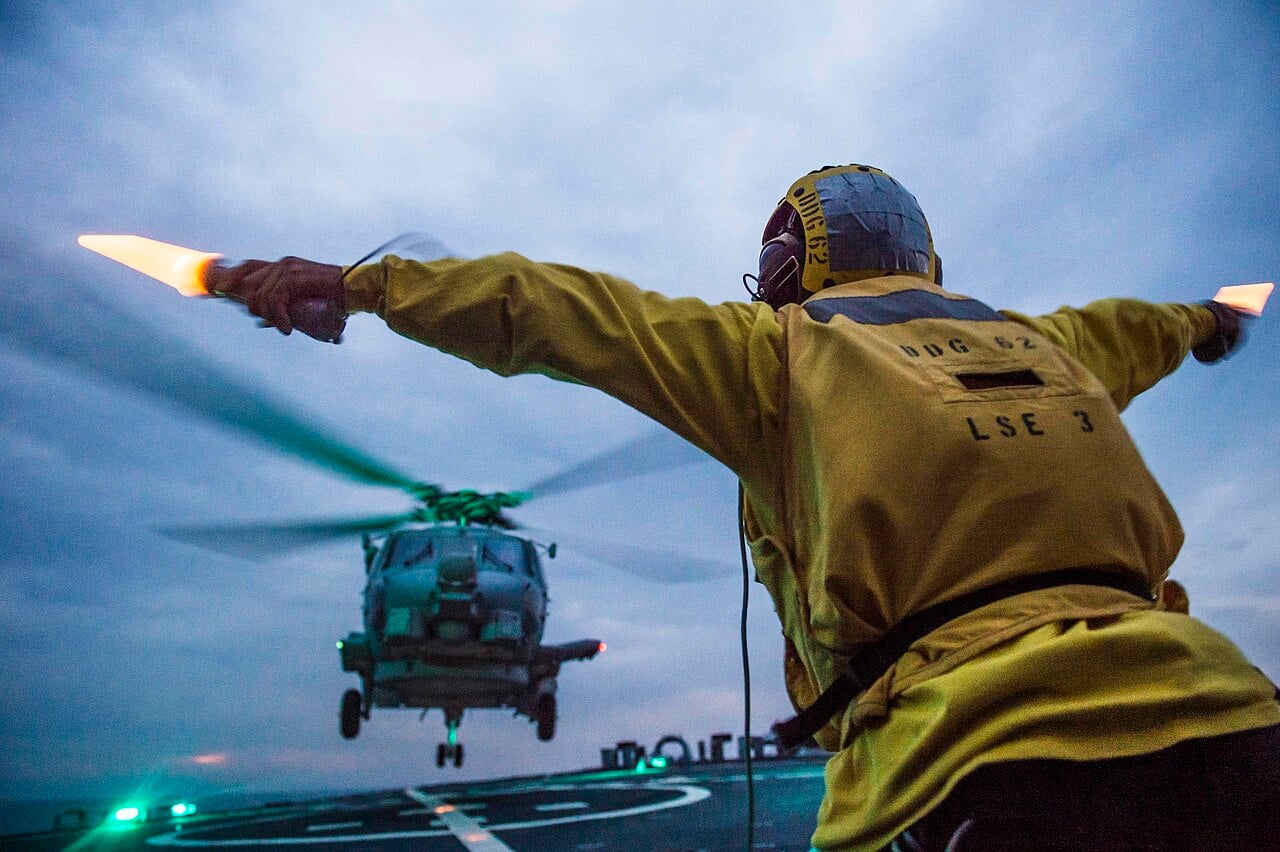
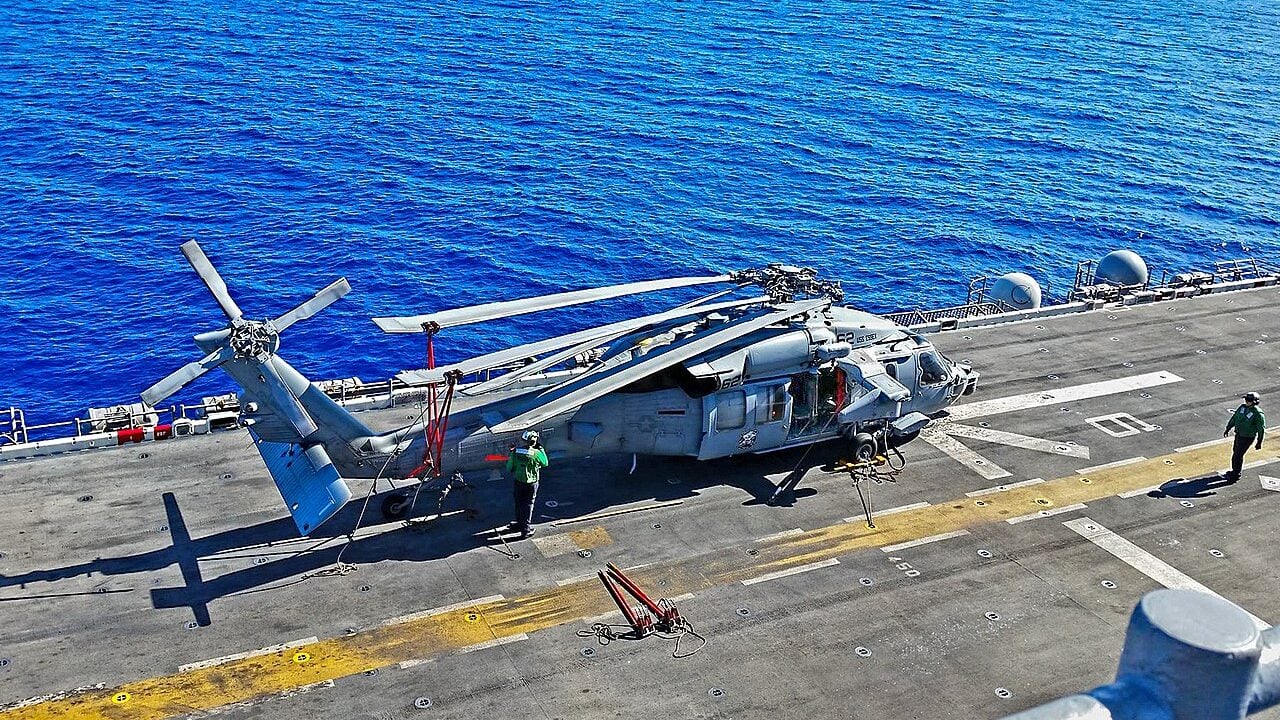
The MH-60 Seahawk is essentially the navalized cousin of the Black Hawk, adapted for life at sea and built to operate from the decks of destroyers, cruisers, and aircraft carriers. Developed by Sikorsky, it is one of the most versatile helicopters in the U.S. Navy’s fleet.
Unlike land-based helicopters, the Seahawk is engineered for harsh maritime conditions.
Folding rotor blades allow it to fit into tight shipboard hangars, while corrosion-resistant materials help it withstand constant exposure to saltwater.
It is equipped with advanced radar systems, infrared sensors, and electronic warfare suites that allow it to detect and track both surface and airborne threats.
Armament is where the Seahawk becomes especially relevant in incidents like this one.
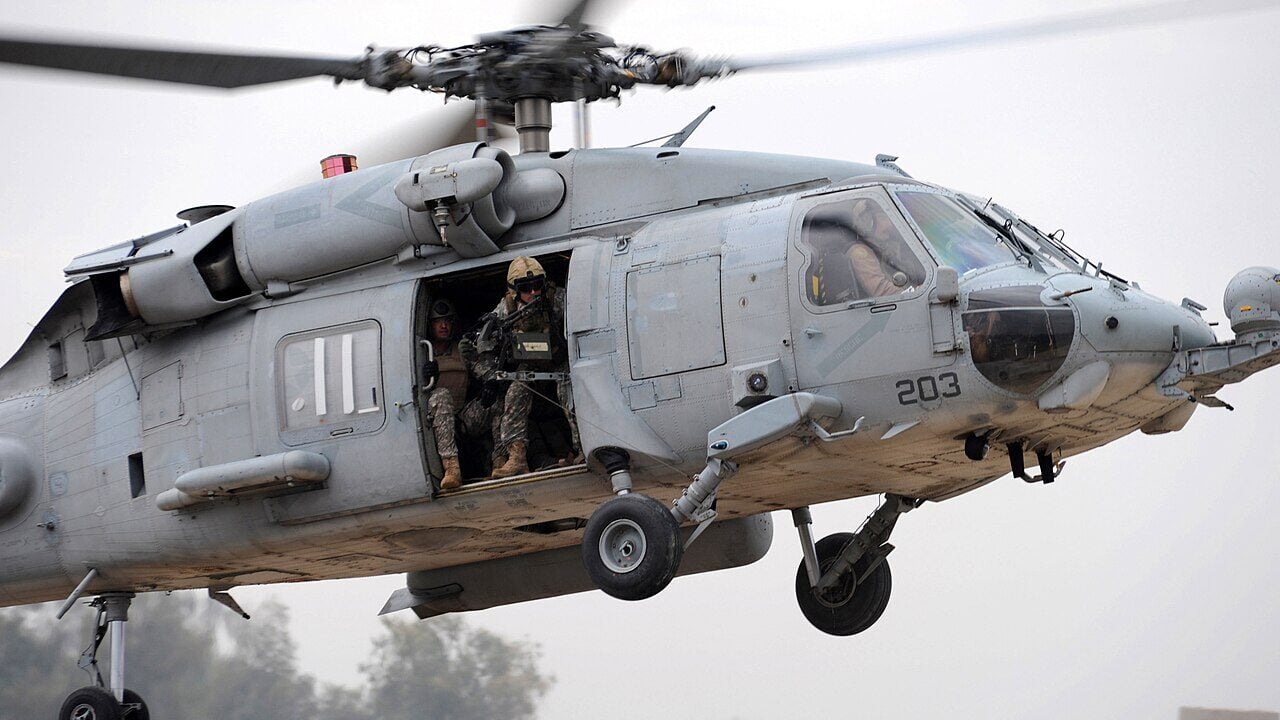
Depending on the variant, it can carry Hellfire missiles, rockets, and crew-served machine guns. This combination makes it highly lethal against small, fast-moving boats like those used by Iran’s Revolutionary Guard (IRGC).
Its ability to hover, maneuver low over water, and maintain visual contact gives it an edge in littoral combat zones.
How the Seahawk Executed the Strike
During Monday’s engagement, the Seahawk played a crucial role in identifying and prosecuting targets. Operating alongside the more heavily armed Apache, it helped locate the Iranian boats and maintain situational awareness across a wide area.
The helicopters approached at low altitude, a tactic that reduces detection and maximizes surprise. Using onboard sensors, crews tracked the boats as they maneuvered toward commercial vessels. Once cleared to engage, the helicopters opened fire, striking each target with precision.
The Seahawk’s ability to coordinate with naval assets below and other aircraft above made it a key node in the broader operation. It effectively acted as both hunter and spotter, ensuring that no hostile craft slipped through the defensive net.
Beyond the Battlefield
This incident highlights how modern naval conflicts are evolving.
Iran has long relied on small, agile boats as part of a broader asymmetric strategy designed to overwhelm larger, more advanced forces. These swarm tactics are intended to exploit narrow waterways like the Strait of Hormuz, where maneuvering space is limited.
The response from U.S. forces shows how airpower, especially helicopters like the Seahawk, is being used to counter that approach. Instead of relying solely on large warships, commanders are leveraging fast, flexible aerial platforms that can engage threats at close range with precision.
For observers in the automotive and mobility space, there is a familiar theme here.
Just as high-performance vehicles are evolving to handle complex environments with advanced sensors and control systems, military platforms like the Seahawk are doing the same in combat. It is a fusion of mobility, technology, and adaptability.
In the Strait of Hormuz, that combination proved decisive. Six hostile boats were eliminated, commercial traffic was protected, and a volatile situation was contained without losses on the U.S. side.
Sources: The Aviationist, TWZ