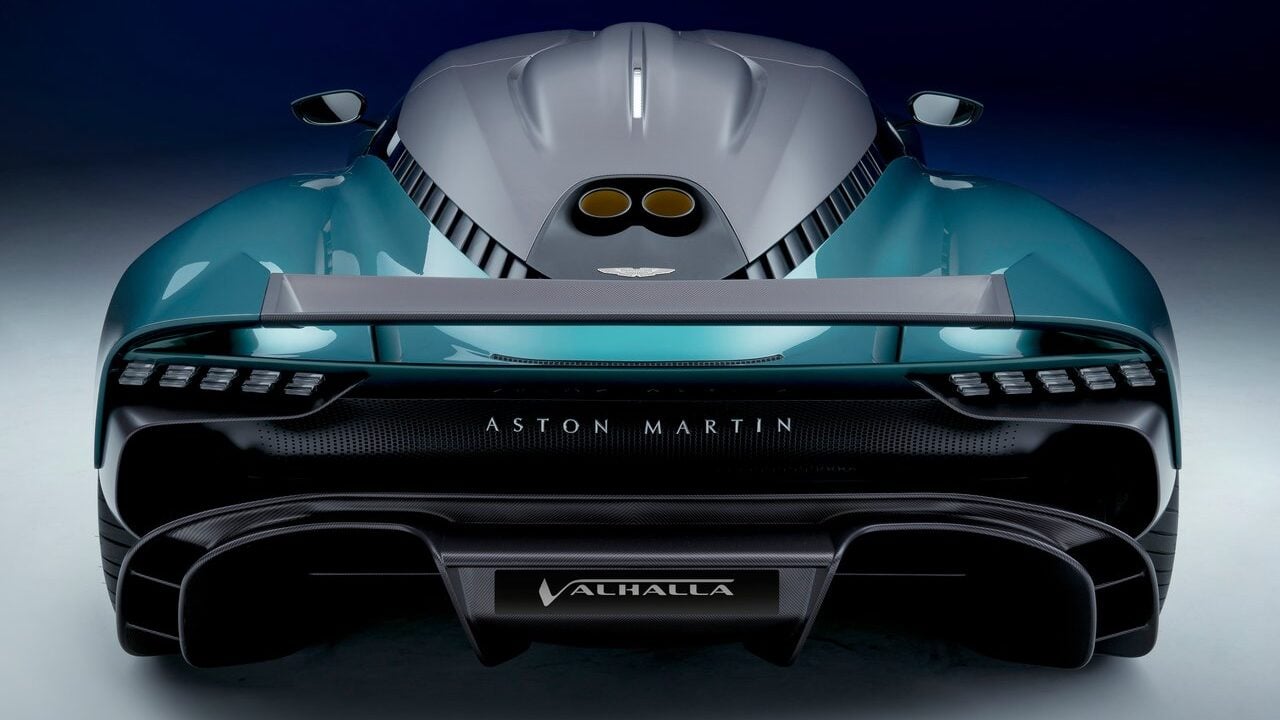

Imagine slotting a $1 million hybrid hypercar into reverse, easing onto the throttle… and watching the digital speed readout climb past 60 mph. Backwards.
Such must be the product of a fever dream. Except it isn’t. Word on the street is that this was a very real engineering problem (it’s a problem, right?) inside the Aston Martin Valhalla.
Here is the wild part. Nothing “special” was added to make it happen.
The Bones Say It All

The Valhalla’s architecture is where things get interesting. Up front sit two high-output electric motors, each independently driving a front wheel. They handle torque vectoring, electric-only propulsion, and crucially, reverse motion.
There is no conventional reverse gear. No idler gear flipping rotational direction inside the transmission. Instead, reversing is achieved by simply spinning the electric motors the opposite way. Clean. Elegant. Slightly unhinged.
Because electric motors deliver peak torque from zero rpm and are not bound by gear ratios in the same way as combustion engines, their speed ceiling is largely a function of motor design and software limits.
In the Valhalla, those front motors are capable of pushing the car to roughly 87 mph in either direction.
At that speed, forward makes sense. Reverse, not so much.
Not the Car’s Fault, Of Course
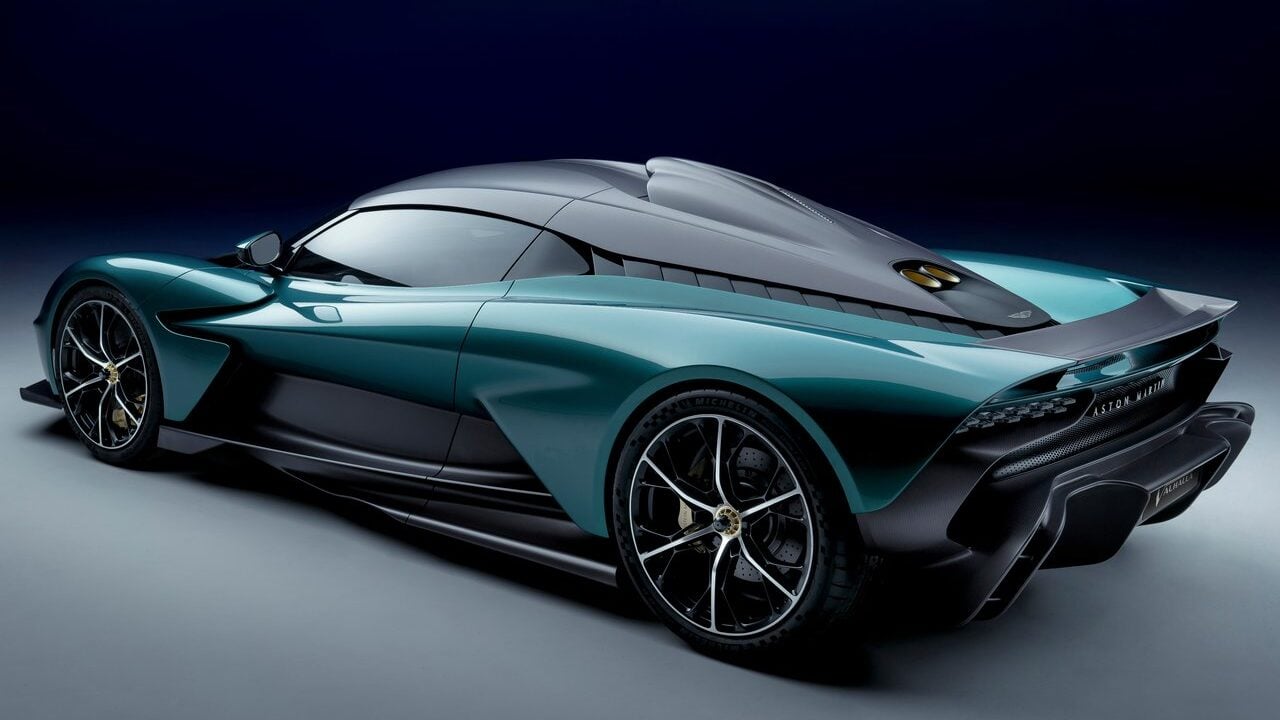
From a physics standpoint, the car does not “know” it is going backwards. The motors apply torque to the wheels. The wheels generate longitudinal force. The chassis responds the same way whether velocity is positive or negative.
The problem is everything else.
Aerodynamics, for starters. The Valhalla produces over 600 kg of downforce at speed, carefully balanced between front and rear using active aero surfaces. Those surfaces are tuned for forward airflow.
Flip the direction, and you disrupt pressure zones, stall critical aero elements, and effectively turn stability into a guessing game.
Then there is steering geometry. Ackermann angles, caster, and toe settings are optimized for forward motion. At triple-digit reverse speeds, steering inputs become nonlinear and potentially unstable. Can’t blame the Valhalla here; the car was never meant to “lead” with its rear axle.
Braking is another headache. Weight transfer under deceleration assumes forward travel. In reverse at high speed, load paths shift in ways the suspension and brake balance were not designed to handle.
In short, the drivetrain said “yes,” while the rest of the car quietly panicked.
And the Eagle’s Wings Got Clipped
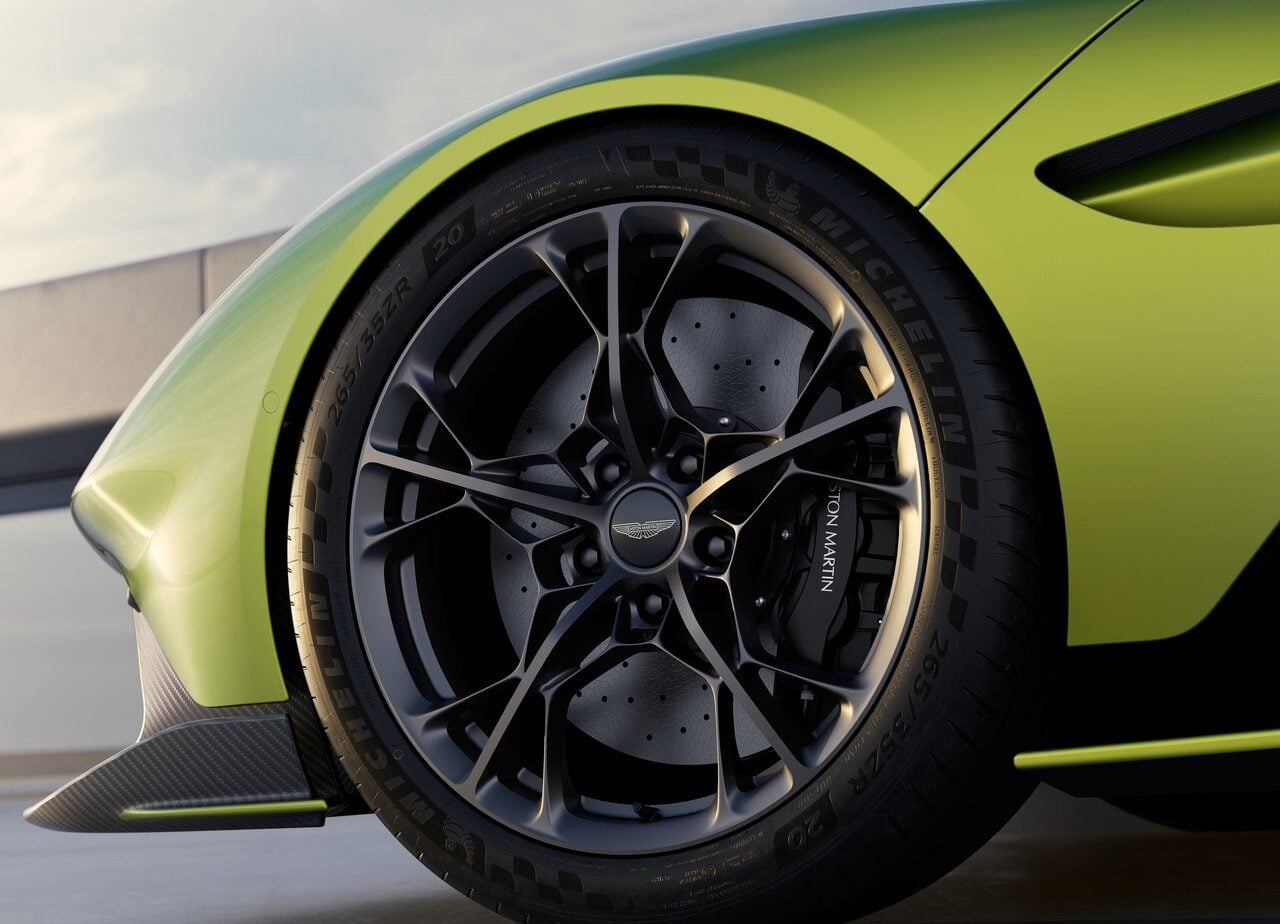
Aston Martin engineers caught this, um, anomaly during development. The electric front axle could push the car backwards just as aggressively as it could pull it forward in EV mode.
So they did the only sensible thing.
They killed the party.
Aston Martin reportedly electronically limited reverse speed to around 18 to 19 mph for production models. Not because the system could not handle more, but because the rest of reality could not.
There is a deeper takeaway here, and it says a lot about where performance engineering is heading.
In traditional combustion cars, mechanical constraints naturally cap behavior. Gear ratios, engine characteristics, and physical linkages act as built-in governors. In electrified systems, those constraints disappear. Capability expands into areas nobody previously had to think about.
Including accidentally building a hypercar that can moonwalk at nearly 100 mph.
It’s a Common Thing, Actually
This is not even unique to Aston Martin. The Rimac Nevera famously hit 171 mph in reverse under controlled conditions, proving that electric drivetrains do not inherently care about direction.
What changes is responsibility. When the hardware no longer imposes limits, software has to step in as the final authority.
So yes, 87 mph in reverse is technically trivial in a modern hybrid hypercar.
Making it survivable is the hard part.