There was a period when twin turbos meant more than just a faster spec sheet. The phrase carried a little danger, a little mystery, and a promise that the car in question was built by engineers who wanted more than easy power.
Twin turbos suggested ambition. They hinted at a machine that had been pushed past the ordinary answer, a car that needed more air, more speed, and a more dramatic personality than a single turbo or a bigger naturally aspirated engine could deliver.
That is why factory twin turbo cars still hold such a peculiar place in performance car history. They were not all the same. Some were homologation specials built to satisfy racing rules. Some were technological moonshots. Some were grand touring coupes that suddenly discovered a violent streak. Others became legends because the turbos changed everything about how the car felt, sounded, and entered the room. The best ones did not just use twin turbos. They were defined by them.
What Makes A Twin Turbo Car Truly Cool

This list was never about the fastest cars or the most expensive ones. It had to be about machines where the twin turbo setup was central to the appeal, not a technical footnote buried under the hood. The car also needed a strong identity of its own, because coolness has never been measured by horsepower alone.
A truly great twin turbo car should feel like the forced induction changed its whole personality, its pace, its aura, and the way people remembered it. That is why this group mixes homologation heroes, supercars, and sports GT icons instead of following one price band or one country. They all prove the same point in different ways: when twin turbos are done right, they do not just add power, they add mythology.
Ferrari 288 GTO

The 288 GTO matters because it was the moment Ferrari stopped treating turbocharging like an experiment and turned it into a declaration. Ferrari’s own history notes that the car used a 2.855 liter V8 with two turbochargers and 400 hp, which was a sensational number for the mid 1980s. But the real point of the 288 GTO is not the figure itself. It is the way the car fused racing intent with road going beauty.
This was a homologation special in spirit, built for a Group B world that never quite arrived as expected, and that only deepened its mystique. The shape still looks elegant, but underneath it sat something much more serious than a dressed up Berlinetta. It was a warning shot. It told the world Ferrari was prepared to weaponize turbocharging without losing visual grace, and that combination is a huge part of why the car still lands so hard today.
The 288 GTO is cool because it feels like a threshold car, the moment an old school Ferrari silhouette met a far more explosive future.
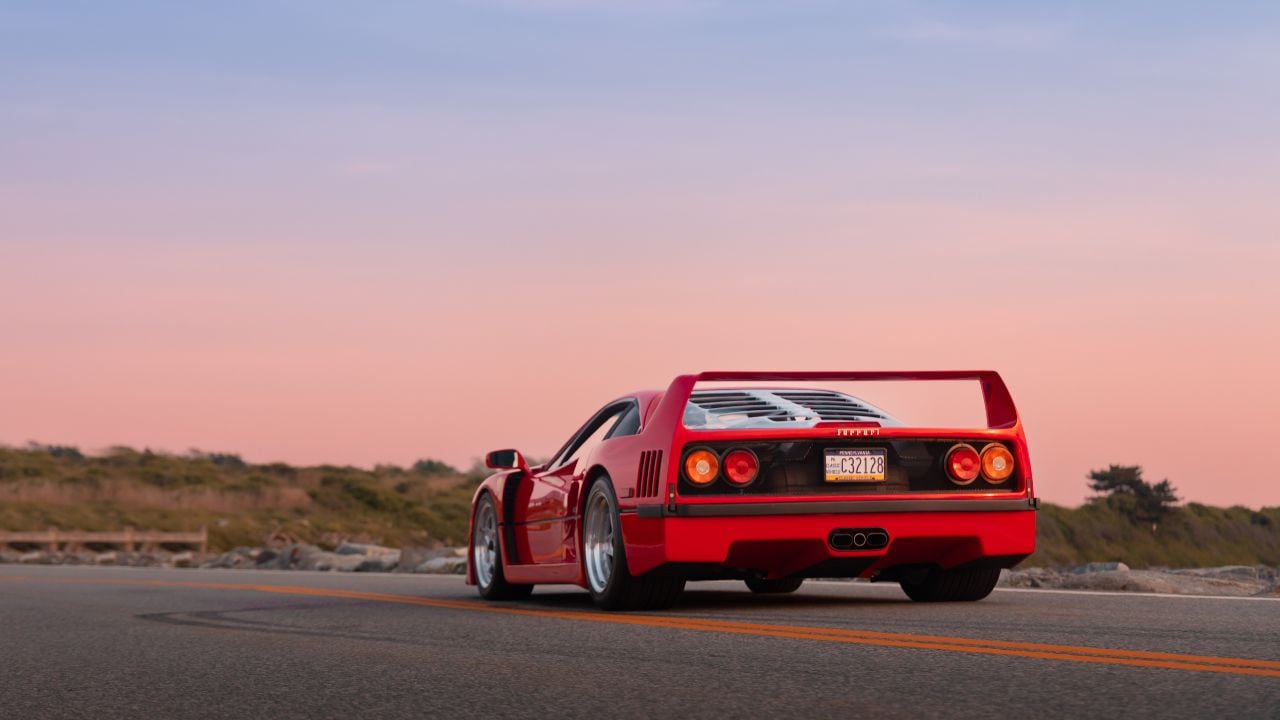
Ferrari F40

The F40 took the 288 GTO idea and stripped away every last trace of caution. Ferrari describes it as Enzo Ferrari’s final masterpiece, and the specs still read like something written in a fever dream: a 2.9 liter twin turbo V8 producing 478 hp, a featherweight body, and an attitude that never once pretended comfort was the point. This is one of the few cars whose reputation is so enormous that it risks flattening the actual machine. Then you revisit the details and remember how outrageous it really was.
The F40 did not use twin turbos to make itself friendlier or more flexible. It used them to become more extreme. That is the key. Plenty of turbocharged cars are cool because they are clever.
The F40 is cool because it is savage. The whole car feels like a single uncompromising thought, and the twin turbo engine is the heart of that thought. It gave the F40 its violence, its laggy drama, and its sense that every full throttle moment might become a story you tell for the rest of your life.
Porsche 959
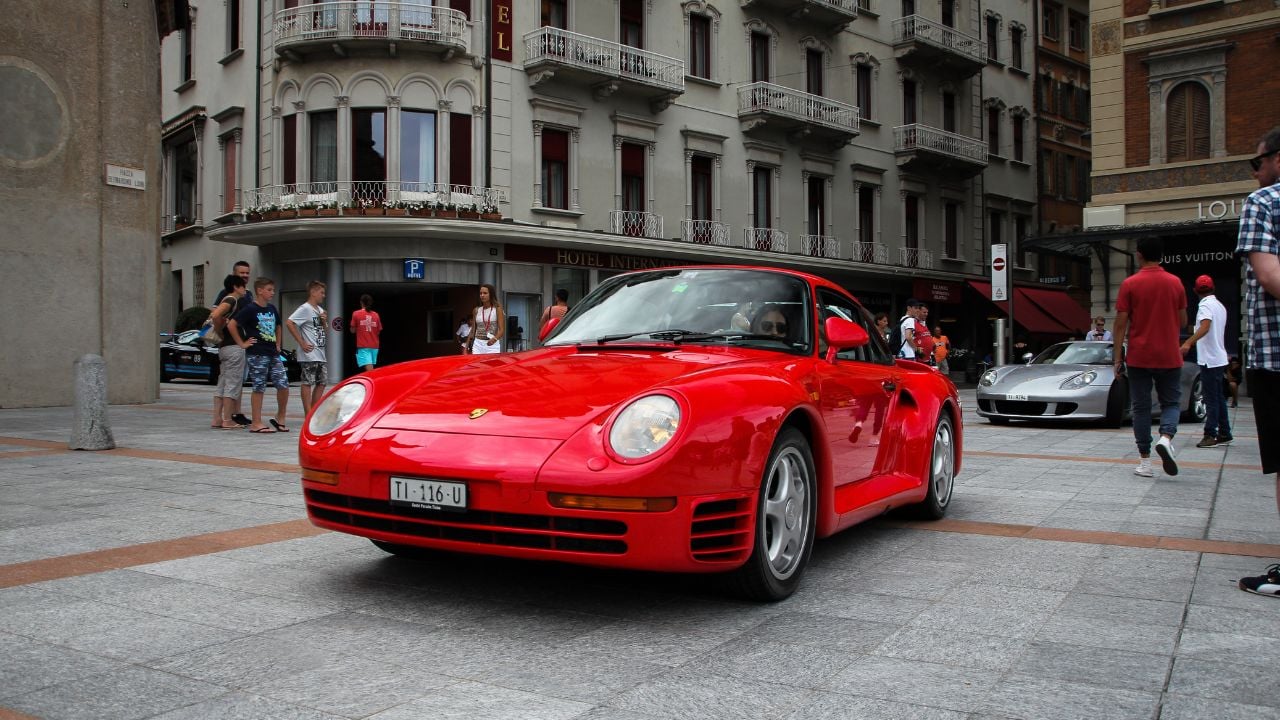
The Porsche 959 is cool in a completely different way. It did not arrive as a brawler. It arrived as a message from the future. Porsche’s own history still describes the 959 as the most technologically advanced road going sports car of its era, with a 450 PS six cylinder twin turbo boxer engine and all wheel drive sophistication that reshaped how high performance road cars were understood. That is what makes the 959 so important in this story.
The twin turbos were not there for theater alone. They were part of a much larger engineering argument. This car was built to prove what Porsche thought the next generation of supercars should become. And remarkably, so much of it was right.
The 959 feels cool because it combined intelligence and speed in a way very few cars ever have. It was devastatingly quick, yes, but also elegant in its problem solving. The car never seemed interested in brute force for its own sake. It wanted to be complete. That sort of confidence ages beautifully, and it is a big reason the 959 still feels almost impossibly advanced for the decade that produced it.
Jaguar XJ220

The XJ220 has one of the most dramatic reputations of any twin turbo supercar because it lived two different lives at once. One was the dream people thought they were getting, a V12, all wheel drive flagship. The other was the real production car, a sleek, low, mid engined monster powered by a 3.5 liter twin turbo V6 making around 542 hp.
The reason it belongs here is simple: once you separate the launch controversy from the car itself, the XJ220 becomes stunningly easy to admire. Jaguar’s own historical material points to 550 PS and under four seconds to 60 mph, while later road test coverage still emphasizes how extraordinary the car felt at speed. This was not a compromised machine. It was a very fast, very serious supercar that happened to arrive wearing the wrong expectations.
In hindsight, that only makes it cooler. The XJ220 has the long, elegant menace of a proper 1990s flagship exotic, and the twin turbo V6 gives it a far more technical, race linked character than the public was prepared to appreciate at the time. Sometimes coolness takes a while to catch up with the truth.
Toyota Supra Turbo
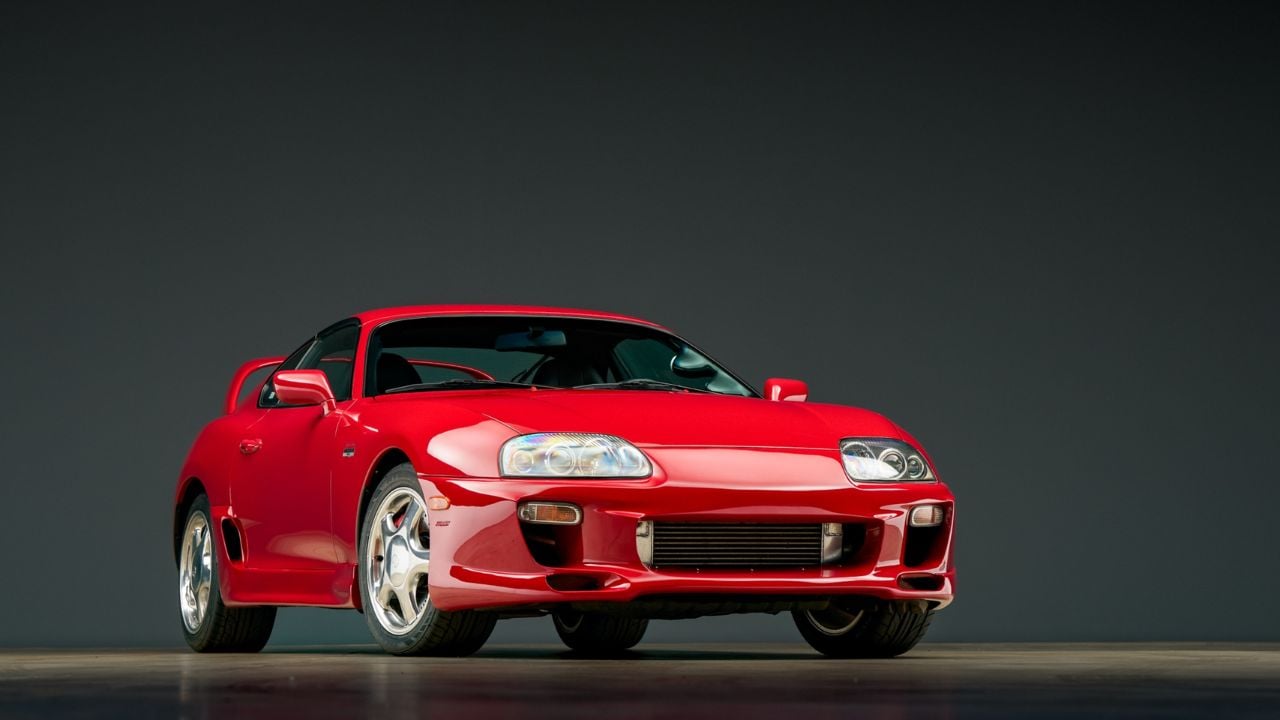
The Mk4 Toyota Supra Turbo became cool in a way manufacturers can never fully design. It earned its status through capability, yes, but also through the strange magic of timing. Toyota’s own history still points to the 2JZ-GTE straight six with twin sequential turbochargers, 320 hp, and sub five second 0 to 60 mph pace. Those numbers mattered, but they were only the beginning.
The real point of the Supra Turbo was that it looked and felt like a car with far more headroom than Toyota was officially admitting. It was polished, fast, dependable by sports car standards, and quietly overbuilt in ways tuners would later turn into legend. Yet even before the modification culture made it famous, the factory car already had a very strong identity.
It was not delicate like a pure sports coupe, and it was not rough like an old muscle car. It was a Japanese GT with serious engineering muscle and an engine that seemed to be waiting for someone to discover just how much more it had to give. That tension, factory polish on one side, hidden fury on the other, is exactly what made the twin turbo Supra such a defining cool car.
Nissan 300ZX Twin Turbo

The 300ZX Twin Turbo was Nissan at its most ambitious and perhaps most stylish. By the time the Z32 arrived, the Z car had already earned its reputation, but this version gave the line a new kind of sophistication. Nissan’s heritage material notes the twin turbo VG30 engine as part of a much broader rethink, and period road test archives put the output at 300 hp with an electronically limited top speed of 155 mph.
That sounds familiar today, but in 1990 it made the car feel genuinely advanced. The 300ZX Twin Turbo was not just quick. It looked like the future, with its low nose, smooth lamps, wide stance, and cockpit that wrapped around the driver in a way many rivals never quite managed. It is cool because it captured a moment when Japanese sports cars became beautifully serious without losing their charm. There was technology here, but it did not feel clinical.
There was performance, but it arrived in a shape that still looks remarkably clean and self assured. The twin turbos gave the Z32 its bite, but the real magic was how complete the whole thing felt.
Nissan GT-R
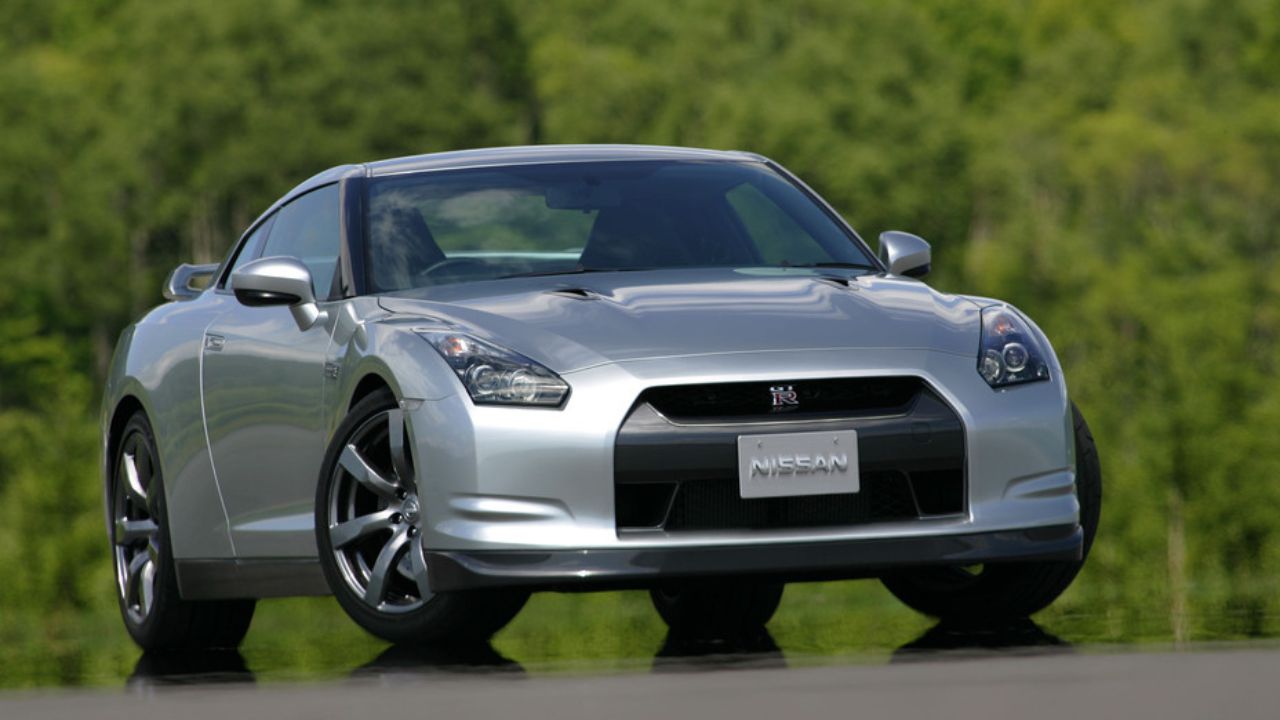
The GT-R is the car that turned twin turbos into a modern weapon of mass humiliation. Nissan’s official press materials for the R35 generation consistently highlight the hand assembled VR38DETT 3.8 liter twin turbo V6, with later NISMO versions reaching 600 hp. But the GT-R’s place on this list has less to do with numbers than with effect.
This car reset expectations every time it appeared. It was not exotic in the old Italian sense, and it was not graceful in the old British sense. It was something more confrontational: a highly engineered performance machine that used twin turbos, all wheel drive, and obsessive development to embarrass cars that were supposed to exist on a higher plane. That gave the GT-R a very different flavor of coolness. It was not romantic at first glance. It became cool because it was relentless.
The twin turbo V6 was central to that reputation, delivering the kind of crushing, repeatable speed that made the GT R feel almost unfair in the best possible way. Some cars are cool because they seduce. The GT-R was cool because it hunted.
Why Twin Turbos Still Sound Like A Promise

What makes these seven cars memorable is not just the hardware. It is the mood that came with it. Twin turbos once suggested that the manufacturer wanted something extra from the car, something more forceful, more exotic, more technically ambitious, or just a little less reasonable than the standard recipe.
In the Ferrari pair, that meant menace. In the Porsche, it meant futuristic sophistication. In the Jaguar, it meant misunderstood brilliance. In the Japanese trio, it meant depth, hidden potential, and a very different idea of speed.
That is why factory twin turbo cars still carry such a strong emotional charge. They remind you of a time when forced induction could still feel like a dramatic choice instead of a universal efficiency tool. The best of them did not just gain power from the setup. They gained character. And in the end, that is the whole point of a list like this. Plenty of cars are fast. Only a few make the words twin turbo feel like part of the legend.