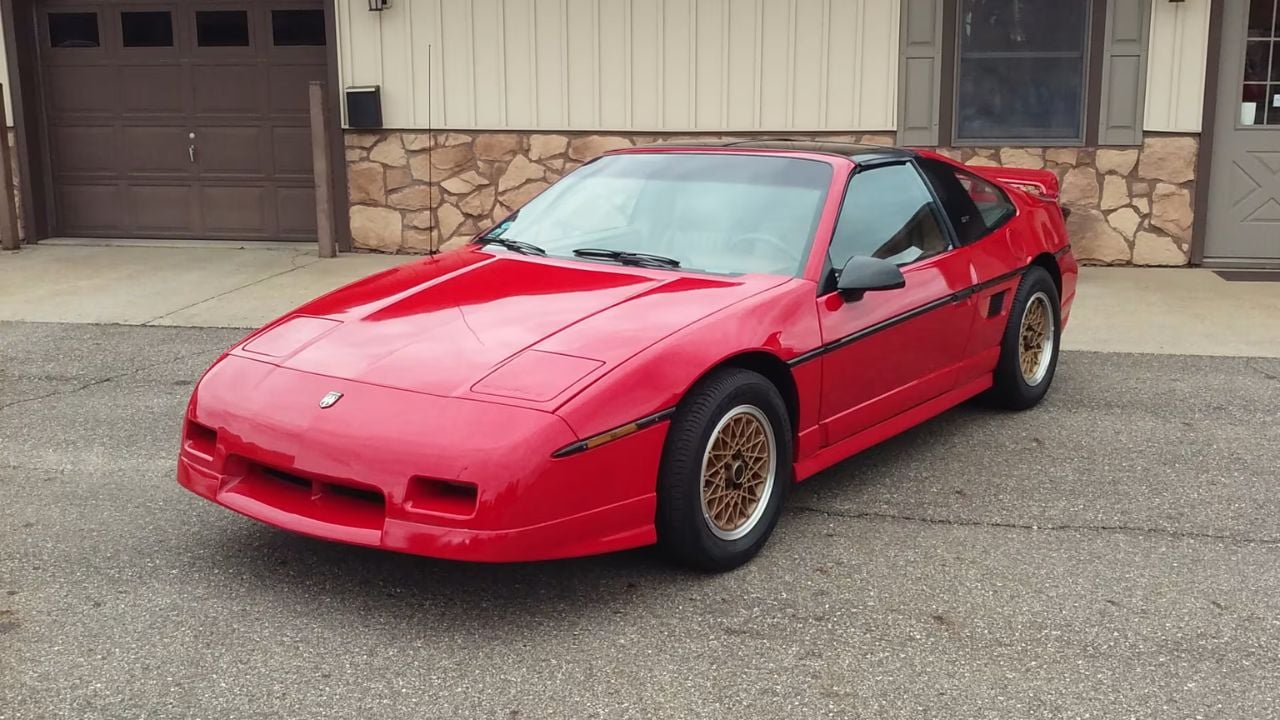
A 1988 Pontiac Fiero GT is headed to Mecum Indy on Friday, May 8, and it arrives as one of the most interesting late-model Pontiacs in the sale. Mecum lists this car as Lot J143, a no-reserve example powered by a 2.8-liter V6 and paired with a 5-speed manual transmission. That already gives it the kind of specification enthusiasts want from a Fiero GT.
It also brings the detail that matters most here. Mecum notes this car is one of just 614 1988 Fiero GTs produced with factory T-tops, a configuration that instantly lifts its collector interest. The odometer shows 74,913 miles, which places it in a part of the market where buyers can still hope for a car that feels preserved without being museum-fragile.
That matters because the 1988 Fiero GT was the car the model line had been moving toward all along. Earlier Fieros built the image. The final-year cars brought much more of the hardware and polish that image deserved. By then, Pontiac had turned its mid-engine experiment into something far more convincing from behind the wheel.
That is why this Mecum offering feels more significant than a simple late-1980s sports coupe crossing an auction block. It represents the final and most complete chapter of one of GM’s boldest performance ideas, wrapped in one of the rarest factory configurations the Fiero GT ever received.
Rare T-Top Specification Gives This GT Extra Weight
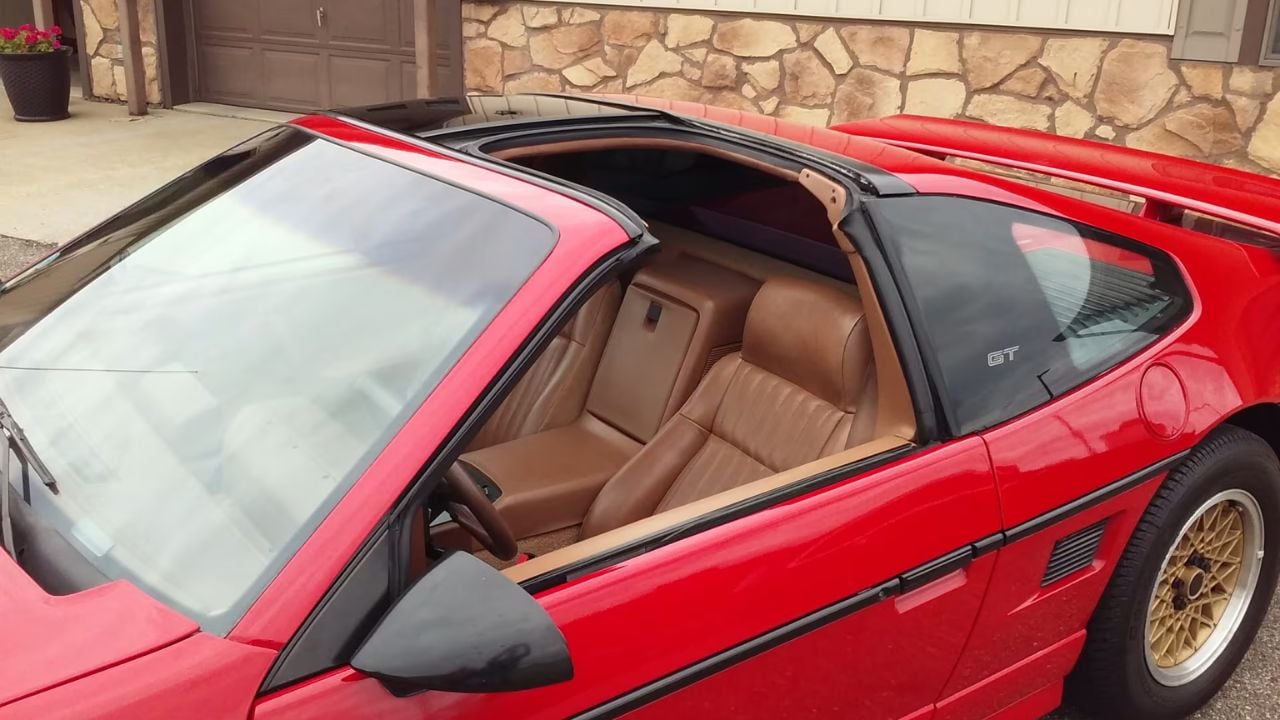
Factory T-tops have long been one of the most desirable details on a late Fiero, and this car’s rarity gives it an immediate talking point. Mecum’s listing identifies it as one of 614 produced with T-tops for 1988, which helps explain why cars like this tend to stand apart from more common final-year GTs. The T-top roof does more than add rarity. It changes the whole mood of the car, giving the Fiero a more open, more special kind of personality without losing the fastback shape that made the GT the most visually dramatic version of the lineup.
The mechanical package also fits the story well. The 2.8-liter V6 gave the GT the performance credibility the earlier four-cylinder cars could not fully deliver, and the 5-speed manual keeps this example in the part of the market enthusiasts usually prefer. In period terms, that combination was enough to make the Fiero feel genuinely sporty, especially once the road began to curve.
This is what makes the car appealing at auction. It is not simply a rare option package attached to an ordinary trim level. It is a rare version of the most desirable mainstream Fiero, and that gives it a much stronger identity the moment it appears in the catalog.
The 1988 Model Year Finally Delivered the Chassis the Fiero Needed
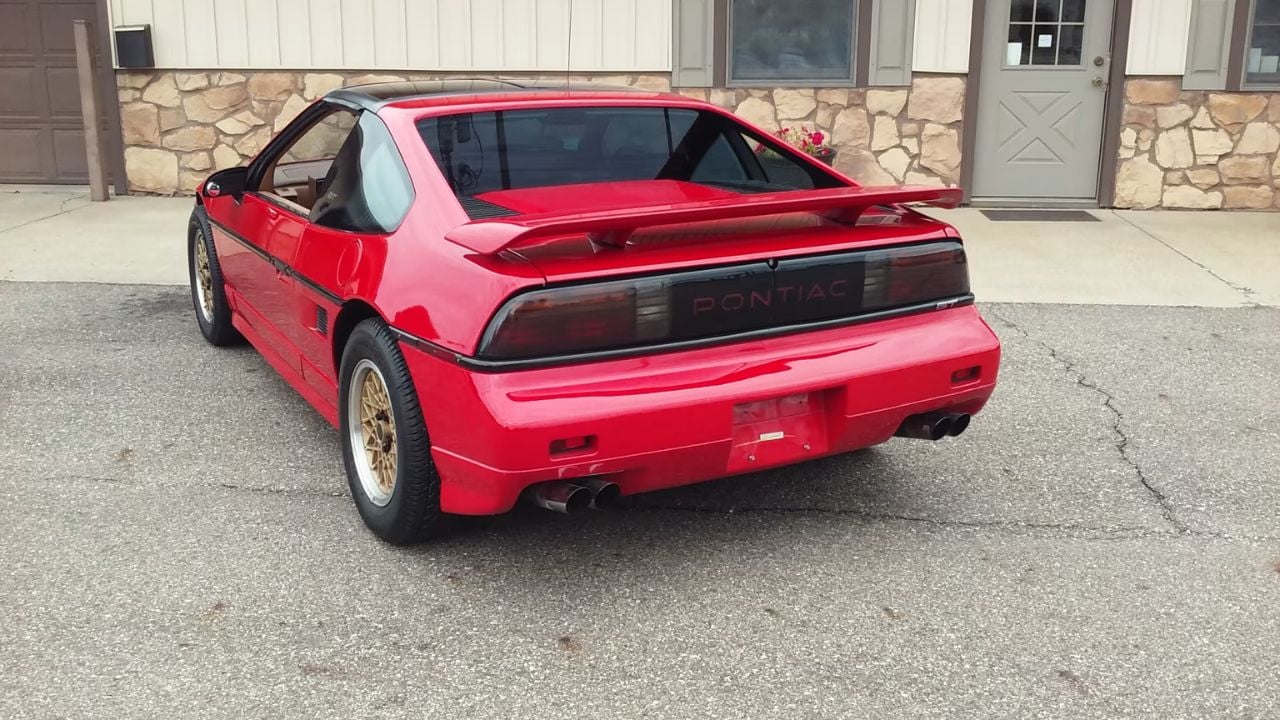
The biggest reason late Fieros attract more respect is simple: Pontiac fixed a lot of what critics had been complaining about. By 1988, the car had received a redesigned suspension, improved steering geometry, and vented disc brakes at all four corners. Those changes gave the Fiero a more disciplined, more mature driving character and made the final-year cars feel much closer to the mid-engine sports coupe the badge and proportions had promised from the beginning.
That transformation matters more than the raw numbers. The 1988 GT was not a giant-killer on paper, but it finally felt more cohesive as a sports car. It steered better, stopped better, and carried itself with more confidence than the earlier cars. For collectors, that makes the 1988 model year the natural sweet spot.
It also helps that production ended just as the Fiero was reaching that point. Pontiac shut the program down in August 1988, which meant the most developed version also became the final version. That kind of timing has a way of strengthening a car’s mythology, especially when later enthusiasts can so clearly see how much better the formula had become by the end.
A Short-Lived Mid-Engine Pontiac That Still Feels Different

When the Fiero first arrived for 1984, it already stood apart from almost everything else built by a major American manufacturer. It used a transverse mid-engine layout, rear-wheel drive, and composite body panels, and it looked far more exotic than its price suggested. Even when the earliest versions did not fully deliver on the promise of that layout, the idea itself remained compelling.
By the end of the run, the GT had grown into the image. The fastback styling looked right, the V6 gave the car the performance it needed, and the 1988 chassis updates finally made the driving experience feel more complete. That is why the late GT cars have developed such a loyal following. They are not just curious survivors from an unusual GM project. They are the version that makes the whole Fiero story easier to understand and much easier to appreciate.
At Mecum Indy, this example should appeal to exactly that kind of buyer. It offers the final-year hardware, the rare T-top roof, the preferred manual transmission, and the kind of specification that makes the Fiero GT feel like more than an automotive footnote. It feels like the version collectors were always going to come back for.