There’s something about a classic pickup truck that screams louder than horsepower figures and hauling specs. It’s the satisfying thud of the tailgate dropping, the distinct aroma of old vinyl and engine oil, and the coffee ring permanently etched into the dashboard. These imposing machines are rolling monuments to simpler times, hauling everything from livestock to life’s biggest moments.
Before the automotive landscape became choked with amorphous crossovers and touchscreen-laden behemoths, these steel-bodied workhorses ruled the blacktop and the back forty. We’ve sifted through decades of rust, scrutinized dusty sales brochures, and checked out forums filled with pickup purists.
1956 Chevrolet 3100 Task Force
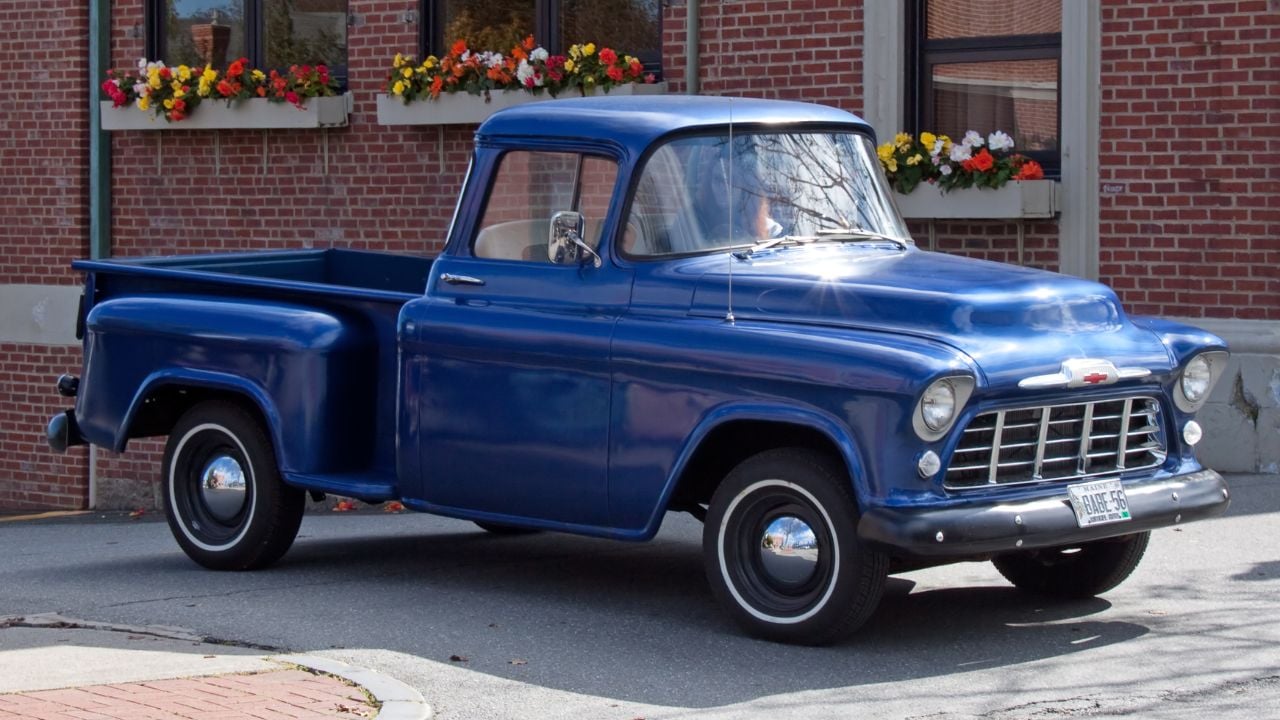
If a Norman Rockwell painting could sprout a steering wheel, it would undoubtedly be the 1956 Chevrolet 3100 Task Force. Part of Chevy’s entirely redesigned “Task Force” generation (1955-1959), it dramatically ditched the boxy postwar aesthetic for sleek, flowing lines, those unmistakable wraparound windshields, and aggressive “Cyclops” hood ornamentation. This was a revolution.
It was much more than a looker, the Task Force era was pivotal: it brought Chevy’s new small-block V8 power to pickups, along with available automatic transmissions. This truck wasn’t just built to work; it was built to cruise Main Street with swagger. Its inherent ruggedness meant it was also a prime candidate for NAPCO 4×4 conversions, giving it surprising off-road chops. The Task Force series didn’t just look good; it laid the unyielding groundwork for Chevy’s decades-long dominance in the pickup market. Today, a well-restored 3100 fetches big bucks and draws a crowd faster than free beer.
1948 Ford F-1
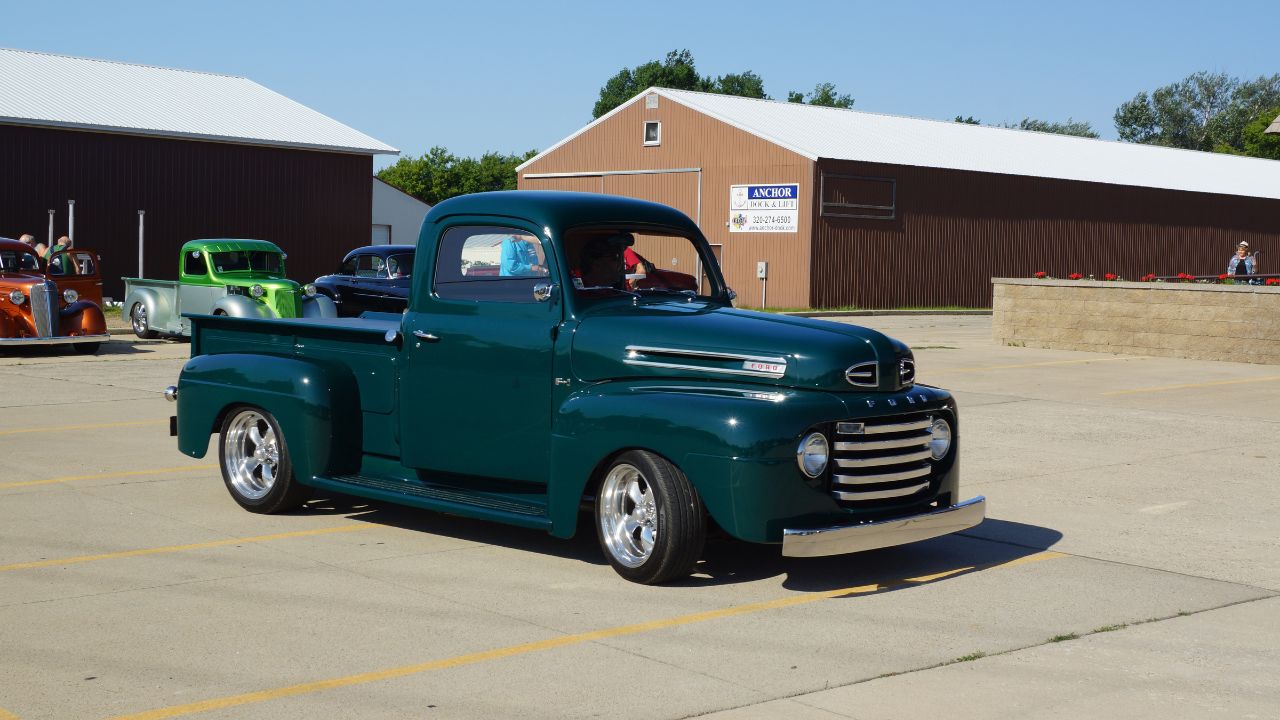
You can’t begin a Ford truck legacy without a reverent nod to the 1948 Ford F-1. This wasn’t just a model year; it was the birth of the now-legendary F-Series dynasty, right as America was pivoting from wartime production to suburban expansion. Ford designed it as part of their “Bonus-Built” generation (1948-1952), delivering the first all-new postwar truck with civilian styling and a ride comfort that, for the era, was genuinely impressive. Power came from either a steadfast 226 cubic-inch Flathead I6 or the venerable 239 cubic-inch Flathead V8.
Its beauty was in its unpretentious simplicity: no frills, just honest steel, pure grit, and an unwavering commitment to getting the job done. That iconic split windshield, bold grille, and integrated headlights became instant symbols of post-war American resilience and hard work. The F-1 did more than spark a series, it ignited a dynasty that still tops sales charts today, proving that sometimes, the simplest tools are the most effective.
1972 Chevrolet C10

Ah, the 1972 Chevrolet C10. This glorious machine marked the final year of the second-generation “Action Line” (1967-1972), the trucks that set the stage for the later, boxier C/K pickups that would dominate the custom scene for decades. Its clean, purposeful lines, coupled with a revolutionary ride quality thanks to an available coil-spring rear suspension on 2WD models (a genuinely car-like innovation for pickups then), shocked buyers.
But it’s the aesthetics that cemented its timeless appeal: robust chrome trim, bold factory colors that screamed “seventies cool,” and an interior that felt more like a comfortable sedan than a utilitarian truck. Power options ranged from bulletproof straight-sixes to potent small-block 350 cubic-inch V8s and even the mighty 402 cubic-inch (known as 400) big-block.
Today, the ’72 C10 remains a holy grail among resto-modders and customizers, equally at home slammed to the pavement at a show as it is earning its keep on a working ranch. Now that’s American ingenuity.
1957 Ford Ranchero

Wait, a car-truck? Oh, yeah! The 1957 Ford Ranchero blurred the automotive lines with unapologetic swagger, long before the Chevrolet El Camino even entered the fray. Ford took their full-size Fairlane car platform and masterfully integrated a pickup bed, giving birth to what they dubbed “the car that works like a truck.”
Slick, impossibly stylish, and available with eye-popping two-tone paint options and the full suite of car-like comforts, it was a genuine surprise hit. While it was never intended to tow combines, its practicality for the suburbanite who needed to haul lumber on Saturday and look effortlessly cool on Sunday was undeniable. Power came from a selection of Ford’s respected Y-block V8s, including the 292ci and 312ci options.
Call it the original mullet on wheels: business in the back, pure party up front.
1970 Chevrolet El Camino SS 396
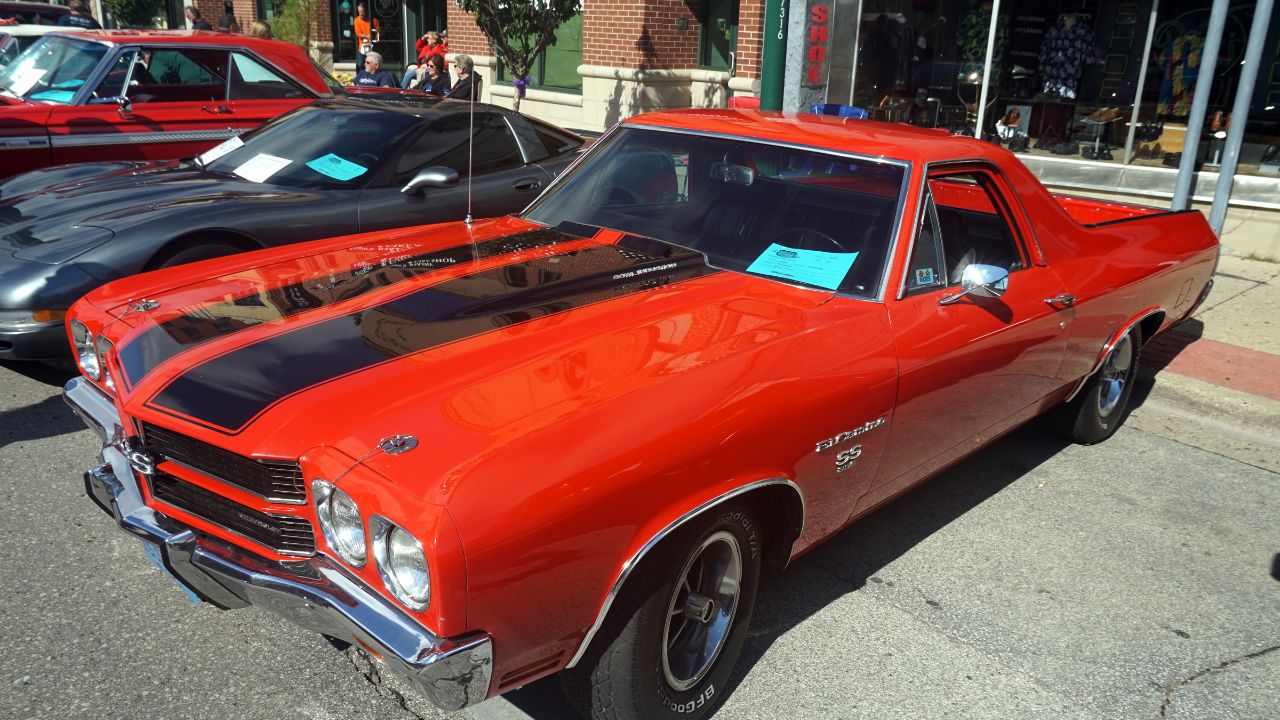
Speaking of car-truck hybrids, the 1970 Chevrolet El Camino SS 396 was the Ranchero’s more muscular, rebellious cousin. Based on the legendary Chevelle A-body platform (part of the 3rd Gen El Camino, 1968-1972), this wasn’t about hauling chores; it was about hauling ass. Under the hood roared Chevy’s big-block that still wore SS 396 badges in 1970, even though the optional engines displaced 402 cubic inches. In L78 form, it was rated at 375 horsepower and could be paired with an optional Muncie 4-speed manual.
This machine epitomized GM’s willingness to throw practicality to the wind in favor of pure, unadulterated street cred and attitude. Was it a truck? A muscle car? Didn’t matter. It could peel out with glorious tire smoke and still carry plywood, provided that plywood didn’t mind a little G-force. The El Camino SS 396 remains a visceral symbol of an era when automakers weren’t afraid to inject absurd levels of fun into utilitarian vehicles.
1986 Toyota Hilux (North American Pickup)

Behold: the unkillable one. Though it was a slightly later model that earned its immortality on Top Gear (surviving explosions, drowning, and a building collapse), the entire fourth-generation Toyota Hilux (N-series, 1983-1988) established Toyota’s reputation for indestructible trucks. The Hilux legend only grew with high-profile endurance stunts and expeditions that showcased the truck’s toughness far beyond normal daily use.
Enthusiasts tend to prize the earlier solid-axle 4WD trucks, while later versions switched to independent front suspension. Depending on market, power came from Toyota’s famously robust 22R-E fuel-injected 2.4L four-cylinder, and some regions also offered diesel options. In North America, it became the undisputed favorite among serious off-roaders and outdoor junkies.
You still see these things crawling up impossible trails or being shipped to war zones and developing nations for a second, third, and fourth life. If you need a truck to survive the apocalypse, this is your Huckleberry.
1956 Ford F-100

If there’s one truck that effortlessly straddles the line between hot rod and hard worker, it’s the 1956 Ford F-100. Part of Ford’s second-generation F-series (1953-1956), the ’56 stands alone with its distinctive wraparound windshield, a unique feature to that single model year. Combined with its bold, squared-off front end and integrated headlights, this F-100 looked like it meant business even when standing still.
It arrived during a pivotal time when design was gaining as much importance as durability, and Ford nailed it. This was the truck that begged to be pinstriped by customizers and chopped by hot rodders, yet it still faithfully showed up every morning to haul hay or engine blocks without complaint. Under the hood, it offered formidable Y-block V8s (like the 272ci and 292ci) that gave it real muscle for a mid-’50s rig. The cab was also roomier, the dashboard more car-like, and the ride surprisingly refined. It was a truck for folks who worked hard and played even harder.
Today, it’s one of the most beloved classics in the vintage truck world, a veritable blank canvas for builders and a cherished memory for those who grew up riding shotgun with granddad behind the wheel.
1979 Dodge Lil’ Red Express

Talk about breaking the rules. The Dodge Lil’ Red Express (produced only for 1978 and 1979) was a glorious loophole muscle truck born during the dark ages of emissions crackdowns, when most performance cars were being neutered. Dodge engineers took advantage of late-1970s emissions rules that treated some trucks differently than passenger cars, helping the Lil’ Red Express stand out in performance tests. They promptly shoved a special, high-performance 360 cubic-inch (5.9L) E58 police-spec V8 engine (225 hp) under the hood of a brightly painted, step-side pickup, adding massive chrome exhaust stacks and real wood paneling.
The result was loud, fast, and utterly absurd in the best possible way. In period magazine testing, it was shockingly quick for the late 1970s, with some outlets calling it the quickest American-built vehicle you could buy in 1978, proving that pickups could be about pure, unadulterated fun, not just dreary function. It was Dodge’s message to automotive conformity, delivered with a full-size rumble.
1935 Ford Model 50
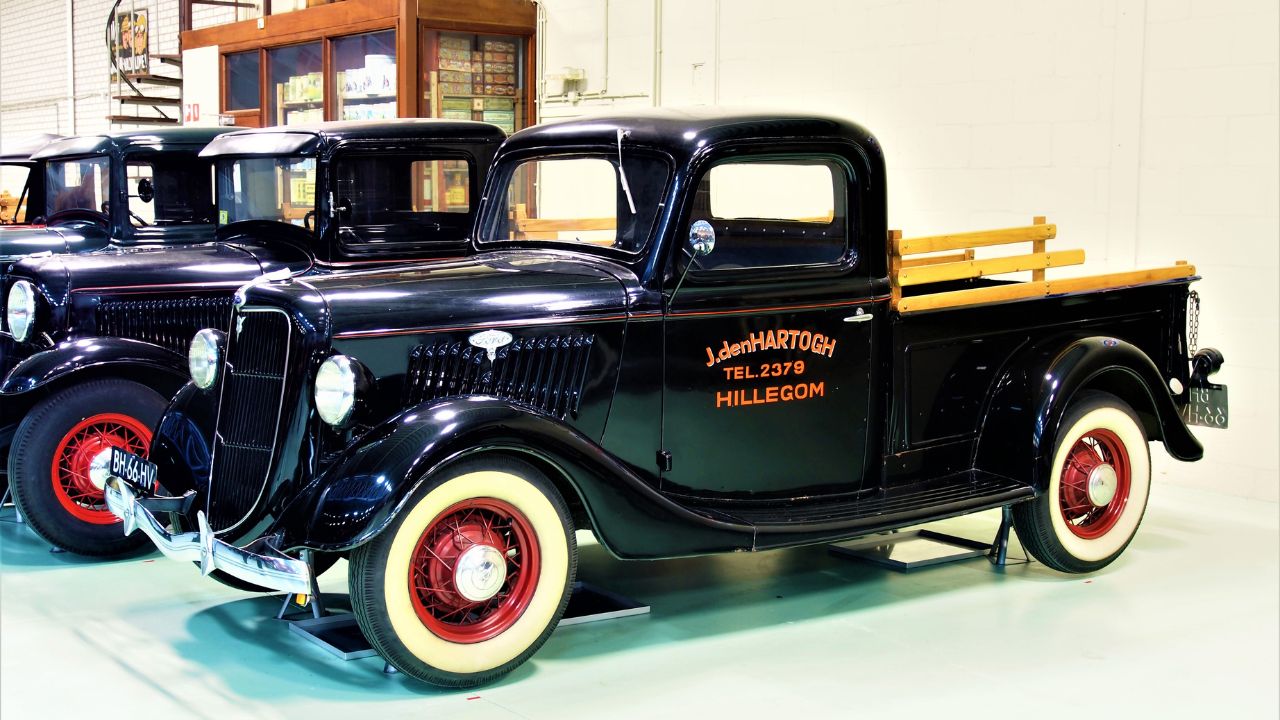
Let’s rewind to the genesis of mass-market performance. The 1935 Ford Model 50 was the pickup version of Ford’s revolutionary V8-powered cars, bringing genuine muscle and affordability to working-class Americans during the Great Depression. With its legendary Flathead V8 (221 cubic inches, 85 hp), it could outwork and often outrun just about anything else on the road in its era. It boasted elegant curves, a more integrated cab and bed design than its predecessors, and an undeniable no-nonsense aesthetic.
Ford built it cheap, dependable, and tough, qualities that made it a steadfast mainstay through the hardest of times. These are the trucks you see in sepia-tone photos, looking perfectly at home in a dusty field, and if you’re lucky, you’ll still find one rumbling to life at a vintage car meet-up, proving that a little V8 magic goes a long, long way.
1991 Ford F-150 Nite Edition
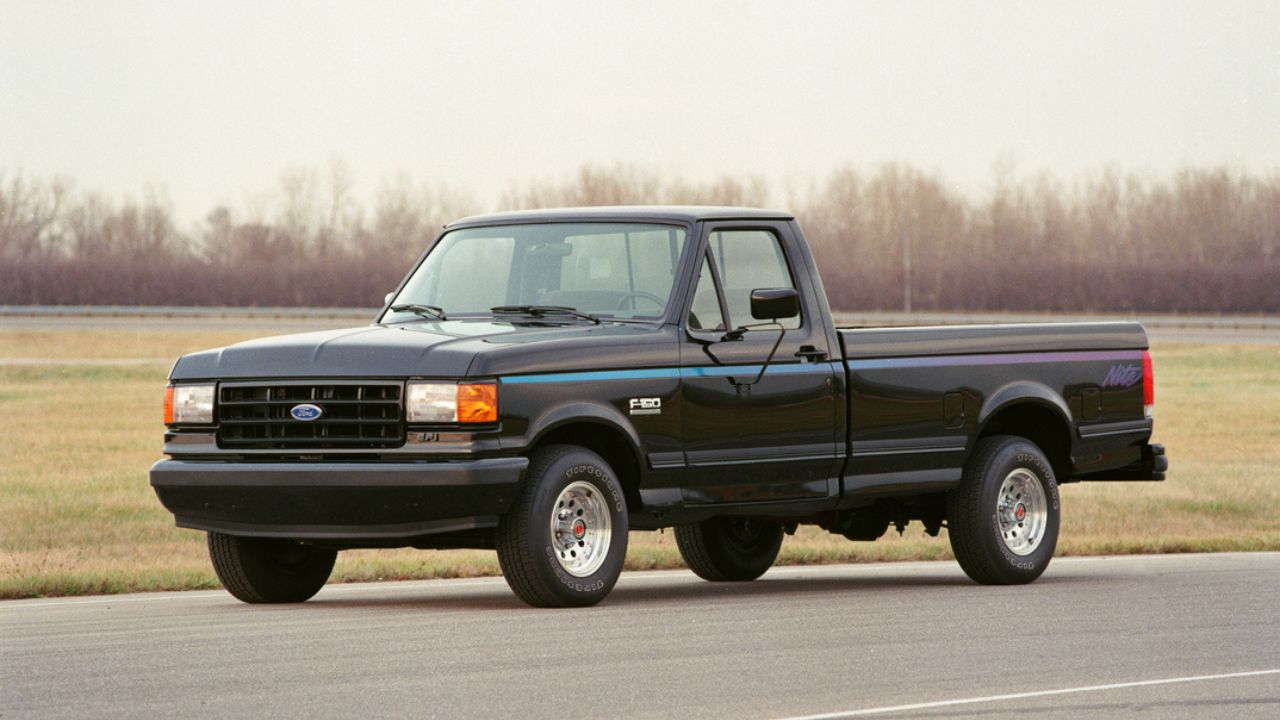
Before every truck on the dealership lot wore “blacked-out” trim, there was the 1991 Ford F-150 Nite Edition. This was a limited-edition rebel that took the already popular 9th-generation F-150 (1991-1992) and gave it a stealthy, custom look straight from the factory. It featured deep black paint, color-matched black bumpers, grilles, and mirrors, subtle “Nite” decals, and a sporty interior. Under the hood, the venerable 5.0L (302ci) V8 or the beefier 5.8L (351ci) V8 provided plenty of grunt to match its dark aesthetic.
Only produced for a couple of years (and a very brief run in late ’91), it’s a relatively rare sight today because too many got driven into the ground, a testament to their utility and appeal. Now, these trucks are starting to climb in value, as Gen Xers and older Millennials snap them up for nostalgic weekend builds, proving that true cool eventually finds its way back. The 90s always does it better, except ultra low rise jeans, let’s leave those in the past so I don’t get retraumatized.
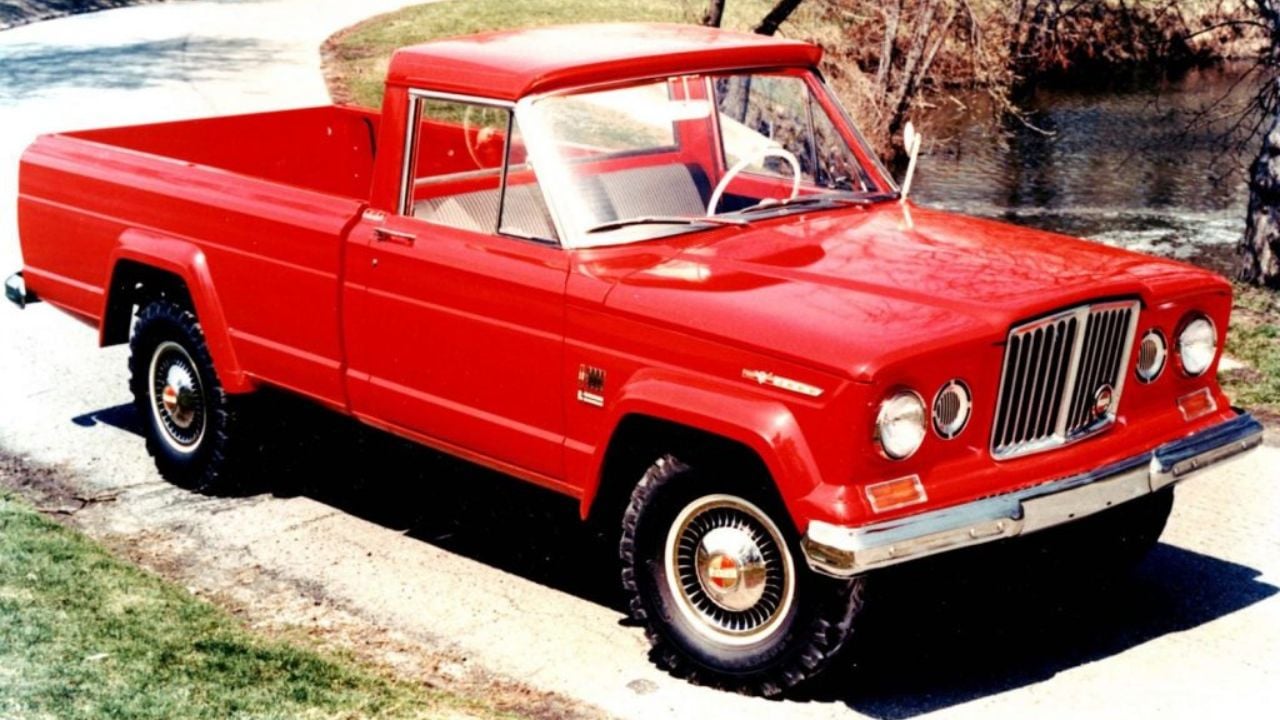
1963 Jeep Gladiator (J-Series)

Long before there were trail-ready Broncos or the modern Wrangler pickups, there was the Jeep Gladiator. Born in 1962 (not 1960, a common misconception), this part of the venerable J-Series combined Jeep’s legendary military DNA with a full-size pickup design penned by the iconic Brooks Stevens. The original Gladiator had undisputed 4WD cred, robust Dana 44 axles, and the kind of square-jawed styling that made it an instant favorite in rugged outposts and remote job sites.
It was revolutionary for combining serious off-road prowess with surprising civilian comfort, decades before “overlanding” was even a hashtag. Under the hood, it offered Kaiser’s innovative Tornado OHC I6 (an unusual overhead-cam inline-six for a US light truck of its era) and later, AMC V8s. If you wanted to blaze a new trail and tow a camper, this was your rig. It soldiered on in various forms through the 1987 model year, a testament to its raw utility and undeniable charm.
Today’s modern Jeep Gladiator owes more than just its name to this classic; it carries forward a legacy built on very knobby tires and unwavering capability.
The Road Never Forgets
There’s an undeniable gravitas to an old pickup truck that just sticks with you. Maybe it was your granddad’s rig, the one with the cracked vinyl seat and the comforting scent of motor oil and stale pipe tobacco. Maybe it was your first ride, the one that routinely stalled in the high school parking lot but always, somehow, got you home. Or perhaps it’s simply the raw idea of it: steel and soul, rumbling down a dirt road with nothing but time and a loyal dog in the bed.
These trucks weren’t engineered for climate-controlled comfort or infotainment systems. They didn’t care about EPA-rated MPG or Bluetooth connectivity. They were forged to work, to haul, and, most importantly, to last. But beyond their utilitarian purpose, they were made to be there, a silent, steady presence in the moments that truly mattered. A stolen first kiss on the bench seat. An aimless drive to nowhere on a sweltering summer night. A dependable partner through life’s grinds and triumphs.
The chrome might dull, the paint might fade, and the body might earn a few more dents, but the memories, like the trucks themselves, endure. These machines are often part of the family. And if you’re fortunate enough to still hear one fire up in the cold morning air, that unmistakable rumble, then you know: the road, and these icons, never truly forget.