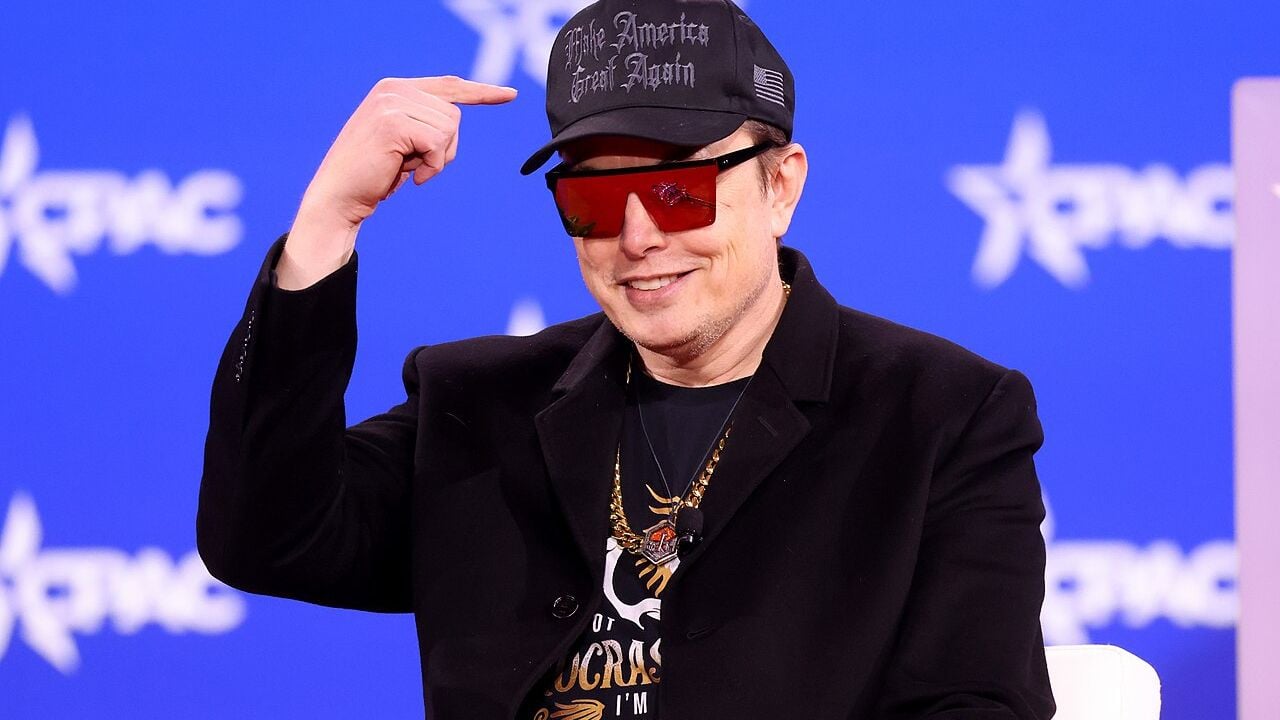
Elon Musk has made a very public hobby of railing against wasteful government spending. He spent much of 2024 and 2025 embedded in Washington as an unofficial budget hawk, pushing to slash federal programs and warning darkly about America’s growing deficit. He once told a Pennsylvania crowd that when advisers pitch him tax loopholes, he turns them down flat because they sound “pretty shady.”
So it may raise a few eyebrows to learn that Tesla, the company Musk leads as CEO and controls as its largest shareholder, has reported owing exactly zero dollars in U.S. federal taxes for all but one year of the past two decades. Over that stretch, Tesla pulled in roughly $264 billion in U.S. revenues. The lone exception was 2023, when the company reported an estimated $48 million tax bill, and it remains unclear from public filings whether that amount was ever actually paid.
Now, a sweeping investigation by Reuters adds important context to that figure. The outlet spent months combing through thousands of pages of regulatory documents filed across 14 countries, and interviewed more than 20 analysts, tax experts, and industry consultants. What they found was a web of foreign subsidiaries, centered in the Netherlands and Singapore, that appear to have quietly received $18 billion in profits, none of which was taxed in either country or in the United States.
Reuters found no evidence that Tesla broke any laws. Profit shifting, as this strategy is known, is a legal and widely used corporate practice. But the scale of what appears to have happened at Tesla, combined with Musk’s very vocal public persona on matters of taxes and government spending, makes this one of the more striking examples of the gap between political rhetoric and corporate reality.
What Is Profit Shifting and Why Does It Matter?
Profit shifting is the practice of moving earnings from a high-tax country to a lower-tax one, usually by assigning valuable intellectual property (things like patents or proprietary technology) to a foreign subsidiary. Once the IP lives offshore, royalties and licensing income flow there instead of back to headquarters, and the profits get taxed at whatever rate that foreign country charges, which is sometimes zero.
Tesla appears to have set this up through a “cost-sharing arrangement” it first disclosed in its 2015 annual report, though the company never named which subsidiaries were involved or explained the purpose. According to the Reuters investigation, Tesla subsidiaries in Singapore and the Netherlands became the beneficiaries. One Dutch entity, called TM International, is registered as a nonresident partnership, lists zero employees, files no financial statements, and pays no Dutch taxes. A Singapore subsidiary owned more than 99% of it and received roughly $18 billion in profits through it between 2023 and early 2025, none of which was taxed in Singapore.
Three tax experts who reviewed the Reuters findings, including a former U.S. Treasury official and a University of Michigan law professor, independently concluded that the arrangement existed almost certainly because of an offshore intellectual property transfer. “It’s entirely about shifting profits to low-tax jurisdictions,” said Reuven Avi-Yonah of the University of Michigan.
The Numbers Tell a Striking Story

Tesla’s foreign tax obligations over the years have dwarfed its U.S. ones by a staggering margin. According to regulatory filings, Tesla has reported foreign tax liabilities totaling $6.4 billion since it was founded in 2003. Its only reported U.S. federal tax estimate? That $48 million from 2023. That means Tesla has reported foreign tax bills more than 130 times larger than its domestic ones, despite the U.S. historically being its biggest market and still accounting for roughly half of its total sales.
That gap is hard to explain through losses alone. Tesla did bleed money for years before turning its first full-year profit in 2020, and companies are allowed to carry those losses forward to offset future tax obligations. Green energy credits also helped lower the bill. But even accounting for all of that, the Reuters analysis suggests that the Dutch and Singaporean structure enabled Tesla to avoid at least $400 million in U.S. taxes it would otherwise have owed, based on the standard 21% corporate tax rate.
There may be some movement on this front. In its most recent annual report filed in January 2026, Tesla disclosed that more than 90% of its global profits in 2025 were earned in the United States, a sharp reversal from prior years, when the U.S. share of global profits averaged around 27%. The company offered no explanation for the shift. Tax experts told Reuters the change could signal Tesla quietly unwound the offshore arrangement, though the savings already captured over the years would remain intact.
What Can Businesses and Policymakers Learn from This?
The Tesla situation is a useful case study in how multinational tax avoidance actually works in practice, as opposed to how it is usually discussed. It does not require anything illegal. It does not require a villain in a boardroom making sinister decisions. It requires accountants, lawyers, a few offshore subsidiaries, some well-placed intellectual property transfers, and jurisdictions that are happy to attract paperwork without asking too many questions.
The Netherlands and Singapore are both well-known players in the global corporate tax minimization ecosystem, and Tesla is far from the only company to have found them useful. Microsoft is currently fighting a multi-billion-dollar IRS claim over similar profit-shifting arrangements. Apple, Google, and scores of other American corporations have used comparable structures over the years with varying degrees of public scrutiny.
What makes the Tesla story notable is the combination of scale and public posture. When the CEO of a company is simultaneously serving as a senior government adviser focused on cutting spending and loudly criticizing fiscal waste, the revelation that his own company has structured itself to minimize its contribution to the federal budget becomes a matter of public interest, regardless of legality. It is a good reminder that corporate tax contributions are shaped far more by structure and strategy than by stated values, and that the gap between what executives say about taxes and what their finance teams actually do can be very wide indeed.
Tesla Has Not Commented, and the IRS Has Not Responded
Reuters made multiple attempts to reach both Tesla and Musk directly for comment before publishing its findings. Neither responded. The IRS also did not respond to requests for comment. Tax authorities in both the Netherlands and Singapore declined to discuss Tesla’s situation, citing confidentiality rules that prevent them from commenting on individual taxpayers.
That silence is itself fairly standard in these situations. Companies are rarely eager to discuss the mechanics of their tax planning publicly, and tax authorities are legally constrained from doing so on their behalf. What is left for the public is whatever trickles out through regulatory filings, investigative journalism, and the occasional congressional hearing where experts piece together what the numbers imply.
For now, Tesla’s official position on all of this is no position at all. The company continues to disclose the bare minimum required by law, which, as this investigation shows, can still leave an awful lot of room for interpretation.