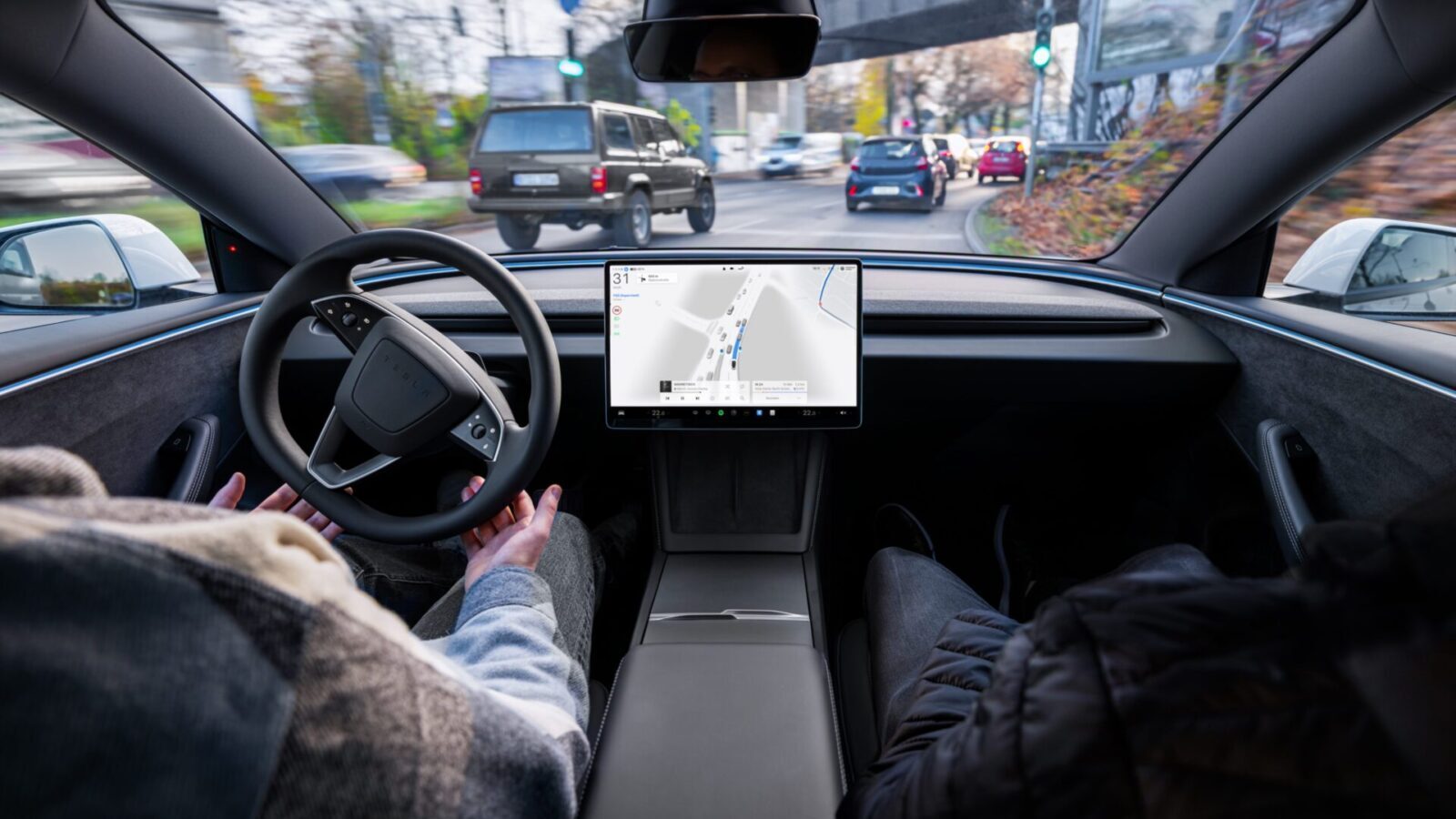
Tesla’s Full Self-Driving system is supposed to make driving easier, provided someone behind the wheel keeps paying attention. A new test in Belgium suggests that supervision becomes especially important when the software encounters certain European traffic rules.
During a three-day evaluation, a road-safety organization recorded Tesla’s supervised driving software exceeding posted speed limits and attempting to overtake cyclists where passing is prohibited. Some of the most concerning behavior occurred on slower urban streets designed to protect pedestrians and cyclists.
The findings, as reported by Reuters, come from Belgian nonprofit Johanna.be, which tested the system over approximately 249 miles in July. The group subsequently asked transportation regulators to reconsider their approvals.
Tesla has been pursuing wider authorization for FSD across the European Union. With a potential EU-wide approval decision approaching, the report raises questions about how consistently the technology follows local road regulations.
FSD Sometimes Recognized The Sign, Then Ignored The Limit
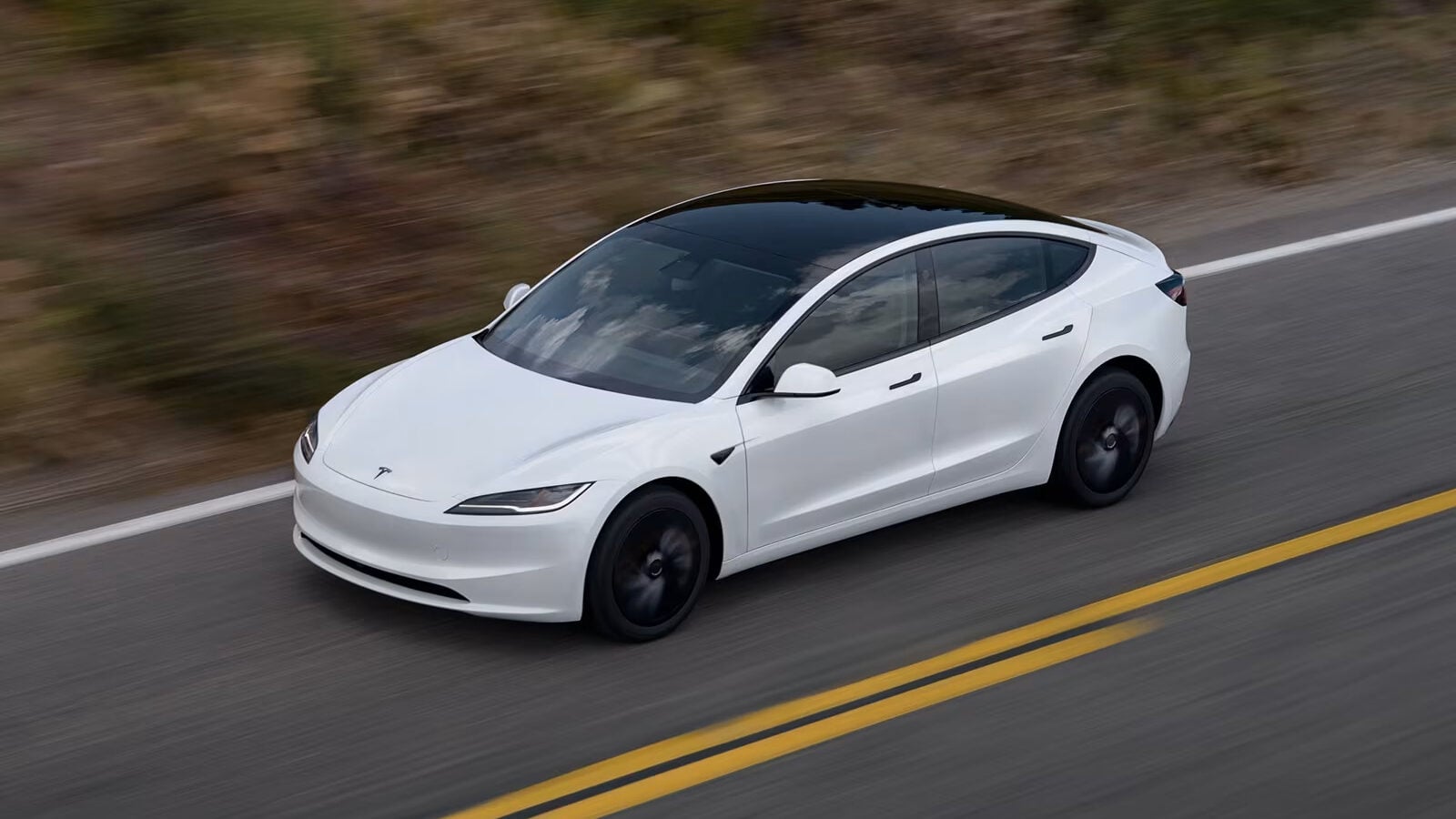
The NGO tested a Tesla Model 3 running FSD version 14.2.2.6 in Standard mode, with its speed offset set to zero and contextual maximum-speed adjustment disabled. The organization focused particularly on low-speed areas around Brussels.
On roads with a 30 km/h (19 mph) limit, the system exceeded the limit in 16 of 29 tested segments. The highest speeds recorded on those segments averaged 44 km/h (27 mph), rather than representing the vehicle’s average speed throughout each segment.
The report also describes an unusual discrepancy between what the car detected and what it told the driver. In some cases, FSD appeared to recognize a roadside 30 km/h sign before displaying a 50 km/h (31 mph) limit instead.
The group found similar problems in residential areas limited to 20 km/h (12 mph), where the software exceeded the limit in five of 12 tested zones. Incorrect speed-limit information is particularly concerning because drivers supervising the system might reasonably look to the display for confirmation.
Cyclists Presented Another Problem
Belgium has designated cycle streets where motorists are prohibited from overtaking cyclists. FSD attempted to pass riders on these roads, with the supervising driver intervening to prevent several maneuvers.
Interestingly, the report wasn’t entirely negative about Tesla’s behavior around vulnerable road users. Researchers said the software generally behaved cautiously around pedestrians and cyclists, frequently yielding without prompting.
Those positive observations didn’t eliminate the group’s concerns about speeding and prohibited overtaking. The findings also have limitations, since they concern one vehicle, one software version, and a selected collection of Belgian roads rather than the entire European FSD fleet.
Regulators Have Been Asked To Reconsider

Dutch regulator RDW approved supervised FSD in April 2026, with Belgium and several other European countries subsequently allowing the technology. The findings of this latest study were submitted to RDW and the Flemish transportation ministry ahead of a possible EU-wide vote.
RDW told Reuters it had received the report and would consider it through its monitoring procedures. Tesla didn’t respond to Reuters’ requests for comment, although the company has separately published research arguing that FSD-equipped vehicles generally avoid excessive speeding.
European authorities emphasize that drivers remain responsible for obeying traffic laws while using the system. FSD is supervised driver assistance, not autonomous driving that eliminates the need for human oversight.
The Belgian test doesn’t establish that every Tesla using FSD will behave similarly. It does, however, provide regulators with specific examples of traffic-law violations to examine before deciding how widely the technology should be permitted.