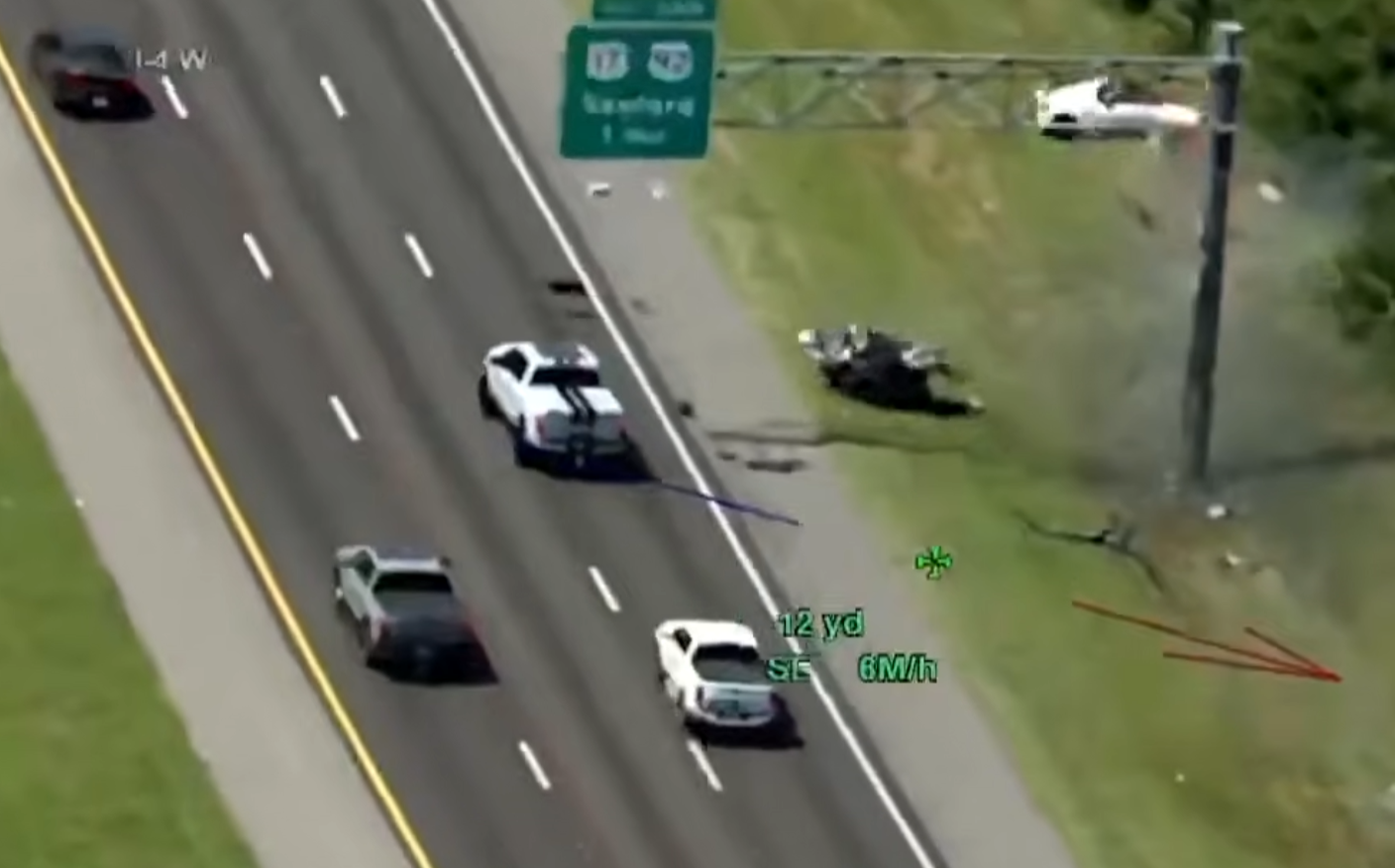
A stolen BMW convertible was split in half during a high-speed Florida chase, but that wasn’t the most shocking part of the story. Deputies say one of the suspects was thrown into the woods, found without a pulse, revived at the hospital, and later linked to a luxury vehicle theft ring.
The incident happened on Aug. 28, 2025, but newly released aerial footage obtained by News 6 Orlando offers a new perspective on what unfolded that day. The video shows the BMW weaving through traffic, driving on the shoulder, and reaching speeds approaching 130 mph on Interstate 4 after investigators say the owner used GPS tracking to help locate the stolen vehicle.
The pursuit ended in Volusia County when the BMW crossed multiple lanes of traffic and slammed into a highway sign support pole. Court documents identified the occupants as D’Mawuko Fugar and Edrick Bush. Bush was ejected into a wooded area and hospitalized as a trauma alert, while Fugar remained with the wreckage. Both survived despite the severity of the crash.
Investigators later tied the men to a theft ring accused of stealing 33 luxury vehicles worth more than $2 million across Central Florida. Authorities say total losses approached $3 million when alleged credit card fraud was included, and court records indicate at least one suspect allegedly returned to stealing vehicles after being released on bond.
How the Chase Unfolded
When deputies first spotted the stolen BMW near Commerce Drive in Longwood, they noticed the convertible top was partially down, and the men inside appeared to be moving it while also discarding items from the vehicle. That detail matters because it suggests the suspects knew law enforcement was closing in and were actively trying to destroy evidence.
Thanks to the owner’s GPS tracking, law enforcement was already on the car’s trail before it ever hit the highway. As the situation escalated, deputies called for help from neighboring Volusia County to try to intercept the vehicle. The driver, however, was not cooperating with geography. He drove on medians, switched directions, and eventually merged back onto I-4 heading westbound, blazing down the shoulder at roughly 130 mph with other drivers nearby.
The helicopter overhead relayed real-time information to ground units, calling out lane changes and speed while keeping the car in sight. Then came the crash.
The BMW left the roadway, crossed multiple lanes of traffic, and slammed into a highway sign support pole. The impact was severe enough to split the car in half and ignite a fire.
A passenger was thrown clear of the vehicle and landed in the wooded area off the highway. He was found roughly 10 minutes later, rushed to the hospital, and admitted to the ICU. Despite a crash violent enough to split the BMW in half, both men survived.
A Theft Ring Built on Opportunity
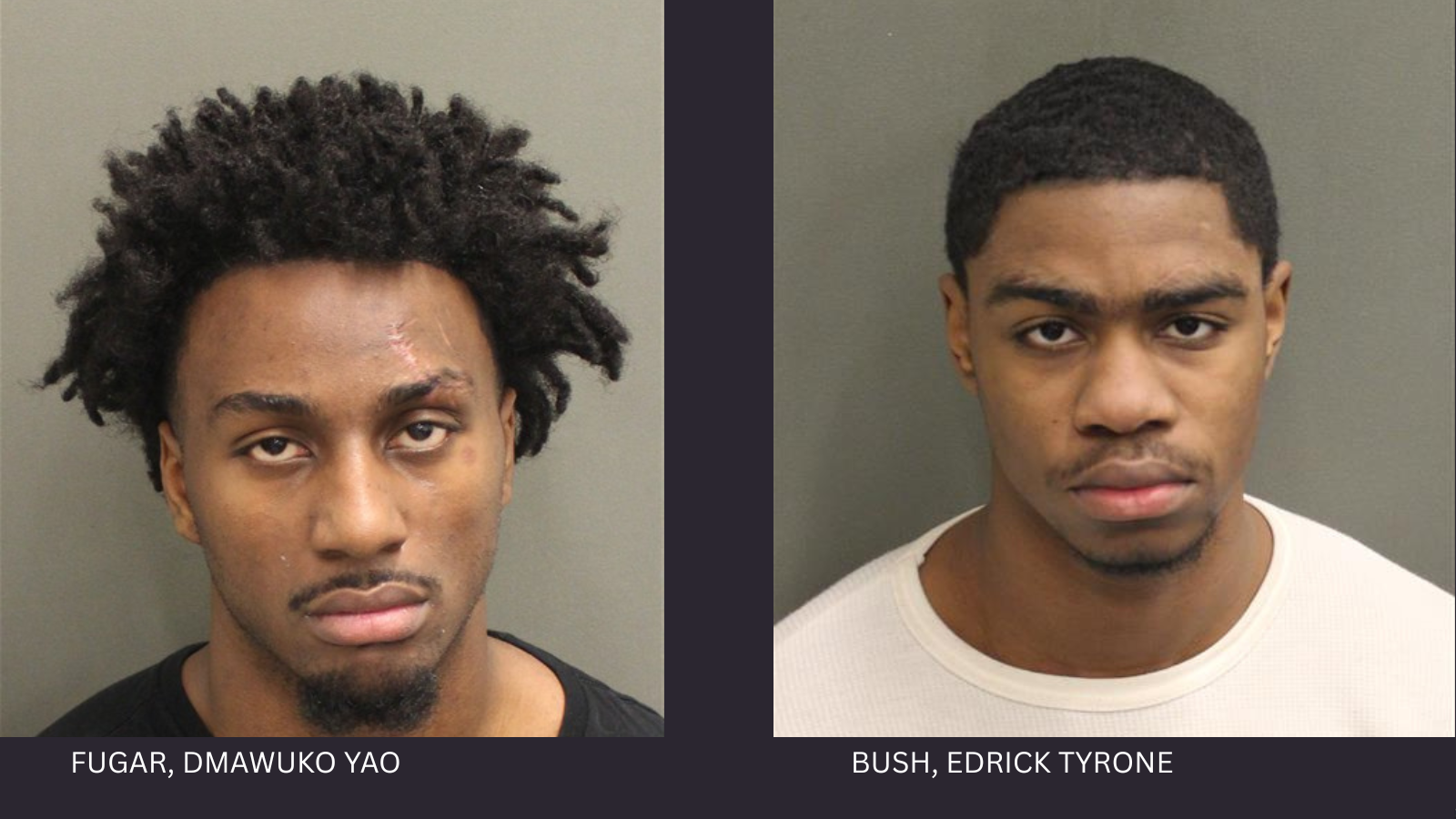
Court documents linked the two men, along with several others, to a coordinated luxury-vehicle theft operation across Central Florida.
Investigators say the group was linked to 33 cases involving high-end vehicles, including BMWs, Range Rovers, Mercedes-Benz G-Wagons, Lamborghinis, and Ferraris. Authorities estimate the stolen vehicles alone carried a combined value exceeding $2 million, with total losses approaching $3 million when alleged credit card fraud was included.
Deputies say the group would drive through neighborhoods looking for potential targets before stealing vehicles from driveways and garages. Investigators also allege the suspects searched stolen vehicles for valuables and credit cards before purchasing gift cards and expensive electronics.
According to investigators, every vehicle connected to the case had one thing in common: the keys or key fobs had been left accessible to the suspects.
That detail is both maddening and important. This was not a crew of expert hackers exploiting keyless-entry vulnerabilities or using sophisticated relay devices to clone signals. According to investigators, the thieves succeeded because owners repeatedly left the means to start the vehicles inside the vehicles.
What We Can Learn From This Incident
There is a lesson here that has nothing to do with car chases or survival stories, and it is a simple one: never leave your keys or key fob in your vehicle, and always lock it, even in your own driveway.
Auto theft experts and law enforcement agencies across the country have repeated this advice for years, but incidents like this one show just how quickly an opportunity can turn into a stolen vehicle.
Beyond the obvious, there is also the GPS angle. The fact that the victim tracked the stolen BMW and handed that information directly to deputies is what allowed law enforcement to locate the vehicle in the first place.
Many automakers now offer built-in vehicle tracking services, while third-party devices such as AirTags have become increasingly popular recovery tools. Knowing where your vehicle is can make the difference between recovering it and never seeing it again.
The case has also sparked debate about bond and repeat offenders. Court records indicate that investigators accused at least one suspect of continuing to commit vehicle thefts after being released on bond, a detail that sparked considerable discussion when the footage was released.
The Helicopter Footage Tells the Story
For residents of Seminole and Volusia counties, the release of the aerial footage adds a new dimension to a case they may have only heard about in passing.
Watching the convertible weave through midday traffic and speed down the interstate shoulder underscores just how dangerous the pursuit became for everyone sharing the road that day.
The footage, obtained and aired by News 6 Orlando, shows law enforcement maintaining a coordinated response throughout the chase. Deputies on the ground and eyes in the sky worked together to track the vehicle until the pursuit ended violently.
Once the BMW crashed, officers converged on the scene and searched the nearby woods for the ejected passenger before eventually locating him and getting him to a hospital.
It is a reminder that high-speed pursuits carry enormous risk not just for the people in the fleeing vehicle, but for everyone else on the road around them.
Source: News 6 Orlando / ClickOrlando, reporting by Katherine Silver