Every decade has that one car that makes you stop and stare, the machine that captures everything wild and wonderful about its era. These aren’t just fast cars with big price tags — they’re the ones that shifted what we thought was possible, the posters that covered bedroom walls, and the dreams that kept enthusiasts up at night.
From the birth of the modern supercar in the 1960s to today’s electrified hypercars, each generation has produced machines that perfectly bottled the spirit of their time. Let’s take a trip through automotive history and celebrate the cars that didn’t just define their decades — they dominated them.
1960s: Lamborghini Miura
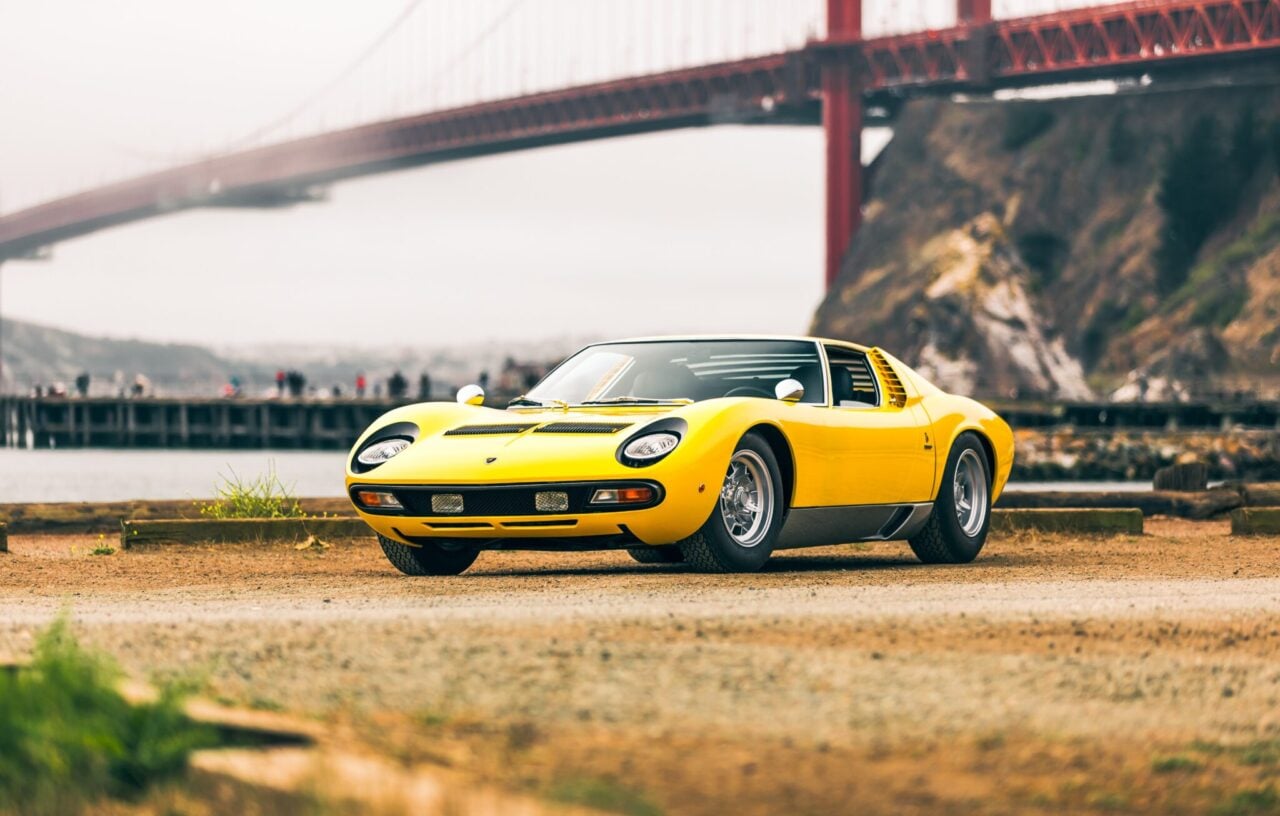
The Miura didn’t just arrive in 1966 — it exploded onto the scene and rewrote the supercar rulebook overnight. With its mid-mounted V12 engine and jaw-dropping Bertone bodywork, this Italian masterpiece introduced a layout that virtually every supercar since has copied.
The 170 mph top speed was mind-bending for the era, but it was the theater of the experience that truly mattered: those eyelash headlights, the wide haunches, and an exhaust note that could wake entire villages. Ferruccio Lamborghini wanted to show Enzo Ferrari how a proper GT car should be built, and boy, did he ever succeed.
The Miura proved that supercars could be rolling art that just happened to go like crazy.
1970s: Lamborghini Countach

If the ’70s had a spirit animal, it was the Countach with its scissor doors thrown wide open. This wedge-shaped wonder made the Miura look almost conservative by comparison, with angular lines that seemed beamed in from another dimension.
The LP400’s 375 horsepower V12 delivered a 180 mph top speed, but numbers barely scratch the surface of what made this car special. Its poster dominated bedroom walls worldwide, making it arguably the most iconic supercar silhouette ever created.
The Countach didn’t care about practicality or rearward visibility; it was pure automotive rebellion wrapped in outrageous Bertone styling. You know a car is special when it’s still incredibly futuristic and stylish decades later.
1980s: Ferrari F40

When Enzo Ferrari wanted to celebrate his company’s 40th anniversary, he did more than throw a party — he built the last car he’d ever personally oversee. The F40 stripped away luxury and left only what mattered: a twin-turbo V8 making 478 horsepower, a top speed of 201 mph, and handling sharp enough to terrify even experienced drivers.
With its aggressive aerodynamics, massive rear wing, and barely-there interior, this wasn’t a car for posing: it was a race car with license plates. The F40 represented everything excessive and wonderful about the 1980s, proving that sometimes more really is more.
It remains the purest expression of Ferrari’s racing DNA ever sold to the public.
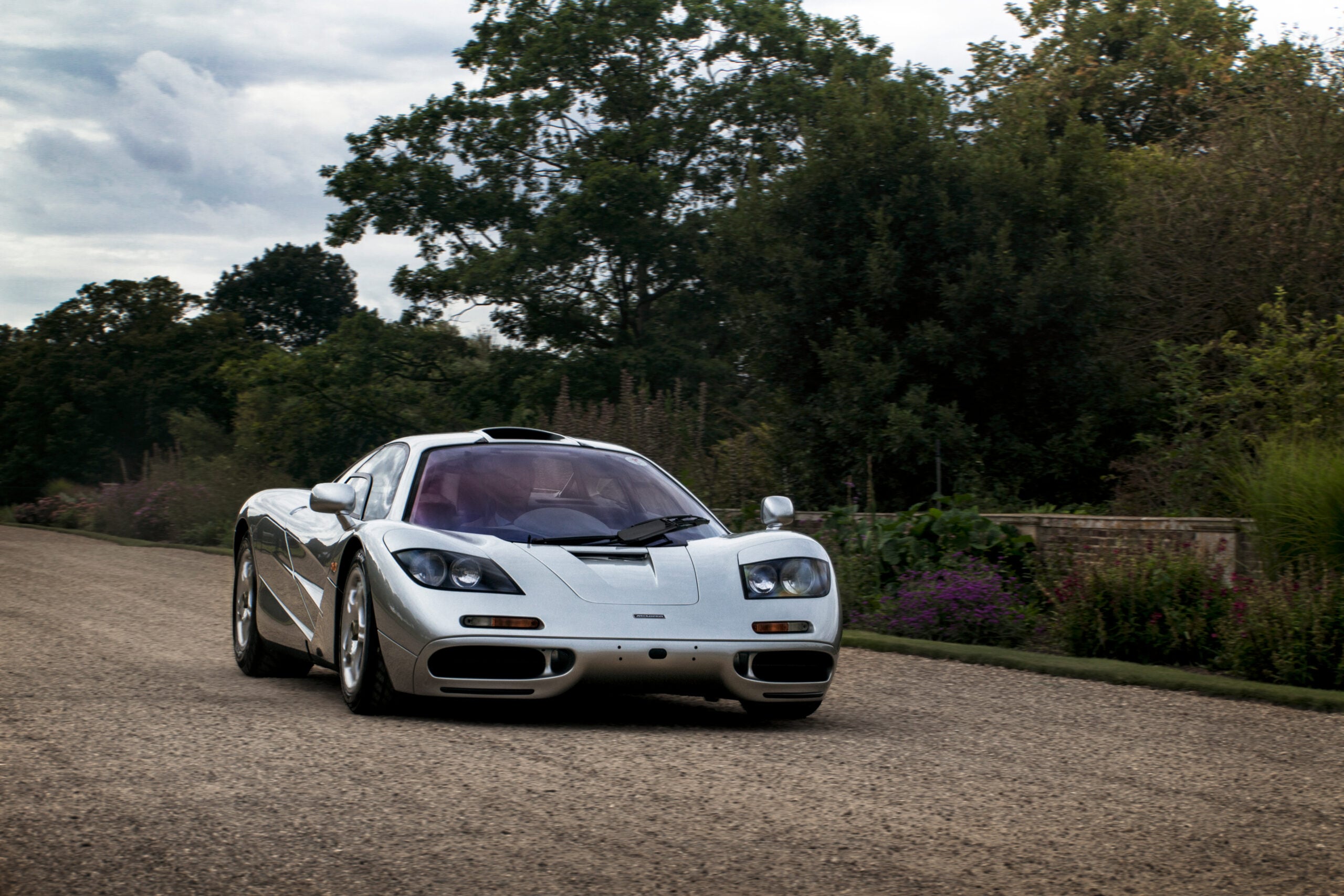
1990s: McLaren F1

The F1 wasn’t just the supercar of the 1990s — it was arguably the greatest automotive achievement of the entire 20th century. Gordon Murray’s obsessive attention to detail resulted in a 627 horsepower BMW V12, a central driving position, and a top speed of 240.1 mph that stood unbeaten for nearly a decade, until the Bugatti Veyron arrived in 2005.
Only 106 were built, each requiring 3,000 hours of hand assembly and costing around $815,000 when new. It proved that a road car design could dominate at Le Mans with only race-spec modifications, blurring the line between road car and prototype.
Three decades later, this naturally aspirated masterpiece still makes modern hypercars look overweight and overcomplicated.
2000s: Bugatti Veyron

The Veyron answered a question nobody asked but everyone wanted to know: what happens when you throw unlimited Volkswagen Group money at the pursuit of speed? The result was a 1,001 horsepower, quad-turbocharged W16 monster that could hit 253 mph while being comfortable enough for a trip to the grocery store.
Its 10 radiators, seven-speed dual-clutch transmission, and retractable rear wing represented engineering on a scale previously reserved for spacecraft. Critics called it excessive, overly complex, and impossibly expensive at $1.7 million, and they were absolutely right — that was the entire point.
The Veyron proved that sometimes the journey matters more than the destination, especially when that journey cost well over a billion dollars in development.
2010s: Porsche 918 Spyder
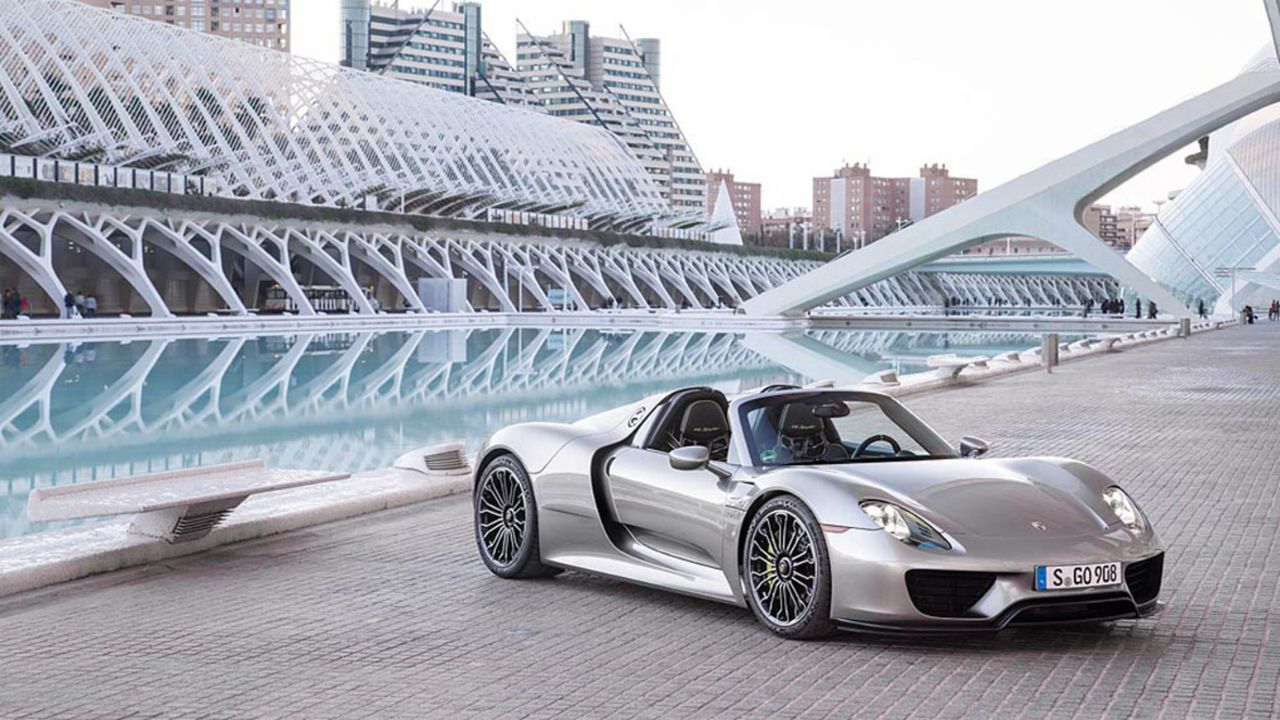
The 918 Spyder arrived when everyone was still figuring out what hybrid supercars should be, and Porsche just casually nailed it on the first try. Its combination of a 608 horsepower V8 and two electric motors produced a combined 887 horsepower and a mind-melting 0-60 mph time of 2.2 seconds.
The party trick was that you could drive it silently on pure electric power for 12 miles or unleash absolute mayhem with everything working together. At $845,000, all 918 units were spoken for by late 2014, months before production ended in 2015, proving the market’s appetite for electrified performance.
This was more than a bridge between automotive eras: it was a masterclass in how to honor tradition while embracing the future.
2020s: Rimac Nevera

The all-electric Nevera represents the moment when EVs stopped being the future and became the present in the hypercar world. With 1,914 horsepower from four electric motors, it demolished the 0-60 mph sprint in just 1.85 seconds and topped out at 258 mph.
Its 120 kWh battery pack provides not just straight-line violence but also 340 miles of range, making it the rare hypercar you could actually drive regularly. The $2.4 million price tag bought you 23 production records, including becoming the fastest accelerating production car ever tested.
Croatian company Rimac proved that the internal combustion engine’s century-long dominance could end not with a whimper, but with an absolutely furious electric scream.
Honorable Mention: Ferrari 250 GTO (1960s)

Yes, we already crowned the Miura, but the 250 GTO deserves recognition as one of the most valuable cars ever sold, with a reported $70 million private sale in 2018. Only 36 were built between 1962 and 1964, each powered by a 300 horsepower V12 that dominated GT racing throughout the decade.
Its combination of gorgeous Scaglietti bodywork and unmatched competition pedigree created a legend that only grows stronger with time. The GTO proved that Ferrari’s racing expertise could be barely civilized for the road, creating a template the company still follows today.
If the Miura defined the supercar’s future, the 250 GTO perfected its past.
Honorable Mention: Dodge Viper (1990s)

The Viper was America’s answer to European supercar refinement: more displacement, more attitude, and considerably less concern for your safety. Its 8.0-liter V10 made 400 horsepower in the original RT/10, delivered with about as much sophistication as a sledgehammer to the face.
No traction control, no anti-lock brakes, no roof: just you, 465 lb-ft of torque, and your questionable life choices. At around $50,000 when new, it proved that supercar thrills didn’t require Italian healthcare costs.
The Viper was gloriously, dangerously, unapologetically American, and we loved it for exactly those reasons.
Honorable Mention: Ford GT (2000s)
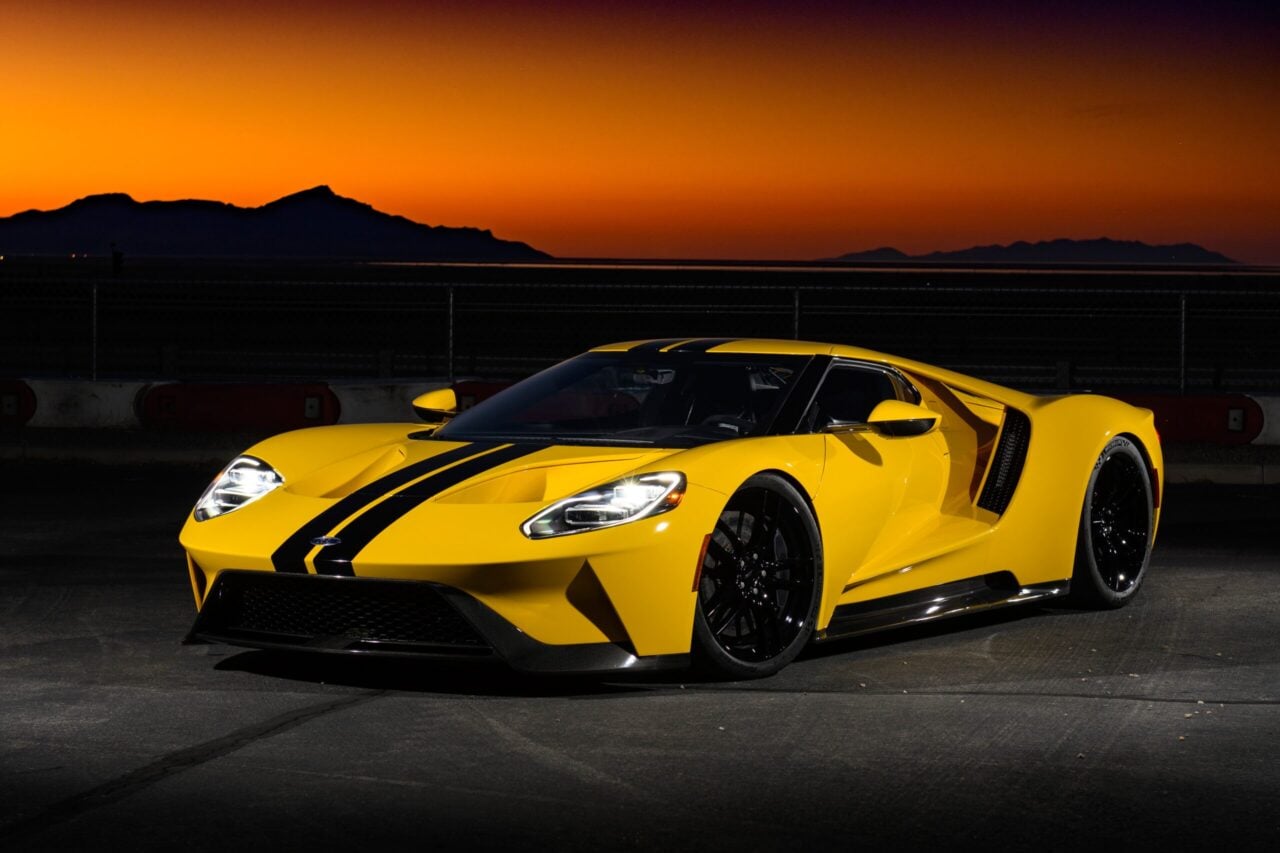
Ford’s heritage homage to the GT40 wasn’t just nostalgia on wheels — it was a legitimate supercar that happened to make Ferrari very nervous. The supercharged 5.4-liter V8 produced 550 horsepower and pushed the retro-styled beauty to 205 mph, showing how American manufacturers could build world-class exotics.
Only 4,038 were produced between 2004 and 2006, each carrying a base price of $139,995 that seems almost quaint now. The GT’s blend of heritage styling and modern performance made it an instant classic, with values steadily climbing ever since.
It may have looked backwards for inspiration, but it brought American supercars further into the future.
Honorable Mention: Koenigsegg Agera RS (2010s)

Christian von Koenigsegg’s relentless pursuit of speed reached its peak with the Agera RS, which briefly held the production car speed record at 277.9 mph in 2017. Its twin-turbo 5.0-liter V8 could be tuned to produce up to 1,360 horsepower, all managed by cutting-edge Swedish engineering and carbon fiber wizardry.
Only 25 were built, each representing the pinnacle of boutique hypercar manufacturing from a company that refuses to accept limits. The $2.1 million price bought you exclusivity that made other supercars look common by comparison.
Koenigsegg proved that a small Swedish manufacturer could embarrass automotive giants with enough determination and engineering brilliance.
Conclusion

Looking back through six decades of supercar evolution, what’s striking isn’t just the raw performance gains — it’s how each car perfectly captured the automotive dreams of its era. From the Miura’s revolutionary mid-engine layout to the Nevera’s electric dominance, these machines pushed boundaries and sparked imaginations in ways that cold specifications can never fully capture.
These tasteful yet powerful supercars preserve the moments when engineers, designers, and dreamers decided that “good enough” simply wasn’t an option. The next decade’s defining supercar is probably being sketched right now, and knowing this industry, it’ll probably make everything we’ve covered here look hopelessly outdated.
That’s exactly how it should be.