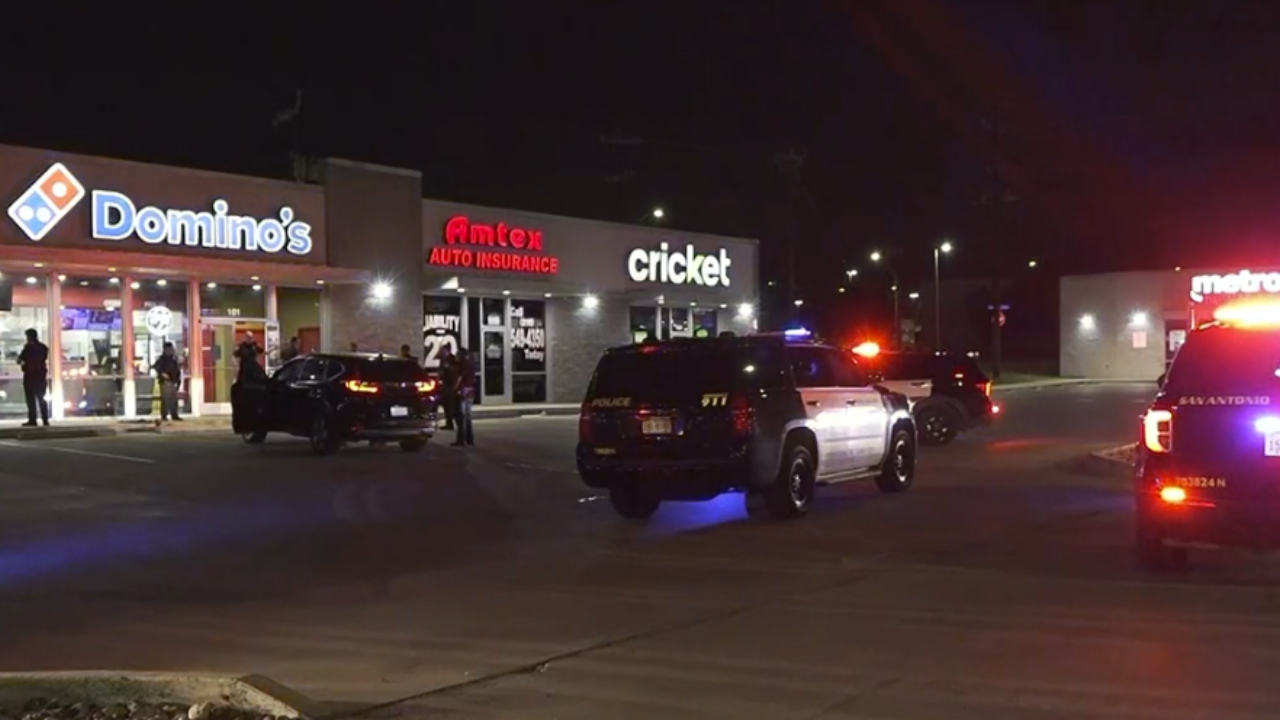
A late-night road dispute in San Antonio took a violent turn Saturday when a driver made a decision that millions of frustrated motorists consider every day, and paid for it with a stab wound. The incident unfolded just before 11:30 p.m. near the 12000 block of Perrin Beitel on the city’s Northeast Side, where San Antonio Police Department officers were called to the scene of what appeared to be a road rage confrontation. The victim had pulled over to face the other driver directly, and the situation escalated fast.
That face-to-face exchange ended with the man taking a stab wound to the abdomen. He was transported to a local hospital with injuries that, fortunately, were not life-threatening. No other injuries were reported, and police took the other individual into custody. The identities of those involved have not been released, and investigators were still gathering information in the immediate aftermath.
What makes this incident worth paying attention to is not that it is especially rare, but precisely because it is not. The impulse to pull over and “sort things out” is one most drivers have felt at some point, usually after being cut off, tailgated, or nearly sideswiped by someone who appeared to be auditioning for a demolition derby. Giving in to that impulse, though, is where things tend to go sideways in a hurry.
San Antonio is no stranger to this pattern. The city ranks second in Texas for road rage incidents involving firearms, with 107 documented shooting cases logged between 2014 and 2024. Saturday’s confrontation involved a blade rather than a gun, but the dynamic is the same: two strangers, already agitated, meeting outside their vehicles with no referee and no good reason to trust how it ends.
When Pulling Over Becomes the Worst Move You Can Make
The most threatening situations often happen when both drivers respond aggressively, and can turn violent if both people get out of their vehicles to confront one another. It sounds obvious written out, but in the heat of the moment, the logic of “I just need to say something” takes over. The problem is that the other driver is operating under the same emotional state, and neither party tends to be at their most reasonable when adrenaline is running the show.
About 37 percent of aggressive driving incidents involve a firearm, which means stepping out of your vehicle to have a word with a stranger is a coin flip where the other person may be holding considerably better odds than you. In this case, the weapon was a knife, but the outcome was nearly identical in terms of trajectory.
Texas Leads the Nation in Road Rage Violence
In 2024, Texas had the highest number of road rage shootings, with 74 incidents, accounting for 17 percent of all cases nationwide. San Antonio specifically recorded 107 road rage shooting cases from 2014 to 2024, ranking second in the state behind Houston’s 212. Saturday’s stabbing adds another chapter to that record, even if blades rarely make it into the statistics that researchers focus on.
Since 2020, road rage has caused an average of 601 incidents of gun violence per year in the U.S., according to the Gun Violence Archive. The broader picture of non-firearm road rage violence, including assaults, fistfights, and incidents like this one, likely pushes that number considerably higher when factored in.
The Numbers Behind the Frustration
The data on road rage in America has a way of making any commute feel like a calculated risk. Since 2019, 12,610 injuries and 218 murders have been attributed to road rage across the United States. Over a seven-year period, more than 200 murders and 12,000 injuries were attributed to road rage, and reported cases have climbed roughly 500 percent over the last decade.
Road rage incidents tend to be more likely to occur in the summer months of July, August, and September, and toward the end of the week during peak commute hours between 5 and 7 p.m. Saturday night near midnight does not fit the typical profile, which is something of a reminder that there is no truly safe window on the calendar.
What Experts Actually Recommend
The advice from law enforcement and safety organizations on this front is consistent and, for anyone who has been genuinely wronged by another driver, a little unsatisfying: avoid eye contact with aggressive drivers, refuse to respond to aggression with aggression, and call 911 rather than attempting to resolve anything personally. The San Antonio case is a fairly clean illustration of why that guidance exists.
AAA notes that aggressive driving is contagious, meaning drivers who experience higher levels of aggression on the road tend to engage in more of it themselves. Getting out of the car does not break that cycle. It accelerates it.
The man in Saturday’s incident is expected to recover. The lesson, as always, costs less than a hospital visit.