General Motors spent the past several years preparing its Lansing operations for an electric future. Now that strategy has changed, and hundreds of workers are temporarily losing their jobs while the automaker prepares the plant for a very different kind of vehicle.
GM plans to lay off roughly 350 employees at its Lansing Grand River Assembly/Stamping and Lansing Regional Stamping facilities beginning January 14, 2027. The downtime is connected to retooling for a new internal-combustion Cadillac sedan rather than the electric vehicles once planned for the site.
The layoffs are expected to be temporary. According to Automotive News, GM intends to recall the affected workers after the retooling work is completed, while the UAW contract with the automaker will allow them to receive 74 percent of their regular hourly wages during the layoff.
It’s a notable reversal for a facility that GM previously positioned as part of its expanding U.S. EV manufacturing footprint. The company announced a $1.25 billion investment in Lansing in 2023, followed by a $500 million federal grant intended to support the conversion of the facility for electrified vehicle production.
Lansing Was Supposed To Become An EV Plant
GM’s original plan placed Lansing alongside several other factories being prepared for electric vehicle production. Those included Factory Zero in Detroit-Hamtramck, Orion Assembly in Michigan, Spring Hill Manufacturing in Tennessee, and Fairfax Assembly in Kansas.
The Lansing investment became even more significant in 2024 when GM was selected to receive $500 million from the U.S. Department of Energy. The federal funding was intended to help convert the facility for production of electrified vehicles while preserving manufacturing employment.
Those plans were drawn up during a period when automakers were expecting EV adoption to accelerate considerably faster. The industry has since adjusted production plans and investments as demand developed differently from some earlier projections.
GM has been among the companies recalibrating its strategy. Rather than dedicating Lansing exclusively to its electric ambitions, the automaker is now preparing the facility to produce another generation of combustion-powered vehicles.
A New Cadillac Sedan Is Coming Instead
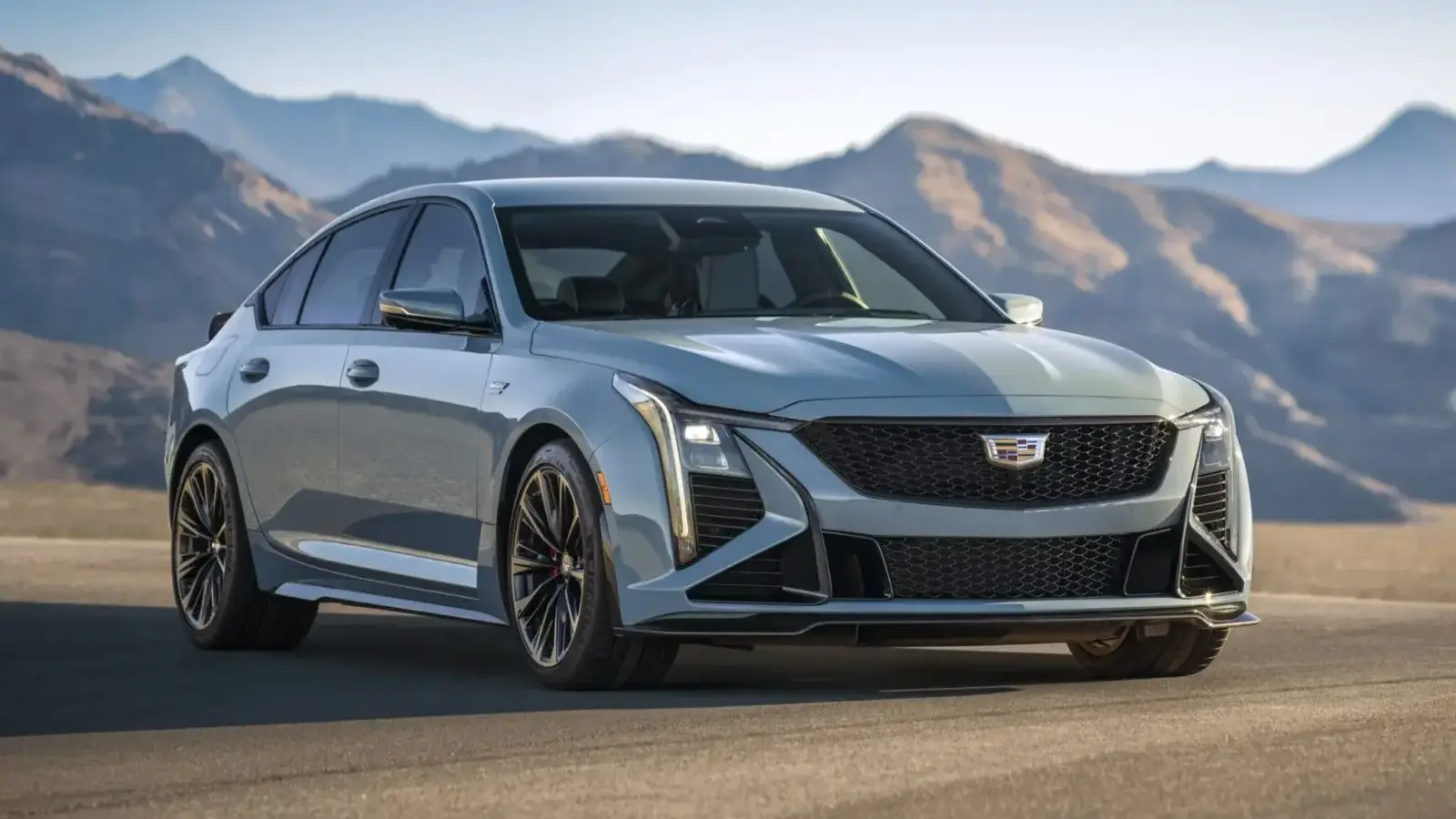
The vehicle expected to emerge from the retooled Lansing operation is a new Cadillac sedan, widely believed to be the next-generation CT5. Reports indicate it will use an updated version of GM’s rear-wheel-drive Alpha architecture.
GM CEO Mary Barra recently said Cadillac will begin introducing the company’s next generation of internal-combustion vehicles in spring 2027. The timing aligns with preparations taking place at Lansing, although GM has not publicly disclosed every detail of the future sedan.
Cadillac’s current CT5 remains one of the increasingly rare traditional luxury sedans produced by an American automaker. Keeping a successor in the lineup would also preserve a combustion-powered alternative as Cadillac simultaneously expands its range of EVs.
Other future combustion models have also been rumored, including successors to the XT5 and XT6 crossovers. Reports have additionally suggested GM is exploring another Camaro, although its eventual form and timing remain uncertain.
350 Workers Will Feel The Transition
For the employees involved, the strategic shift means several months of uncertainty while the facilities are reconfigured. Approximately 350 workers across the two Lansing operations are expected to be affected when the layoffs begin in January.
The contractual income protection softens the immediate financial hit, and GM reportedly plans to bring the workers back once the retooling process is finished. Still, the situation illustrates how quickly changes in product strategy can reach the factory floor.
It also creates an awkward backdrop for the substantial public and private investment previously attached to Lansing’s EV conversion. A facility that was supposed to help underpin GM’s electric expansion is instead being prepared to build another gasoline-powered Cadillac.
GM hasn’t abandoned EVs, and it continues to sell and develop a broad range of electric models. Lansing’s changing mission, however, shows that the company’s path toward electrification is becoming considerably less straightforward than originally envisioned.