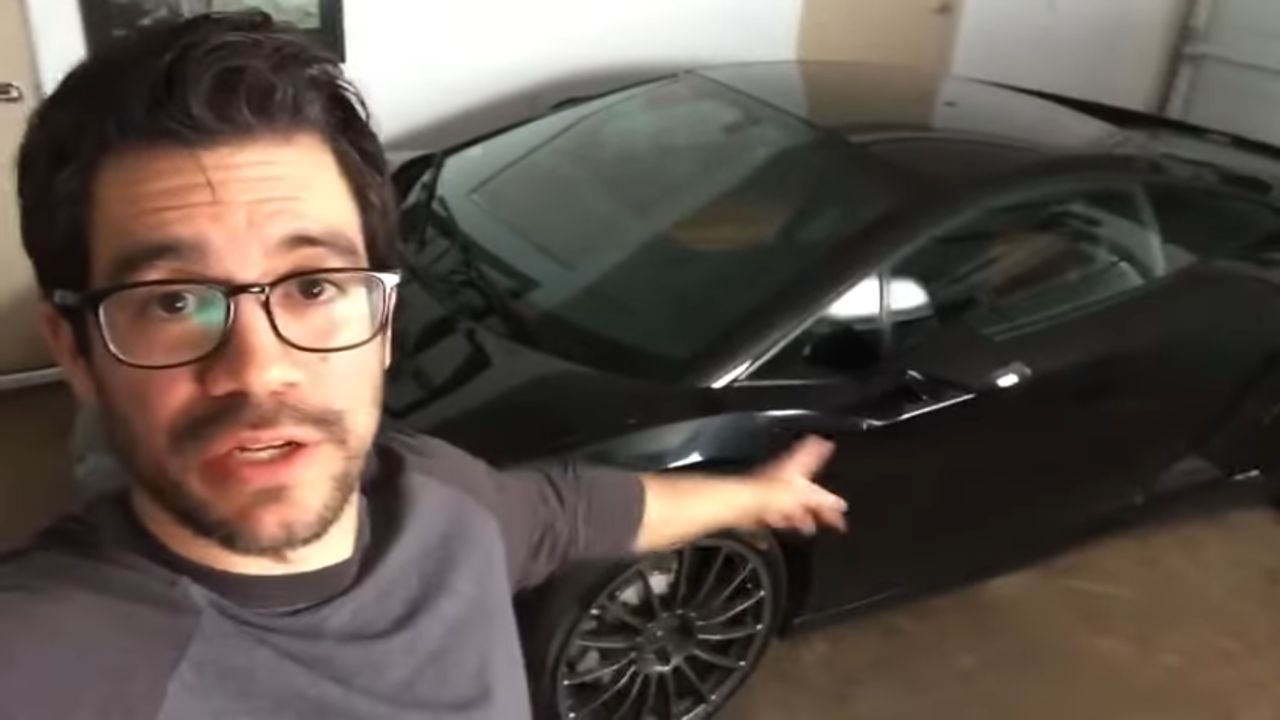

Tai Lopez, the self-styled entrepreneur who once went viral for lounging in a garage next to a black Lamborghini while talking about his love of books, is now facing serious heat from the US Securities and Exchange Commission.
The SEC has filed a civil lawsuit accusing the 48-year-old and his business partners of running what it describes as an $112 million Ponzi scheme that allegedly targeted mostly small investors.
If you remember the “here in my garage” video from 2015, you already know the aesthetic. Flashy car. Luxury vibe. Self-improvement rhetoric.
The black Lamborghini became the visual shorthand for his brand: wealth, success, exclusivity. He famously claimed he valued his book collection more than the car, though the car just happened to be front and center in the shot. It was marketing gold.
The Pitch: RadioShack, Pier 1, and Promised 25% Returns
According to the SEC’s complaint, Lopez and his co-founder Alex Mehr raised more than $230 million between 2019 and 2022 through their company, Retail Ecommerce Ventures. The pitch was simple and seductive.
They would buy struggling retail brands such as RadioShack, Pier 1, and Modell’s Sporting Goods, then revive them as profitable e-commerce businesses. Investors were allegedly told to expect returns of at least 25 percent.
Some were even promised equity stakes with monthly dividends exceeding two percent.
That kind of guaranteed return should always set off internal alarms. High returns with low risk is the fairy tale that fuels most Ponzi schemes.
The SEC alleges that the underlying businesses were unprofitable and that investor funds were used to pay earlier investors, which is the classic Ponzi playbook. On top of that, regulators claim Lopez and Mehr misappropriated about $16.1 million for personal use. The complaint seeks permanent injunctions, civil penalties, officer-and-director bans, and disgorgement with interest.
The Investors: Grandfathers, Retirees, and a $10,000 Pier 1 Gift Card
Investors quoted in media coverage say they were convinced by the story and the branding. An Illinois grandfather who invested $175,000 reportedly received a $10,000 Pier 1 gift card and monthly checks of around $1,000 for roughly two years before things unraveled.
Another investor, an 82-year-old retired real estate broker, put in $300,000, saying the narrative sounded credible because of the recognizable retail brands involved.
Lopez has not been criminally charged. This is currently a civil SEC action, although reports indicate the FBI has contacted investors as part of a separate investigation. The defendants are said to be attempting to settle.
The Lamborghini Problem
Now, about that Lamborghini.
It’s almost a cliché at this point. The Lamborghini, particularly in black or neon colors, has become the unofficial mascot of the “get rich quick” ecosystem.
From crypto promoters to forex gurus to online course sellers, the car shows up again and again in ads, YouTube thumbnails, and Instagram reels. Why? Because it compresses a message into one image: extreme wealth, speed, and success. You do not need to explain margins or cash flow when there is a V10 engine idling behind you.
But there’s more to it, though. The Lamborghini itself is not the problem. It’s just a car.
The issue is how it is used as a credibility shortcut. In many alleged fraud cases, luxury cars are rented for a day to film content. They are props in a psychological strategy. Flash signals authority. Authority builds trust. Trust loosens wallets.
That does not mean everyone who owns a Lamborghini is shady. Plenty of legitimate business owners buy exotic cars because they can. However, in the world of alleged financial schemes, the Lamborghini has become almost theatrical. It is the stage lighting for a performance of success.
In Lopez’s case, the black Lamborghini helped build a persona years before the SEC lawsuit. It was part of the mythology. Now, that same symbol is being revisited in a very different light. The car that once represented aspirational hustle is now tied, at least in regulatory filings, to accusations of misleading investors and recycling their money.
If there is a lesson here, it is not “never trust a Lamborghini.”