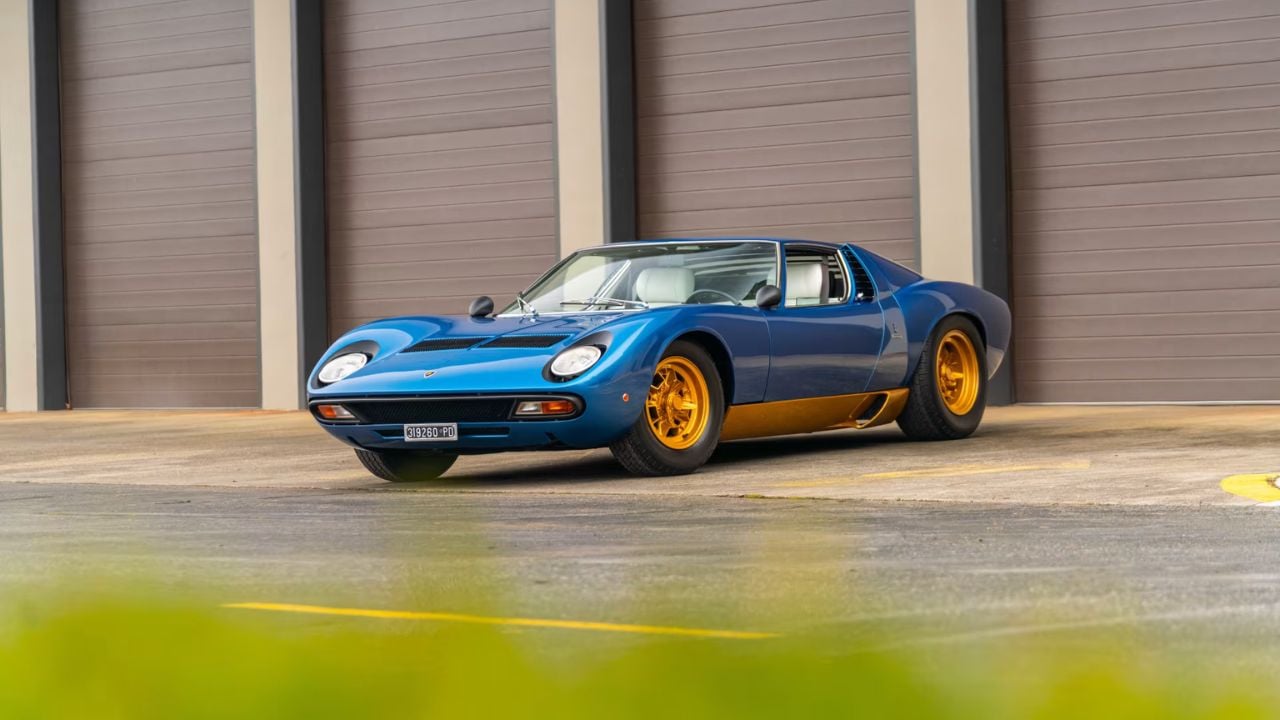
The best auction Lamborghinis do not need much introduction, but some still arrive with an extra layer of intrigue. A Miura SV is already one of the most important supercars of its era. Add a late-production chassis, a highly unusual factory color combination, and very low displayed kilometers, and the car starts to feel less like another blue-chip Italian collectible and more like a genuinely memorable event lot.
That is the territory this 1972 Lamborghini Miura P400 SV enters at Mecum Indy. It is not just another Miura, and it is not just another SV. Mecum presents it as the only example finished in Bleu Tahiti with gold accents over white leather, which immediately lifts it into the part of the market where rarity becomes as much about specification as production count.
That matters because the Miura’s appeal has never been limited to engineering alone. It is one of those rare cars whose shape, historical importance, and myth all reinforce each other, which means collectors tend to care deeply about how an individual chassis is configured and where it sits within the model’s timeline.
Chassis 5066 appears at exactly the right end of that story. It comes from the final Miura SV period, when Lamborghini had already pushed the original concept as far as it could go and was preparing to hand the company’s future over to the Countach.
The Ultimate Evolution of the Miura Idea
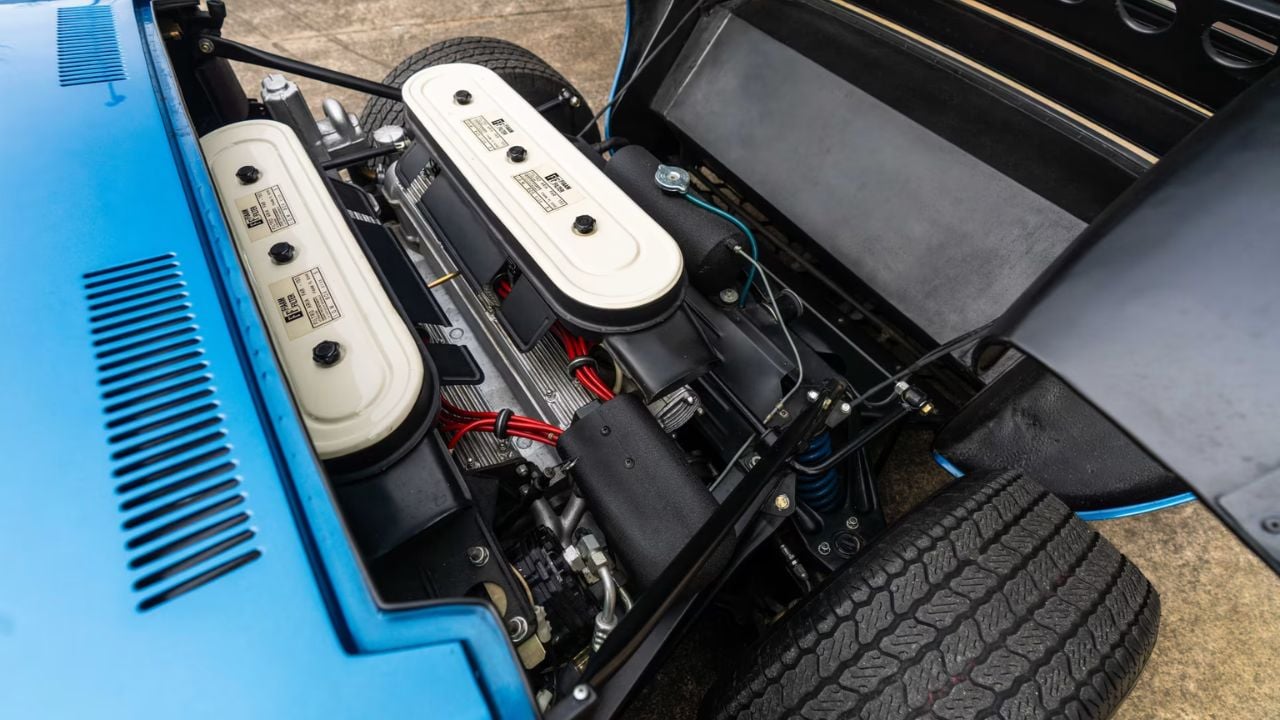
When Lamborghini unveiled the Miura in the mid-1960s, the car changed the conversation around high-performance road cars. Its transversely mounted mid-engine V12 layout, low proportions, and dramatic Bertone styling made it feel like a blueprint for what the modern supercar would become.
The SV was the final and most developed standard production version of that idea. Power from the 3.9-liter V12 rose to roughly 385 horsepower, and the car retained the 5-speed manual transmission that helped make the Miura feel as mechanical and serious as its shape suggested.
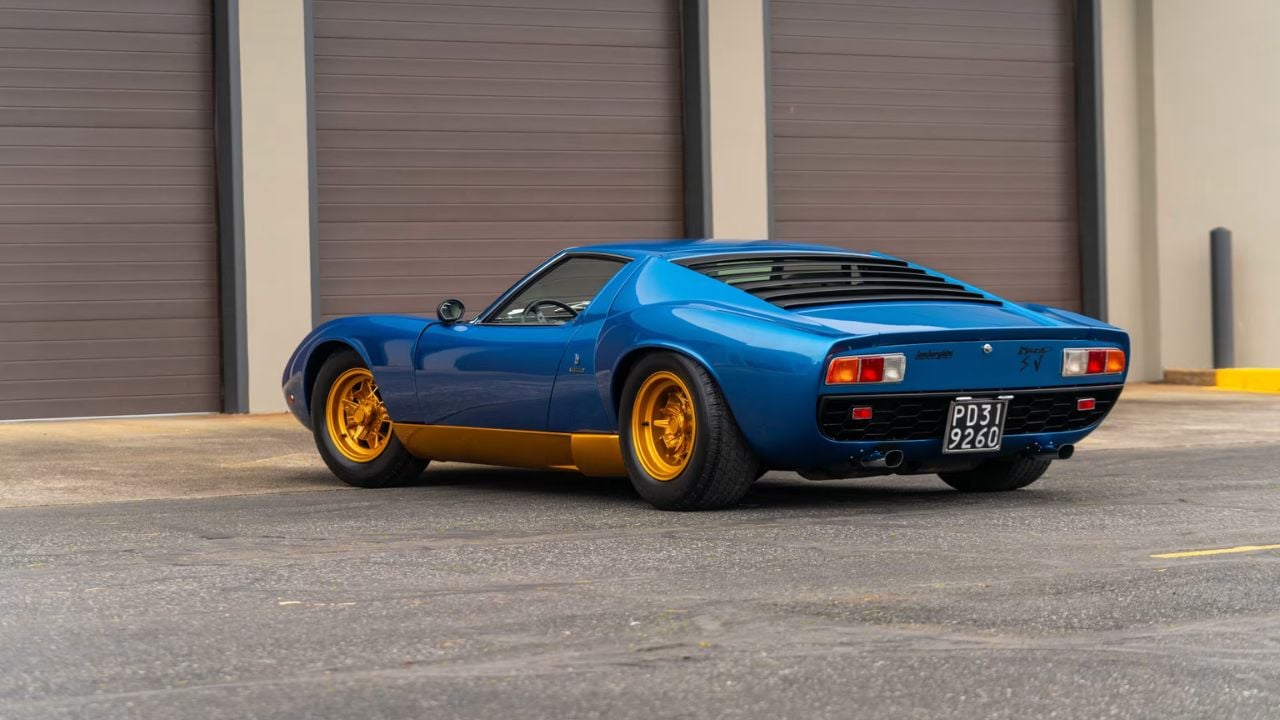
Lamborghini also gave the SV meaningful visual and chassis changes. Wider rear track, revised rear bodywork, and other developmental improvements gave the final cars a more mature and more purposeful character than the earlier P400 and P400 S variants.
That is why the SV occupies such a special place in the Miura hierarchy. It was not merely the most powerful version. It was the point at which the original Miura concept became its fullest and most resolved production form.
Why This One Stands Apart
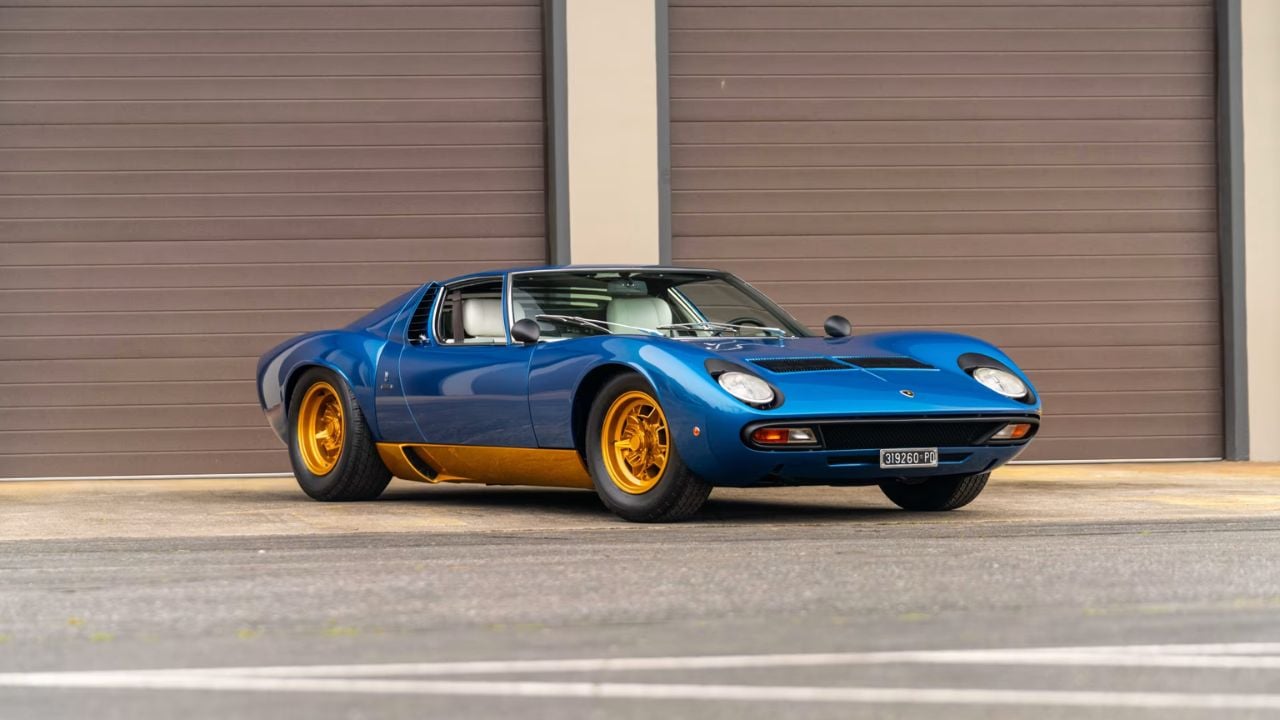
Mecum lists this car as Lot R718 for May 16, 2026, showing 1,516 kilometers and identifying it as the only Miura SV finished in Bleu Tahiti with gold accents over white leather. For a car already built in very limited numbers, that kind of one-off factory presentation matters enormously.
The SV is rare in any color. Lamborghini’s own history puts production at about 150 examples, which is enough to make every genuine SV significant before specification even enters the conversation.
This car’s chassis number also helps. At 5066, it belongs to the very late phase of Miura production, which is exactly where collectors like to look when a model went through gradual development and refinement over time.
That combination of late build, low displayed distance, and unusual factory finish is what turns this Miura from merely desirable into something much more specific. It is a car for buyers who are not just shopping for a Miura SV, but for an SV that can stand apart even among other elite examples.
A Landmark Supercar With Real Auction Gravity
The Miura remains one of the most influential performance cars ever built, but influence alone does not guarantee market strength. What keeps the best SVs so desirable is the way the historical importance, the styling, and the scarcity all keep reinforcing one another instead of working separately.
That dynamic has been visible in public sales for years. Well-documented Miura SVs continue to command serious money, with one 1972 example bringing $1.375 million at Gooding, and the strongest cars still function as centerpiece acquisitions rather than ordinary collector buys.
This Mecum example arrives with exactly the sort of story that can elevate a car within an already elite category. It is a late SV, it wears a striking and highly unusual factory combination, and it comes to one of Mecum’s biggest stages at a time when collectors continue to treat landmark early supercars as foundational pieces.
That is why this Miura should not have trouble standing out at Indy. It is not just another rare Lamborghini. It is the final expression of one of the defining supercars of the twentieth century, presented in a configuration few people will ever see twice.