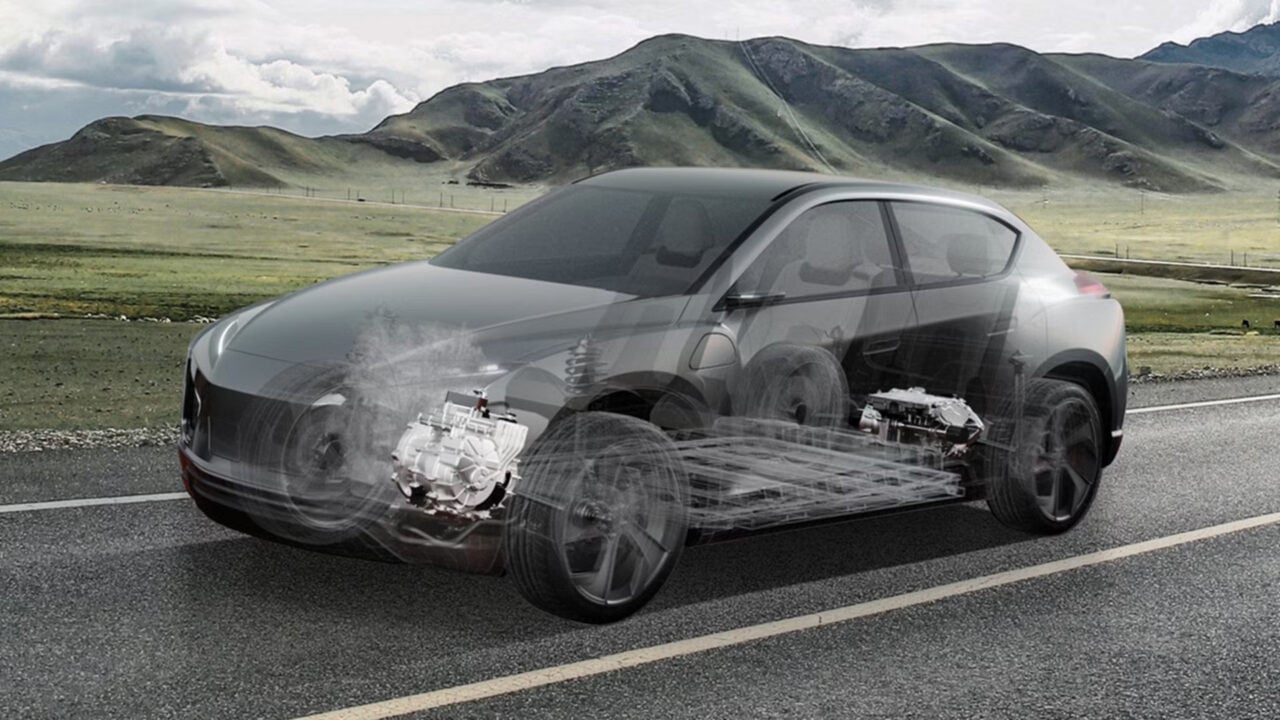
For years, automakers pushed buyers toward a simple choice: go fully electric or stay with gasoline. However, many drivers never fully embraced that all-or-nothing approach.
They liked the idea of EV ownership, but range anxiety, charging times, cold-weather losses, and patchy infrastructure kept them hesitant. For a lot of buyers, the leap still felt too big.
That is why range-extended electric vehicles are suddenly back in focus. Instead of relying only on a battery, they use a small combustion engine as a generator to keep the battery charged and extend driving range.
Now global supplier Magna believes it has a solution that could help reshape the market and give automakers a smarter middle ground.
Magna’s DHD REX System Explained
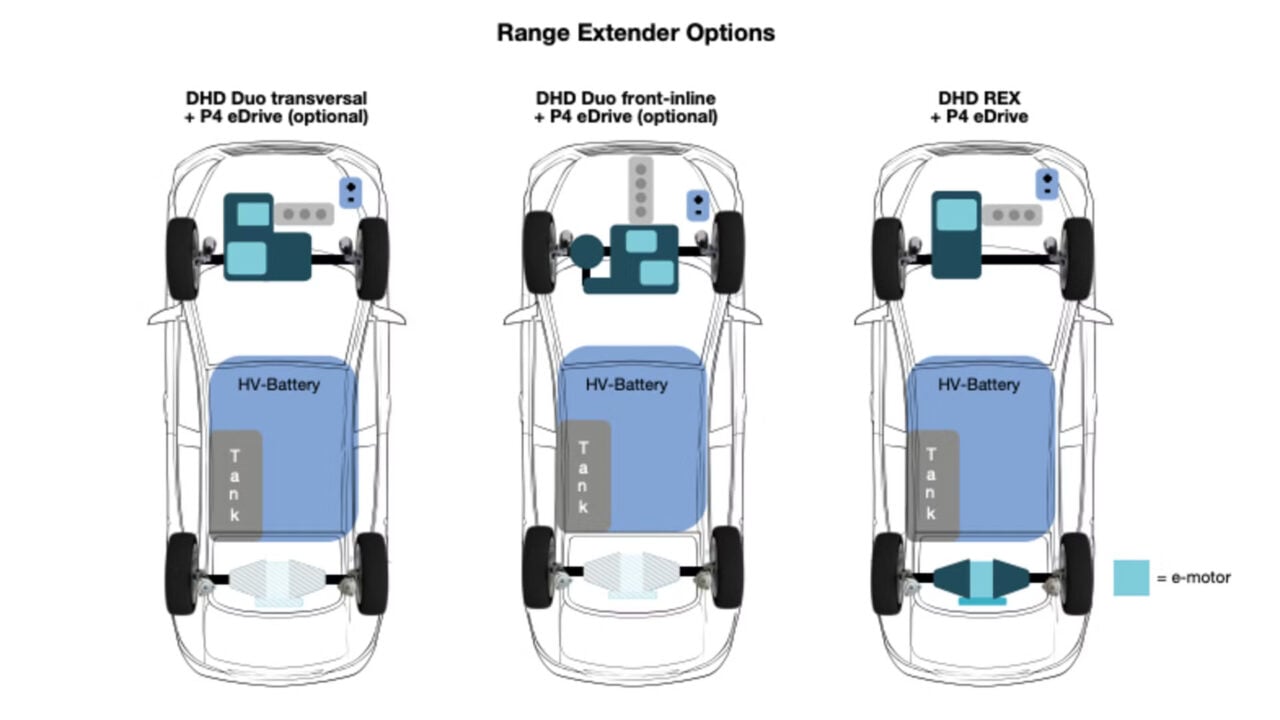
Magna has unveiled its DHD REX powertrain, a dedicated hybrid drive system aimed at range-extended EVs.
According to the company, the setup combines an internal combustion engine with an electric drive unit, allowing multiple operating modes. That includes pure EV driving, generator mode where the engine recharges the battery, and parallel hybrid operation for improved highway efficiency.
That addresses one weakness of many EVs: sustained high-speed cruising, where batteries drain faster, and charging stops become more disruptive.
Why It Could Be More Important Than Another EV Launch
Many consumers do not reject EVs entirely. What they reject is inconvenience.
A range-extender setup attacks that exact problem. Drivers can commute daily on electric power, then use gasoline backup for long road trips without hunting for chargers or waiting 30 minutes beside a motorway.
It effectively blends the strengths of EVs and hybrids while avoiding some of the weaknesses of both.
That could be especially appealing in North America, Australia, parts of Europe, and rural markets where charging networks still lag.
Designed For SUVs And Multiple Vehicle Types
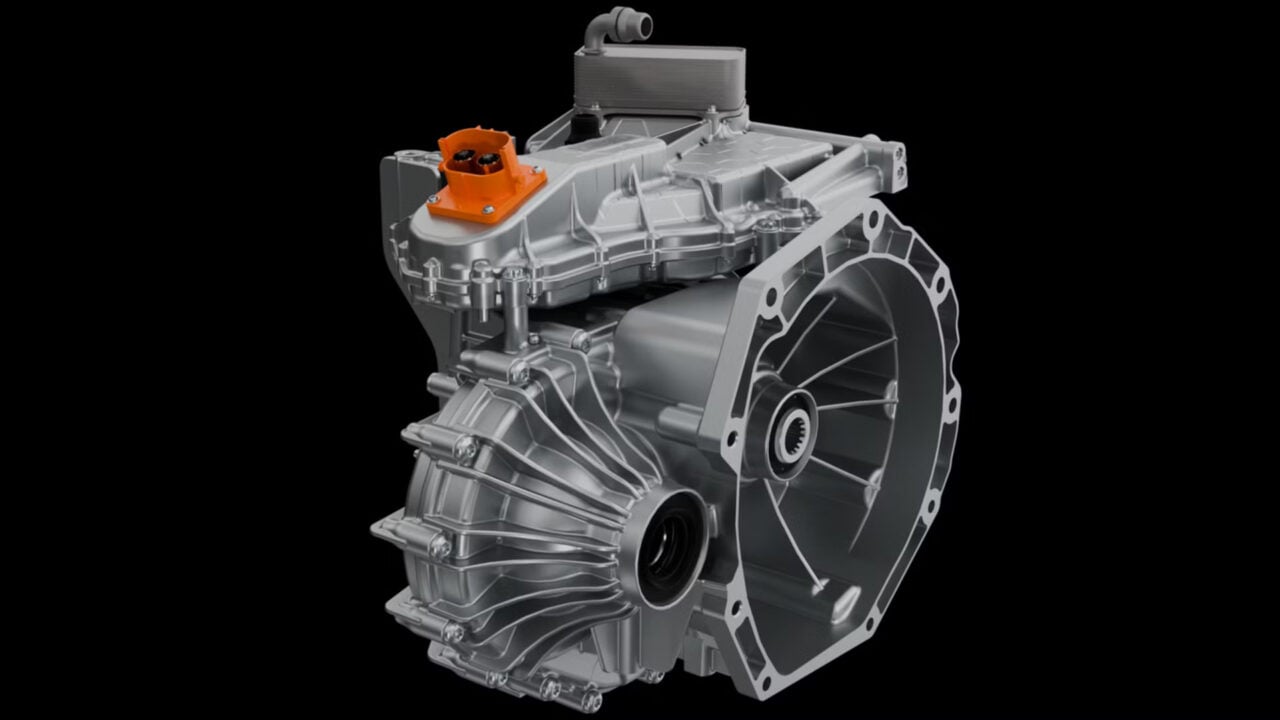
Magna says the DHD REX system is scalable for vehicles from B-segment to E-segment, including SUVs and all-wheel-drive applications.
That is important because crossovers and SUVs remain the volume sellers in many markets. If a technology only works in small hatchbacks, it stays niche.
If it can be fitted to family SUVs, pickups, and mainstream crossovers, it becomes commercially serious.
Why Automakers Are Interested Again

Several manufacturers that once chased all-EV futures are now reconsidering range extenders as customer demand has been more mixed than expected. Many buyers still want electrification, but not full dependency on charging infrastructure.
That creates a major opening for systems like Magna’s.
Instead of redesigning everything from scratch, automakers could adapt existing EV platforms with range-extending hardware and widen their customer base.
China May Lead, But Others Could Follow
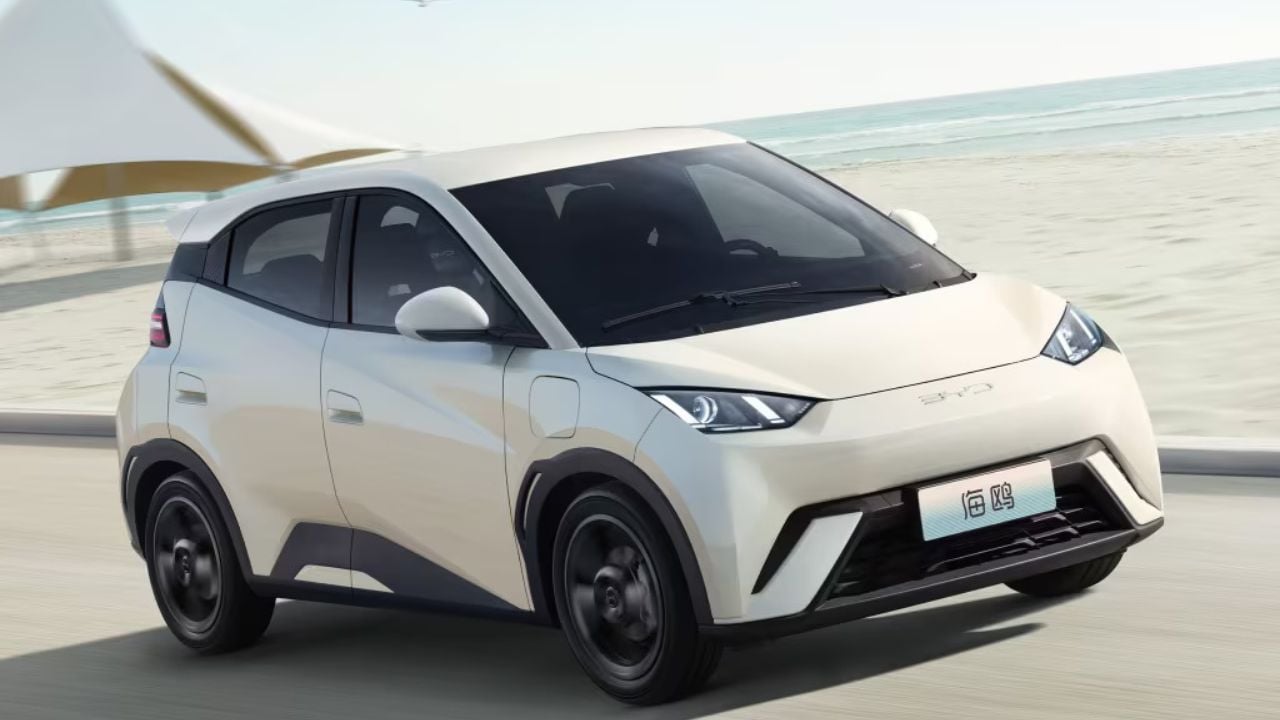
Magna has already discussed demand for hybrid and extended-range systems in China, where rapid EV adoption is paired with fierce competition and constant innovation.
That said, this technology may prove even more useful elsewhere.
In markets where charging remains inconsistent, a well-executed range-extender could outsell full EVs for years.
Flexibility Is the Real Game Changer
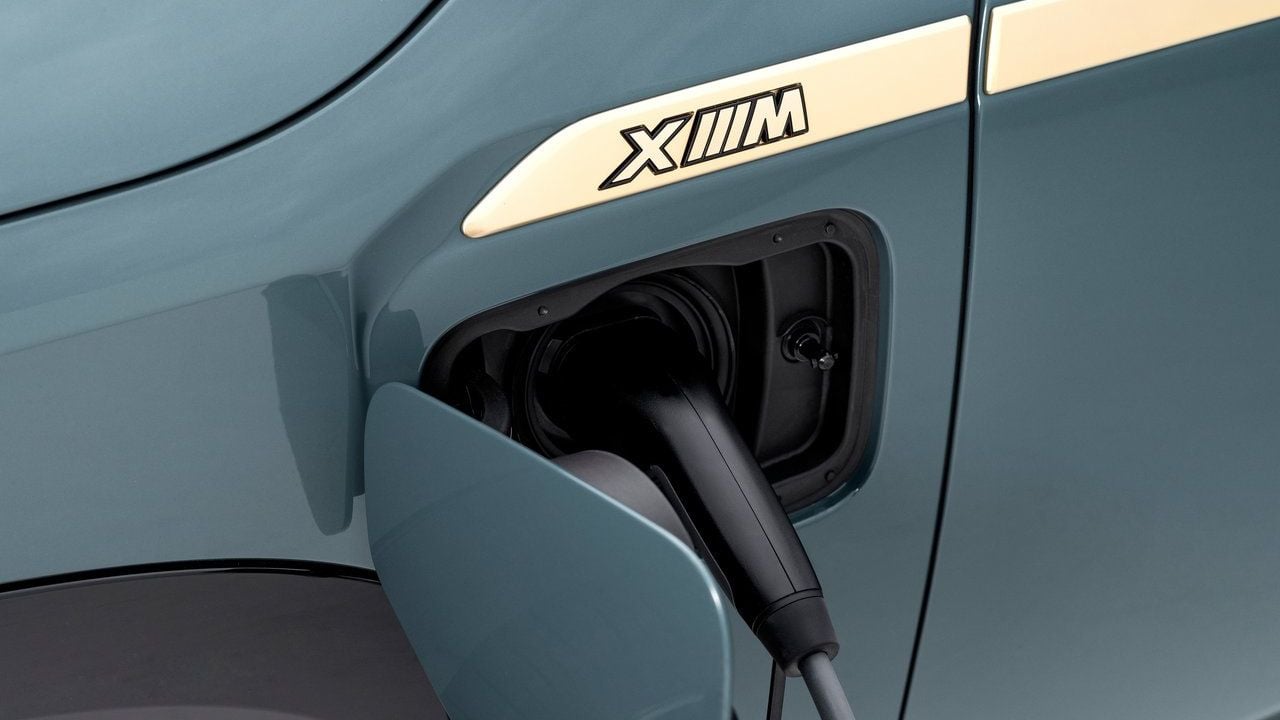
While charging speed and battery range are important, the biggest change in the industry may be the realization that consumers want options.
Magna’s DHD REX powertrain reflects that new reality. Instead of forcing drivers into one future, it offers a bridge between today’s habits and tomorrow’s technology.
And that could make it one of the smartest automotive ideas of the decade.