
Just as the electric vehicle movement gained some momentum, a newly proposed bipartisan bill could require EV owners to pay an annual fee for road repair work.
While some states charge EV owners for road repair work, most of the road repair costs are covered by diesel and gasoline taxes, meaning EV owners in many states are exempt from the tax.
Now, though, things could change if a new law is introduced that will increase the cost of EV ownership by a small margin.
However, it remains uncertain how the annual fee would impact potential EV owners.
EV Owners Do Not Pay for Road Repairs
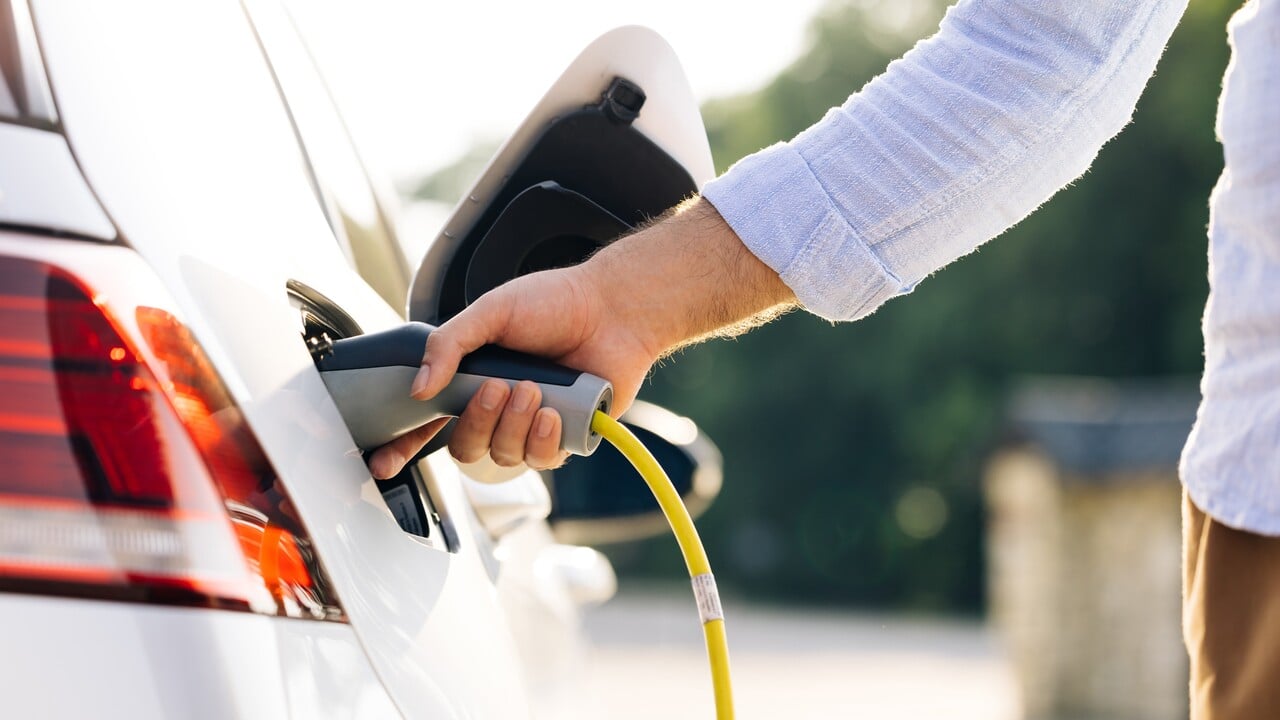
According to a report by Reuters, the U.S. House is working on a five-year highway reauthorization bill that would allocate $580 billion. At present, most federal road repairs are being carried out by revenue generated from diesel and gasoline taxes.
Now, lawmakers have proposed a bill that would mandate EV owners to pay an annual fee of $130, while owners of some plug-in hybrid vehicles will be required to pay $35 toward road repairs.
The law states that starting in 2029, the fees will be hiked by $5 per year up to $150 for EV owners and $50 for plug-in hybrid owners.
In addition, the bill requires autonomous school buses ferrying young students to have a human operator.
The U.S. House Transportation Committee is expected to take up the bill on Thursday. It was introduced by the committee’s Republican chair, Sam Graves, and its top Democrat, Rick Larsen.
The topic of paying road repair charges has been quite controversial. For the past few decades, Congress chose not to increase fuel taxes to cover rising road repair costs.
Some Republican senators proposed in February last year that EV owners be charged a $1,000 tax to account for the increasing cost of road repairs.
However, the proposed bill has faced backlash from an environmental group called The Sierra Club, which argues that it would decrease funding for electric vehicle charging infrastructure and describes the additional cost as “an irresponsible tax for EV and plug-in hybrid drivers.”
New York Accelerates Toward Electrification
In related news, Guessing Headlights recently reported how New York took a big step towards its 2035 and 2040 zero-emissions goals.
The New York State Office of General Services and the New York Power Authority deployed over 1,850 zero-emission vehicles (ZEVs) and installed over 1,300 EV charging ports on state-owned properties.
ZEVs now account for over 10% of the state’s light-duty, non-emergency fleet. This is in line with Governor Kathy Hochul’s Executive Order 22, which requires all of New York’s light-duty, non-emergency vehicles to transition to ZEVs by 2035.
By 2040, the objective is to have all medium- and heavy-duty vehicles transition into ZEVs. The report adds that the state not only intends to decarbonize its vehicle fleet but also aims to reduce operating costs arising from fuel consumption and vehicle maintenance.
To support the expansion of ZEVs, the state has expanded charging infrastructure. An additional 550 charging ports are currently in the design and construction phase.
The push for electrification of state vehicles comes amid an additional $30 million incentive that the state announced last month to push motorists toward EV adoption.
The programme offers point-of-sale rebates worth between $500 and $2,000 for those who purchase or lease battery-electric and plug-in hybrid vehicles. Higher incentives can be expected for vehicle models that offer a higher range.
Governor Kathy Hochul stated that the incentives will be distributed through the Drive Clean Rebate programme administered by the New York State Energy Research and Development Authority (NYSERDA).
Considering the ongoing war against Iran and the rising fuel prices as a result, Governor Hochul believes the incentives will encourage drivers to switch to EVs. She said in a statement last month:
“As the federal administration continues to roll back support for clean air and electric vehicles, New York State is leaning in to prioritize benefits that reduce consumer out-of-pocket costs while reducing harmful emissions.
“At a time when gas prices at the pump have soared in the wake of the war with Iran, electric vehicles will help make driving more affordable for New Yorkers.”