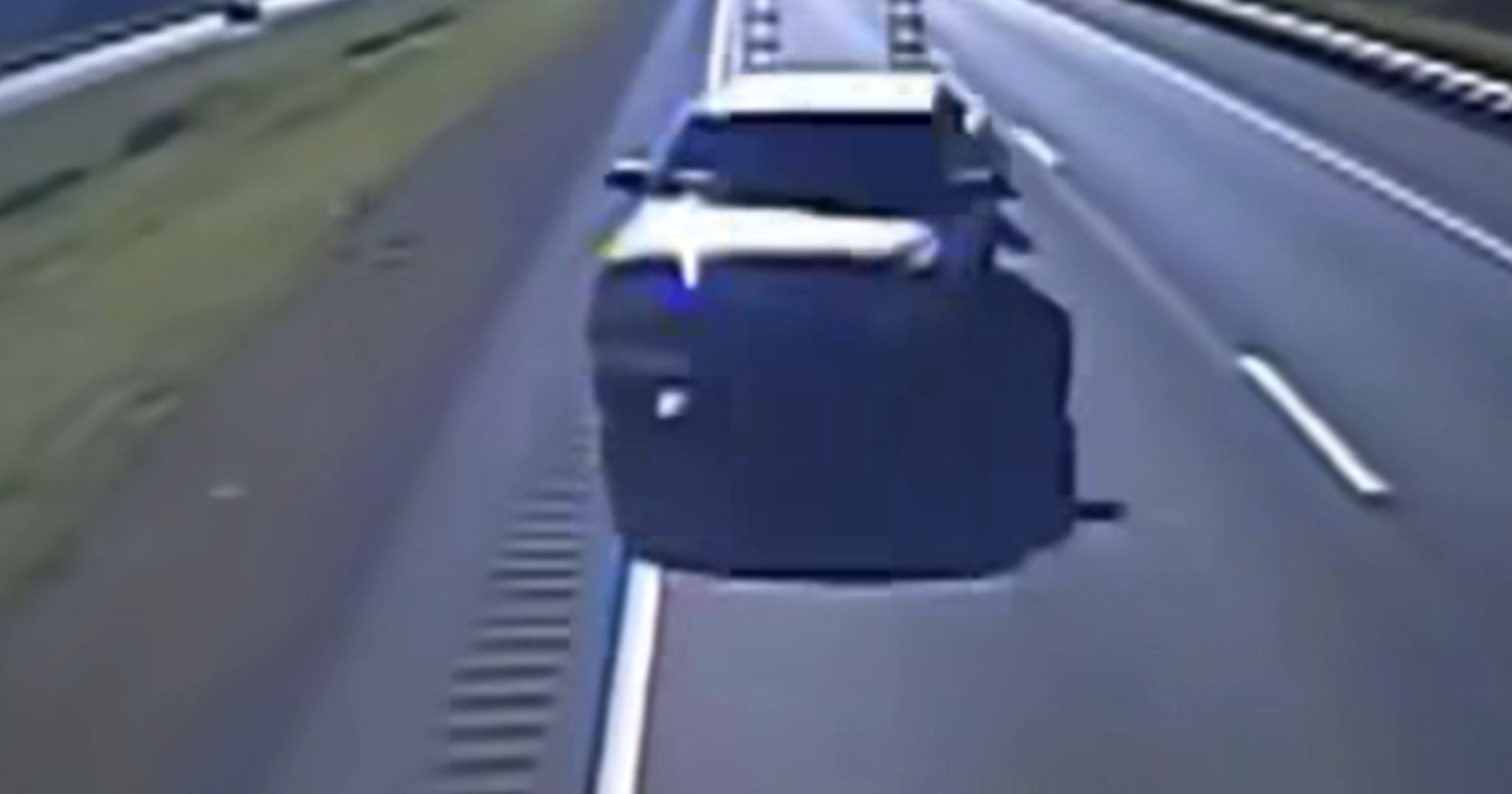
Pennsylvania’s highway safety crews have a problem that no amount of flashing lights seems to fix: drivers keep plowing into the trucks designed to protect road workers. Slow Down Move Over Inc. is circulating dashcam footage of the latest incident, showing a truck hauling a flatbed trailer slam into a PennDOT attenuator vehicle at highway speed. It is not a subtle impact. The attenuator truck absorbs the hit the way it was engineered to, which is exactly the point — but the fact that it keeps having to do its job is the story here.
PennDOT reports that 12 attenuator vehicles have been struck so far this year. Nobody was hurt in this particular crash, but that is not always the case. Previous incidents in the same running tally have produced injuries to PennDOT employees and significant repair bills for equipment that taxpayers ultimately cover. The agency has been releasing these videos with increasing urgency, and it is not hard to see why.
Attenuator trucks — sometimes called crash cushions or truck-mounted attenuators (TMAs) – sit at the tail end of a work zone specifically to catch errant vehicles before they reach the crew. The driver inside the cab knows what they signed up for, but that does not make being rear-ended at highway speeds a reasonable workplace hazard. These rigs are not cheap, and they are not disposable. When one gets destroyed, it comes out of the transportation budget and it takes a worker out of a protective position until replacement equipment arrives.
What makes the video especially useful as a teaching tool is how ordinary the crash looks in the moments before impact. No dramatic swerve, no sudden brake lights – just a truck that apparently did not register the situation until it was too late. That is the pattern PennDOT keeps documenting, and it lines up with what road safety agencies nationwide have been saying for years: distraction and speed are doing most of the damage.
What an Attenuator Truck Actually Does
A truck-mounted attenuator is essentially a sacrificial buffer. It rides behind a shadow vehicle and carries an energy-absorbing crash cushion on its rear. When a distracted or speeding driver hits it, the cushion is engineered to crumple in a controlled way, dissipating kinetic energy and keeping the impact from reaching the work crew further up the road.
The driver of the attenuator truck sits in a cab designed to separate from the worst of the collision. It works, most of the time. But the system was never intended to be tested on a near-daily basis.
Pennsylvania Just Toughened Its Distracted Driving Law
The timing of this latest video release is relevant. Pennsylvania’s “Paul Miller’s Law” recently went into full effect, and in just the first three days of enforcement, state police issued nearly 700 citations and more than 300 warnings for distracted driving violations. The law now prohibits handheld device use even when stopped at a red light.
Whether that new enforcement pressure translates into fewer work zone incidents remains to be seen, but the attenuator crash count was already at 12 before the construction season fully heats up.
Work Zone Crashes Are a National Problem, Not Just a Pennsylvania One
Pennsylvania is not alone in documenting this pattern. Missouri recorded 24 work zone fatalities in 2025, with distracted driving linked to at least half of those deaths. That state has also been expanding its TMA fleet in response to a 2021 crash that killed two road workers who did not have an attenuator truck behind their crew.
The equipment exists. The question is whether drivers are alert enough to make it matter less often.
What Drivers Are Required to Do in Work Zones
Most states, Pennsylvania included, have Move Over laws that require drivers to reduce speed and, where possible, shift away from the lane nearest a work zone or emergency vehicle. Fines in active work zones are typically doubled. None of that appears to be a sufficient deterrent given the frequency of these incidents. The basics still apply: reduce speed at posted work zone limits, keep both hands on the wheel, and treat arrow boards and cone tapers as the serious traffic control devices they are – not suggestions to negotiate.
PennDOT spokesperson Fritzi Schreffler put it plainly: the whole point of the attenuator truck is to place something between the traveling public and the crew doing the work, something capable of absorbing the force of a crash. The person inside that truck feels every one of those hits. Twelve times this year, so far, they have had to.