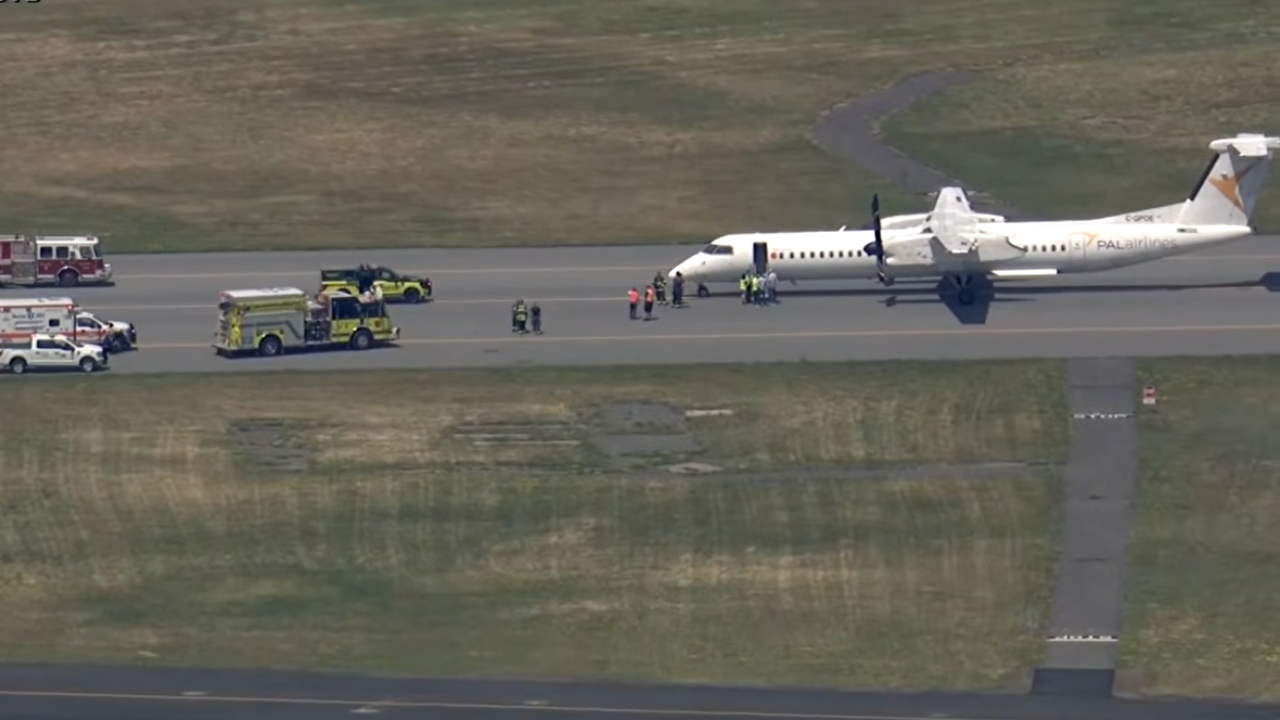
There are moments in the air when your stomach drops and you assume it’s just turbulence, the kind of routine jolt that gives white-knuckle flyers their reputation. And then there are moments when the plane lurches and something in the back of your brain says, no, that’s different. That’s exactly what passengers aboard Air Canada Flight AC7664 experienced on Wednesday afternoon, and their instincts turned out to be entirely correct.
The regional PAL Airlines flight was operating on behalf of Air Canada, heading from Newark Liberty International Airport to Halifax, Nova Scotia, when the captain suffered a medical emergency mid-flight. According to passenger Rodney McDonald, the aircraft began swerving violently, flight attendants rushed into the cockpit, and moments later the pilot was being removed from the flight deck.
Not exactly the in-flight entertainment most people sign up for.
McDonald and roughly four other passengers spent about 40 minutes physically restraining the captain in the aisle while the first officer took control of the situation from the cockpit. The episode lasted long enough that by the end of it, passengers were reportedly exhausted. Forty minutes is a long time to do anything at altitude, let alone manage a medical crisis in a narrow regional aircraft cabin.
The first officer diverted the aircraft to Boston, where it landed safely. The captain was then transported to a hospital for treatment, and his current condition has not been publicly confirmed. Air Canada said it is working to get affected passengers rebooked and on their way to Halifax.
What Passengers Actually Did Up There
To be clear, none of this was in anyone’s travel itinerary. McDonald described the moment the plane swerved as unmistakably wrong, saying it felt less like turbulence and more like someone had physically grabbed and jerked the controls, repeatedly.
Once the pilot was out of the cockpit, a handful of passengers made the decision to step in and help restrain him for the duration of the diversion.
The Co-Pilot Did Exactly What Co-Pilots Are Trained to Do
This is also the part of the story worth noting for anyone who spends time worrying about the flight deck. Massachusetts State Police confirmed the aircraft was being flown by the co-pilot, and the FAA acknowledged the diversion. The system worked as designed.
Commercial aviation requires two qualified pilots precisely because emergencies happen, and Wednesday was a textbook example of that redundancy doing its job.
The Plane, for What It’s Worth
The aircraft was a De Havilland Q400, a twin-engine turboprop carrying 61 passengers. It’s a workhorse of regional routes across North America and not a glamorous machine, but it got everyone on the ground in one piece.
Under the circumstances, that’s the only review that matters.