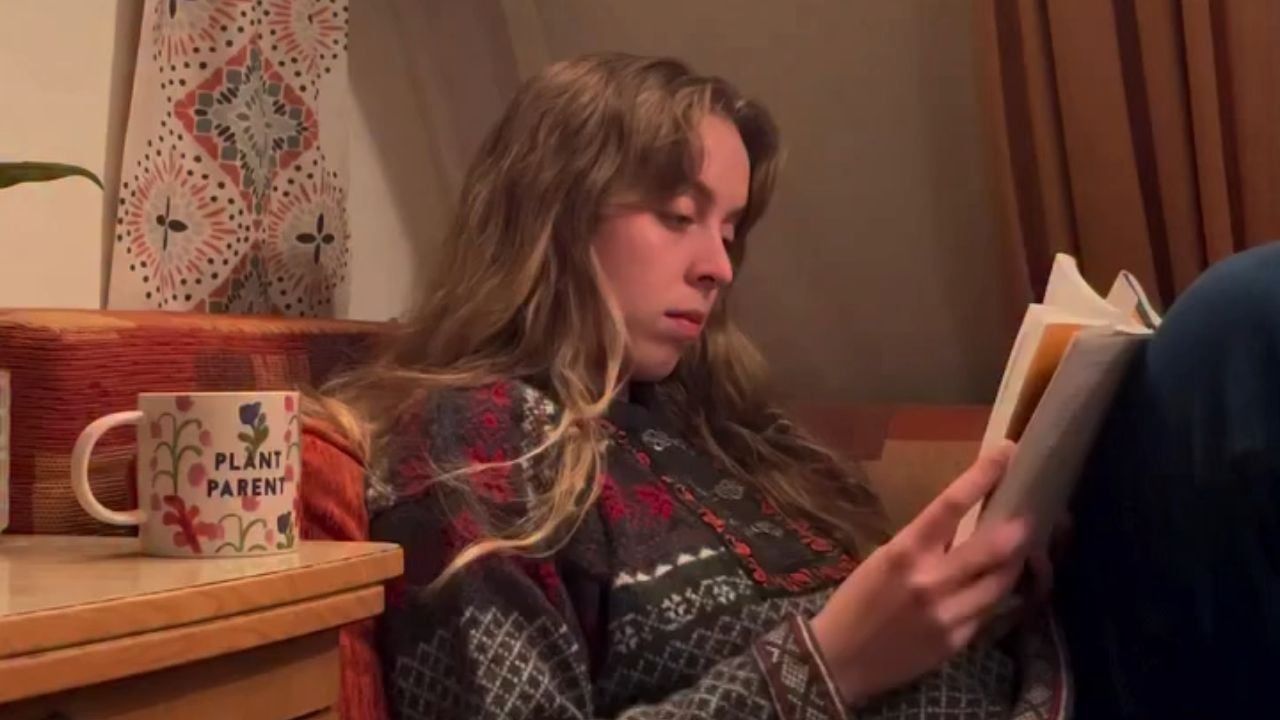

Eva Outram, 28, once a project manager for the NHS in Leeds, Northern England, abandoned her £1,300-a-month (around $1,800) apartment after realizing city life no longer suited her.
Inspired by her time on Channel 4’s Alone and her boyfriend Tom Park’s lifestyle, she invested £4,800 ($6,500) in a caravan and moved onto a farm.
In exchange for a few hours of work, ranging from animal care to construction, she and Tom live rent-free, saving about £2,500 ($3,380) monthly. Outram even covered four months’ accommodation by face painting at the farm’s children’s events. Their utilities are provided, leaving them with far greater disposable income.
Outram now works remotely as a content creator, sharing their journey on @eva__exploring, while enjoying the freedom to move locations. The couple dreams of a road trip to Greece and eventually buying land, though they have no immediate plans.
She says reduced expenses let her pursue passions, calling it her “dream life.”
The Accidental Poster Child
She didn’t set out to become the poster child for “live lighter, save harder, breathe deeper,” but somehow that’s exactly where life parked her.
View this post on Instagram
At 28, the woman at the heart of this story walked away from a conventional job, not with a dramatic speech or a cinematic exit, but with a practical decision that would have made most accountants nod in approval.
The destination was not a glossy high-rise apartment or a trendy city loft. It was a van. And not just any van, but a rolling micro-home that would soon become both shelter and strategy.
Choosing to live in a caravan on farmland in the U.S. carries both appeal and obstacles. The merit lies in reduced living costs, freedom from rent or mortgages, and the chance to embrace a simpler, more self-sufficient lifestyle.
Many farms offer work-trade arrangements, allowing residents to exchange labor for accommodation, which can foster community and financial flexibility.
However, zoning laws often restrict long-term caravan living, and there’s the challenge of limited access to utilities and healthcare or emergency services being farther away. Seasonal weather extremes, from harsh winters to hot summers, also demand resilience. Ultimately, it’s liberating but logistically demanding.
The Math Starts Making Noise
The setup sounds almost suspiciously simple: swap rent for wheels, swap square footage for freedom, and redirect monthly expenses into something far less predictable but far more flexible.
View this post on Instagram
In her case, the math started to make a lot of noise. By removing rent from the equation entirely, she began saving thousands each month, enough to turn budgeting from a tightrope walk into something closer to a downhill glide.
Her living arrangement took shape on a farm, where parking space came without a monthly invoice attached. That detail alone changes the entire emotional texture of the story.
No landlord. No lease renewal anxiety. No elevator that smells like someone else’s dinner. Just land, a van, and the kind of quiet that forces you to notice how often city life had been talking over itself.
Inside the van, life was not trying to pretend it was something else. It was compact, intentional, and a little stubborn about its limitations.
Every object had to justify its presence. Every surface had to multitask. The bed was also storage. The kitchen was also a puzzle. The closet was whatever corner still had air left in it. It was less “tiny luxury apartment” and more “efficiency taken seriously.”
But the real story is not the furniture. It is the financial shift that came with it.
The Money Stacks Up
Without rent draining her account, her monthly cash flow suddenly looked unfamiliar. The difference did not vanish into chaos or indulgence. It stacked up.
View this post on Instagram
Month after month, the savings accumulated in a way that made long-term planning feel more like something she could actually touch. Emergency fund. Future options. Breathing room. The kind of financial buffer that most people only talk about after a lucky year or a strict decade.
Living on a farm also added a strange contrast to the usual van life aesthetic. This was not a parade of coastal sunsets and crowded scenic overlooks. It was steadier. More grounded. The van was parked, not constantly chasing views, which shifted the focus inward.
Daily life became less about movement and more about maintenance, reflection, and a very honest relationship with consumption.
There is a subtle irony here. The less space she had, the more control she seemed to gain. Not control in the sense of rigidity, but control over choices that previously came pre-packaged with rent, commute, and obligation.
Even simple routines like cooking or cleaning carried a different weight when every item had already passed a cost-benefit interrogation.
Friction and Freedom
Of course, it is not a fantasy without friction. Van life rarely is.
Weather matters more. Privacy is negotiated rather than guaranteed. Comfort is something you engineer, not something you assume. But those trade-offs sit alongside something equally real: reduced financial pressure and a sense of autonomy that most fixed housing arrangements quietly dilute.
The interesting part is how normal it starts to feel.
What looks unconventional from the outside eventually becomes just Tuesday. Wake up, adjust the space, step outside, check what the day requires, and notice that the biggest monthly bill no longer exists. That absence does more psychological work than most people expect.
So, Outram’s van-in-a-farm story is not really about the van but about what happens when one of life’s biggest recurring costs gets removed and never comes back. Everything else simply rearranges itself around that absence, including expectations, priorities, and the definition of enough.