AI-powered robots will soon make it to classrooms, and the Salamanca City Central School District in Western New York will be one of the first ones to receive an AI humanoid robot this fall.
The small, rural district located on the Seneca Nation reservation will receive the robot not with the intention of replacing the classroom teacher, but to provide learning support to both students and educators.
Last month, the Cattaraugus County school district approved the purchase of the robot from Realbotix during a board meeting. Also included is an artificial intelligence teacher’s assistant program, which allows students to interact with an avatar of the robot on laptops.
The female robot, named Sally, will look and interact similarly to a human being, given its silicone skin and long brown hair. For mobility, it features a wide range of upper-body movements and facial expressions.
Realbotix, a tech company, looks forward to a new phase where humanoid robots and AI assistants participate in the field of education. However, given that this is the first time something like this is being introduced to students, parents, and experts have raised concerns.
Robotics Company Says This Is the First Step to Going Mainstream
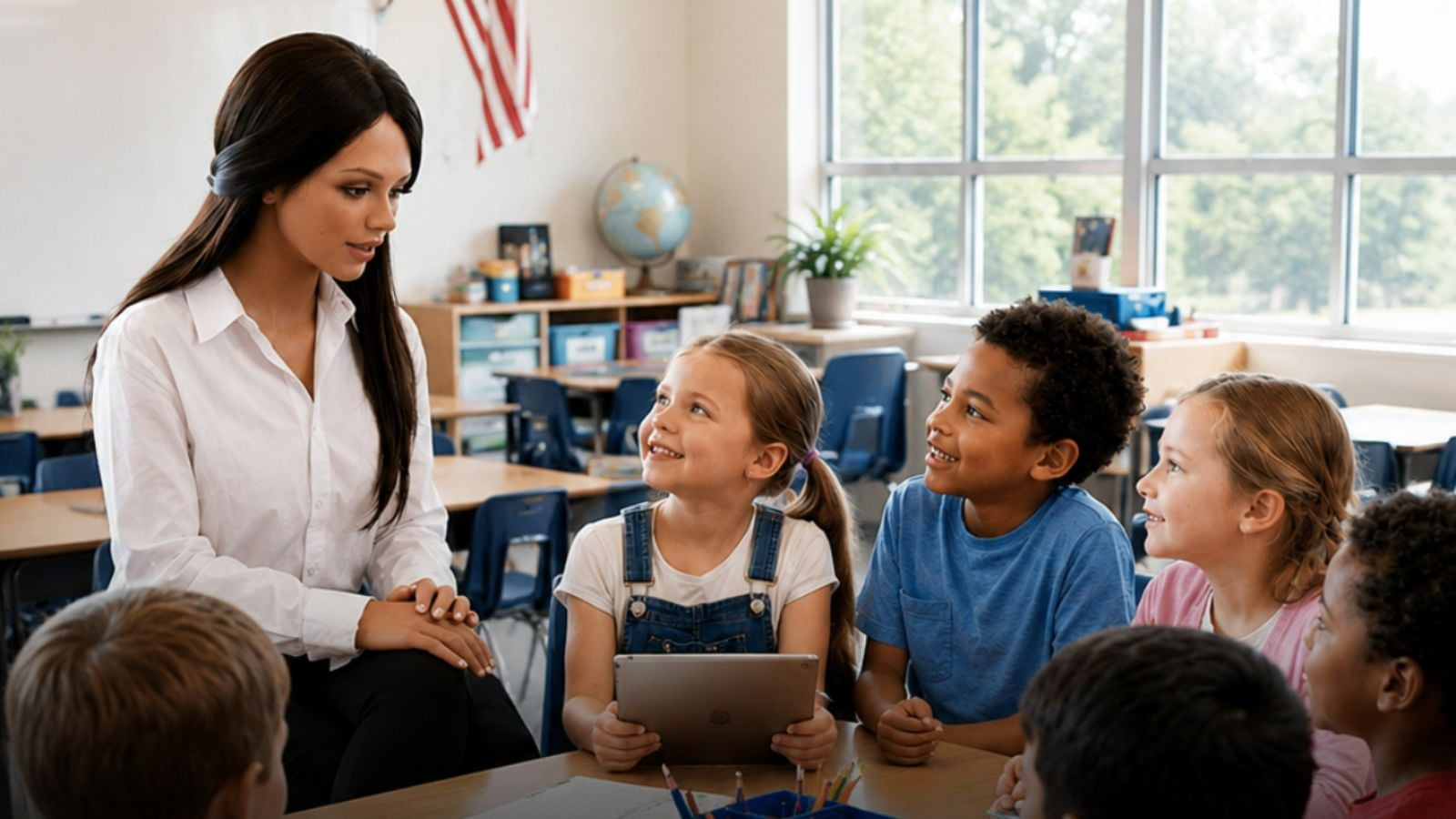
According to a report by New York Focus, the robot will also serve as a classroom resource if a teacher needs input on what is next in the lesson, since the curriculum data has been fed into the robot.
Speaking about the addition of Sally to the school this fall, Andrew Kiguel, CEO of Realbotix, said:
“This deployment in a working school district represents a landmark moment for both AI and humanoid robotics. Salamanca marks the beginning of a new era where humanoid robots and intelligent AI assistants become standard tools in STEM education.”
However, instead of identifying students through names, it will identify them through a unique code. Kiguel said:
“They’ll be able to say, ‘Hey, I’m student number 1234,’ and then the robot will be like, ‘Hey, we were talking about this yesterday, do you want to continue that conversation?’”
Students will be able to use avatars to help complete their assignments before and after school hours. Notably, privacy may not be an issue with Sally because, unlike other Realbotix robots, it will not feature facial recognition and recording.
What Salamanca Aims to Achieve Through Sally
Salamanca stands alone as the only incorporated U.S. city situated completely within the boundaries of a Native American reservation. Around 1,300 students attend its school district, where 32 percent identify as American Indian or Alaska Native and 79 percent qualify as economically disadvantaged.
The school intends to introduce the robot and avatar in its high school AI and robotics courses, which use a curriculum developed by Apple co-founder Steve Wozniak to prepare students for high-demand tech jobs. If this pilot project is successful, the district plans to roll it out to additional high school classes.
Answering a question about why the district was embracing AI, Salamanca Superintendent Mark Beehler explained:
“Many schools are taking the easy solution of simply banning it, but I have found that students will find a way around most rules that schools put in place. I also believe it is critical for schools to teach proper use of technology, not simply exclude it.”
To tackle inaccurate results given by AI, Beehler said Realbotix has trained the robot and avatar to say, “I don’t know,” instead of making up responses, also known as “AI hallucinations.”
Beehler said the district will measure the success of the program primarily through qualitative feedback from both students and teachers.
Parents and Experts Are Not Sure Yet
Local parent Sierra Abrams, who learned about the technology on social media, has raised concerns about AI. She said:
“We already have so many issues in our community, including environmental issues. I just don’t understand the concept of adding AI onto that. Bringing it into the school district is contradicting everything we believe, in my opinion.”
Ryan Schaaf, associate professor of educational technology at Notre Dame of Maryland University, explained that the success of the program depends on how it is implemented, but stated that schools must balance AI and traditional learning to reduce students’ future dependence on technology. He said:
“It gives students a true disadvantage because once they leave school, they are going to be immersed in AI technologies.”
The robot cost the district $57,590. Kiguel said this was a discounted price. The company website offers the M-Series robot at a starting price of $95,000.
What do you think about schools using AI-powered humanoid robots in the classroom? Let us know in the comments.