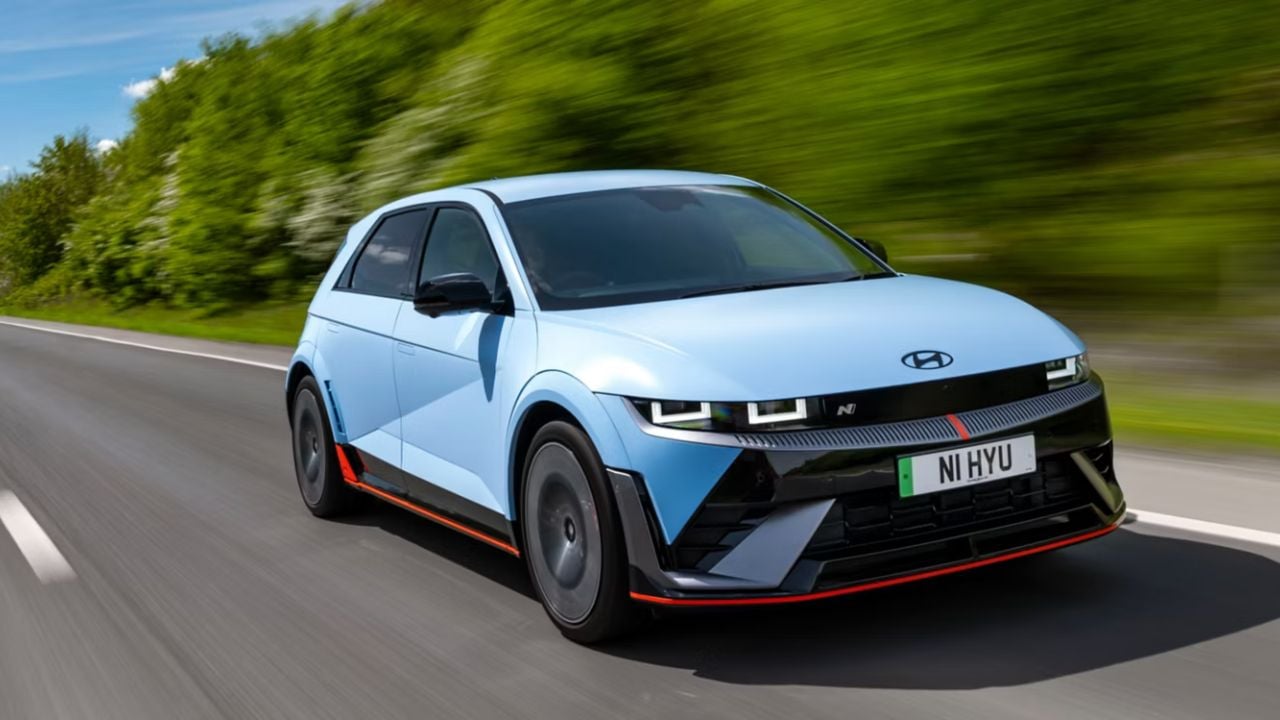
Hyundai may have accidentally stumbled onto one of the most entertaining ideas in the EV world. When the Hyundai Ioniq 5 N introduced simulated gear shifts, fake revs, and artificial drivetrain drama, plenty of enthusiasts rolled their eyes. Then people actually drove it, and suddenly the industry realized Hyundai might have been onto something.
The Korean automaker’s fake gearbox system turned out to be surprisingly convincing in the real world. Instead of feeling like a cheap gimmick, the setup added genuine personality and engagement to an EV segment that often gets criticized for feeling too clinical and disconnected.
Now, Hyundai appears ready to take that concept even further. A newly uncovered patent filing suggests the company is experimenting with a fully physical manual-style shifter setup for future vehicles, potentially complete with a clutch pedal and a traditional H-pattern layout.
Naturally, this does not mean Hyundai is secretly building electric cars with actual multi-speed manual transmissions underneath. Patent filings frequently exist purely to protect intellectual property ideas, and many never reach production. Still, the level of detail in Hyundai’s latest filing suggests this isn’t just a quick thought experiment from an engineer’s sketchbook.
Hyundai Wants EVs To Feel Mechanical Again
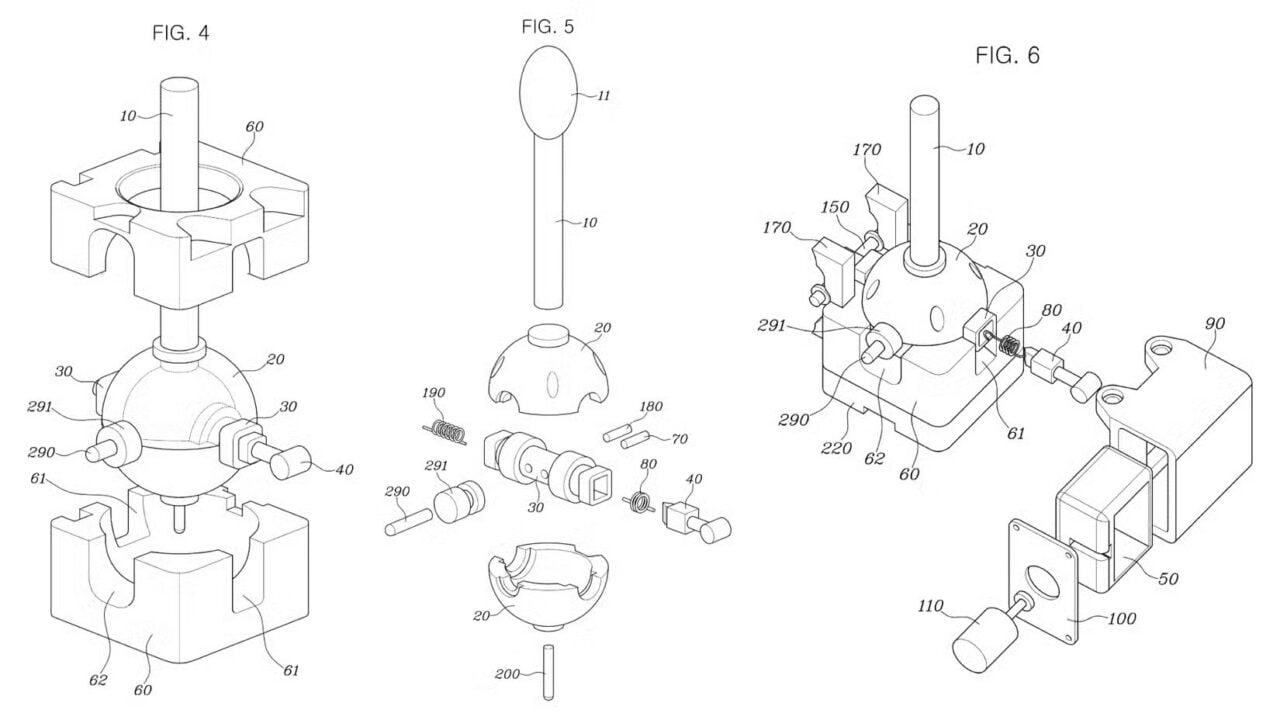
The patent, filed with the U.S. Patent and Trademark Office, outlines what Hyundai calls an “electronic shift operation apparatus.” In simpler language, it is essentially a fake manual transmission interface designed to behave like a traditional stick shift despite having no physical gearbox connection.
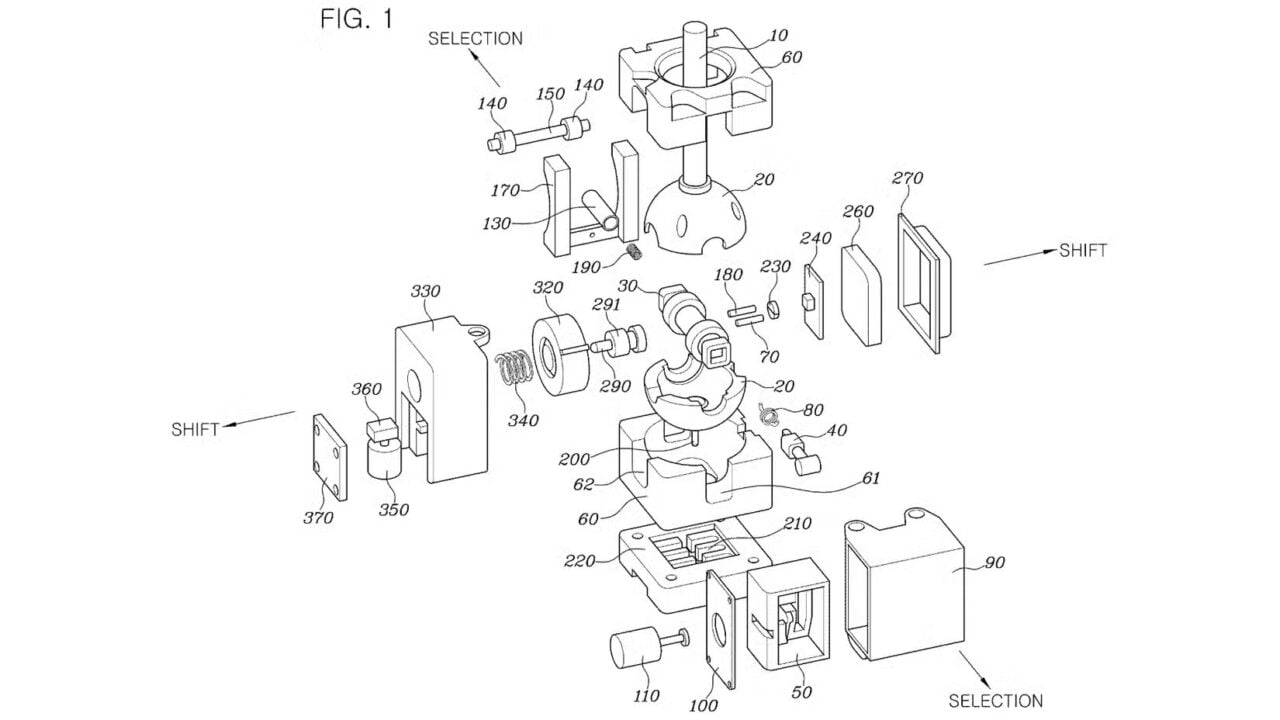
Instead of mechanical linkages connecting the shifter to gears, the system relies on electronic sensors, springs, magnetic resistance, and software-controlled movement. The goal is to recreate the physical sensation of rowing through gears while still using a modern electronic drivetrain underneath.
According to the filing, the setup would include seven selectable gates arranged like a classic six-speed manual with reverse. The diagrams also show neutral positions between gears, along with software logic capable of simulating different driving modes and shift behaviors.
Yes, There’s Even A Clutch Pedal
Perhaps the wildest detail in the entire patent is Hyundai’s inclusion of a clutch pedal. In the proposed system, drivers could press the clutch and manually move through the H-pattern gates exactly like a conventional manual transmission car.
The patent explains that different driving modes would alter how the shifter behaves. In automatic operation, only certain gates would remain accessible, while manual mode would unlock the full simulated stick-shift experience.
Hyundai also appears focused on replicating the actual feel of a manual shifter rather than merely mimicking the visuals. The patent references spring tension, physical resistance, gated movement, and even shift lockouts designed to make the interaction feel closer to a real gearbox.
The Technology May Not Be EV-Only
One particularly interesting aspect of the patent is that Hyundai never specifically says the system is designed exclusively for electric vehicles. The filing carefully avoids directly referencing gasoline engines, hybrid systems, or even traditional transmissions.
That leaves the door wide open for multiple possible applications. Hyundai could use the technology in future EVs as an evolution of the Ioniq 5 N’s simulated gearbox, but it could also theoretically appear in hybrid or internal-combustion performance models.
That flexibility is important because automakers are increasingly searching for ways to preserve driver engagement while still meeting emissions regulations and efficiency targets. A simulated manual setup could potentially deliver some of the emotional appeal of a stick shift without requiring a fully mechanical transmission architecture.
Automakers Are Suddenly Chasing Driver Engagement Again
For years, the automotive industry treated simplicity as the defining advantage of EVs. Electric cars were supposed to be smooth, silent, seamless, and effortless compared to noisy old combustion vehicles with clunky gear changes and mechanical quirks.
The problem is that many enthusiasts eventually realized seamless performance can sometimes feel strangely sterile. Quick acceleration alone does not necessarily create an emotional connection between driver and machine.
That realization has triggered a noticeable change, and Ford, Subaru, and Porsche have all explored patents or concepts involving simulated shifting, clutch systems, or more interactive EV controls.
Hyundai May Be Leading The Industry Here
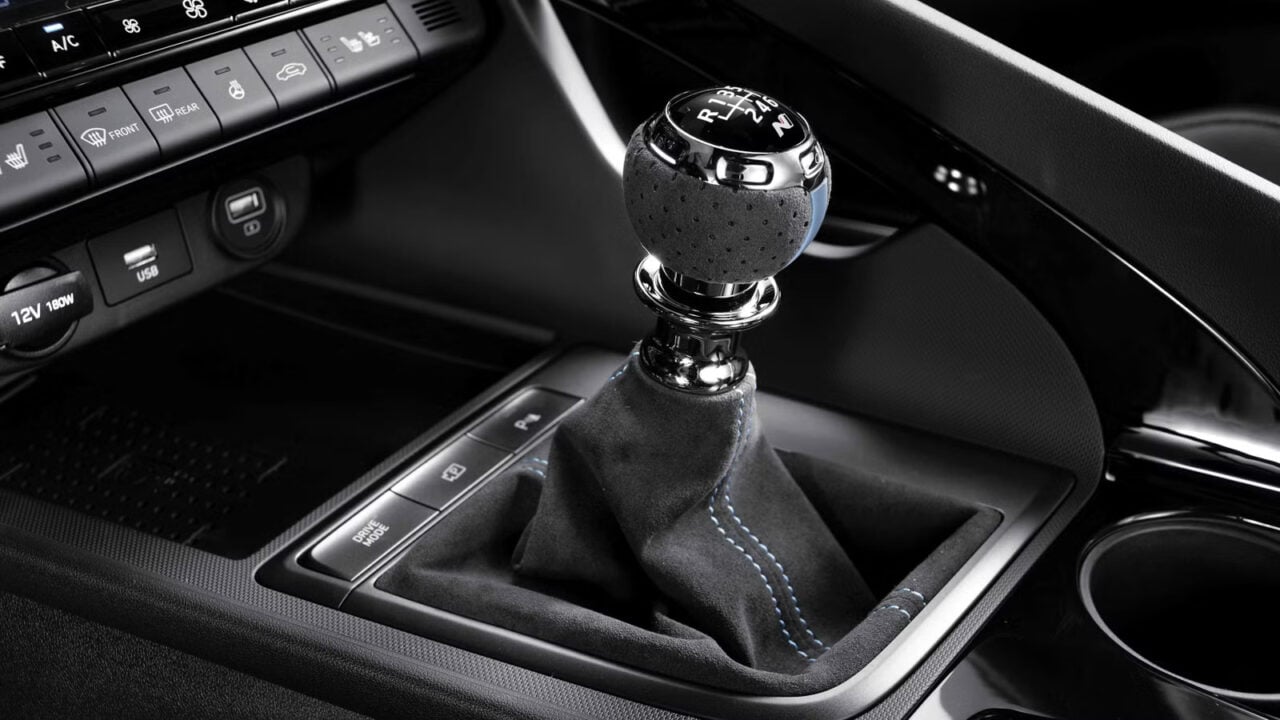
The reason Hyundai’s work stands out is that it has already proved these ideas can actually work in the real world. The Ioniq 5 N succeeded because the company understood that driver engagement is about more than outright speed figures or lap times.
By introducing fake shifts, synthesized revs, and simulated power delivery interruptions, Hyundai gave drivers something modern EVs often lack: rhythm and anticipation. The experience may not replicate a real manual transmission perfectly, but it creates involvement in a way many performance EVs still struggle to achieve.
Whether this exact patent ever reaches production remains uncertain. Still, if there is currently one automaker capable of making fake shifting feel genuinely entertaining instead of painfully gimmicky, Hyundai has already earned the benefit of the doubt.