When a journalist becomes the news himself, you know the story is worth telling. NBC News senior correspondent Tom Costello was just trying to get home after a long day at work on May 12, 2025. Instead, he ended up in the middle of a terrifying highway rescue that would keep him awake for hours. And if you have a teenager who drives, or is about to, this story is going to hit differently.
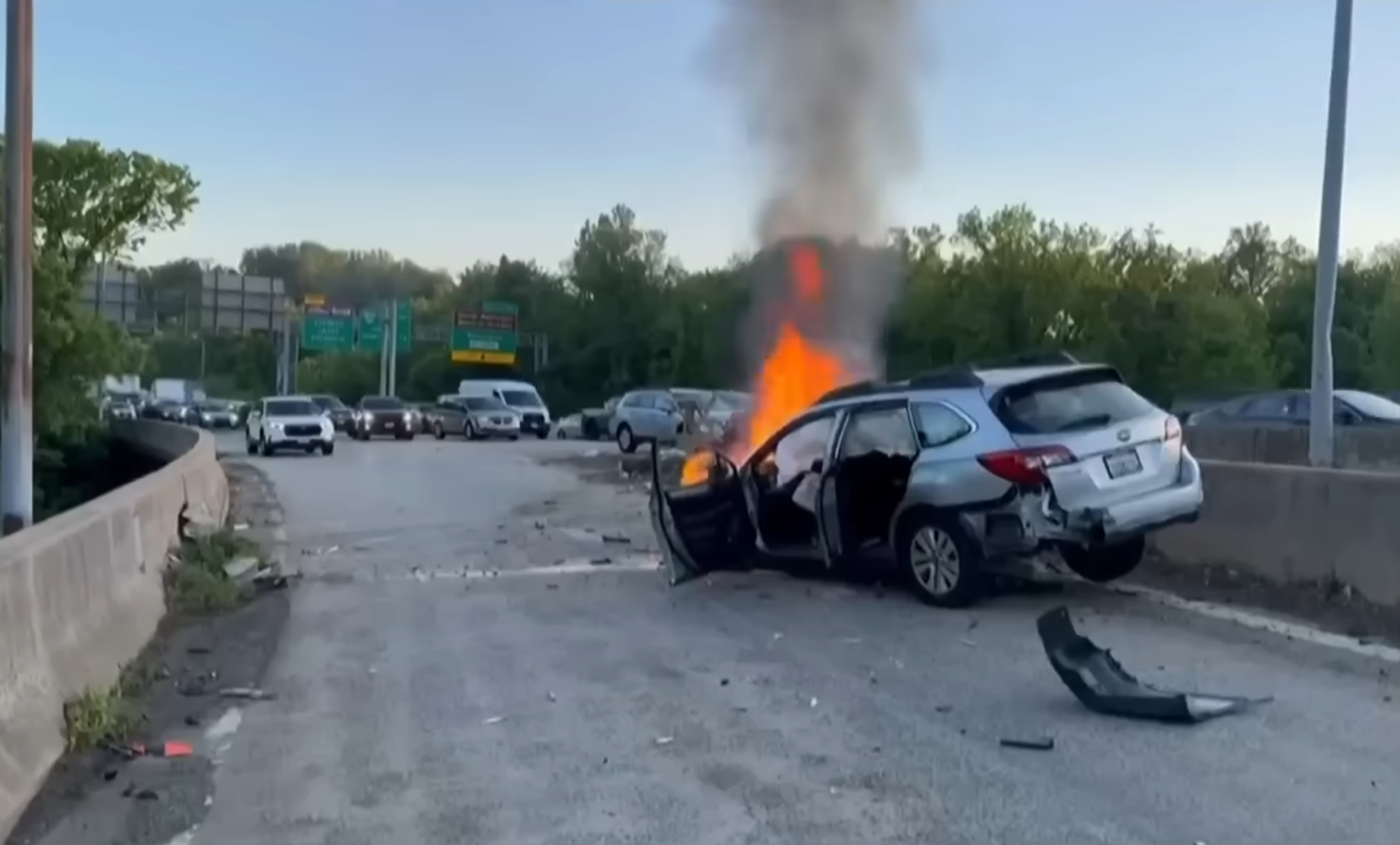
It started with a car flying past Costello on I-495, better known as the Capital Beltway in Washington DC, at what he estimated was somewhere around 100 miles per hour. That is not a typo. One hundred miles per hour on a highway already known for aggressive commuters and tight lanes. Costello watched in real time as that car took a corner, lost control, and slammed directly into a concrete barrier. What followed was the kind of crash that makes your stomach drop just hearing about it.
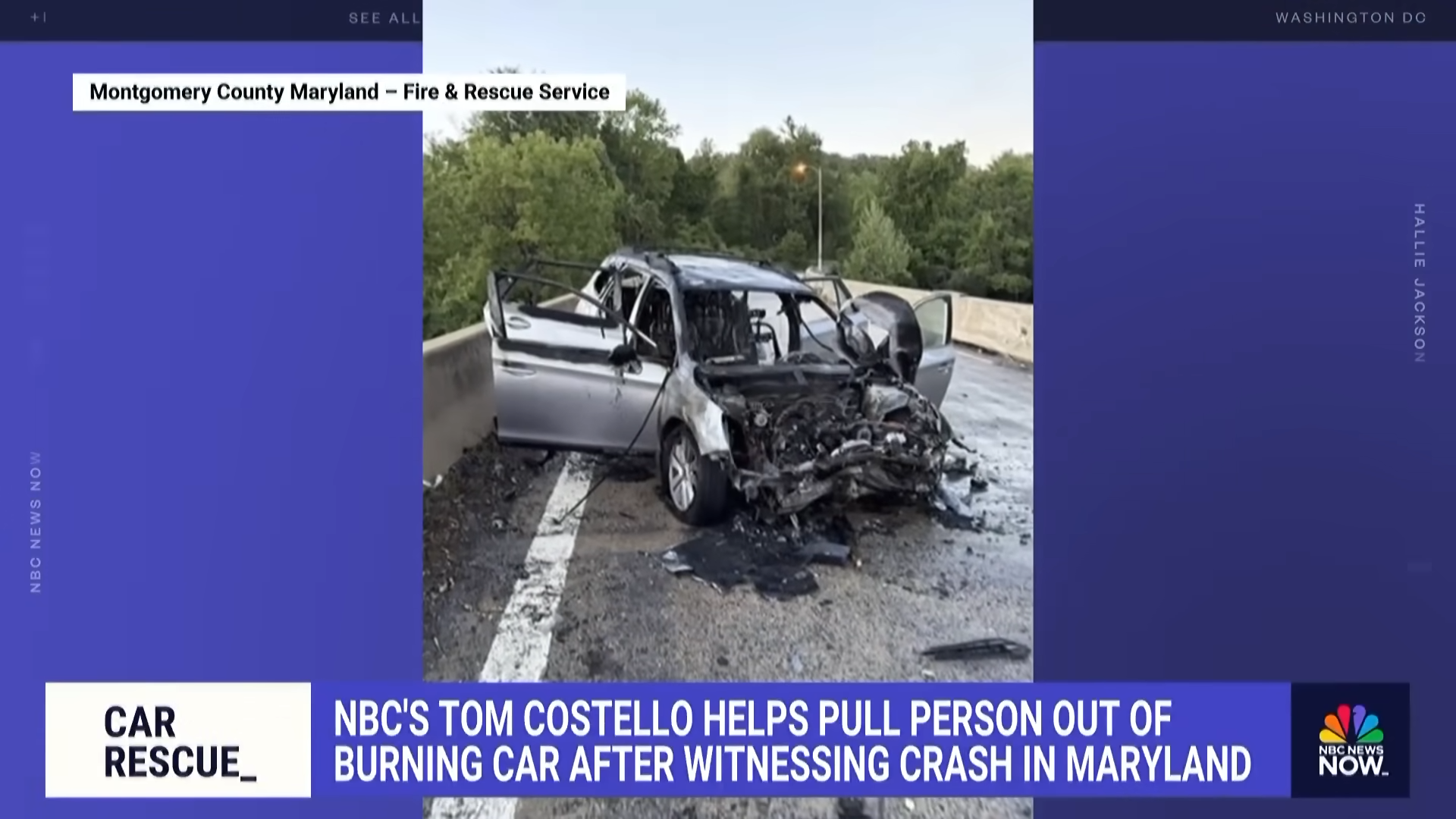
The car did not just crumple. It broke apart on impact, sending pieces flying in every direction before launching into the air and crashing back down to the pavement. The vehicle was crushed, smoking, and barely recognizable. Most people watching from a distance probably assumed the worst. Costello, to his credit, did not just drive past.
What happened next involved a reporter, an orthopedic surgeon, a nurse, and a teenager who probably had no business being alive. It is the kind of story that is almost hard to believe, and yet it played out on a Washington DC highway in front of multiple witnesses.
What Tom Costello Did When Everyone Else Was Still Processing
Costello did two things immediately after witnessing the crash: he called 911 and he ran toward the car. Those two things, in that order, are not a small deal. Most bystanders freeze. Most people reach for their phones to film, not to call for help. Costello told 911 dispatchers to get trucks rolling right away because whoever was inside was in serious trouble.
When he pulled open the driver’s side door, he genuinely expected to find the worst. What he found instead was a 17-year-old boy who was dazed, staring blankly through the shattered windshield, and barely able to speak. Costello checked on him methodically, asking if he could hear, if he could feel his fingers and toes, and what hurt. The teen’s answer to that last question was pretty direct: everything.
At this point, Costello was not sure whether moving the boy was safe, given the likelihood of spinal or neck injuries in a crash that severe. But then he noticed something that made the decision for him. Flames were starting to build underneath the car, and they were not going to wait for a careful deliberation.
A Reporter, a Surgeon, and a Nurse Walk Onto the Beltway
Here is where the story takes a turn that sounds almost scripted. As other drivers pulled over to help, two of them turned out to be medical professionals. One was an orthopedic surgeon. Another was a nurse. The three of them, Costello, the surgeon, and the nurse, formed an impromptu rescue team on the shoulder of one of the most trafficked highways in the country.
The surgeon stabilized the teenager’s head and neck. Costello took the torso. The nurse handled the legs. Together, they carried the boy down the off-ramp to safety, coordinating on the fly with zero preparation and very little time to spare. Seconds after they got him clear, the car fully ignited and exploded. Had they been any slower, the outcome of this story would be unimaginably different.
Costello said he was so shaken by the experience that sleep did not come easily that night. For a journalist who has covered some of the biggest stories in the country, that says a lot about what he witnessed on that stretch of highway.
What Parents and Teen Drivers Need to Take Away From This
Costello himself offered the most pointed takeaway when he addressed viewers: watch your kids. That was his message, plain and simple. A 17-year-old, likely not far into his driving experience, was doing 100 miles per hour on a public highway at night. The fact that he is alive is, by Costello’s own admission, something close to miraculous.
Teen drivers are statistically among the highest-risk groups on the road. Inexperience, overconfidence, peer pressure, and a still-developing sense of consequences all factor in. Speed is consistently one of the top contributors to fatal crashes among young drivers. A car doing highway speeds does not give a teenager, or anyone else, the reaction time needed to course-correct when something goes wrong.
The conversation about car keys and responsibility is often awkward. It can feel like nagging, like distrust, like something a teenager will roll their eyes at. But a concrete barrier on I-495 does not care about any of that. Neither does a fire that builds underneath a crushed vehicle while someone is still inside it.
The Bystander Effect, and Why Costello’s Response Matters
There is a well-documented psychological phenomenon called the bystander effect: the more people who witness an emergency, the less likely any individual is to step in and help. Everyone assumes someone else will do it. Everyone waits. And sometimes, that waiting has real consequences.
Costello did not wait. He called for help and he went toward the danger, even when he thought the driver might already be dead. That instinct, or whatever you want to call it, directly contributed to a teenager walking away from a crash that should not have been survivable. The orthopedic surgeon and the nurse who stopped deserve equal credit. All three of them made a choice in a matter of seconds that most people never have to make at all.
It is worth sitting with that for a moment, not to make anyone feel guilty for how they might react in a similar situation, but to think about what it actually looks like to help. It does not always require training or a medical degree. Sometimes it just requires stopping, calling 911, and refusing to assume someone else will handle it.